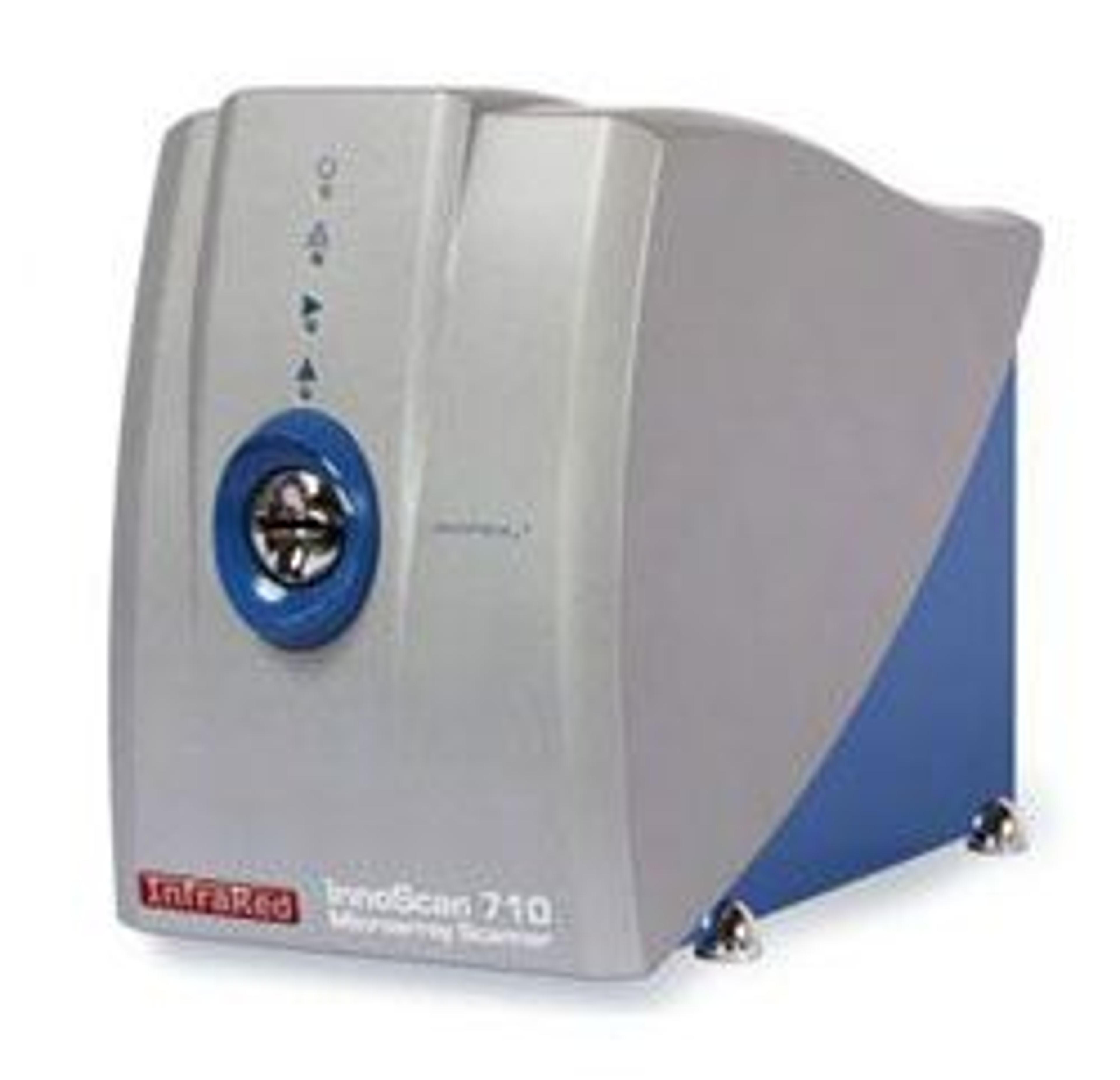
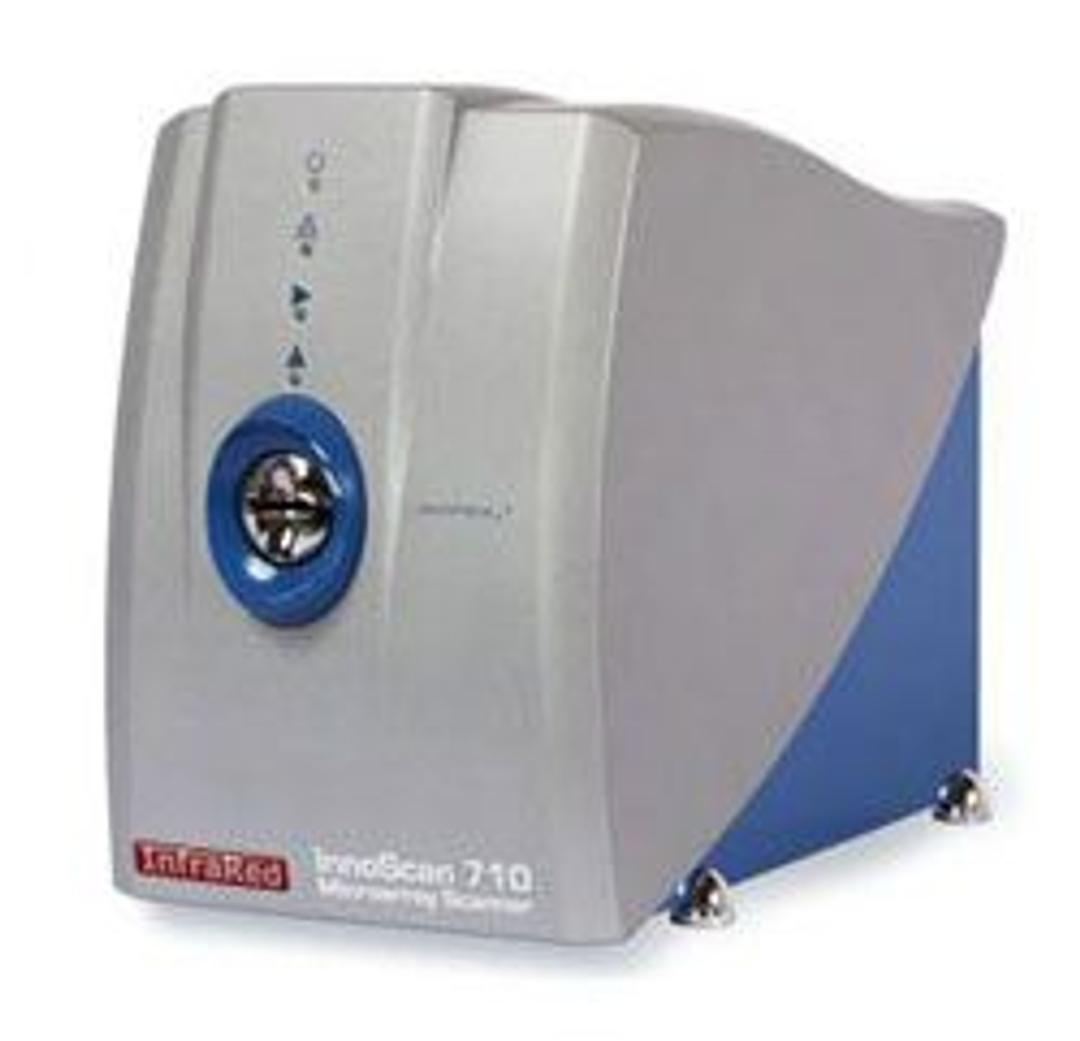
Advanced Infrared 2-colour Microarray Scanner: InnoScan 710IR
Unmatched performance for protein assays.Specifically designed to enhance detection in nitrocellulose protein array applications, the InnoScan 710IR near infrared (NIR) fluorescence scanner from Innopsys has on-board 670 nm and 785 nm excitation lasers to optimize performance by reducing the inherent background from the nitrocellulose. No scanner comes close for optical quality and speed of operation. Full compatibility with t…
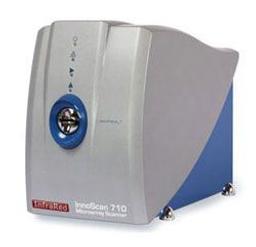

The supplier does not provide quotations for this product through SelectScience. You can search for similar products in our Product Directory.
Unmatched performance for protein assays.
Specifically designed to enhance detection in nitrocellulose protein array applications, the InnoScan 710IR near infrared (NIR) fluorescence scanner from Innopsys has on-board 670 nm and 785 nm excitation lasers to optimize performance by reducing the inherent background from the nitrocellulose. No scanner comes close for optical quality and speed of operation. Full compatibility with traceability standards is guaranteed, with a validation slide and associated Mapix software provided.
Eliminating one of the most common concerns, the InnoScan 710IR is insensitive to substrate distortion. The real-time autofocus system makes the entire reading area completely uniform.
Sensitivity and signal-to-noise ratio are two of the outstanding characteristics upon which the reputations of InnoScan scanners have been built. Outstanding photometric properties, combined with unique data manipulation software, ensure the most advanced analyses possible on the market for this class of scanner.
Features:
- 670 nm and 785 nm excitation lasers for enhanced IR performance
- Simple to understand and operate – concentrate on the interpretation
- High precision - maximum resolution of 3 µm/pixel
- Under 4 minutes reading time combined with 10µm resolution
- Unbeatable scanning speed (10 to 35 lines/sec)
- Barcode identification for reliable traceability
- Portable, compact design; can be shared by labs
- Attractive price

InnoScan® 710IR Infrared Detection for Optimal Scan of Nitrocellulose-Based Protein Arrays
This technical note focuses on the application of the InnoScan® 710 and 710IR scanners to scan protein arrays. Its principal goal is to guide customers and distributors in choosing the adequate scanner according to the microarray they want to read.
InnoScan 710-IR Scanner Excels at Cytokine Detection in Conjunction with pGOLD Chips
A 6 log dynamic range of cytokines makes it difficult for conventional ELISA technology to accurately assess because of a 2-4 log dynamic range limit. The InnoScan 710- IR scanner from Innopsys, when coupled with pGOLD slides from Nirmidas Biotech, is able to quantify IL-1b levels over the relevant 6 logs of dynamic rage thanks to the near-infrared detection of the InnoScan 710-IR scanner and the metal-enhanced fluorescence (MEF) capabilities of the pGOLD slides.
NIR RPPA Detection Together with Dynamic Range Extension (XDR) Function in the Innoscan 710-IR Scanner Makes RPPA Detection Cheaper By 90 Percent
Reverse Phase Protein Arrays (RPPA) also named cell lysate arrays have been shown to be useful tools for biomarker evaluation in large patient cohort. One of the challenges of this technology is the dynamic range, since biomarker expression levels can vary from fento-molar (fM) to micro-molar (μM) concentration in the same cohort. This application note demonstrates how, using the dynamic range extension (XDR) function in the InnoScan 710-IR scanner, RPPA costs are dramatically diminished when switching from colorimetric to fluorescence detection.
Infrared Detection Decreases Nitrocellulose Autofluorescence and Improves RPPA Assays Signal‐to‐Noise Ratio Over Visible Wavelength Detection
Reverse Phase Protein Arrays (RPPAs) are a specific type of protein arrays consisting of printed cell lysates useful for cell signaling and biomarker analysis. RPPAs are mainly built on nitrocellulose film slides as they have high binding capacity and viability for native proteins. Until now, RPPA assays with fluorescence detection were limited in sensitivity by high intrinsic background fluorescence normally produced by the nitrocellulose; in this application note learn how it is now possible to increase the Signal to Noise Ratio using Near Infrared (NIR) detection with the InnoScan 710‐IR scanner.
Reverse Phase Protein Arrays for Cell Signaling: Using the InnoScan 710-IR Scanner Improves Sensitivity and Dynamic Range
Reverse Phase Protein Arrays (RPPAs) are increasingly used to study cell signaling as they are highly multiplexed and allow precise quantification of protein of interests in biological samples. The InnoScan 710-IR scanner combines infrared detection with high sensitivity and quality images. This application note compares the performance of the InnoScan 710-IR to its main competitor infrared scanner. It is shown that the InnoScan 710-IR improves the signal to noise ratio by a factor of up to 2.7 especially for low concentrations of arrayed cell lysates and extends the dynamic range compared to its competitor.
Using Infrared Detection Increases SNR by 3.5 Fold on Nitrocellulose Colorimetric Assay-Labeled Protein Microarrays.
The sensitivity and dynamic range of colorimetric protein assays on nitrocellulose supports requires a detection method that produces low background levels on the array. Accuracy demands objective assessment of very small spots found in higher density, highly multiplexed arrays. In this application note, the Innopsys InnoScan 710IR scanner uses infra-red detection to improve sensitivity by 3-5 fold, improve quantitative resolution between analytes and improve the multiplex capacity of the calorimetric protein assay.