
InnoScan 710-IR Scanner Excels at Cytokine Detection in Conjunction with pGOLD Chips
19 Nov 2014A 6 log dynamic range of cytokines makes it difficult for conventional ELISA technology to accurately assess because of a 2-4 log dynamic range limit. The InnoScan 710- IR scanner from Innopsys, when coupled with pGOLD slides from Nirmidas Biotech, is able to quantify IL-1b levels over the relevant 6 logs of dynamic rage thanks to the near-infrared detection of the InnoScan 710-IR scanner and the metal-enhanced fluorescence (MEF) capabilities of the pGOLD slides.
Related products
Request Quote for All Products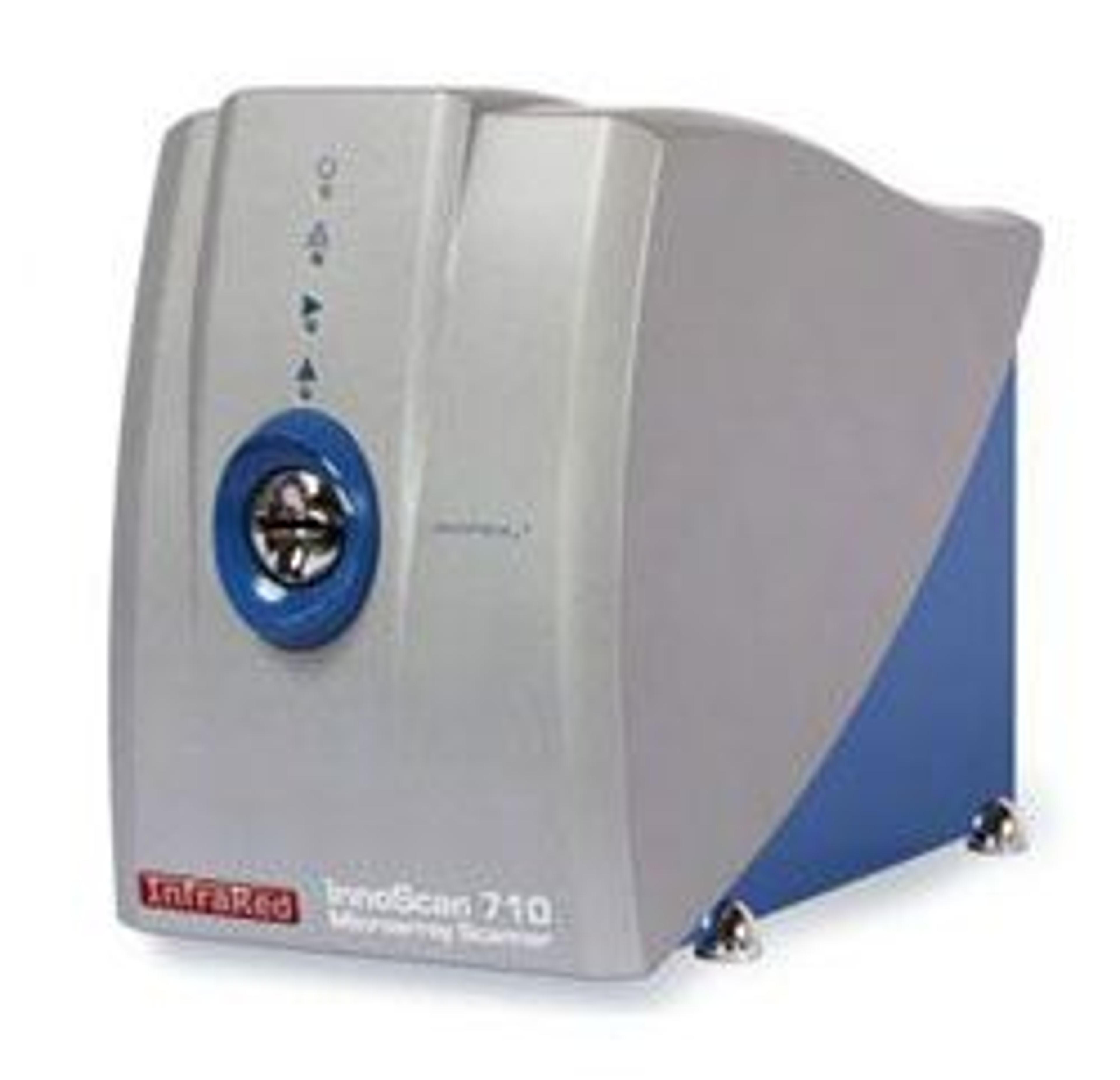
Advanced Infrared 2-colour Microarray Scanner: InnoScan 710IR
InnopsysUnmatched performance for protein assays.Specifically designed to enhance detection in nitrocellulose protein array applications, the InnoScan 710IR near infrared (NIR) fluorescence scanner from Innopsys has on-board 670 nm and 785 nm excitation lasers to optimize performance by reducing the inherent background from the nitrocellulose. No scanner comes close for optical quality and speed of operation. Full compatibility with traceability standards is guaranteed, with a validation slide and associated Mapix software provided.Eliminating one of the most common concerns, the InnoScan 710IR is insensitive to substrate distortion. The real-time autofocus system makes the entire reading area completely uniform.Sensitivity and signal-to-noise ratio are two of the outstanding characteristics upon which the reputations of InnoScan scanners have been built. Outstanding photometric properties, combined with unique data manipulation software, ensure the most advanced analyses possible on the market for this class of scanner.Features: 670 nm and 785 nm excitation lasers for enhanced IR performance Simple to understand and operate – concentrate on the interpretation High precision - maximum resolution of 3 µm/pixel Under 4 minutes reading time combined with 10µm resolution Unbeatable scanning speed (10 to 35 lines/sec) Barcode identification for reliable traceability Portable, compact design; can be shared by labs Attractive price