QPatch HT and QPatch HTX
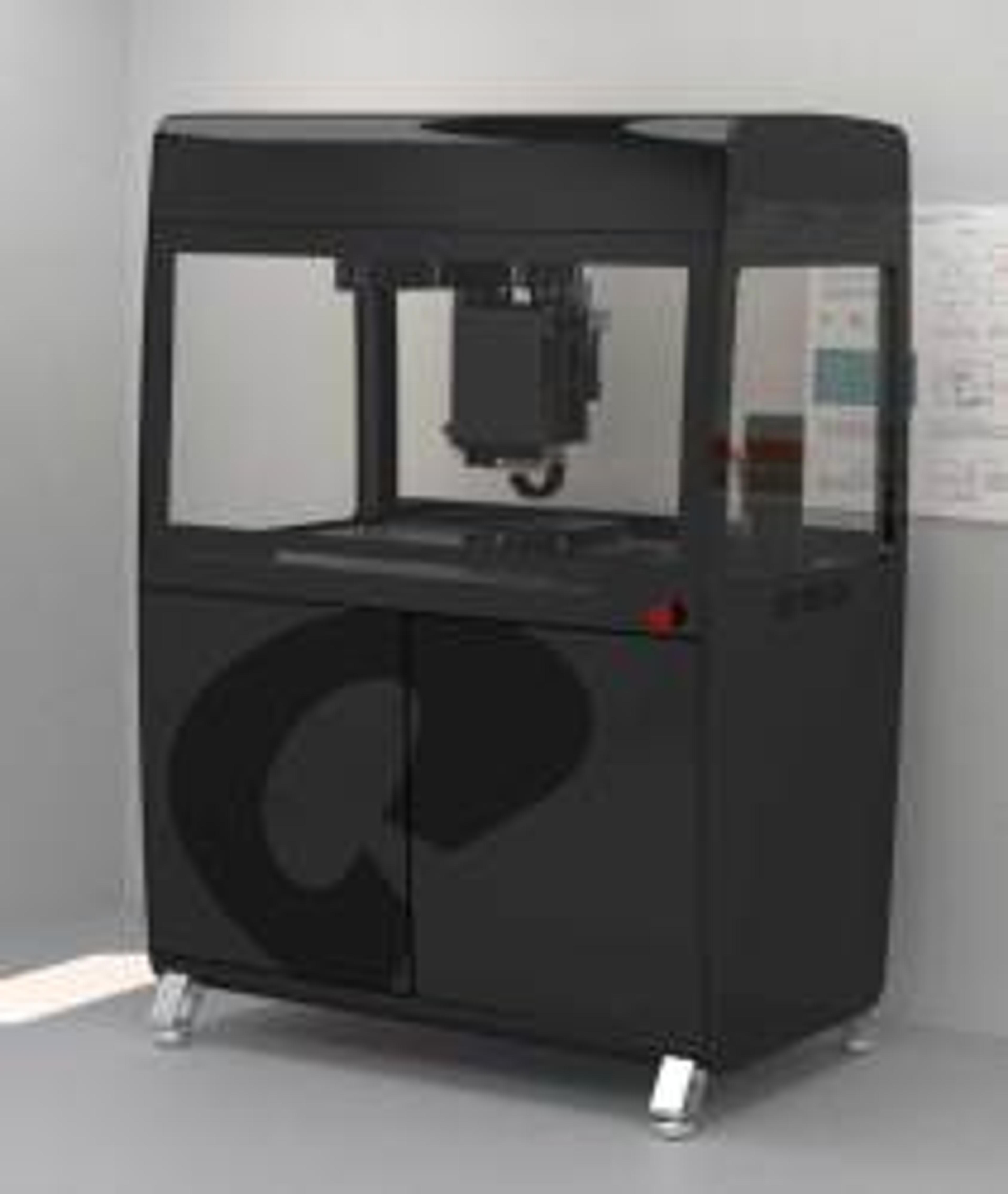
The QPatch HT and QPatch HTX enable high-throughput patch clamping with 48 parallel recording sites. Automated patch clamping with the same high quality afforded by conventional patch clamping can now be applied in all phases of ion channel drug discovery, including primary screening of focused compound libraries. • Up to 7000 data points per day • Screening and compound profiling • Multi-hole and single-hole mode (QPatch HT…


The supplier does not provide quotations for this product through SelectScience. You can search for similar products in our Product Directory.
The QPatch-HT is a high-quality (GOhm seal) 48 channel APC device. It has some very advantageous features, not the least of which includes an on-board cell prep station (Qstir and Qfuge) and automated plate handling proceedure. When it is working well, it can be fantastic (e.g. I have had up to 4 months of continual screening on three different targets with little/no interuption). The down-side is that there are times when the device either underperforms and/or crashes and significant assistance from customer support is needed to get things "back to normal". Customer support is generally very good--but you do NEED it. Consumables are expensive but can be well worth the price for the quality of data for important targets/programs.
Review Date: 13 May 2011 | Sophion Bioscience
The QPatch HT and QPatch HTX enable high-throughput patch clamping with 48 parallel recording sites. Automated patch clamping with the same high quality afforded by conventional patch clamping can now be applied in all phases of ion channel drug discovery, including primary screening of focused compound libraries.
• Up to 7000 data points per day
• Screening and compound profiling
• Multi-hole and single-hole mode (QPatch HTX)
• Ligand- and voltage-gated recordings
• Eight pipette liquid handling with intelligent scheduler
• True gigaseals
• Flow channels for solution exchange
• Up to 50 liquid additions
• User-friendly experiment execution
• Unattended operation for several hours
• On-board cell preparation
• Elevator units for QPlate stacking
• Elevator units for compound plate stacking
• Cell clone screening feature
• Multiple intracellular solutions testing feature
• User friendly assay setup and quick data analysis

Generation of a High Throughput GABA Receptor Assay to Detect Benzodiazepines
This application poster identifies a high throughput GABAA α1β3γ2 and α2β2γ2 assay suitable for detecting benzodiazepines, which in functional assays would modulate the GABA response. The GABAA receptor is a ligand-gated ionotropic ion channel. Its endogenous ligand is GABA (y-aminobutyricacid), the major inhibitory neurotransmitter within the central nervous system.
Development of a Medium Throughput Electrophysiology Assay to Investigate State-Dependency of Sodium Channel Blockers Using QPatch
This application note evaluates the suitability of the CHO ChanClone™ Nav1.5 cell line, over-expressing recombinant human Nav1.5 (a voltage-gated sodiumchannel), for use on the automated electrophysiology platform, QPatch. The researchers develop an assay suitable for the investigation of pharmacological modulators of Nav1.5 channels. The automated electrophysiology platform is capable of producing data of equivalent quality to that obtained using manual patch, but at significantly higher throughput (up to 16 cells can be patched in parallel).
Enhancing Throughput with Multiple Cell Lines Per Well with the QPatch HTX
In this application note, a series of experiments with a combination of ion channels involved in cardiac risk assessment are conducted. Parallel operation of 48 multi-hole patch clamp sites, each comprising 10 individual patch clamp holes, in a single measurements site, allows for high throughput. The ion channel currents were separated temporally or pharmacologically by proper choices of voltage protocols or ion channel inhibitors. Biophysical and pharmacological data are presented. Simultaneous recordings on multiple cell lines expressing different ion channels are analysed using the QPatch HTX.
CHO Cells Stably Expressing Voltage Gated Potassium Channels Tested on the QPatch Platform
This application data shows data from CHO cells stably expressing KV1.5 tested on the QPatch platform. The voltage gated potassium channel KV1.5 is a homotetrameric protein present in the heart. It is a delayed rectifier, participating in the early phase of the heart action potential. Experiments were conducted to evaluate the IV-relationship of KV1.5 as well as dose-response for inhibitors. The response of KV1.5 to a known blocker was also tested.
TRP’ing on QPatch in Mulitmode Mode
In this application note three different transient receptor potential ion channels (TRPA1, TRPV1 & TRPM8) are tested in both single-hole mode and in multihole mode patch clamping with different agonists and antagonists. The advantages of testing compounds in multihole mode will be a minimization of biological variance and an increase in current amplitude, since the current response from several cells are summarized. The disadvantage is lack of serial resistance compensation and in some cases large leak currents.
Biophysical and Pharmacological Profiling of Multiple Na V Subtypes on QPatch HT
In this application poster pharmacological and biophysical data is obtained on a panel of voltage-gated sodium channel subtypes expressed in cell lines. The QPatch cell clone screening feature and its direct integration with the QPatch Assay Software allows simultaneous testing of cell clones expressing the same gene(s) of interest, or simultaneous testing of a panel of ion channel subtypes or a group of ion channels (e.g. heart channels).
Use- and State-Dependent NaV 1.5 Blockers on QPatch X and In Vivo and In Vitro Assays
This application poster shows that the QPatch X in multi-hole mode can be successfully used for screening NaV1.5 blockers. The cardiac voltage dependent sodium channel (NaV1.5) is responsible for the upstroke and directed propagation of action potentials in the heart, and is therefore a central ion channel in safety assessment and drug discovery. For drug screening, a protocol is established for QPatch X that both tests the decay of the sodium current (30 Hz pulsetrain), and the recovery of the current from this pulse-train induced decay.
Embryonic Stem Cell Derived Cardiomyocytes, Cor.At® Cells, Tested on QPatch
This application note presents recordings of three essential cardiac currents; IK, ICa, and INa from Cor.At® cells obtained with the QPatch system. Axiogenesis has developed Cor.At® cells, cardiomyocytes derived from transgenic mouse embryonic stem cells. Differentiated stem cells, like Cor.At® cells, may be interesting for ion channel screening as they provide a more physiological relevant environment for the ion channel(s) under examination.