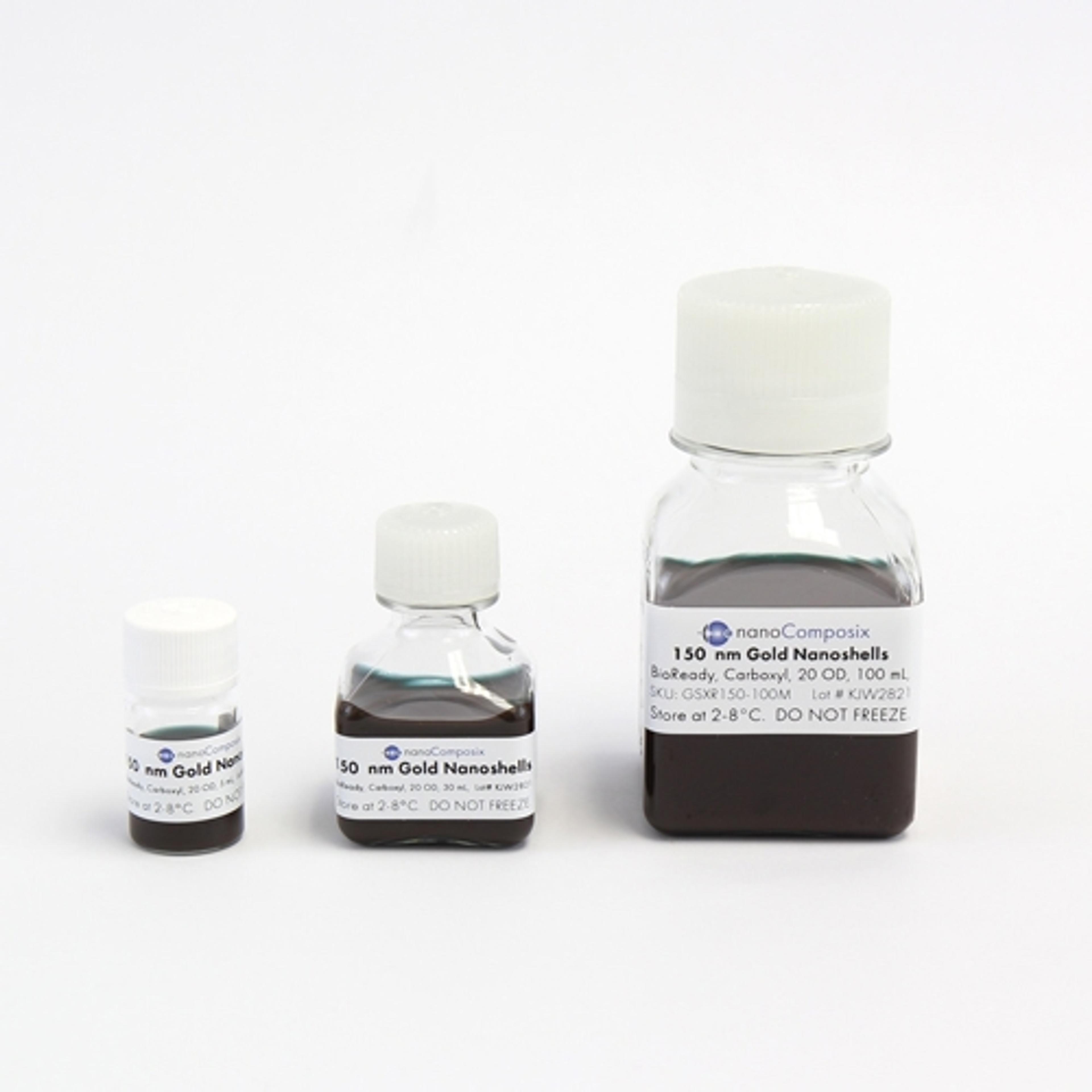
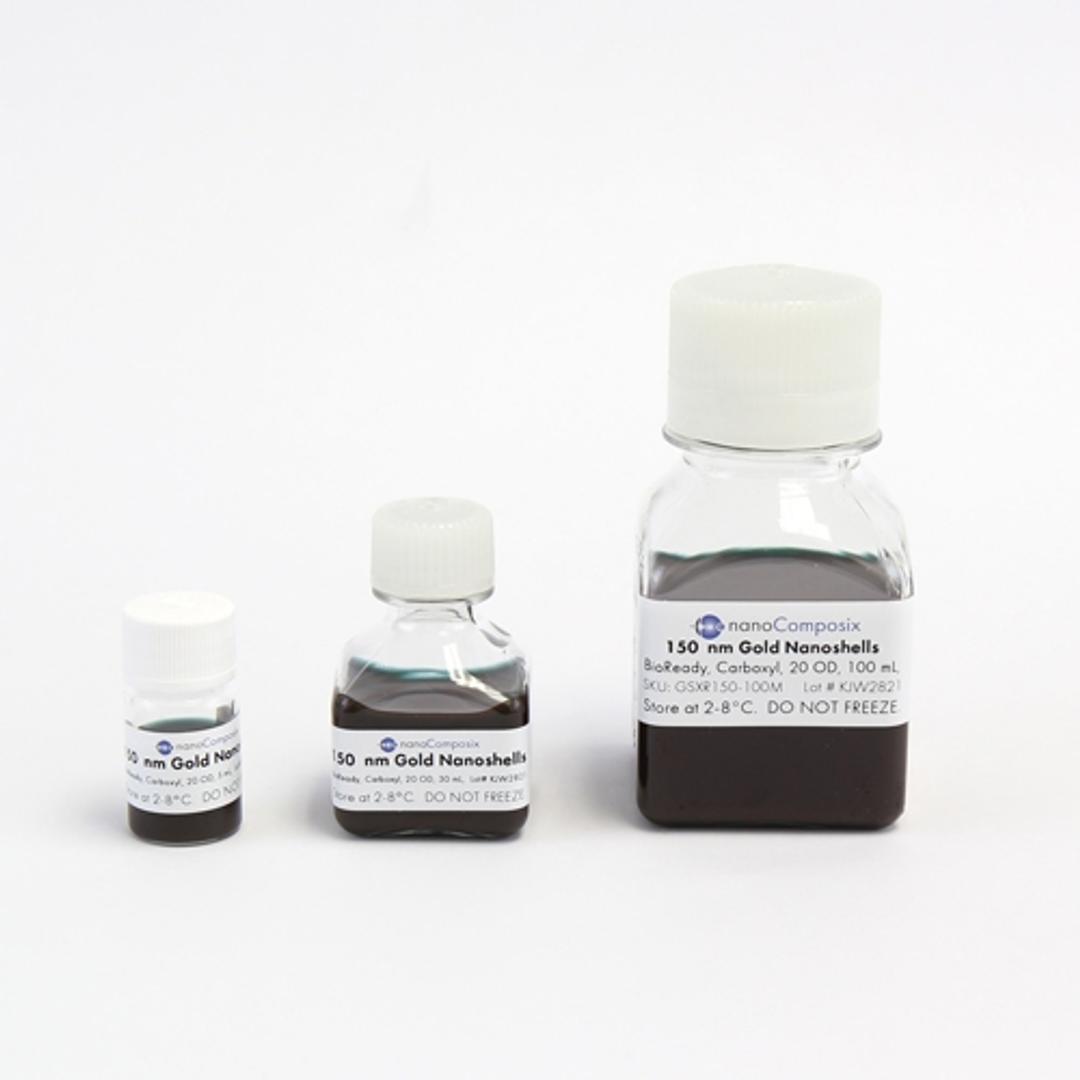
BioReady Carboxyl Gold Nanoshells - 150 nm
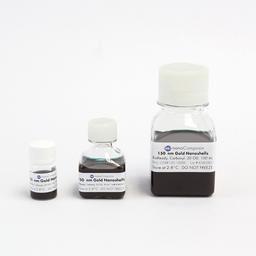
BioReady Gold Nanoshells – Carboxyl - 150 nm, 20 OD in aqueous 0.02 mM potassium carbonate



The supplier does not provide quotations for this product through SelectScience. You can search for similar products in our Product Directory.
Great product
Used for biomedical purpose
Gold nanoshells consist of a silica core surrounded by a gold shell. By changing the ratio of the size of the core to the thickness of the shell, the plasmon resonance can be tuned across the visible and infrared
Review Date: 30 Jul 2022 | nanoComposix
Good sensitivity but inconsistent.
Lateral flow development
Nanoshells provide great sensitivity in lateral flow applications. Unfortunately the inconsistency of conjugation and stability of the conjugates caused us to seek out an alternative nanoparticle for our application.
Review Date: 26 Jan 2022 | nanoComposix
Great product was able to significantly improve our sensitivity
Research
The optimization of the 150nm particles was straight forward and easy to reproduce. It was easy to achieve consistent results as long as each operator didn't deviate from the protocol.
Review Date: 26 Jan 2022 | nanoComposix
BioReady products are specially formulated for the attachment of a molecular recognition element such as an antibody for lateral flow and biodiagnostics.
Ultra-bright gold nanoshells provide up to a 20× increase in lateral flow diagnostic sensitivity over 40 nm gold nanoparticles. Combining the benefits of gold nanoshell brightness and covalent conjugate stability, gold nanoshells are recommended for achieving maximum assay sensitivity.
Gold nanoshells consist of a 120 nm silica core coated with a 15 nm thick gold shell. Due to the plasmon resonance of the gold nanoshells, an intense blue line will be visible on white lateral flow test strips.

Applications of nanoparticles in targeted drug delivery and photothermal therapy
The use of nanoparticles for targeted drug delivery, controlled release of therapeutic agents and photothermal therapy (PTT) is growing rapidly. This compendium highlights recently published articles that describe the use of silica and metal-based nanoparticles to improve therapeutic delivery and enable novel photothermal treatments.
Performance comparison of commonly used nanoparticle probes in SARS-CoV-2 nucleocapsid protein LFA
Lateral flow assays (LFAs) are simple to use, disposable diagnostic devices that can test for a wide variety of biomarkers in diverse sample types, including saliva, blood, urine, and food. Standard lateral flow tests generate an optical signal that arises from strongly colored reporter probes, often nanoparticles, bound to test lines on a white nitrocellulose strip. Given the critical role of the probes, their selection is one of the most important decisions made during the planning of a new lateral flow assay. Download this application note to see a comparison being nanoparticle probes.
Increased sensitivity of lateral flow assays using gold nanoshells
The lateral flow immunoassay is a self-contained, portable diagnostic device that is easy to use, fast and inexpensive. The lateral flow test devices can be stored at ambient temperature, have a long shelf life, and provide diagnostic results without sample processing or additional equipment, making this format ideal for point-of-care and field-based diagnostics.
nanoComposix has developed a gold nanoshell that typically results in 6 to 20 times greater sensitivity in lateral flow assays compared to 40 nm diameter gold colloid. Download this white paper below to find out how they achieved these results, and how gold nanoshells can make all the difference.
Lateral Flow Assay Development: From Concept to Commercialization
Watch this video to see Andre Alfaro, Director of Assay Development at NanoComposix, describe the whole process of lateral flow assay development from start to finish.