Thermo Scientific™ Vanquish™ Horizon UHPLC System
The Thermo Scientific™ Vanquish™ Horizon UHPLC System is built from the ground up to deliver better results with superior separations and easier interaction with no trade-offs in performance, robustness, or ease-of-use. This fully integrated and biocompatible system features high sample capacity for high-throughput workflows, industry-leading pumping performance, amazingly high signal-to-noise (S/N) and linearity, two-mode the…


The supplier does not provide quotations for this product through SelectScience. You can search for similar products in our Product Directory.
Medium class HPLC
Biochromatogrphy analysis. Eather for MS, UV, FLD and RID detectors
The system is very sensitive for every environmental change. Main disadvantage is that the user can't perform as many test as at agilent lab advisor software.
Review Date: 6 Feb 2026 | Thermo Fisher Scientific
Consistently gives good results.
Chromatography
The Thermo Vanquish Horizon is easy to use, quiet, and consistently gives good results.
Review Date: 26 Mar 2019 | Thermo Fisher Scientific
The Thermo Scientific™ Vanquish™ Horizon UHPLC System is built from the ground up to deliver better results with superior separations and easier interaction with no trade-offs in performance, robustness, or ease-of-use. This fully integrated and biocompatible system features high sample capacity for high-throughput workflows, industry-leading pumping performance, amazingly high signal-to-noise (S/N) and linearity, two-mode thermostatting, and more.
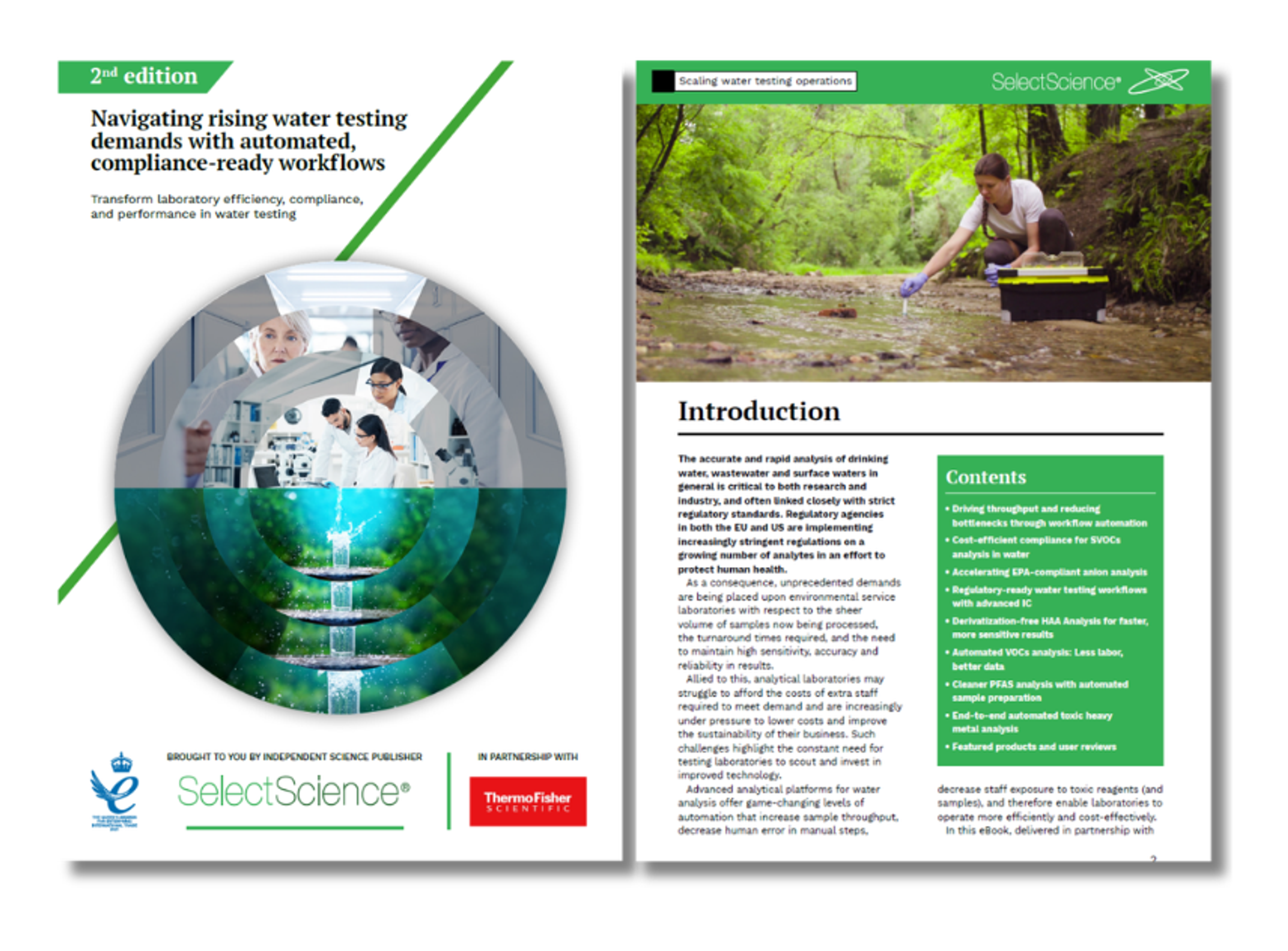
Navigating rising water testing demands with automated, compliance-ready workflows
As regulatory requirements tighten and testing volumes continue to grow, water laboratories face increasing pressure to deliver accurate, compliant results faster than ever before.
This practical guide explores how automation is helping laboratories overcome common bottlenecks across drinking water, wastewater, and environmental monitoring workflows. Through expert case studies, application notes, and technical resources, discover strategies to improve throughput, reduce manual handling, simplify regulatory compliance, and support long-term laboratory sustainability.
Key topics explored:
- Rising water testing volumes and regulatory pressure
- Workflow automation and productivity gain
- Faster turnaround times without compromising compliance
- Reduced solvent use, waste, and manual intervention
- PFAS, VOCs, SVOCs, heavy metals, anions, and HAA analysis
- End-to-end workflows from sample prep to data reporting
- Sustainability and laboratory efficiency
Resource details:
Document type: SelectScience guide
Page count: 127
Edition: 2nd

Navigating the forensics of food contact materials to ensure packaging integrity and safety assurance
To preserve quality and reduce food wastage during transport, food products are often packaged in materials such as plastics, aluminum cans, or glass. However, the quality and integrity of these materials must be continuously evaluated by suppliers to ensure the composition of food is not changed due to the accumulation of migrant substances.
In this infographic, we explore the growing complexity of food contact material testing within global supply chains, the considerations that come with the increased use of recycled ingredients, legislative insights, and how suppliers can improve their compliance testing whilst supporting the increasing needs of research and development and quality testing departments.
Navigating the forensics of food contact materials to ensure packaging integrity and safety assurance
The quality and integrity of food contact materials must be evaluated by suppliers to meet various regulatory guidelines around the world. Their presence poses a potential risk to consumer health, making accurate and robust detection of these compounds an essential step in protecting your brand reputation.
In this video, learn about the types of compounds that can migrate from food contact materials into foodstuffs, the variables that impact migration rate, considerations for new innovative packaging materials, and discover how chromatography, mass spectrometry, and software solutions can help you confidently quantify and unambiguously identify harmful compounds from food contact materials so you can easily report across targeted and non-targeted analysis of volatiles, semi-volatiles, non-volatiles, and elemental impurities.