Navigating rising water testing demands with automated, compliance-ready workflows

30 Jul 2026

Cameron Smith-Craig
Cameron Smith-Craig
Pharma and Applied Sciences Editor
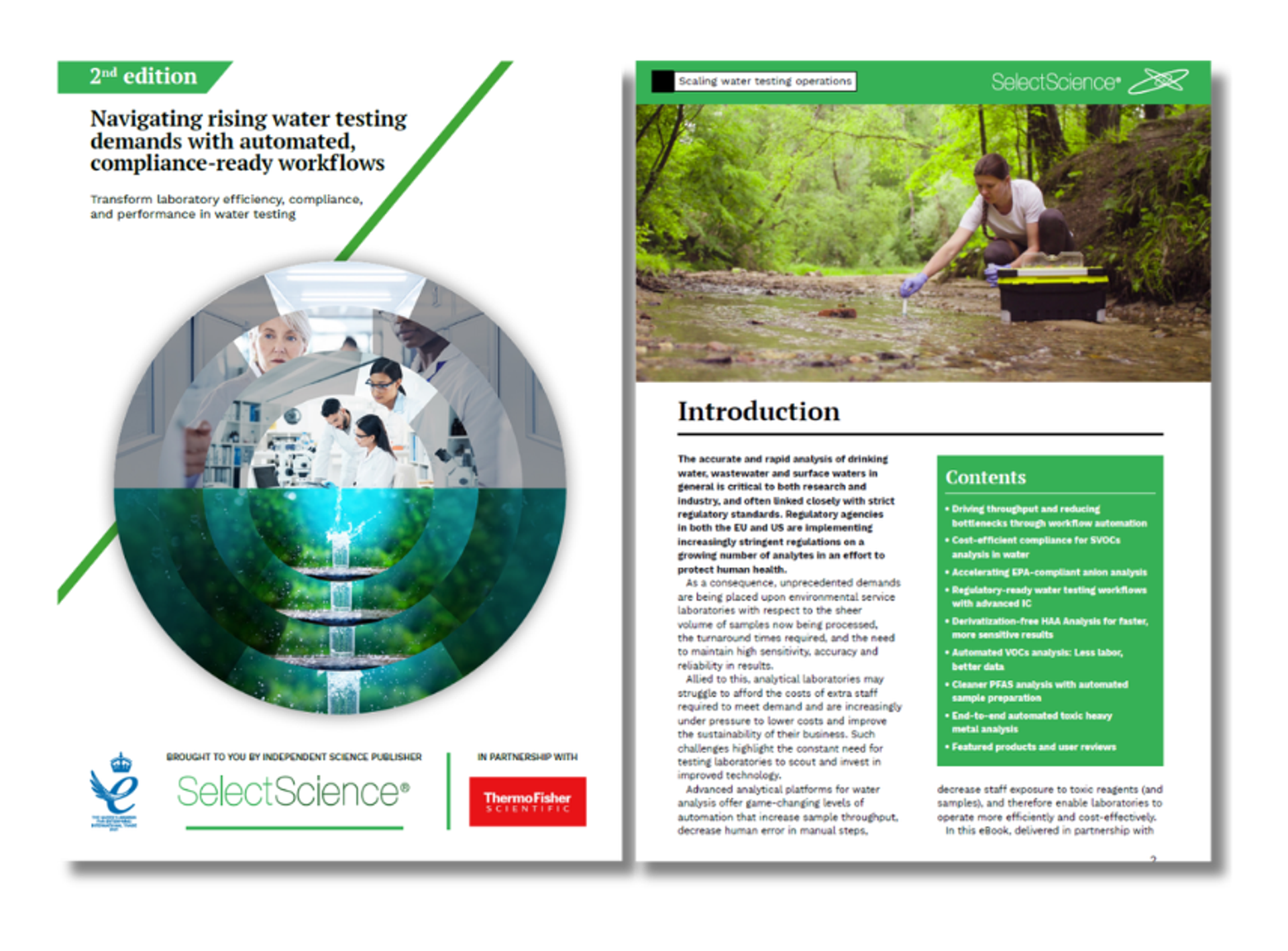
Navigating rising water testing demands with automated, compliance-ready workflows

As regulatory requirements tighten and testing volumes continue to grow, water laboratories face increasing pressure to deliver accurate, compliant results faster than ever before.

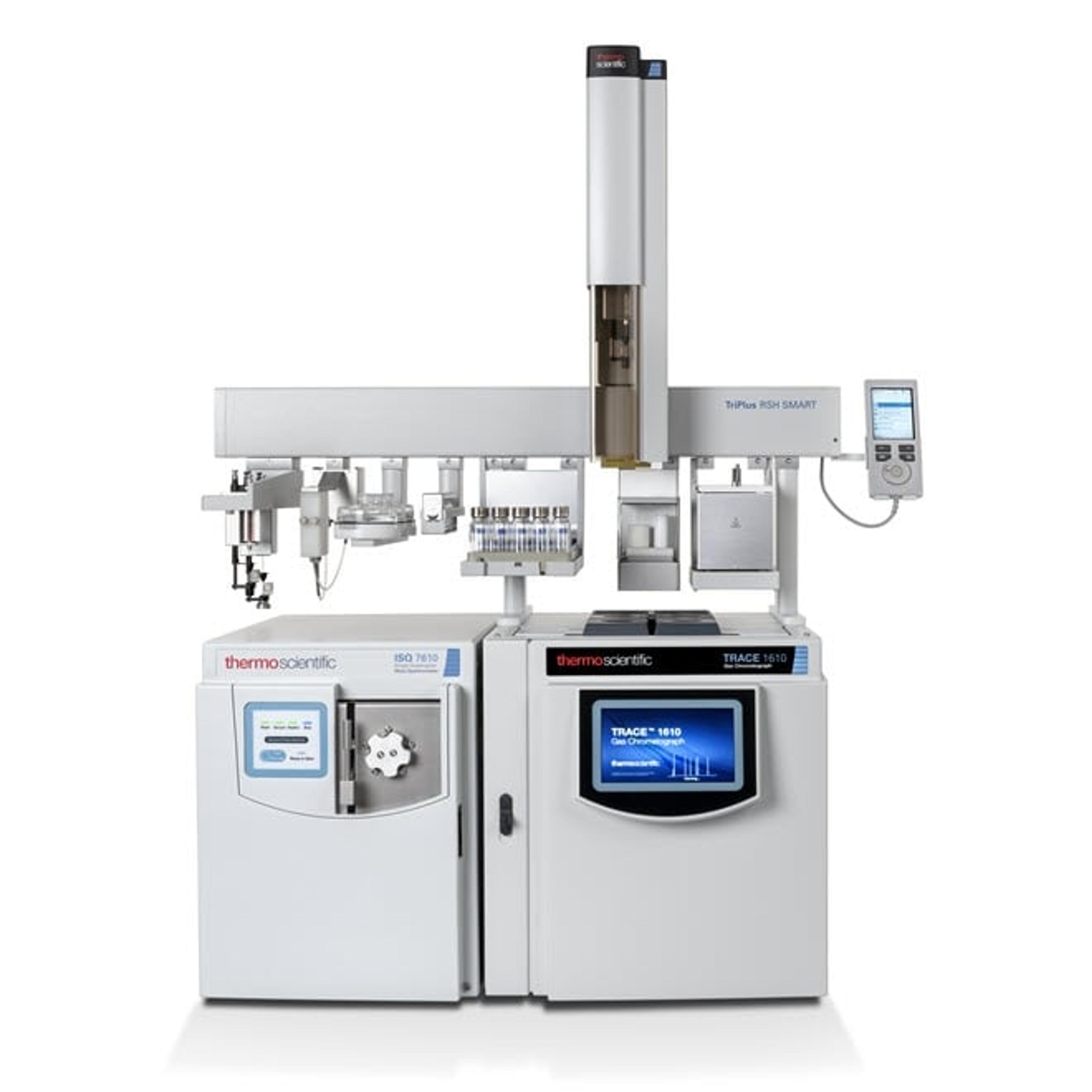
This practical guide explores how automation is helping laboratories overcome common bottlenecks across drinking water, wastewater, and environmental monitoring workflows. Through expert case studies, application notes, and technical resources, discover strategies to improve throughput, reduce manual handling, simplify regulatory compliance, and support long-term laboratory sustainability.

Key topics explored:

  • Rising water testing volumes and regulatory pressure
  • Workflow automation and productivity gain
  • Faster turnaround times without compromising compliance
  • Reduced solvent use, waste, and manual intervention
  • PFAS, VOCs, SVOCs, heavy metals, anions, and HAA analysis
  • End-to-end workflows from sample prep to data reporting
  • Sustainability and laboratory efficiency

Resource details:
Document type: SelectScience guide
Page count: 127
Edition: 2nd

Frequently asked questions

What are the biggest challenges facing water testing laboratories today?

Many water testing laboratories are managing increasing sample volumes, tighter regulatory requirements, staff shortages, and pressure to reduce turnaround times while maintaining analytical accuracy and compliance.

How can automation improve water testing workflows?

Automation can reduce manual sample preparation, minimize human error, increase throughput, support unattended operation, and improve consistency across routine water testing methods.

Which contaminants are commonly monitored in water testing laboratories?

Common targets include PFAS, volatile organic compounds (VOCs), semi-volatile organic compounds (SVOCs), inorganic anions, haloacetic acids (HAAs), pesticides, polycyclic aromatic hydrocarbons (PAHs), and toxic metals.

How can laboratories improve compliance with water quality regulations?

Modern analytical workflows combine automated sample preparation, advanced chromatography, mass spectrometry, and data management software to help laboratories meet EPA, ISO, ASTM, and EU water testing requirements.

Why is automation important for PFAS analysis?

PFAS testing often requires extremely low detection limits and careful sample handling. Automated sample preparation can improve reproducibility, reduce contamination risks, and help laboratories manage growing testing demand.

How can laboratories reduce costs in water analysis?

Laboratories can improve efficiency by automating labor-intensive workflows, reducing solvent consumption, minimizing repeat analyses, increasing instrument utilization, and streamlining data reporting processes.

Links

Tags

Environmental Monitoring and TestingEnvironmental monitoring and testing uses handheld portable analyzers, kits, spectrometers or chromatography systems for air, water, soil, food and other sample testing. Useful features of analyzers such as BOD and COD include portability, easy calibration, automation and sensitivity.  Environmental test kits for pH, water, moisture, etc, should be accurate, sensitive, reliable, fast and easy to use.Ion ChromatographyIon chromatography, also known as ion exchange chromatography, is a high-performance liquid chromatographic technique used for the separation and identification of ions or polar molecules in a sample, including proteins, nucleotides and amino acids. Equipment includes ion exchange columns, ion exclusion columns, ion chromatography systems, pumps, and detectors. Find the best ion chromatography equipment in our peer-reviewed product directory: compare products, check customer reviews and receive pricing direct from manufacturers.Preparative ChromatographyPreparative chromatography equipment is used for purification purposes, separating and collecting compounds eluted from a mixture which can then be subsequently used for further purposes. This can be done in large quantities or small. Preparative chromatography systems are usually low to medium pressure liquid chromatographs that are semi-automated. Explore a range of preparative columns and fraction collectors. Find the best preparative chromatography equipment in our peer-reviewed product directory: compare products, check customer reviews and receive pricing direct from manufacturers.Mass SpectrometryMass spectrometry (MS) is a powerful analytical technique used to identify and quantify molecules based on the mass-to-charge ratio of gas-phase ions. It provides detailed information about the structure, composition, and properties of compounds and is widely used across fields such as environmental monitoring, materials science, drug discovery and development, food and beverage testing, and wider chemical research. Key MS techniques include tandem mass spectrometry (MS/MS), liquid chromatography–mass spectrometry (LS-MS) and inductively coupled plasma (ICP-MS). Choosing from these wide range of techniques and technologies can be a daunting task, so keep up to date with scientific applications, performance expectations, and customer reviews here all in one place. Visit our product directory to receive quotes direct from the manufacturer. Environmental AnalysisEnvironmental analysis describes a variety of tests that determine the effect of chemicals, processes and particulates such as persistent organic pollutants (POPs) have on the environment.Water AnalysisAnalytical methods used to test the purity of drinking water include determining the level of contaminants abides to the level set by the Environmental Protection Agency (EPA).Drinking Water AnalysisAnalytical methods used to test the purity of drinking water include determining the level of contaminants abides to the level set by the Environmental Protection Agency (EPA).