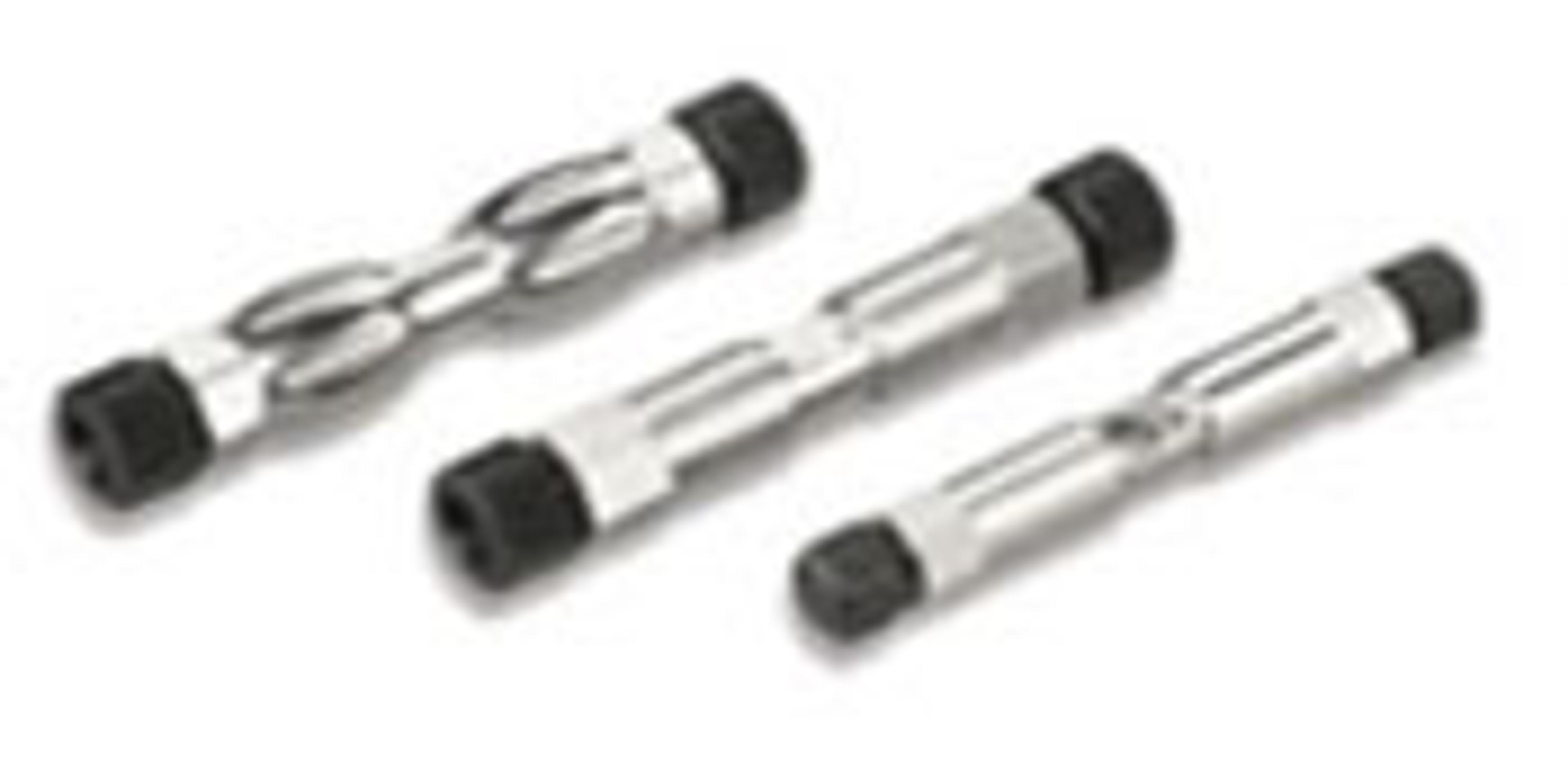
ACQUITY UPLC HSS T3 Columns for Polar Compound Retention
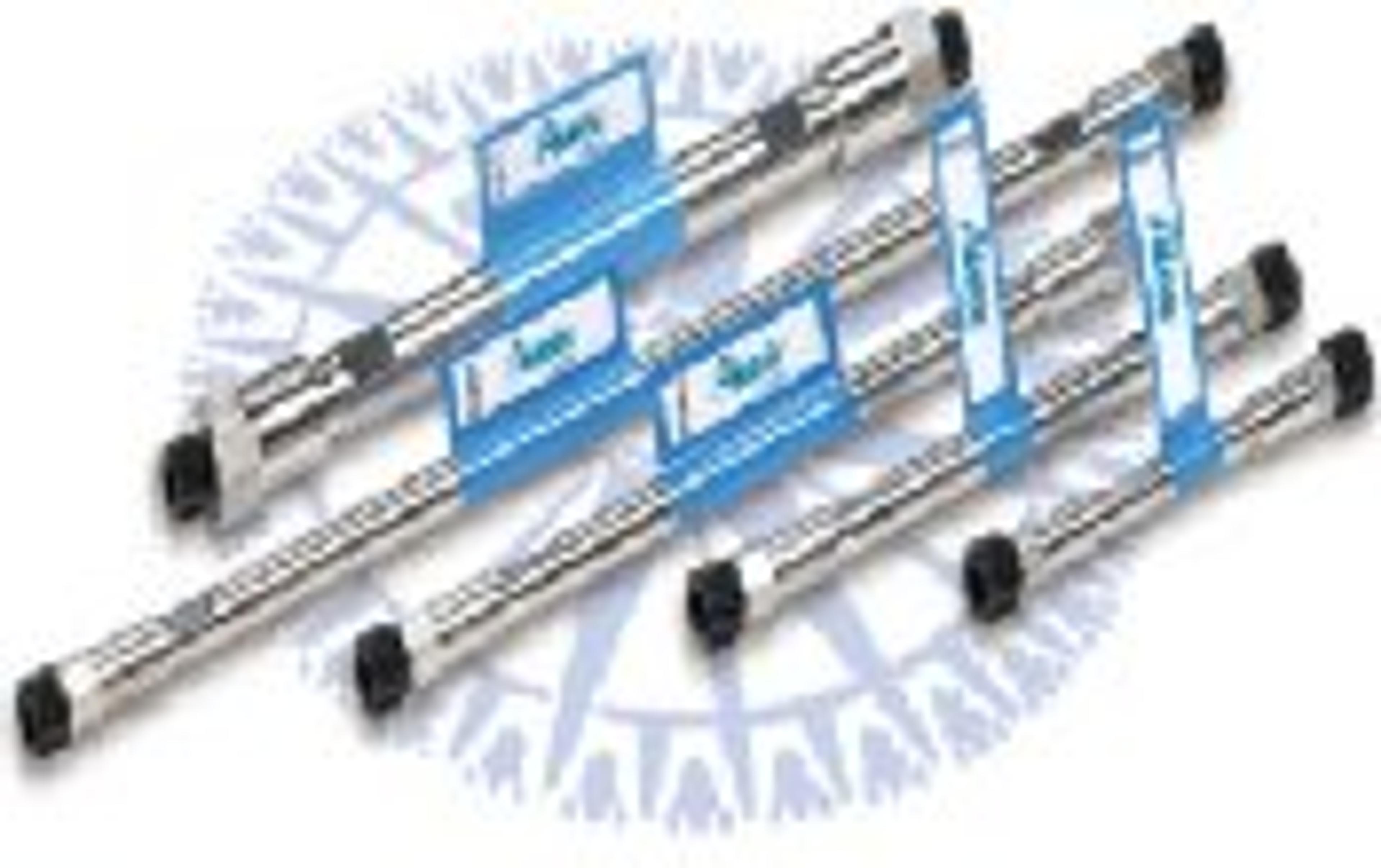
ACQUITY UPLC® HSS (High Strength Silica) T3 Columns contain the first and only 100% silica particle designed, tested and intended for use in applications up to 15000 psi/1000 bar. The ACQUITY UPLC® HSS particle is not an HPLC particle. High pore volume HPLC particles do not possess the mechanical stability necessary to withstand the high column packing and operating pressures of UPLC® separations. The first ligand chemistry in…

Place your order directly with the manufacturer.
Esay to take care, good and reliable even with harsh phases
Separation
Durable, reliable and longlisting. Even when using harsh mobile phases this can last more than 3000 injections
Review Date: 10 Feb 2023 | Waters
An excellent tool for analyzing a wide variety of molecules.
Analysis of secondary metabolites of medicinal plants
The column is very useful to analyze secondary metabolites of plants, as well as synthesis molecules, mycotoxins, among others. It is easy to create methods and mass chromatograms and spectra come out in good resolution.
Review Date: 27 Sept 2022 | Waters
Great results and easy to use
Quantitative and qualitative detection of plant secondary metabolites
The column is easy and can analyze many products, polar and non polar.
Review Date: 16 Dec 2021 | Waters
A basic column type for polar metabolites
UPLC column
One of the most used column types in our lab. We use it for polar metabolites and various specimens. High quality. Very reproducible and efficient.
Review Date: 15 Nov 2021 | Waters
One of our mostly used columns
UPLC column
Our gold standard for polar metabolites in metabolomics LC-MS analysis. We base a number of protocols in this column. Might be more expensive than the competition but is high quality.
Review Date: 15 Nov 2021 | Waters
A great product worth buying and using. Time and money saver.
Analysis of metabolites in natural products
HSS T3 columns are one of the best columns for the separation of mixtures of analytes. Working with natural products and analyzing huge mixtures of compounds is such a tough job but HSS T3 made it easy. Saving time, the separation is now easy as well as cost effective.
Review Date: 30 Oct 2020 | Waters
Truly, I can say it's great and one of the best.
Quantification of phenolics/flavonoids & theanine in medicinal plants
Great resolution and separation achieved by this HSS T3 column. I was struggling in the method development of mixtures of phenolics/flavonoids and Theanine, but after using the HSS T3 column, many of the problems of separating the standard mixture of phenolics and flavonoids were solved, with greater separation from end to end baseline with excellent repeatability. A wide range of compouds are now quantified and separated by this column. Thanks to Waters Corporation. Looking for buy a new one in the next month.
Review Date: 24 Jan 2020 | Waters
Very good product
Analysis of pesticides and biopesticides in all different matrices
The column is reliable and easy to use. normally there are no clogs or leaking issues and it is very robust
Review Date: 5 Jul 2019 | Waters
Fairly good produt for beverage analysis.
Food and beverage
Good product for amino acid sepration and sweetner analysis.
Review Date: 26 Mar 2019 | Waters
Brilliant column!
Metabolic profiling of urine samples
We love this column. It is robust, reliable and durable. It is one of our favourite standard column to do high-throughput metabolomic profiling analysis.
Review Date: 31 May 2016 | Waters
ACQUITY UPLC® HSS (High Strength Silica) T3 Columns contain the first and only 100% silica particle designed, tested and intended for use in applications up to 15000 psi/1000 bar. The ACQUITY UPLC® HSS particle is not an HPLC particle. High pore volume HPLC particles do not possess the mechanical stability necessary to withstand the high column packing and operating pressures of UPLC® separations.
The first ligand chemistry in this UPLC®-certified column family utilizes T3 bonding in order to retain and separate polar organic compounds. ACQUITY UPLC® HSS T3 columns possess the superior polar-compound retention, aqueous mobile phase compatibility and ultra-low MS bleed of Atlantis® T3 columns.
Easier Method Transfer
Since Atlantis® T3 HPLC and ACQUITY UPLC® HSS T3 columns utilize T3 bonding, LC methods can be transferred from HPLC to UPLC® separations. Because Atlantis® and HSS particles are different substrates, some method modification and/or optimization may be required. A compelling benefit of UPLC® technology is the ease and speed at which this method optimization can occur since UPLC® separations offer greater resolution in less time.
Moving from XBridge™ HPLC to ACQUITY UPLC® BEH columns is nearly seamless, as the hybrid particle substrates differ only in particle size. However, because of T3 bonding it should be straightforward to make simple adjustments to successfully transfer a separation from an Atlantis® T3 HPLC column to an ACQUITY UPLC® HSS T3 column.
Brochures

Acquity UPLC Columns Brochure
When investing in a new LC instrument, it is important to consider its capabilities to meet existingand future demand. With UPLC Technology, one can invest in the future by utilizing a single system with the capabaility to optimally run sub-2μm UPLC Columns with the ruggedness and robustness to run legacy HPLC methods. The ACQUITY UPLC® System family is an LC Technology platform that can be utilized independent of your separation needs, thus facilitating productivity and simplifying method transfer from site to site.
The Analysis of Steroid Hormones Using LC-MS/MS
This application note presents an analytically sensitive, accurate and precise measurement of corticosteroids and androgens in serum, for clinical research.
How to Accurately Quantify Aclycarnitines in Urine
In this application note, discover an analytically validated bioanalytical clinical research method for the quantification of low concentration acylcarnitines in urine.
Analysis of Busulfan in Plasma for Clinical Research
The bioavailability of busulfan varies greatly between individuals due to factors such as age, underlying diseases and drug-drug interactions. In this application note, an analytically sensitive and selective clinical research method has been developed for the analysis of plasma busulfan.
Solid Phase Extraction and Analysis of Coenzyme Q10 from Plasma Using Oasis PRiME HLB for Clinical Research
CoQ10 is a unique hydrophobic molecule that is a key component in ATP synthesis. In this application note, the efficient extraction and analysis of CoQ10 from plasma samples is detailed.
Selecting a Reversed-Phase Column for the Peptide Mapping Analysis of a Biotherapeutic Protein
A chromatographic peptide mapping method must provide adequate resolution and recovery of a broad set of peptides if it is to be used in the quality analysis of a biotherapeutic protein. In this application note, a range of reversed phase columns by Waters are analysed for their applicability to peptide mapping, demonstrating high peak capacity separations.
Multi-Dimensional Chromatography Compendium: Loop vs. Trap Injection
This white note compendium by Waters explores multi-dimensional chromatography, focusing on the differences between loop and trap injection. When new technology is introduced, new options and combinations of analysis become available, often enhancing complex analyses. This white paper explains the differences between the two methods and how resolution can be optimized for analyses.
A Novel Method of M/Z Drift Correction for OA-TOF Mass Spectrometers Based on Construction of Libraries of ‘Matrix’ Components
In this poster, a library of m/z and retention time is constructed for common components of a matrix and used to correct for m/z drift for subsequent analyses. This approach is compared with results from periodic external ‘lock mass’ correction. Orthogonal acceleration Time-of-Flight, accurate mass measurement is a well-established analytical technique. Compensation for temperature-dependent m/z drift is commonly performed by periodic measurement of internal or external reference peaks introduced using a purpose built interface.
Analysis of Plant Alkaloids Through Accurate Mass Screening and Discovery
Plant alkaloids are nitrogen containing compounds derived from plant material. They have been used for centuries for medicinal and recreational purposes. Time of flight mass spectrometry can accurately identify substance composition and allow for in depth study of chemical structures. This application note describes a study using the Waters ACQUITY UPLC I-Class to analyze plant alkaloids and create an alkaloid library for future reference.
A High-Sensitivity UPLC/MS/MS Method for the Quantification of Desmopressin in Rat Plasma
This application note describes a highly specific and sensitive methodology for the quantification of desmopressin in plasma using solid phase extraction (SPE) followed by reversed-phase UPLC® coupled to tandem quadrupole mass spectrometry. Desmopressin is a peptide containing nine amino acids, a form of the normal human hormone arginine vasopressin that reduces urine production, and is most commonly prescribed for the treatment of diabetes insipidus or nocturnal enuresis. The low circulating levels of desmopressin requires a high-sensitivity assay to accurately define its pharmacokinetics in humans, especially pediatrics. The combination of solid-phase extraction methodology, UPLC chromatography, and Xevo TQ-S mass spectrometer has facilitated the development of an assay for desmopressin with a LLOQ of 1 pg/mL in plasma.
Methodology for the Identification of Pesticide Metabolites in Complex Matrices Using UPLC-ToF/MSE and the UNIFI Scientific Information System
This application note demonstrates a workflow for Waters® Metabolite Identification Application Solution with UNIFI. Atrazine (a commercially available herbicide that is well documented in the scientific literature) and its metabolites were spiked into soil extracts and used as a case study. Atrazine is a triazine herbicide that is widely used to control weeds in a variety of crops including corn, sugar cane, and sorghum.