
How to Accurately Quantify Aclycarnitines in Urine
27 Nov 2018In this application note, discover an analytically validated bioanalytical clinical research method for the quantification of low concentration acylcarnitines in urine.
Related products
Request Quote for All Products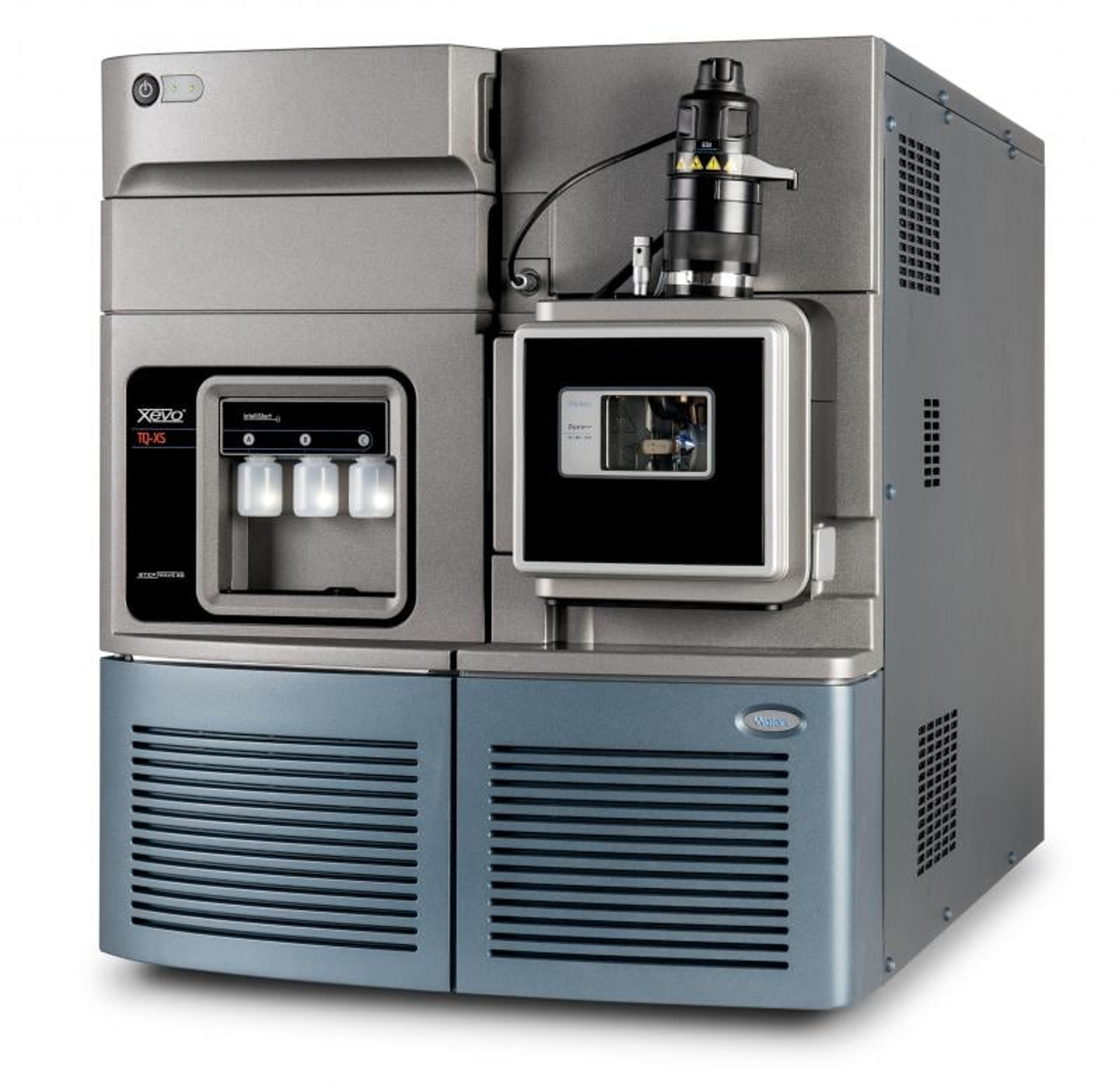
Xevo TQ-XS Triple Quadrupole Mass Spectrometer
WatersExpanding ultimate sensitivity analysis. Maximizing your compound coverage.

TargetLynx
WatersThe TargetLynx™ Application Manager automates sample data acquisition, processing and reporting for quantitative results.It incorporates a range of confirmatory checks that identify samples that fall outside user-specified or regulatory thresholds. Identify Non-compliant Samples TargetLynx rapidly identifies and flags samples where: Analytes are above a specified maximum reporting level (MRL) Analyte confirmatory ion ratios are outside specified limits One or more analyte signal-to-noise ratios are below a defined value An analyte retention time or relative retention time is outside limits An analyte concentration is below set LOD and LOQ thresholds The standard deviation of response for QC standards exceeds a defined value The blank response is too high The coefficient of determination (r2) of the calibration curve exceeds a defined value LC/MS & LC/MS/MS and GC/MS & GC/MS/MS Use TargetLynx to quantify and confirm both LC/MS & LC/MS/MS and GC/MS & GC/MS/MS data. This data may be selected ion monitoring (SIM), multiple reaction monitoring (MRM), or full scan/full spectrum. In the case of full scan/spectrum data, extracted ion chromatograms are used for quantification. Ensure Regulatory Compliance The demand by regulatory authorities for assurance of confirmation in quantitative analysis continues to increase. To ensure cost-effective compliance, TargetLynx offers software that gives you confidence in your results and eliminates time-consuming, costly manual checks.
ACQUITY UPLC HSS T3 Columns for Polar Compound Retention
WatersACQUITY UPLC® HSS (High Strength Silica) T3 Columns contain the first and only 100% silica particle designed, tested and intended for use in applications up to 15000 psi/1000 bar. The ACQUITY UPLC® HSS particle is not an HPLC particle. High pore volume HPLC particles do not possess the mechanical stability necessary to withstand the high column packing and operating pressures of UPLC® separations. The first ligand chemistry in this UPLC®-certified column family utilizes T3 bonding in order to retain and separate polar organic compounds. ACQUITY UPLC® HSS T3 columns possess the superior polar-compound retention, aqueous mobile phase compatibility and ultra-low MS bleed of Atlantis® T3 columns. Easier Method Transfer Since Atlantis® T3 HPLC and ACQUITY UPLC® HSS T3 columns utilize T3 bonding, LC methods can be transferred from HPLC to UPLC® separations. Because Atlantis® and HSS particles are different substrates, some method modification and/or optimization may be required. A compelling benefit of UPLC® technology is the ease and speed at which this method optimization can occur since UPLC® separations offer greater resolution in less time. Moving from XBridge™ HPLC to ACQUITY UPLC® BEH columns is nearly seamless, as the hybrid particle substrates differ only in particle size. However, because of T3 bonding it should be straightforward to make simple adjustments to successfully transfer a separation from an Atlantis® T3 HPLC column to an ACQUITY UPLC® HSS T3 column.