TargetLynx
The TargetLynx™ Application Manager automates sample data acquisition, processing and reporting for quantitative results.It incorporates a range of confirmatory checks that identify samples that fall outside user-specified or regulatory thresholds. Identify Non-compliant Samples TargetLynx rapidly identifies and flags samples where: Analytes are above a specified maximum reporting level (MRL) Analyte confirmatory ion rat…


The supplier does not provide quotations for this product through SelectScience. You can search for similar products in our Product Directory.
The TargetLynx™ Application Manager automates sample data acquisition, processing and reporting for quantitative results.
It incorporates a range of confirmatory checks that identify samples that fall outside user-specified or regulatory thresholds.
Identify Non-compliant Samples
TargetLynx rapidly identifies and flags samples where:
- Analytes are above a specified maximum reporting level (MRL)
- Analyte confirmatory ion ratios are outside specified limits
- One or more analyte signal-to-noise ratios are below a defined value
- An analyte retention time or relative retention time is outside limits
- An analyte concentration is below set LOD and LOQ thresholds
- The standard deviation of response for QC standards exceeds a defined value
- The blank response is too high
- The coefficient of determination (r2) of the calibration curve exceeds a defined value
LC/MS & LC/MS/MS and GC/MS & GC/MS/MS
Use TargetLynx to quantify and confirm both LC/MS & LC/MS/MS and GC/MS & GC/MS/MS data. This data may be selected ion monitoring (SIM), multiple reaction monitoring (MRM), or full scan/full spectrum. In the case of full scan/spectrum data, extracted ion chromatograms are used for quantification.
Ensure Regulatory Compliance
The demand by regulatory authorities for assurance of confirmation in quantitative analysis continues to increase. To ensure cost-effective compliance, TargetLynx offers software that gives you confidence in your results and eliminates time-consuming, costly manual checks.

Improved Multi-Analyte Method for the Underivatized Analysis of Anionic Pesticides in Food by LC-MS/MS
This application note describes the quantitative determination of an extended suite of eight anionic polar pesticides, which are not amenable to conventional reverse-phase chromatography by LC-MS/MS.
Multiresidue Analysis of Pesticides in Fruits and Vegetables Using UPLC-MS/MS
In this application note, the development of a multiresidue method for the routine determination of 190 pesticide residues in various fruit and vegetable matrices using UPLC-MS/MS is described. White grapes and green beens were selected for this application due to their relatively increased complexity, since they contain chlorophylls which are known to affect the extraction efficiency of pesticides from food matrices. A generic QuEChERS sample extraction procedure was used to extract the pesticides from the samples, followed by a rapid and high resolution UPLC separation and trace level detection of pesticides using the Xevo TQ-S micro.
A Quantitative UPLC-MS/MS Research Method for the Measurement of Paracetamol and Metabolites in Plasma
The measurement of paracetamol, also known as Acetaminophen and it's derivatives, is a valuable means of studying the effects of the drug in both animals and humans. This application note describes a sensitive, validated, UPLC-based bioanalytical method for the quantification of acetaminophen and it's five metabolites.
Discrimmination of Different Unifloral Honeys Using an Untargeted High-Definition Mass Spectrometry Metabolomic Workflow
Food fraud can result in major food safety issues. Interestingly, honey is frequently subjected to fradulent mislabelling and adulteration due to it's high value as a food commodity. Traditional methods of characterization involves complex pollen analyses, which can produce erroneous and non-specific results. This application note describes the verification of honeys from different botanical origins using UPLC-MS/MS.
How to Accurately Quantify Aclycarnitines in Urine
In this application note, discover an analytically validated bioanalytical clinical research method for the quantification of low concentration acylcarnitines in urine.
Discrimination of Different Unifloral Honeys Using an Untargeted High-Definition Mass Spectrometry Metabolomic Workflow
In this application note, the differentiation of honeys from different botanical origin is demonstrated using an untargeted metabolomics approach via UPLC -MS/MS.
LC-MS/MS Analysis of Urinary Benzodiazepines and Z-drugs via a Simplified, Mixed-Mode Sample Preparation Strategy
This application note describes a rapid and simplified solid phase extraction protocol and LC-MS/MS method for the analysis of urinary benzodiazepines and metabolites for forensics toxicology use.
Analysis of Busulfan in Plasma for Clinical Research
The bioavailability of busulfan varies greatly between individuals due to factors such as age, underlying diseases and drug-drug interactions. In this application note, an analytically sensitive and selective clinical research method has been developed for the analysis of plasma busulfan.
LC-MS/MS Analysis of Pesticide Residues in Rice and Unexpected Detection of Residues in an Organic Rice Sample
The use of pesticides in various stages of cultivation of basmati rice has increased in order to improve its production yield. A multi-residue pesticide method has been developed for the determination of pesticides in basmati rice. This application note shows the analysis of over 200 pesticides using a simple QuEChERS sample preparation procedure, followed by UltraPerformance LC® (UPLC®) couple to tandem quadrupole mass spectrometry.
A Clinical Research Method for the Analysis of Serum Testosterone and Androstenedione
This application note describes an analytically sensitive and selective clinical research method for the analysis of serum testosterone and androstenedione. Excellent method precision was achieved through the use of analytically sensitive and selective sample preparation, chromatography, and MRM mass spectrometry on the ACQUITY UPLC I-Class UPLC System and Xevo TQD. In addition, method accuracy for the analysis of testosterone has been demonstrated through evaluation of CDC HoSt samples.
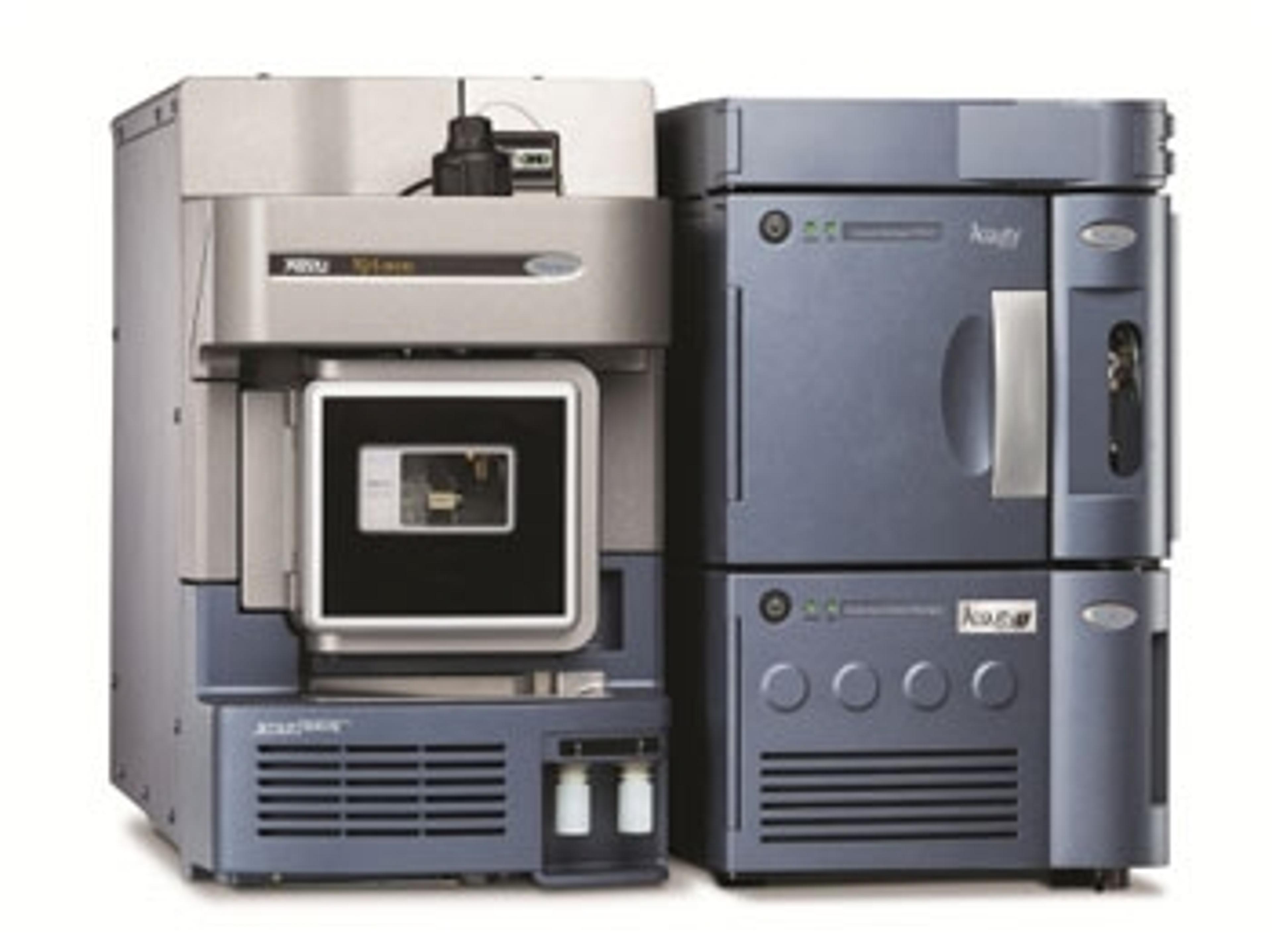
Waters Improves and Extends Tandem Quadrupole MS Portfolio with Upgraded Xevo TQ-S Micro and New Xevo TQ-S Cronos
Designed for quantitative analysis, Waters' full portfolio of TQ MS systems makes high performance and routine analysis accessible, robust, reliable

‘We Save Hours of Work Daily by Streamlining Our Clinical LC-MS Workflow’
How data management solutions are alleviating bottlenecks in the clinical laboratory and saving hours of analyst time, every day