
A Novel Method of M/Z Drift Correction for OA-TOF Mass Spectrometers Based on Construction of Libraries of ‘Matrix’ Components
2 May 2016In this poster, a library of m/z and retention time is constructed for common components of a matrix and used to correct for m/z drift for subsequent analyses. This approach is compared with results from periodic external ‘lock mass’ correction. Orthogonal acceleration Time-of-Flight, accurate mass measurement is a well-established analytical technique. Compensation for temperature-dependent m/z drift is commonly performed by periodic measurement of internal or external reference peaks introduced using a purpose built interface.
Related products
Request Quote for All Products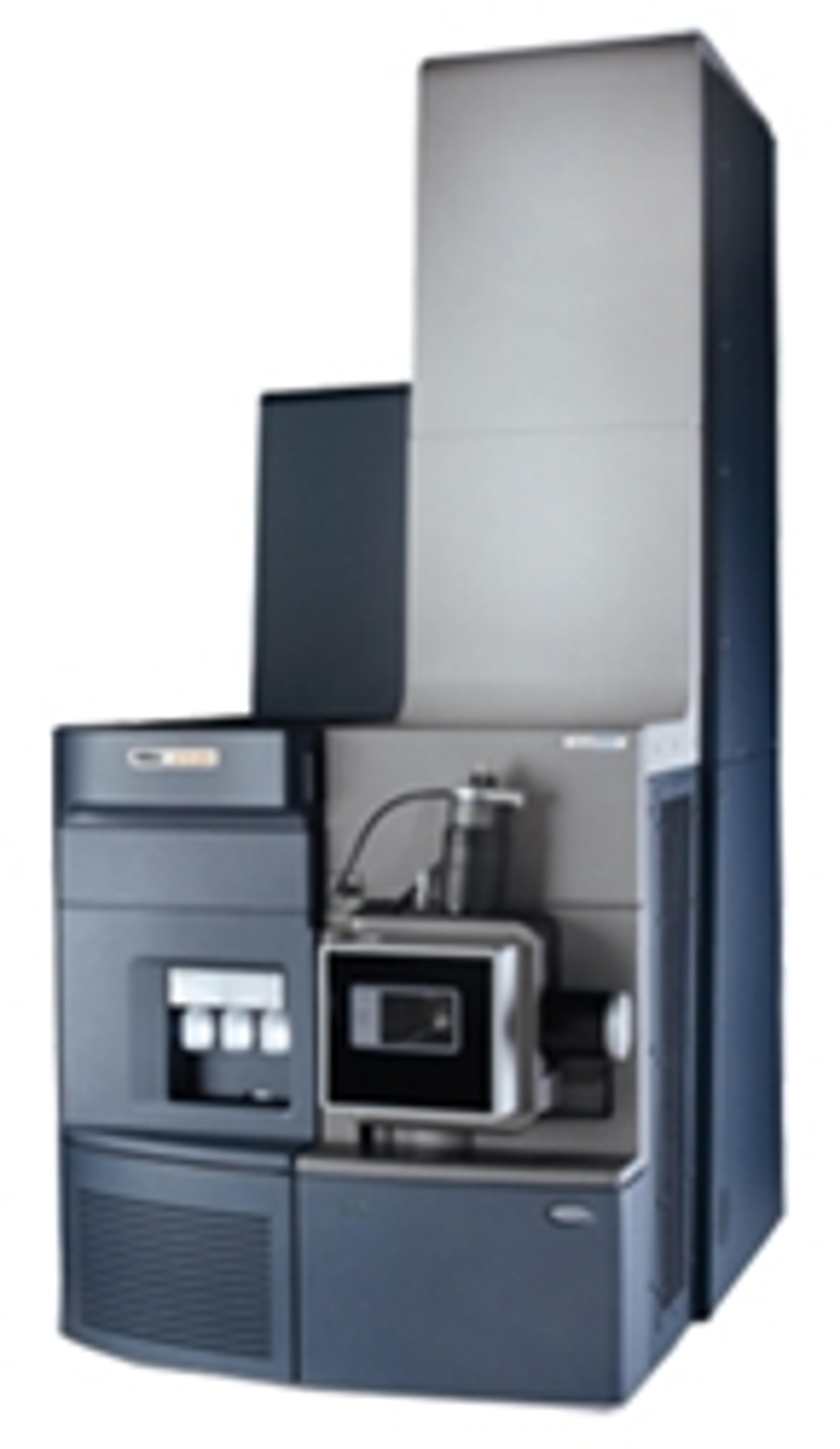
Xevo G2-XS QTof
WatersXevo G2-XS QTof - eXtreme Sensitivity, eXtraordinary Selectivity, eXceptional Solutions. For the scientist who needs to identify, quantify and confirm the broadest range of compounds in the most complex and challenging samples the Xevo G2-XS QTof provides maximum robustness with no compromise in performance, class-leading real-world quantitative sensitivity, the highest quality, most comprehensive qualitative information, flexibility to adapt to changing needs and is accessible to experts and non-experts alike.
ACQUITY UPLC HSS T3 Columns for Polar Compound Retention
WatersACQUITY UPLC® HSS (High Strength Silica) T3 Columns contain the first and only 100% silica particle designed, tested and intended for use in applications up to 15000 psi/1000 bar. The ACQUITY UPLC® HSS particle is not an HPLC particle. High pore volume HPLC particles do not possess the mechanical stability necessary to withstand the high column packing and operating pressures of UPLC® separations. The first ligand chemistry in this UPLC®-certified column family utilizes T3 bonding in order to retain and separate polar organic compounds. ACQUITY UPLC® HSS T3 columns possess the superior polar-compound retention, aqueous mobile phase compatibility and ultra-low MS bleed of Atlantis® T3 columns. Easier Method Transfer Since Atlantis® T3 HPLC and ACQUITY UPLC® HSS T3 columns utilize T3 bonding, LC methods can be transferred from HPLC to UPLC® separations. Because Atlantis® and HSS particles are different substrates, some method modification and/or optimization may be required. A compelling benefit of UPLC® technology is the ease and speed at which this method optimization can occur since UPLC® separations offer greater resolution in less time. Moving from XBridge™ HPLC to ACQUITY UPLC® BEH columns is nearly seamless, as the hybrid particle substrates differ only in particle size. However, because of T3 bonding it should be straightforward to make simple adjustments to successfully transfer a separation from an Atlantis® T3 HPLC column to an ACQUITY UPLC® HSS T3 column.