Turn connected lab data into deeper insight across chromatography workflows

Discover how connected data tools can strengthen chromatography oversight and QC decision-making

11 Aug 2026

Todd Beanlands
Science Editor
Connected lab data into deeper insight across chromatography workflows

Modern analytical laboratories generate vast amounts of chromatography data across instruments, teams, and global sites. Yet when that data remains fragmented across separate systems, it can be difficult for labs to gain the visibility needed to make confident decisions.

As regulatory expectations evolve and QC laboratories move toward lifecycle-driven control, teams need better ways to access, trend, and interpret analytical data. Manual or retrospective approaches can make it harder to detect drift, identify anomalies, monitor method performance, and maintain consistent oversight across sites and systems.

This application eBook explores how cloud-enabled informatics, data intelligence, and real-time monitoring tools can help laboratories transform connected chromatography data into actionable insight. Discover how Waters™ informatics solutions support method transfer, proactive method monitoring, secure cloud adoption, audit readiness, and more efficient QC decision-making.

What will you learn in this eBook?

This eBook examines how connected data and informatics tools can support key chromatography workflows, including:

  • Data-driven method transfer across QC laboratories
  • Comparative testing and continuous post-transfer monitoring
  • Proactive method monitoring for lifecycle control
  • Ongoing procedure performance verification and inspection readiness
  • Secure cloud adoption for regulated laboratory environments
  • Predictive lab operations using chromatography data intelligence
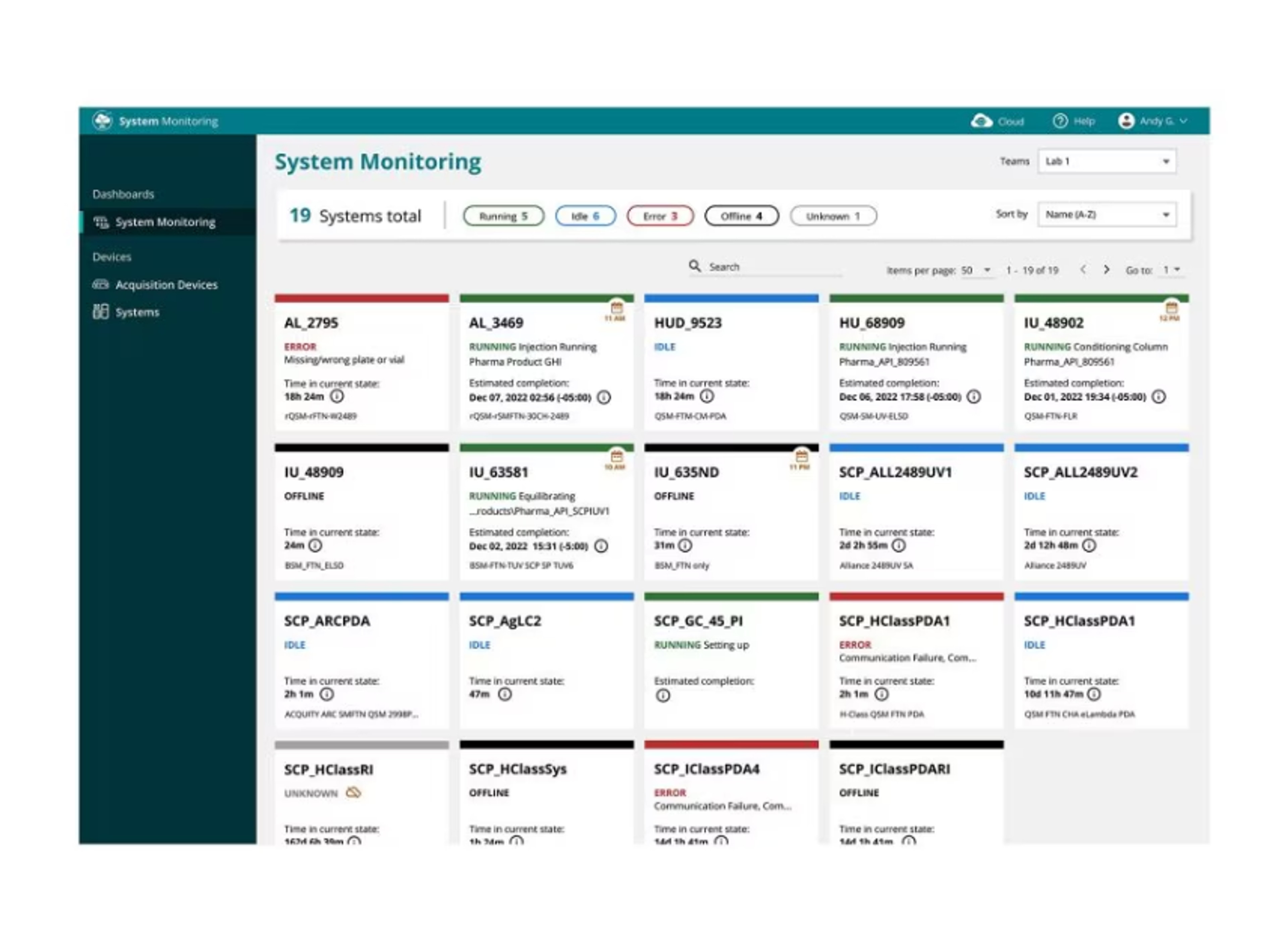
  • Real-time system monitoring across pharmaceutical QC laboratories
  • Case studies from MannKind Corporation and Chong Kun Dang

Who should download this resource?

  • QC laboratory managers
  • Analytical development scientists
  • Chromatography users
  • Pharmaceutical QC teams
  • Lab informatics managers
  • QA/QC leaders
  • Method development and validation scientists
  • Regulatory and compliance teams
  • Laboratory operations managers
  • CDS, LIMS, and laboratory IT specialists
  • Teams using or managing Empower™ Chromatography Data System workflows

Frequently asked questions

How can Waters™ informatics solutions improve chromatography data management in pharmaceutical QC laboratories?

Waters™ informatics solutions help pharmaceutical QC laboratories connect chromatography data across instruments, teams, and global sites. By enabling cloud-enabled informatics, data intelligence, and real-time monitoring, these tools support method transfer, proactive method monitoring, predictive lab operations, and real-time system monitoring, helping teams detect drift, identify anomalies, maintain lifecycle control, and make more efficient QC decisions.

What chromatography workflows are supported by the connected data and informatics tools described in this application eBook?

The eBook details support for data-driven method transfer across QC laboratories, comparative testing and continuous post-transfer monitoring, proactive method monitoring for lifecycle control, ongoing procedure performance verification, inspection readiness, secure cloud adoption for regulated environments, predictive lab operations using chromatography data intelligence, and real-time system monitoring across pharmaceutical QC laboratories.

Who should download this chromatography data intelligence and cloud informatics eBook from Waters™?

This resource is intended for QC laboratory managers, analytical development scientists, chromatography users, pharmaceutical QC teams, lab informatics managers, QA/QC leaders, method development and validation scientists, regulatory and compliance teams, laboratory operations managers, and CDS, LIMS, and laboratory IT specialists, including teams using or managing Empower™ Chromatography Data System workflows.
Links

Tags

UHPLC and HPLCHigh performance liquid chromatography (HPLC) and ultra high performance liquid chromatography (UHPLC), also known as UPLC, are analytical techniques used to separate, identify and quantitate components of complex mixtures including biological samples such as proteins and lipids as well as chemical mixtures of pesticides, drugs and oils. Both techniques are liquid chromatographic methods but differ by operating pressures (HPLC < 6000 psi < UHPLC ). Components of HPLC and UHPLC systems include columns, detectors, pumps, autosamplers and column heaters. Explore a range of UHPLC and HPLC columns for your specific sample needs including reverse phase, normal phase, ion exchange, HILIC, ion exclusion and size exclusion columns. For more specialized HPLC, explore FPLC, countercurrent LC and simulated moving bed systems. Find the best UHPLC and HPLC equipment in our peer reviewed product directory: compare products, check customer reviews and receive pricing direct from manufacturers.Ion ChromatographyIon chromatography, also known as ion exchange chromatography, is a high-performance liquid chromatographic technique used for the separation and identification of ions or polar molecules in a sample, including proteins, nucleotides and amino acids. Equipment includes ion exchange columns, ion exclusion columns, ion chromatography systems, pumps, and detectors. Find the best ion chromatography equipment in our peer-reviewed product directory: compare products, check customer reviews and receive pricing direct from manufacturers.LC-MSLC-MS (liquid chromatography-mass spectrometry) systems and equipment are used for separation and quantitative analysis of complex mixtures, combining liquid chromatography and mass spectrometry. Quantify proteins, contaminants, pesticides or screen for drug metabolites with a high level of sensitivity. LC-MS systems and equipment include reverse phase, normal phase and specialized columns integrated with various MS detectors such as time-of-flight (TOF), quadrupole, orbitrap or ion trap mass analyzers. LC-MS/MS instruments equipped with a qTOF or triple quadrupole analyzer give greater sensitivity and resolving power to your analysis. Find the best LC-MS equipment in our peer-reviewed product directory: compare products, check customer reviews and receive pricing direct from manufacturers.ChromatographyChromatography is a powerful technique used to separate and analyze components of mixtures based on their chemical properties. It is widely used in fields like biochemistry, pharmaceuticals, and environmental analysis. By exploiting differences in the interaction of substances with a stationary phase and a mobile phase, chromatography enables precise purification and quantification of compounds. Whether you're working with complex biological samples or industrial chemicals, chromatography is essential for obtaining high-quality results. Browse our peer-reviewed product directory to find the best chromatography systems, compare products, read customer reviews, and get pricing directly from manufacturers.Quality ControlQuality control is needed in all production processes. Quality control is a monitoring procedure or set of procedures that are put in place to ensure that a manufactured product adheres to a defined set of quality criteria. Laboratory ManagementLaboratory management involves overseeing the operations of a lab, ensuring compliance with safety regulations, optimizing workflows, and maintaining equipment. Efficient lab management is key to ensuring accurate results and minimizing downtime. Technologies like laboratory information management systems (LIMS) and automated lab equipment are helping labs streamline operations. Browse our peer-reviewed product directory to find the best laboratory management tools, compare products, read reviews, and get pricing directly from manufacturers.Data ManagementCloud Based SoftwareHPLC Method DevelopmentIt is important to develop and validate HPLC methods in order to identify, quantify or purify compounds of interest in the most efficient way. Effective method development ensures optimization, quality control and cost effectiveness.PharmaceuticalsPharmaceuticals are medicinal drugs used in healthcare to diagnose, prevent, cure and treat illnesses. Pharmaceuticals that are excreted after use appear in wastewater and can have detrimental effects on the environment.