Cell Growth Media and Protein Production
Reagents and Products to Label E. coli, Insect, Yeast, and Mammalian Cells

The supplier does not provide quotations for this product through SelectScience. You can search for similar products in our Product Directory.
Preparing isotope-enriched protein using cell-based expression systems is the most popular method to prepare samples for NMR analysis. By far, the most popular organism used to express labeled protein is E. coli. Mammalian, yeast, and insect cells are used for protein expression when E. coli cannot express the protein in a useable form.
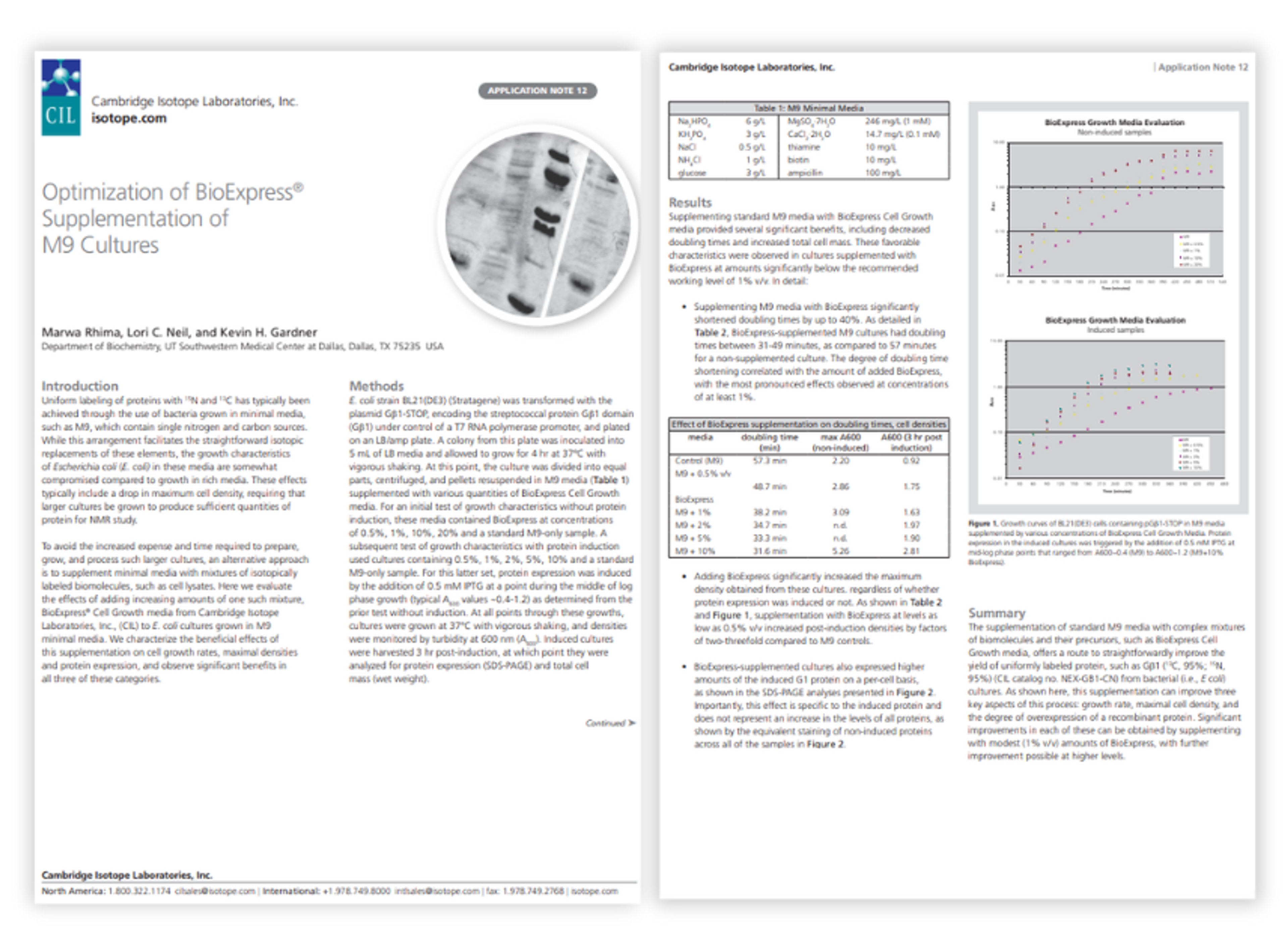
Optimization of BioExpress supplementation of M9 cultures
Uniform labeling of proteins with 15N and 13C has typically been achieved through the use of bacteria grown in minimal media, such as M9, which contain single nitrogen and carbon sources. While this arrangement facilitates the straightforward isotopic replacements of these elements, the growth characteristics of Escherichia coli (E. coli) in these media are somewhat compromised compared to growth in rich media. These effects typically include a drop in maximum cell density, requiring that larger cultures be grown to produce sufficient quantities of protein for NMR study.
To avoid the increased expense and time required to prepare, grow, and process such larger cultures, an alternative approach is to supplement minimal media with mixtures of isotopically labeled biomolecules, such as cell lysates. In this application note, Cambridge Isotope Laboratories evaluates the effects of adding increasing amounts of one such mixture, BioExpress® Cell Growth media to E. coli cultures grown in M9 minimal media.
Resource details:
- Resource type: Application note
- Page count: 4
- Read time: 6 mins
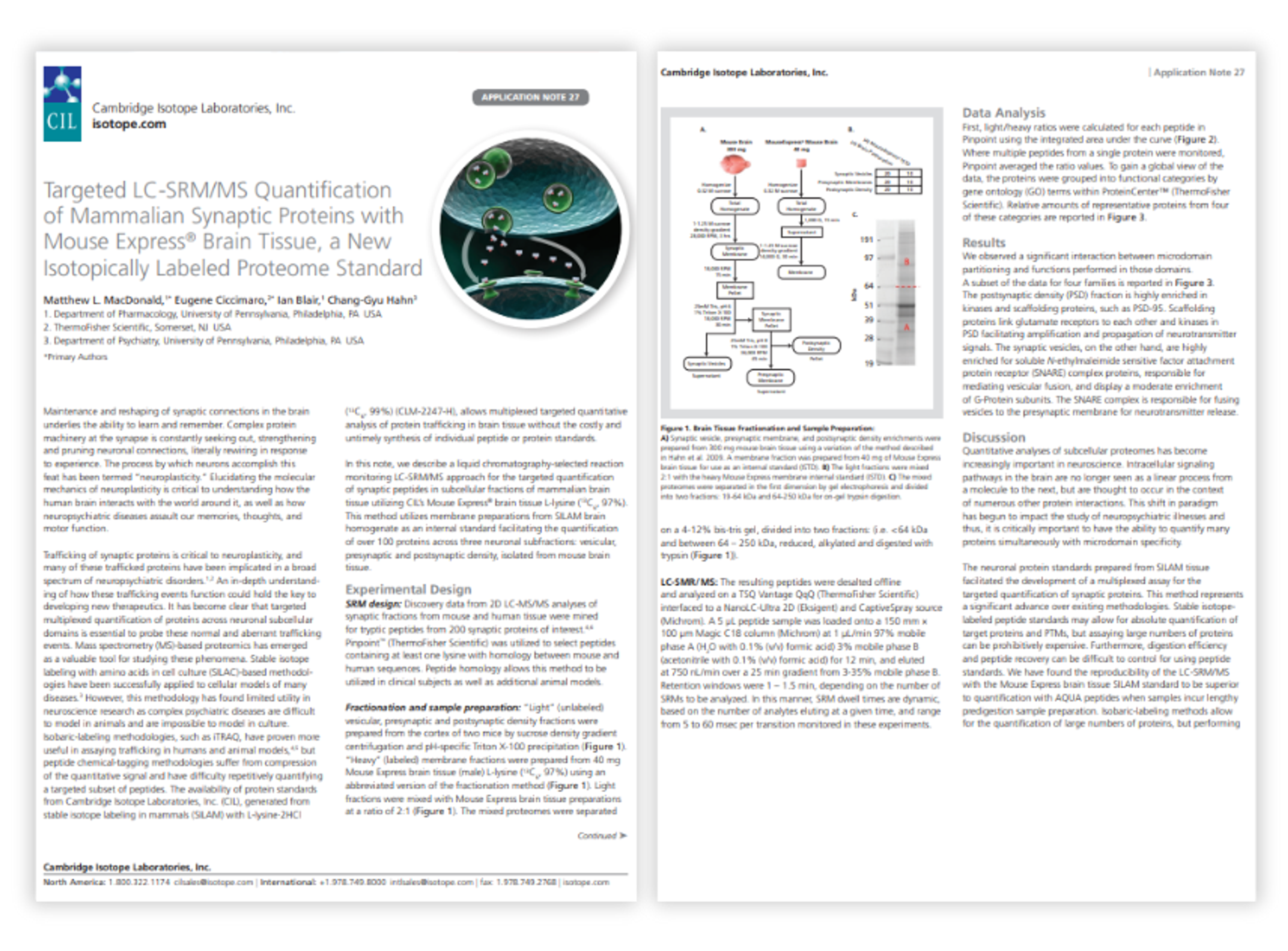
Targeted LC-SRM/MS quantification of mammalian synaptic proteins with Mouse Express Brain Tissue, a new isotopically labeled proteome standard
In this study, discover how protein standards, generated from stable isotope labeling in mammals (SILAM) with L-lysine·2HCl (13C6, 99%) (CLM-2247-H) allow for multiplexed targeted quantitative analysis of protein trafficking in brain tissue without the costly and untimely synthesis of individual peptide or protein standards.
Resource details:
- Resource type: Application note
- Page count: 4
- Read time: 6 mins
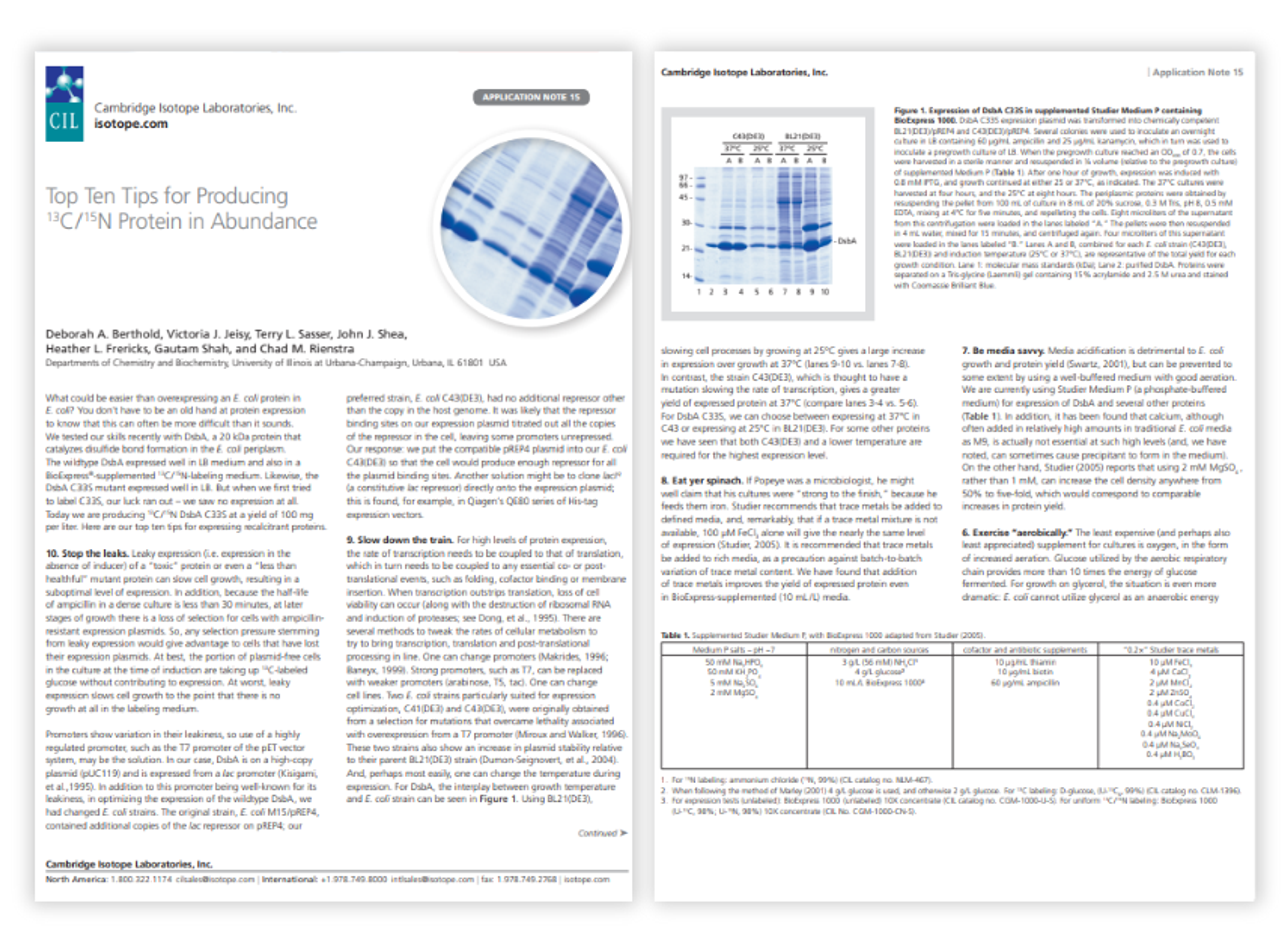
Top ten tips for producing 13C, 15N protein in abundance
What could be easier than overexpressing an E. coli protein in E. coli? You don’t have to be an old hand at protein expression to know that this can often be more difficult than it sounds. Cambridge Isotope Laboratories (CIL) tested its skills recently with DsbA, a 20 kDa protein that catalyzes disulfide bond formation in the E. coli periplasm. In this application note, find top ten tips for expressing recalcitrant proteins.
Resource details:
- Resource type: Application note
- Page count: 4
- Read time: 6 mins
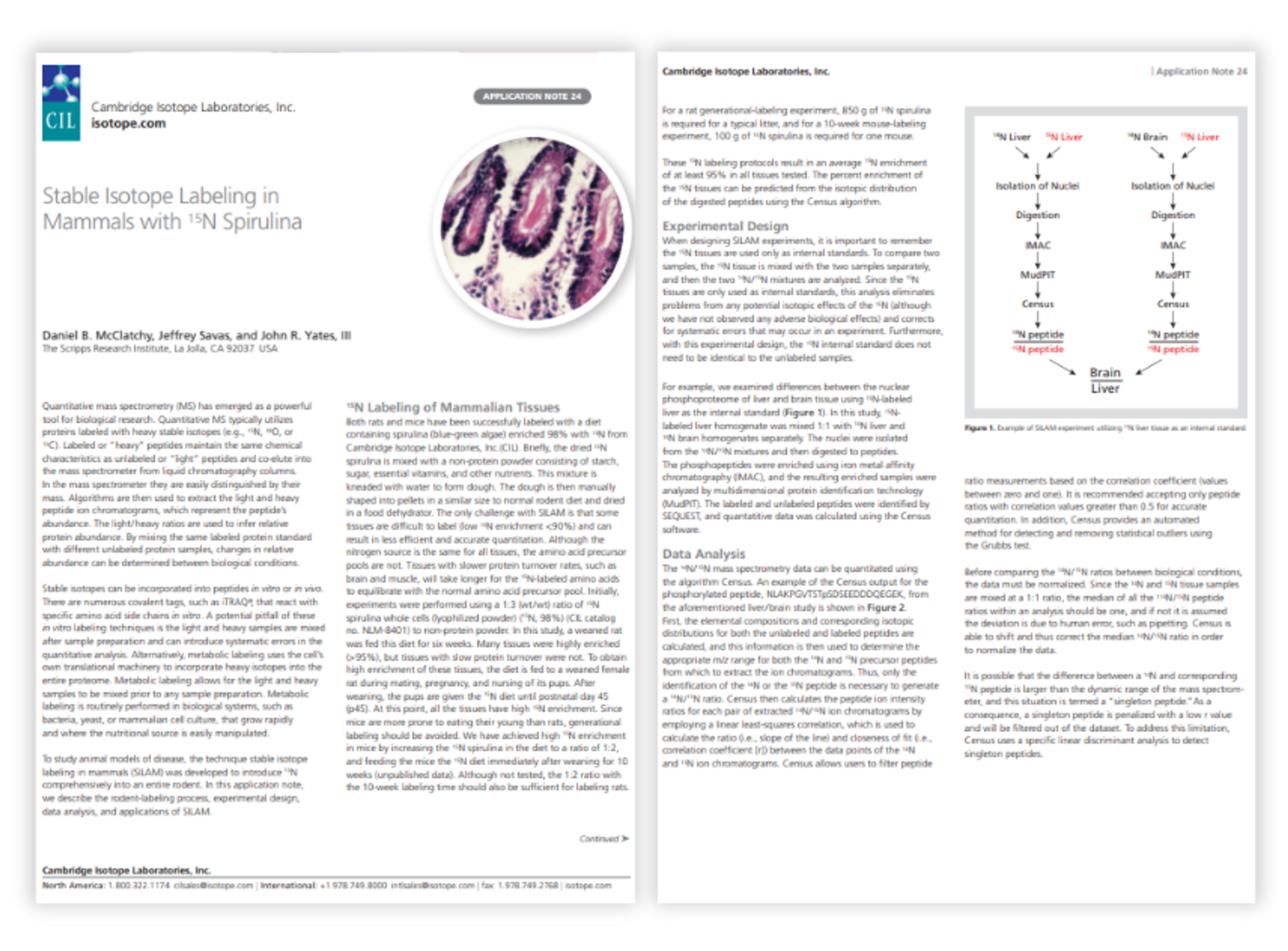
Stable isotope labeling in mammals with 15N spirulina
To study animal models of disease, the SILAM (stable isotope labeling in mammals) technique was developed to introduce 15N comprehensively into an entire rodent. This application note from Cambridge Isotope Laboratories describes the rodent-labeling process, experimental design, data analysis and applications of SILAM.
Resource details:
- Resource type: Application note
- Page count: 4
- Read time: 6 mins