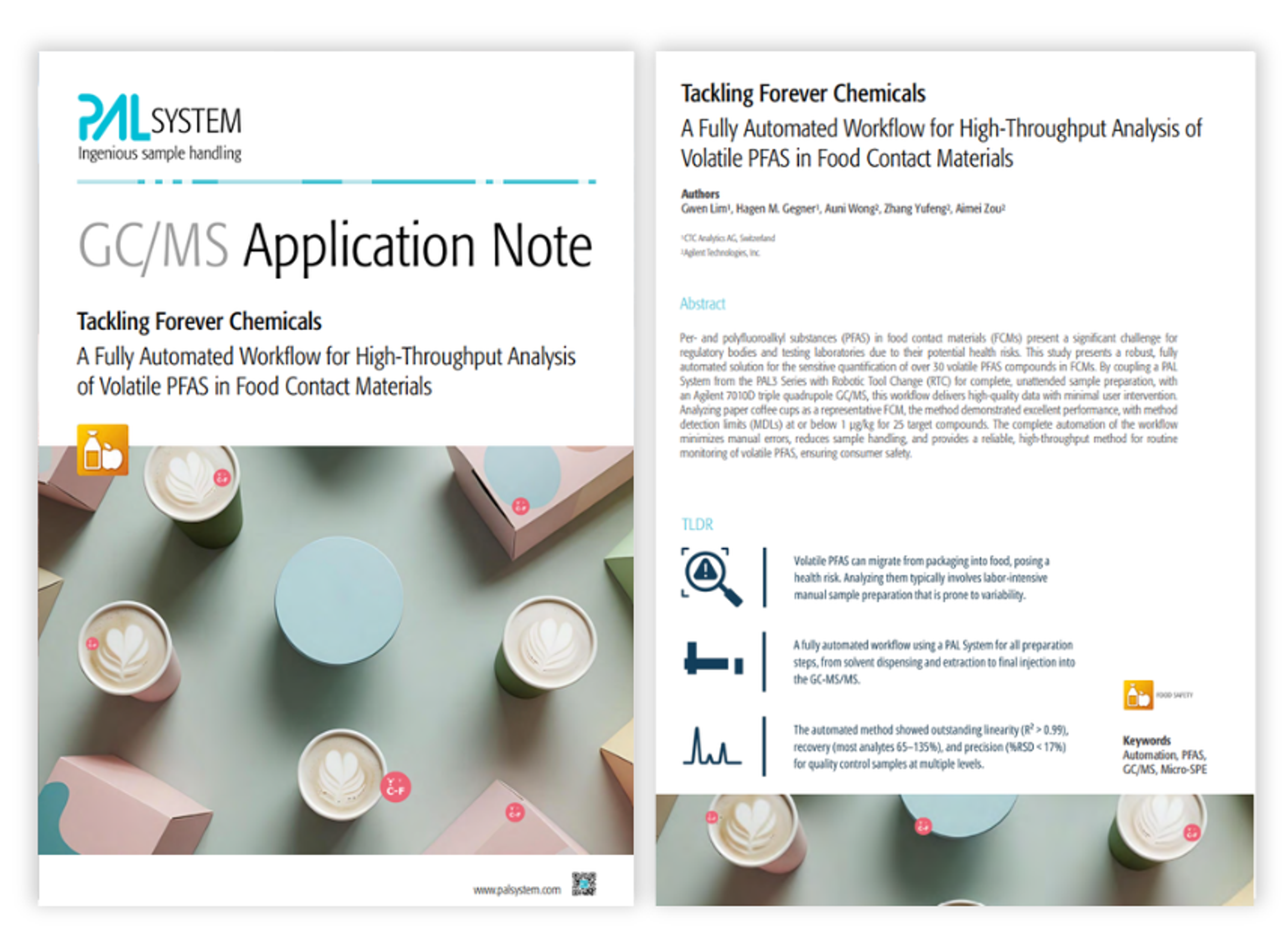
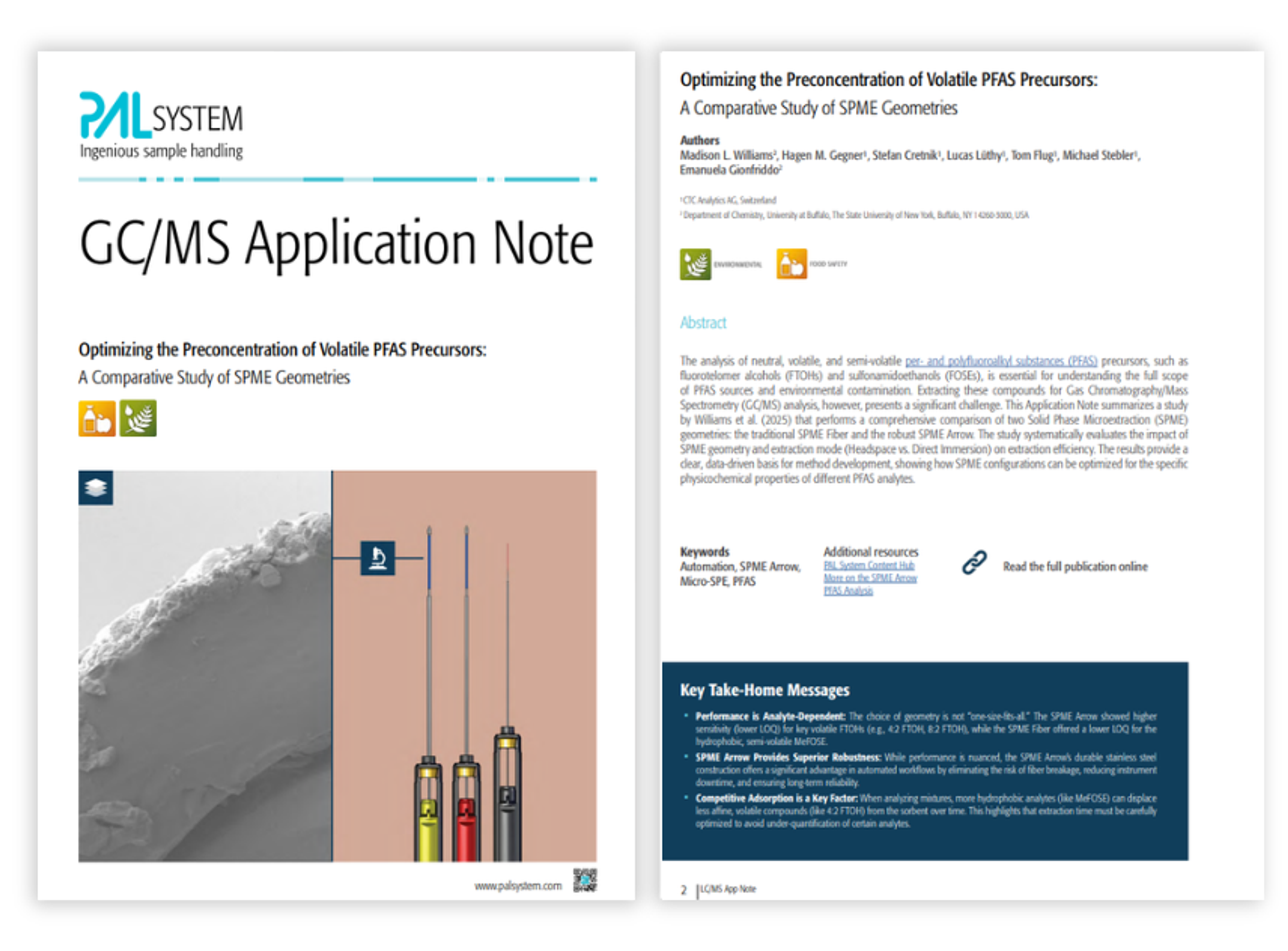
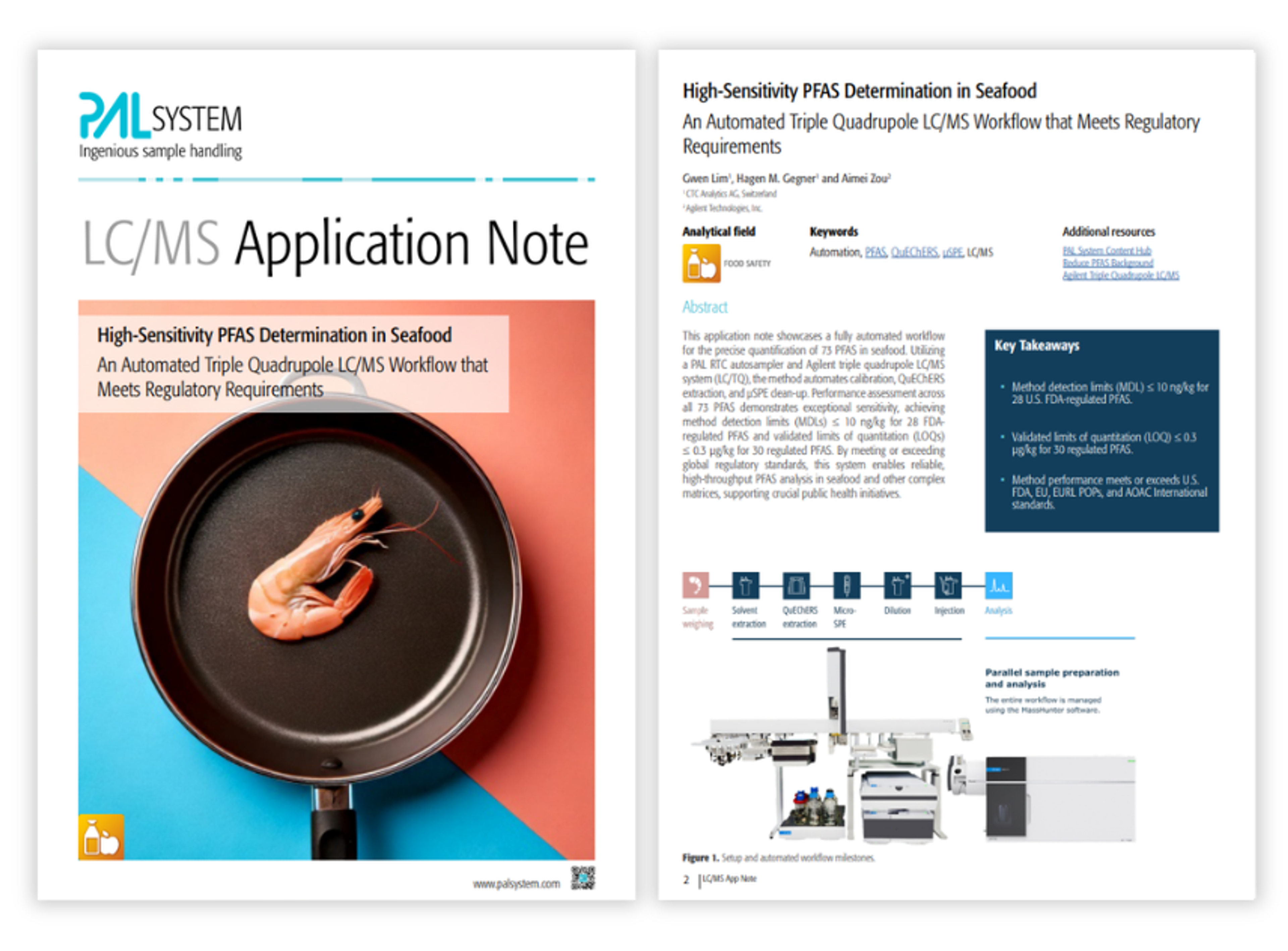
Meet the automated system mastering complex PFAS matrices
Discover how the PAL System supports reliable PFAS analysis, from environmental testing to clinical and life science research
4 Sept 2026
Per- and polyfluoroalkyl substances, or PFAS, have become a major focus for environmental monitoring and public health research. As understanding of their risks grows, so does the need for reliable methods that can detect these persistent chemicals at trace levels across an expanding range of samples.

Dr. Hagen Gegner, Scientific Communications & Project Specialist at CTC Analytics AG
Laboratories are no longer looking only at relatively simple environmental samples such as drinking water. They are also analyzing PFAS in food contact materials, cosmetics, blood plasma, and tissue. Each matrix brings its own chemistry, introduces potential sources of contamination, and can distort results before the sample reaches the mass spectrometer.
According to Dr. Hagen Gegner, Scientific Communications & Project Specialist at CTC Analytics AG, this shift is changing what laboratories need from their sample preparation workflows. Speaking with SelectScience®, he explains how automation can help build cleaner, more reproducible, and more scalable methods.
How complex sample matrices challenge PFAS analysis
In PFAS analysis, the sample matrix can be just as important as the target compound. A drinking water sample presents very different challenges from mascara, food contact packaging, or blood plasma. Cosmetics may contain waxes, pigments, and oils; biological samples may contain proteins and lipids; and packaging can introduce complex polymers.
Across these sample types, one of the main analytical challenges is co-extraction. When PFAS are extracted, background matrix components are often pulled out at the same time. "These co-extracted molecules compete for available charge during the ionization process, effectively crowding out the trace levels of PFAS before they even enter the mass spectrometer,” explains Gegner. “This results in severe ion suppression—or occasionally enhancement—which changes the analytical signal and skews the final results.”
Background PFAS contamination is another major concern, particularly given the parts-per-trillion levels at which these compounds are often monitored. Contamination can be introduced at any stage, from sample collection through to analysis, and may originate from sampling equipment, protective equipment, containers, consumables, reagents or even the analytical instruments themselves. This can lead to false positives, inflated measurements or elevated baselines.
Losses can also occur during routine preparation. Filter membranes or syringe filters can retain PFAS, leading to underestimated concentrations. Storage can introduce similar risks. “Once you’ve prepared something, if it sits waiting in the autosampler tray, you may have a combination of chemical adhesion and micro-evaporation,” says Gegner.
How automation supports reliable PFAS analysis
To counter these variables, robust quality control remains essential. Blanks, quality control samples, and isotope-labeled internal standards help laboratories detect contamination, correct for matrix effects and validate recovery. But as PFAS testing demand grows, Gegner argues that laboratories also need workflows that can scale without simply adding more benches, more analysts, and more manual steps.
This is where automation, and a robotic platform like the PAL System, can help.
The PAL System addresses these challenges by combining automated sample preparation and direct sample injection into a single workflow. While it can operate as a standalone workstation, it delivers its greatest value when fully integrated into the analytical setup.
Dr. Hagen Gegner Scientific Communications & Project Specialist, CTC Analytics AG
In this configuration, the system can run in a ‘prep-ahead’ mode. Rather than preparing samples in large manual batches, the PAL System prepares the next sample while the LC-MS or GC-MS method is still running. Once the analytical run is complete, the next sample is ready for injection.
This reduces mass spectrometer idle time and ensures that each sample experiences the same preparation timeline, reducing the chance of differences emerging from sample degradation pre-analysis.
The system is also highly modular. The same robotic platform can switch from micro-solid phase extraction (Micro-SPE) cartridges for ionic PFAS to solid phase micro extraction (SPME) Arrows or Fibers for volatile and neutral PFAS. Because these workflows are governed by software scripts, methods developed at one site can be shared more easily with other laboratories running similar setups. “Just like that, you have a ring trial, and you can scale your capacity quite easily,” says Gegner.
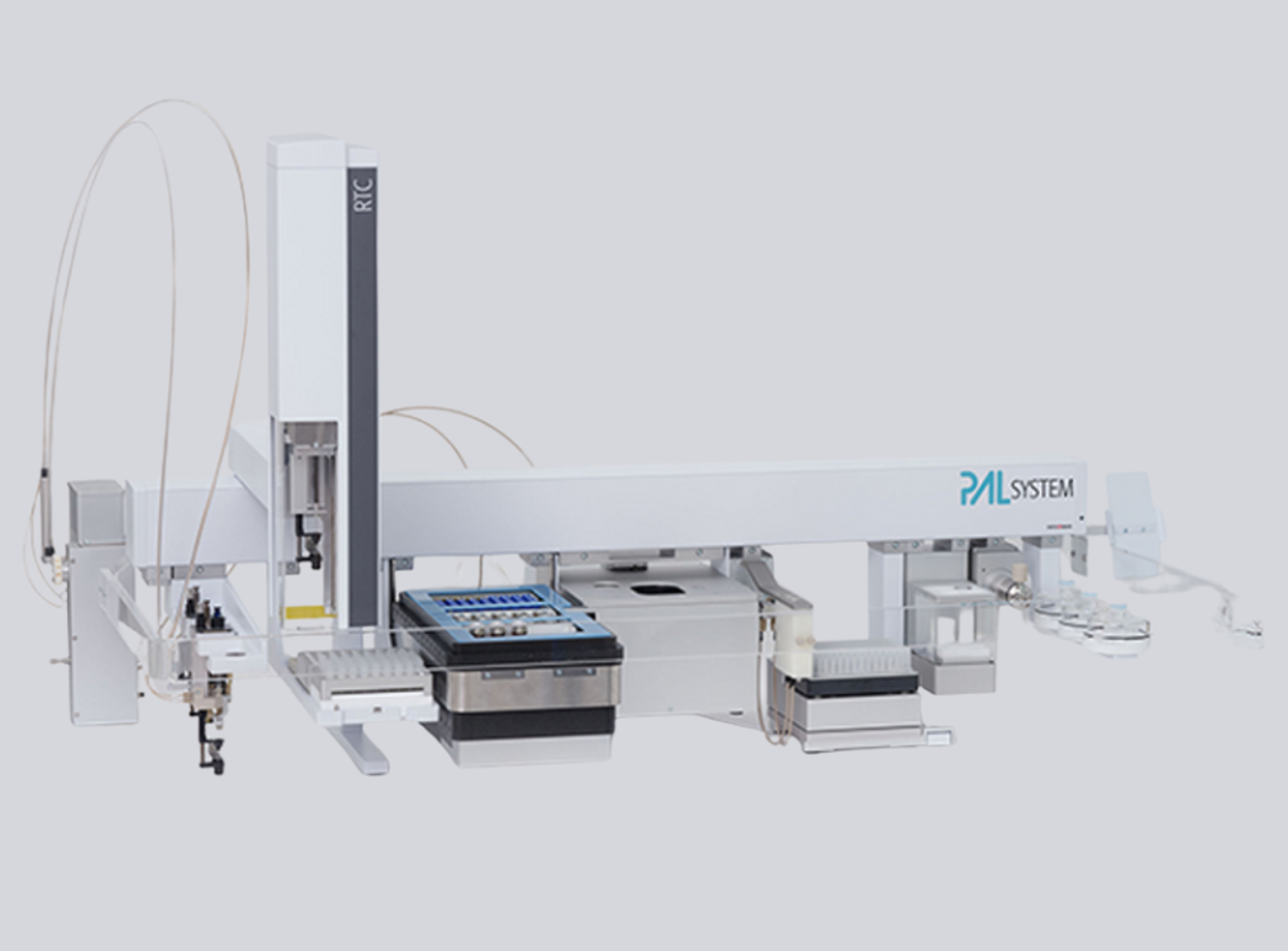
To reduce the risk of background contamination, the PAL System can be configured with PFAS-ready sample-contact components and consumables, including tubing, sample loops, filters, injection syringes, and vials.
The benefits of micro-SPE for PFAS sample preparation
Another way automated workflows can improve PFAS sample preparation is through micro-SPE, a miniaturized version of traditional solid phase extraction, such as dispersive SPE. Instead of relying on larger, more manual extraction formats, micro-SPE uses small sorbent-filled cartridges that can be handled directly by the robotic system to clean up the matrix, concentrate target analytes or perform filtration.
For PFAS analysis, this miniaturized setup can be used with weak anion exchange (WAX) cartridges to selectively capture ionic PFAS. “It traps the target ionic PFAS on the sorbent bed, while problematic matrix interferences pass through to waste,” explains Gegner.
Since the process is automated and online, the isolated sample is then injected directly into the analytical instrument, avoiding some of the risks associated with evaporation. “You bypass evaporation to dryness, where you may lose some PFAS, for example neutral or volatile compounds,” says Gegner.
Compared with traditional dispersive solid phase extraction, micro-SPE uses smaller volumes, reduces solvent consumption, and generates less waste. But according to Gegner, the real power of the approach is its flexibility. By changing the cartridge chemistry, the same robotic platform can be adapted for very different applications.
“If an assay does not require a specialized weak anion exchange cartridge, you can switch to a cartridge for rapid sample filtration,” he explains. “You can combine Quick, Easy, Cheap, Effective, Rugged and Safe (QuEChERS) extractions, popular in food safety, with micro-SPE clean-up transforming a specialized environmental PFAS platform into a multi-residue pesticide clean-up system.”
The same principle applies beyond environmental and food safety testing. By switching to a different sorbent, such as a hydrophilic-lipophilic balanced cartridge, the setup can be adapted for clinical workflows, including steroid analysis in blood plasma. “The exact same robotic setup can provide data across environmental, food safety, life science, and clinical applications,” says Gegner.
Why PFAS testing is moving towards multi-platform analysis
Looking ahead, Gegner sees PFAS analysis moving towards broader, multi-platform screening. Targeted LC-MS methods will remain essential for compliance, particularly where laboratories need to quantify defined lists of regulated PFAS. But he argues that this approach captures only part of the picture.
“Traditional targeted LC-MS methods remain the compliance backbone,” he says. “But if you are looking at a list of 20 to 50 compounds, the vast majority of the known PFAS universe remains unseen.”
To close that gap, he expects laboratories to adopt more hybrid workflows, combining targeted methods with high-resolution untargeted screening and broader measurements such as extractable organic fluorine and total fluorine. Together, these approaches can reveal not only the regulated compounds in a sample, but also the wider burden of fluorinated chemistry that targeted methods may miss.
He also points to the limits of relying too heavily on LC-MS alone. Some volatile and neutral precursors, such as fluorotelomer alcohols (FTOHs) or perfluorooctanesulfonamides (FOSAs), may be missed by standard LC methods, despite their ability to transform in the environment into terminal PFAS such as PFOA (perfluorooctanoic acid) and PFOS (perfluorooctane sulfonate), respectively. “We need untargeted methods and multiple instrumental setups to cover the different PFAS classes,” he says.
This broader view is particularly important in clinical and biological research, where PFAS exposure is rarely about a single compound acting in isolation. “When we analyze blood, we find all kinds of PFAS inside,” he says. “It is not just PFAS causing unfavorable changes to our biology, it is a mixture.”
Rather than focusing only on individual compounds such as PFOA and PFOS, researchers need to understand exposure as a pattern. Which compounds are present? How do those patterns differ between samples? And how might combinations of PFAS influence biological risk?
Meeting that challenge, Gegner reiterates, will require laboratories to automate and standardize more of the workflow, while keeping methods flexible enough to adapt as testing requirements evolve.
“For me, this all comes down to unifying the front end,” he concludes. “That is how these analyses become more traceable, more shareable, and more robust.”
Discover additional insights from Dr. Tiantian Li, Product Manager of LC-MS, CTC Analytics, in this exclusive video interview on the role of automation and the PAL System in reliable PFAS sample preparation.
Related products
Request Quote for All Products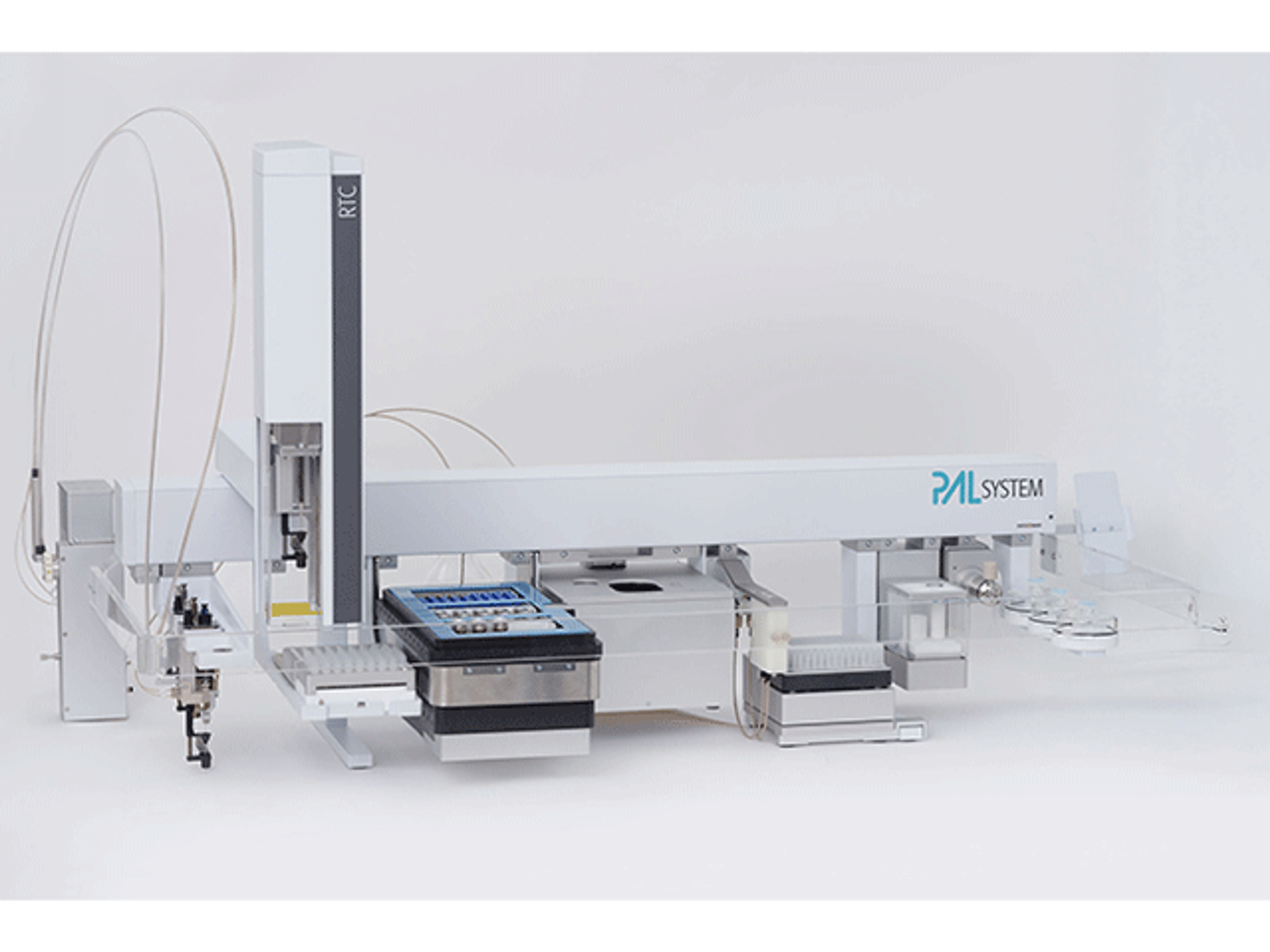
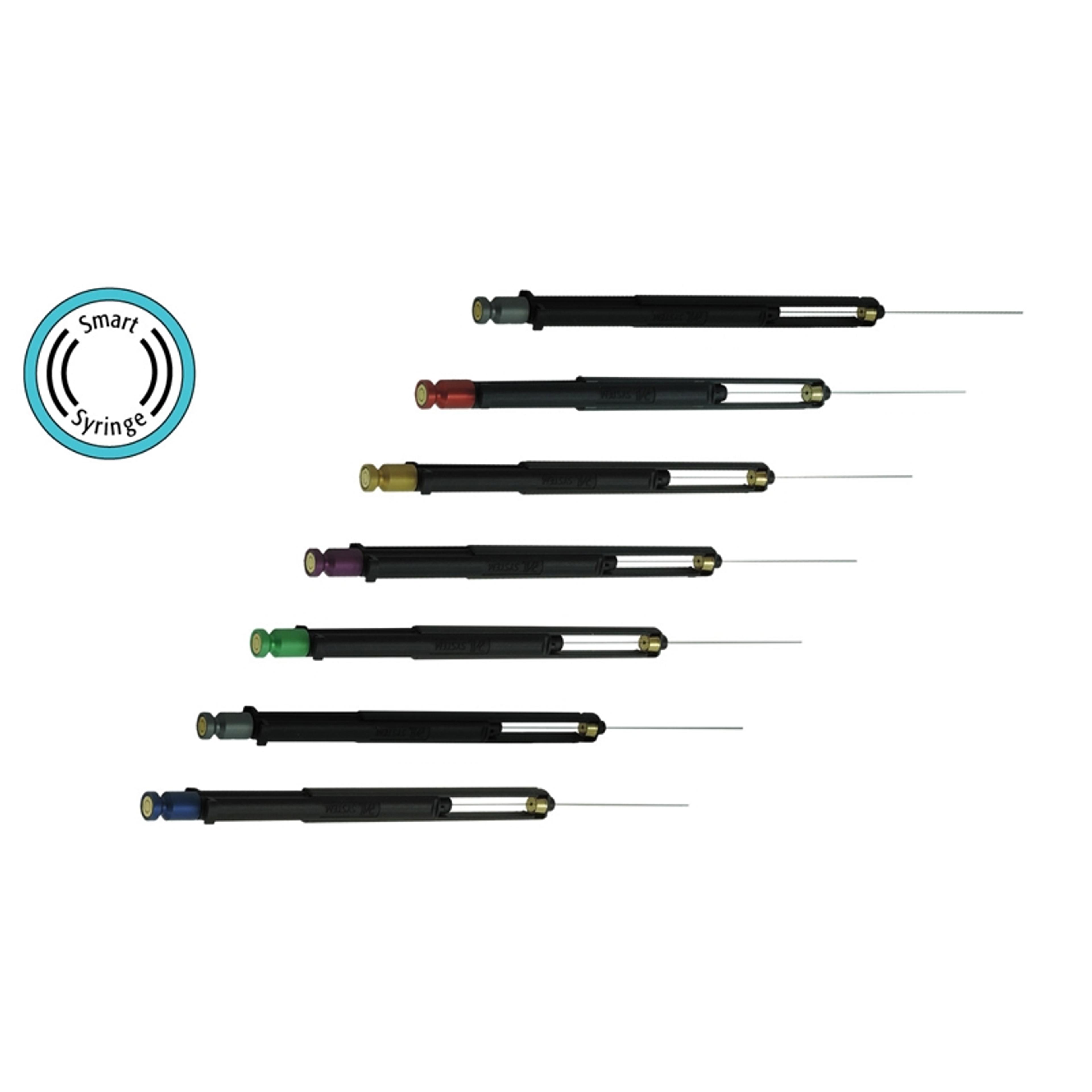
PAL Smart SPME Fiber
PAL SystemSPME is a true solventless and green analytical technique and a very effective way of automated sample preparation. Their excellent extraction properties have been proven for many important applications. PAL SPME fibers have been developed and optimized for automation and featuring excellent extraction properties combined with smart handling and operational safety.
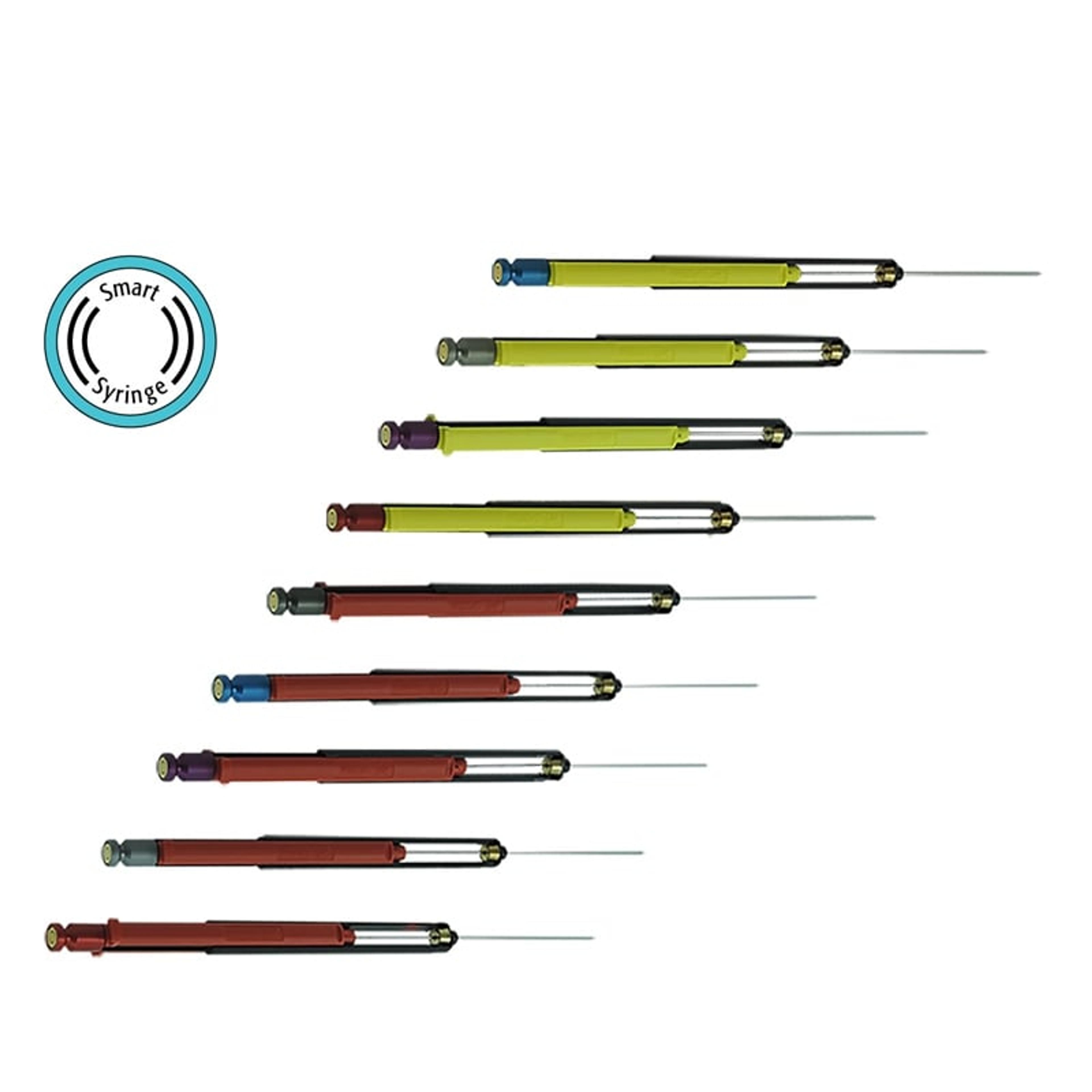
PAL Smart SPME Arrow
PAL SystemThe PAL smart SPME Arrow is a new patented technology for micro-extraction combining trace level sensitivity with high mechanical robustness.
Links
Tags
Frequently asked questions
Show frequently asked questions
How do complex sample matrices like cosmetics, food packaging, and blood plasma affect PFAS analysis by mass spectrometry?
Complex matrices introduce waxes, pigments, oils, proteins, lipids, and polymers that co-extract with PFAS. These background components compete with trace-level PFAS during ionization in the mass spectrometer, causing ion suppression or enhancement. The result can be skewed signals, distorted quantification, and reduced reliability of PFAS measurements across diverse environmental, food, cosmetic, and clinical samples.
How does the PAL System automate PFAS sample preparation to improve data quality and laboratory throughput?
The PAL System combines automated sample preparation and direct LC-MS or GC-MS injection in a single workflow. Operating in prep-ahead mode, it prepares the next PFAS sample while the current run is ongoing, minimizing mass spectrometer idle time. Automation standardizes timelines, reduces contamination and degradation risks, and enables scalable, shareable PFAS methods across laboratories using modular Micro-SPE, SPME Arrows, and Fibers.
What are the advantages of micro-SPE and multi-platform analysis for comprehensive PFAS monitoring?
Micro-SPE with weak anion exchange cartridges selectively traps ionic PFAS, reduces solvent use, avoids evaporation losses, and allows direct online injection. By switching sorbents, the same robotic platform supports environmental PFAS, pesticide, and clinical steroid workflows. Combined with targeted LC-MS, untargeted high-resolution screening, and total fluorine measurements, multi-platform analysis captures regulated PFAS and broader fluorinated chemistries, including volatile precursors like FTOHs and FOSAs.