Drug Discovery & Development Products & Reviews

25

Through extensive research, experimentation, and clinical trials, experts in the field of drug discovery and development identify promising biopharmaceutical or pharmaceutical drug candidates, optimize their efficacy and safety profiles, and navigate regulatory processes for eventual market approval. From innovative therapies to groundbreaking treatments, this dynamic scientific field plays a pivotal role in revolutionizing medicine and saving lives.

Product Filter

Drug Discovery & Development
Browse by Techniques
Explore by Company

Ratings

Search

Selected Filters:


NanoDrop Ultra FL

Thermo Fisher Scientific

NanoDrop Ultra FL integrates both absorbance and fluorescence measurement capabilities on a single pedestal. This model enhances sensitivity for low-concentration samples, detecting down to 0.1 ng/µL dsDNA, and provides a complete analysis solution with advanced contaminant detection and sample integrity alerts.

0.0/5.0
|0 Reviews

NanoDrop UltraC FL

Thermo Fisher Scientific

NanoDrop UltraC FL features pedestal and cuvette absorbance, along with pedestal fluorescence capabilities. It delivers high sensitivity and specificity, optimal for various applications requiring detailed analysis of nucleic acid and protein samples, while ensuring seamless integration with lab workflows and compliance requirements.

0.0/5.0
|0 Reviews


QX700™ HT Droplet Digital™ PCR System

Bio-Rad

The QX700 HT Droplet Digital PCR System enables and automates 7-color multiplexing for up to 384 samples per run, providing clear discrimination of multiple targets. The system includes the QX700 HT Droplet Digital PCR System instrument, QX700 ddPCR™ System Analysis Software, and QX700 ddPCR System Control Software.

0.0/5.0
|0 Reviews


SPATIAL

ariadne.ai

An intuitive browser-based tool for spatial omics data analysis. Simple to use with datasets created by any microscope, SPATIAL features best-in-class image alignment, cell and tissue segmentation.

0.0/5.0
|0 Reviews

Biotinylated Human VEGF165 Protein, His,Avitag™

ACROBiosystems

Biotinylated Human VEGF165, His,Avitag(VE5-H82Q0) is expressed from human 293 cells (HEK293). It carries a polyhistidine tag at the N-terminus, followed by an Avi tag (Avitag™), and has a calculated MW of 22.4 kDa (monomer). The protein migrates as 25-33 kDa (monomer) under reducing (R) condition, and 42-55 kDa (homodimer) under non-reducing (NR) condition (SDS-PAGE) due to glycosylation.

0.0/5.0
|0 Reviews


AVENIO Edge System

Roche

As part of Roche’s NGS Automation solutions, AVENIO Edge System is a fully automated system for library preparation, target enrichment, pooling, normalization, and quantification. AVENIO Edge System is designed to simplify the complexity of automation and optimize lab resources, providing the freedom to walk away and work away, with confidence and trust.

0.0/5.0
|0 Reviews

RC 2 Lite

IKA

Compact recirculating chiller with powerful 400 W cooling capacity, designed for simple cooling tasks down to -10 °C.

0.0/5.0
|0 Reviews

NanoDrop UltraC

Thermo Fisher Scientific

NanoDrop UltraC combines pedestal and cuvette absorbance measurements, expanding its versatility for various sample types. It offers high sensitivity and reliability for both concentrated and dilute samples, making it ideal for comprehensive analytical needs in research and production environments.

0.0/5.0
|0 Reviews

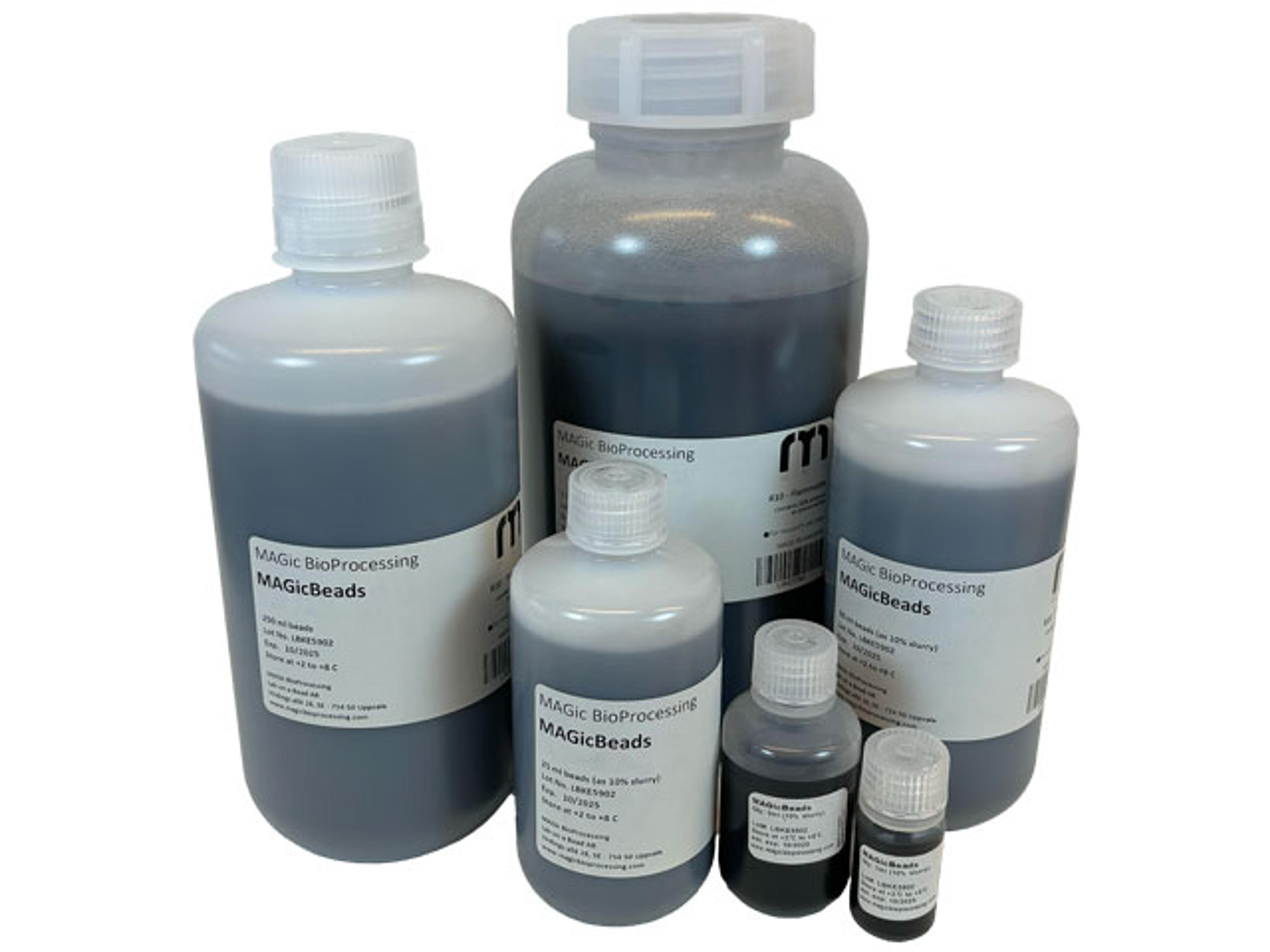
MAGic™ Beads Ultra-Speed Oligo(dT)

MAGic BioProcessing

The MAGic™ Beads Ultra-Speed Oligo(dT) are super-paramagnetic porous beads optimized for streamlined extraction of mRNAs in an automated robotic set up, eliminating the need for extensive processing time and low-quality results. The exceptional magnetization, low magnetic reminiscence and high binding capacity enables fast capture in a magnetic field and rapid resuspension with minimized power input. The magnetic beads are com…

0.0/5.0
|0 Reviews

Human Claudin-6 / CLDN6 Full Length Protein (VLP)

ACROBiosystems

Human Claudin-6 Full Length Protein (VLP) (CL6-H52P7) is expressed from human 293 cells (HEK293). Virus-like particles(VLPs) are formed by self-assembly of envelop/capsid proteins from viruses. Membrane Proteins can be constituted in-situ with VLPs produced from HEK293 cell cultures.

0.0/5.0
|0 Reviews