Optilab™
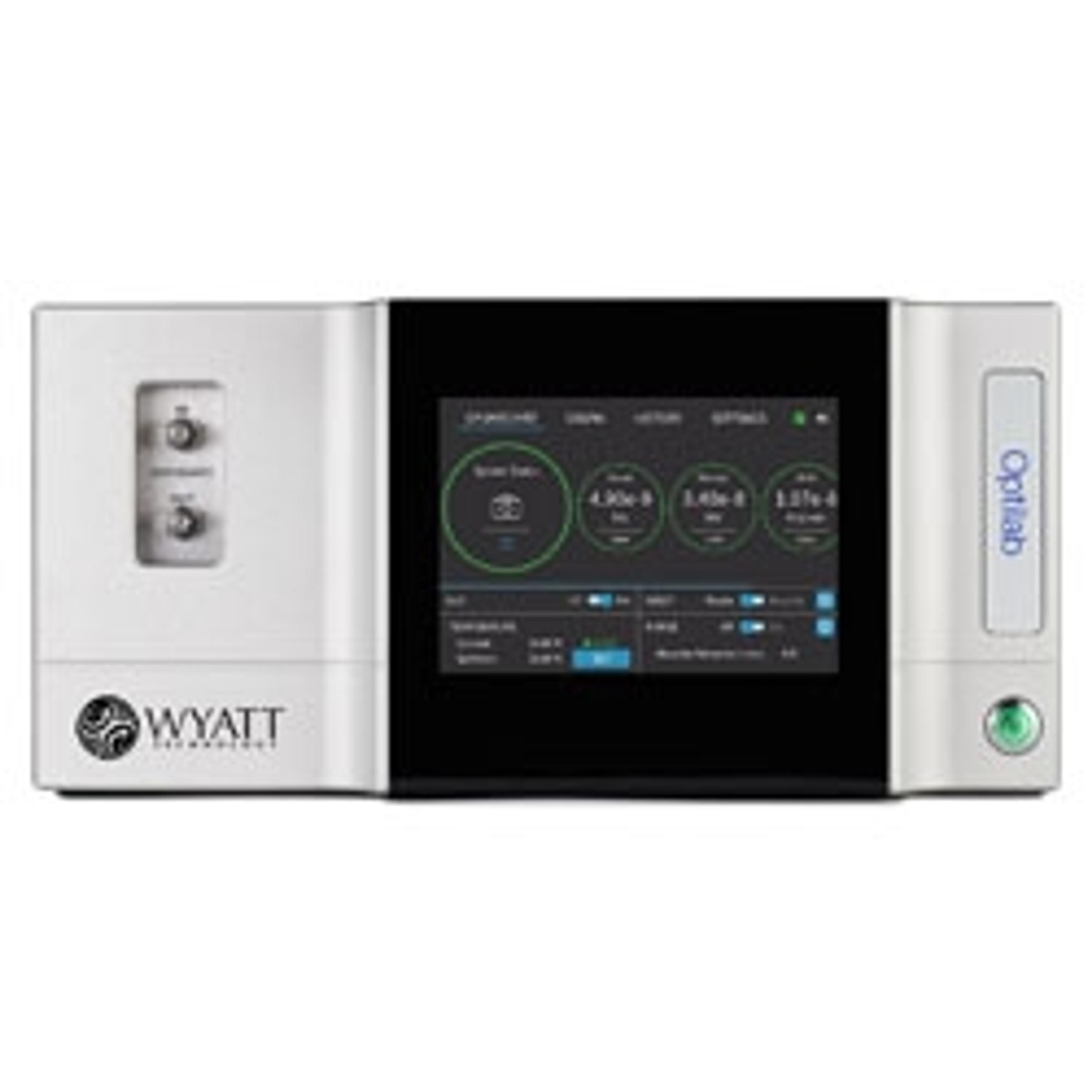
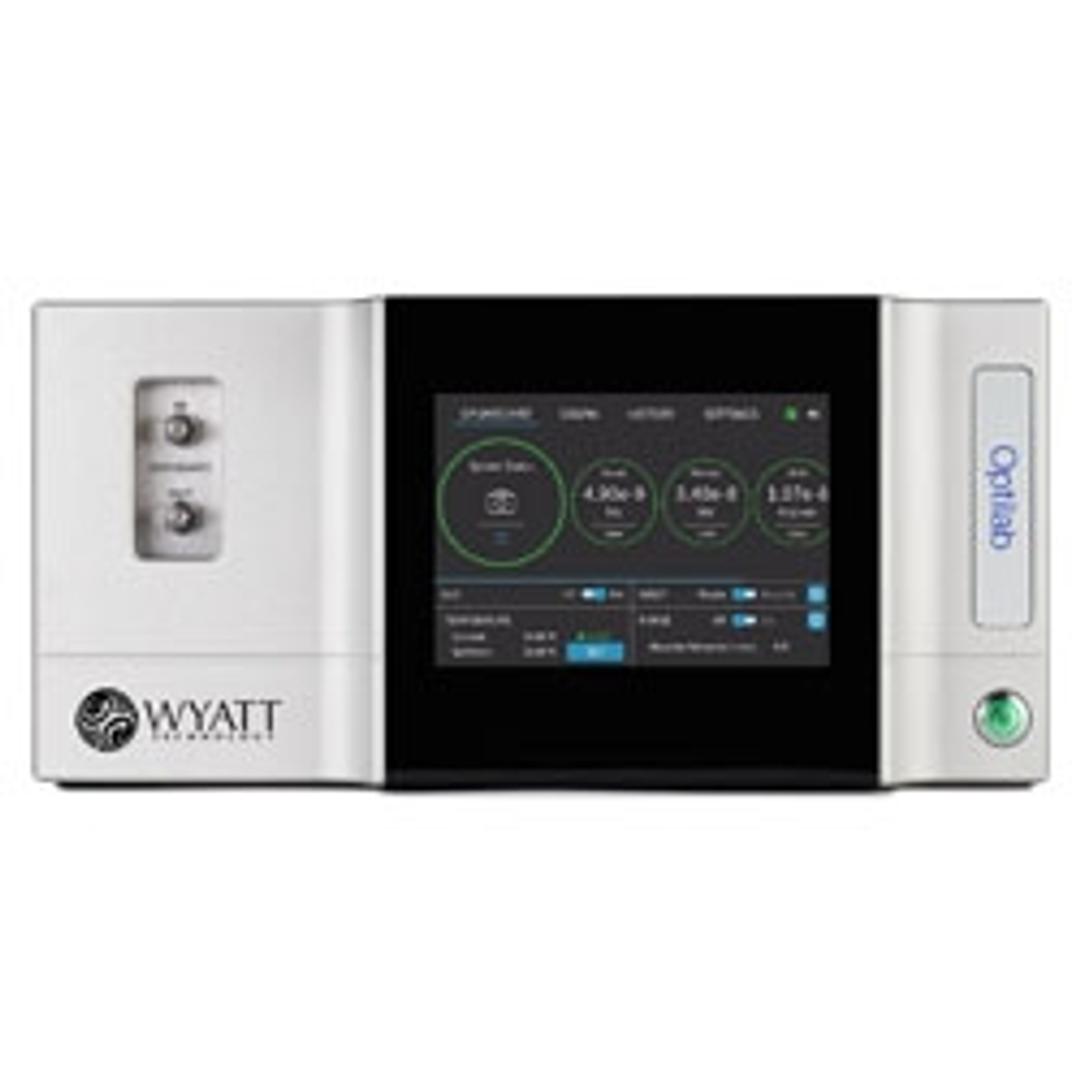
The Optilab™ is a unique dRI detector for HPLC/GPC, optimized for use with MALS.

The supplier does not provide quotations for this product through SelectScience. You can search for similar products in our Product Directory.
Optilab T-rEX is a reliable and easy to use refractive index detector.
Protein chemistry
Optilab T-rEX is our refractive index detector online with the HPLC system and miniDAWN TREOS II 3-angle light scattering detector. We use the above system to characterize recombinant proteins, e.g. their in-solution homo- and heteromultimerization properties, and conjugation to carbohydrates or nucleic acids. In the latter application, the Optilab T-rEX is a seminal piece of the analytical pipeline, and overall provides us with an efficient means to measure concentrations in all of our SEC-MALS applications. The use is straightforward with our protein core personnel, and also with external users after we have trained the operating person. The instrument has been extremy reliable.
Review Date: 11 May 2022 | Waters | Wyatt Technology
This instrument is very helpful and workable.
Molecular weight of polymers
To directly determine the molecular weight is a difficult job to work on. This instrument enabled my lab to easily determine the molecular weight of starch, cellulose, and chitin with reliable data. The operation of the instrument needs some training, and fundamental understanding on the measurement principles. I used the SEC/MALLS/RI analysis system comprising a SEC system (1260 Infinity, Agilent), a multi-angle laser light scattering (MALLS) detector (DAWN HELEOS-II, λ = 658 nm, Wyatt Technology), and an RI detector (RI, Optilab T-rEX, Wyatt technology).
Review Date: 7 Mar 2020 | Waters | Wyatt Technology
One of the best analytical instruments I ever used in my 25 years working.
Molecular weight analysis for depressants. Together with the LS detector we are able to do conformat
As we were starting characterization of our polymers depressants and collectors, we needed to get instruments that will give us most information for us to understand how each property will affect the quality and performance of our product, as part of continuous improvement. We bought the Wyatt triple detectors of which RI was one of them. The service we got from the company was very good starting from installation of the instruments. Doing operational qualification and performance qualification of the detectors was excellent. They sent a professor to help us with that training on the system for data analysis. After sale care was also excellent - when we had just started we had problems in understanding some information and data we got from the systems. We sent all the information to Wyatt head office and within 24 hours we got response. When one of the detectors had a breakdown we shipped to the US and within a very short time it was back working properly.
Review Date: 28 Sept 2018 | Waters | Wyatt Technology
Used daily in our lab- we consistently rely on it!
Measure concentration of downstream SEC samples
The Optilab T-rEX is the perfect complement to the DAWN HELEOS II to supply reliable and accurate concentration information for molecular weight measurements. Having an RI detector in our flow path is also quite handy if our samples have weak or no UV absorbance.
Review Date: 20 Dec 2016 | Waters | Wyatt Technology
I could not recommend Wyatt Technology more highly!
Analysis of Molecular Weight Distribution in Linear Polysaccharides
Highly sensitive and reliable system that provides exceptional accuracy and precision. Sales support at Wyatt is one of the best in the analytical instrument sector.
Review Date: 29 Jul 2016 | Waters | Wyatt Technology
This instrument is invaluable in our lab.
Characterization of Polymers for Paint and Coatings Applications
The T-rex has given our lab a powerful tool in characterization of unknown polymers. We have been successfully characterizing raw materials, unknowns, and problem batches for our company for over a year now. We now can also get accurate polymer MW and distribution data where before we could only compare to standards (usually a dissimilar polystyrene). The system does require a relatively skilled person to perform analyses, but Wyatt also paid for training! Every time I have needed any help the highly trained Wyatt staff have answered questions very quickly. The support is wonderful.
Review Date: 24 Jun 2016 | Waters | Wyatt Technology
Each SEC/GPC Lab has to have at least one set-up.
Polymer analysis
Easy to use equipment. Always can rely on help from Manufacturer network. Reliable results and very good reproducible. The set-up works 24/7/365.
Review Date: 24 Jun 2016 | Waters | Wyatt Technology
The Optilab™ differential refractive index (dRI) detector may be used in conjunction with any HPLC, FPLC, GPC or FFF separation system, plus a Wyatt DAWN™ or miniDAWN™ multi-angle light scattering (MALS) detector, for the absolute determination of the molar mass of all types of macromolecules in solution. While its sensitivity matches the very best HPLC RI detectors, its dynamic range exceeds that of any comparable instrument by 10-100x, with no range settings - meaning you can characterize very large and very small peaks, simultaneously.
In addition to dRI, the Optilab™ also measures the absolute refractive index (aRI) of a solution, important for characterizing solvents. The high-concentration (HC) model provides an extended measurement range suitable for high-concentration samples (up to 180 mg/mL of protein) or gradient-elution chromatography such as ion-exchange.
Features:
- dRI noise: 7.5x10⁻¹⁰ RIU (HC model: 1.5x10⁻⁹ RIU)
- dRI range: 4.7x10⁻³ RIU (HC model: -2.6x10⁻³ to +34x10-3 RIU)
- Dynamic range: 12,000,000:1 (HC model: 23,000,000:1)
- Absolute RI sensitivity: ±0.002 RIU
- Absolute RI range: 1.2 – 1.8 RIU
- Temperature control: heated/cooled 4 - 65°C, including active stabilization—even at room temperature
- Wavelength: 660 nm, matched to MALS instruments; other wavelengths available
- Touch-panel display for immediate access to data, diagnostics and settings
Applications:
- Universal online concentration measurement for chromatography, especially SEC-MALS and FFF-MALS.
- Analysis of conjugated proteins, co-polymers and nanoparticle-encapsulated drugs/proteins/DNA/RNA when combined with a MALS and UV detector
- Offline measurement of second virial coefficient A2 (B22)
- Offline measurement of the specific refractive index increment dn/dc, at the same wavelength as the MALS laser (critical for accurate macromolecular characterization)
- Ion-exchange chromatography with MALS (IEX-MALS) – measure dRI over the entire salt gradient
- Composition-gradient MALS (CG-MALS) – measure protein-protein interactions at high concentration

Irradiation-induced degradation of sodium alginate studied by SEC-MALS
Explore the impact of gamma irradiation on sodium alginate, a polysaccharide widely used in food and medical applications. Using SEC-MALS with a DAWN™ multi-angle light scattering detector and Optilab™ refractometer, researchers can determine molecular weight, size, and conformation without relying on column calibration assumptions. Understanding these properties is crucial for optimizing sodium alginate's performance as a thickening agent and sterile wound dressing.
Characterization of self-associating antibody solutions at high concentrations with CG-MALS
This application note describes the use of multi-angle light scattering (MALS) for characterizing the intermolecular interactions between three different high concentration antibody solutions using a Calypso II, a HELEOS II MALS detector, and Optilab T-rEX™ dRI detector. CG-MALS measurements, automated by Wyatt equipment, provided insight into the colloidal behaviors of the antibody solutions and the nature of the intermolecular forces that contribute to high viscosity.
Characterization of hyaluronic acid with online multi-angle light scattering and differential viscometry
The biopolymer hyaluronic acid is present in all mammalian systems and is of enormous commercial interest for opthalmic, medical, pharmacological and cosmetic applications. In this application note, the absolute determination of hyaluronic acids' properties is demonstrated using MALS, differential refractometry, and differential viscometry detectors in series with SEC separation.
Quantifying quality attributes of AAV gene therapy vectors by SEC-UV-MALS-dRI
In this application note, Wyatt Technology present a simple and direct size-exclusion chromatography method with UV-MALS-dRI detection, which can be readily employed to quantify AAV particle concentration, capsid content, and aggregation throughout the AAV product development and manufacturing processes.
IEX-MALS – A method for protein separation and characterization
Ion-exchange chromatography coupled to multi-angle light scattering (IEX-MALS) allows absolute molar mass determination of proteins, protein complexes and peptides in a heterogenous sample. IEX-MALS can overcome some of the restrictions of SEC-MALS that arise from the limited separation ability of analytical SEC column. Explore how the IEX-MALS method is valuable for quality assessment as well as the characterization of native oligomers, charge variants, modified proteins and mixed-protein samples.
Quantifying AAV aggregation and quality attributes by FFF-MALS
Download this application to see how using Wyatt Technology’s Eclipse FFF-MALS system, both SEC-MALS and FFF-MALS may be performed with a single set of detectors, providing a valuable orthogonal characterization of these gene therapy products.
AF4-MALS as a promising tool for industrial lignosulfonate analysis
In this application note, Wyatt Technology presents a novel approach to the analysis of the molar mass of water-soluble lignosulfonates (LS) by means of AF4-MALS. The method allows for the direct injection of non-purified industrial samples and aims to provide accurate and precise data about LS molar mass distribution, promising a simple, fast and less labor-intensive alternative to standard GPC analysis.
Next steps in adeno-associated virus characterization via light scattering
In this scientific poster, Wyatt Technology demonstrates a workflow that utilizes light scattering to characterize adeno-assoicated virus (AAV). This method, incorporating SEC-MALS, FFF-MALS, and DLS, is designed to provide measurements of AAV critical quality attributes including particle concentration, relative capsid content, and aggregation.
Protein Aggregate Assessment of Ligand Binding Assay (LBA) Reagents Using SEC-MALS
Ligand Binding Assays (LBAs) used for large molecule drug development can necessitate conjugation of a drug to one or more different tags. To help ensure that LBAs utilizing conjugated drug reagents perform consistently over time and provide high quality data, each lot of conjugated material should be characterized functionally and biophysically prior to being incorporated into the LBA. One potential source of lot-to-lot variability is aggregation, which may be inherent to the drug, induced by the conjugation process and/or handling of the reagents. SEC-MALS is a superior method for assessing the aggregate profiles of LBA reagents.

Characterization of PLGA Using SEC-MALS-VIS
In this application note, two commercially available samples were analyzed by SEC coupled to a Multi-Angle Light Scattering (MALS) detector (HELEOS), a refractive index detector (Optilab rEX), and a viscosity (VIS) detector (ViscoStar). The results demonstrate that SEC-MALS-VIS is an excellent method for the characterization of PLGA polyesters as it has the ability to determine not only the molar mass distribution, but to reveal subtle differences in PLGA’s molecular structure.


MATERIALS UPDATE: 7 Developments Changing Polymer Science
From news to application articles, discover the latest advances and methodologies in polymers and plastics
Analytical Chemistry – Forging a Long-Term Relationship with a Trusted Technology Provider
Learn how a polymer analysis lab in the US has reaped the benefits of using instrumentation from a trusted provider for more than 20 years