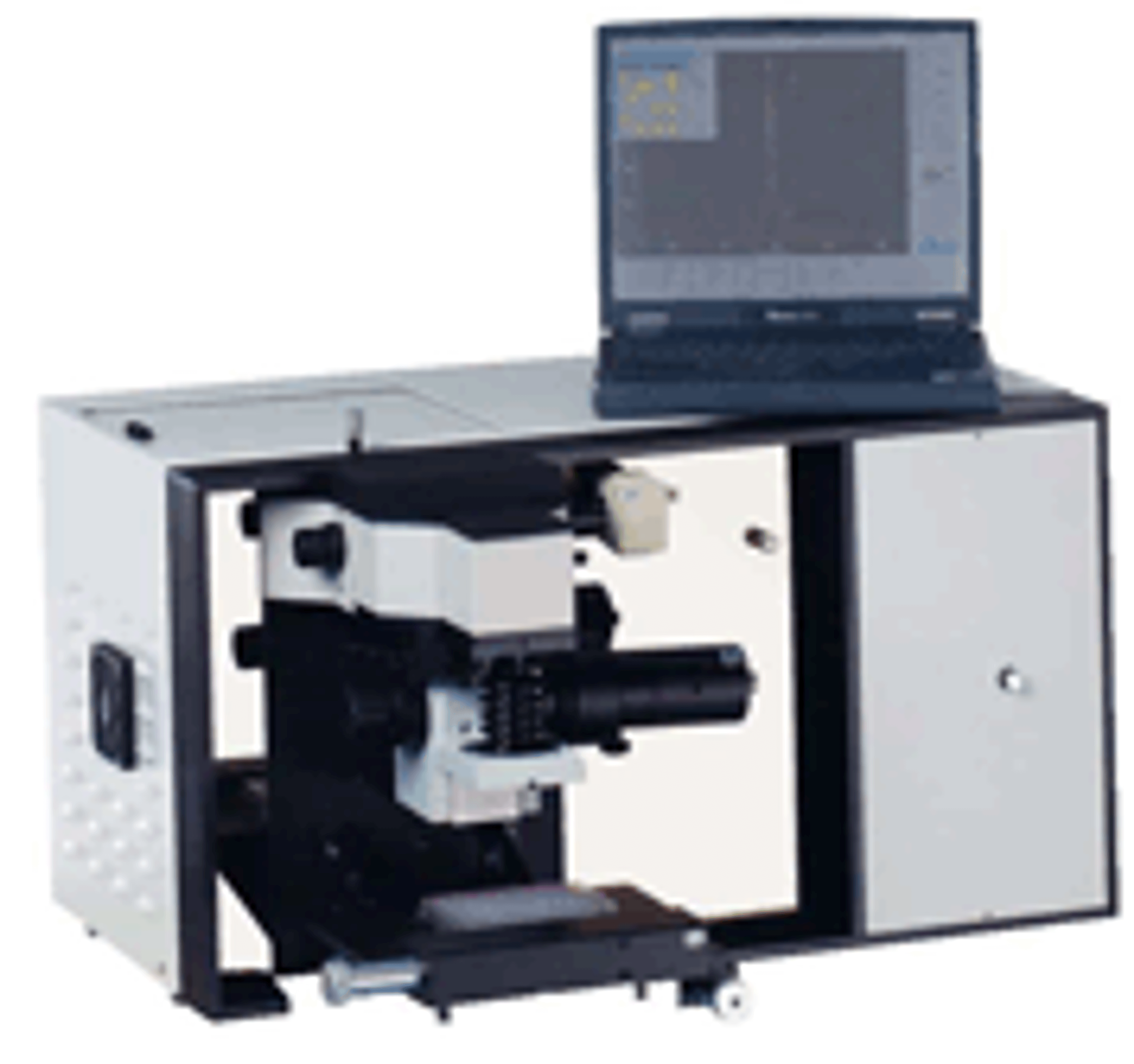
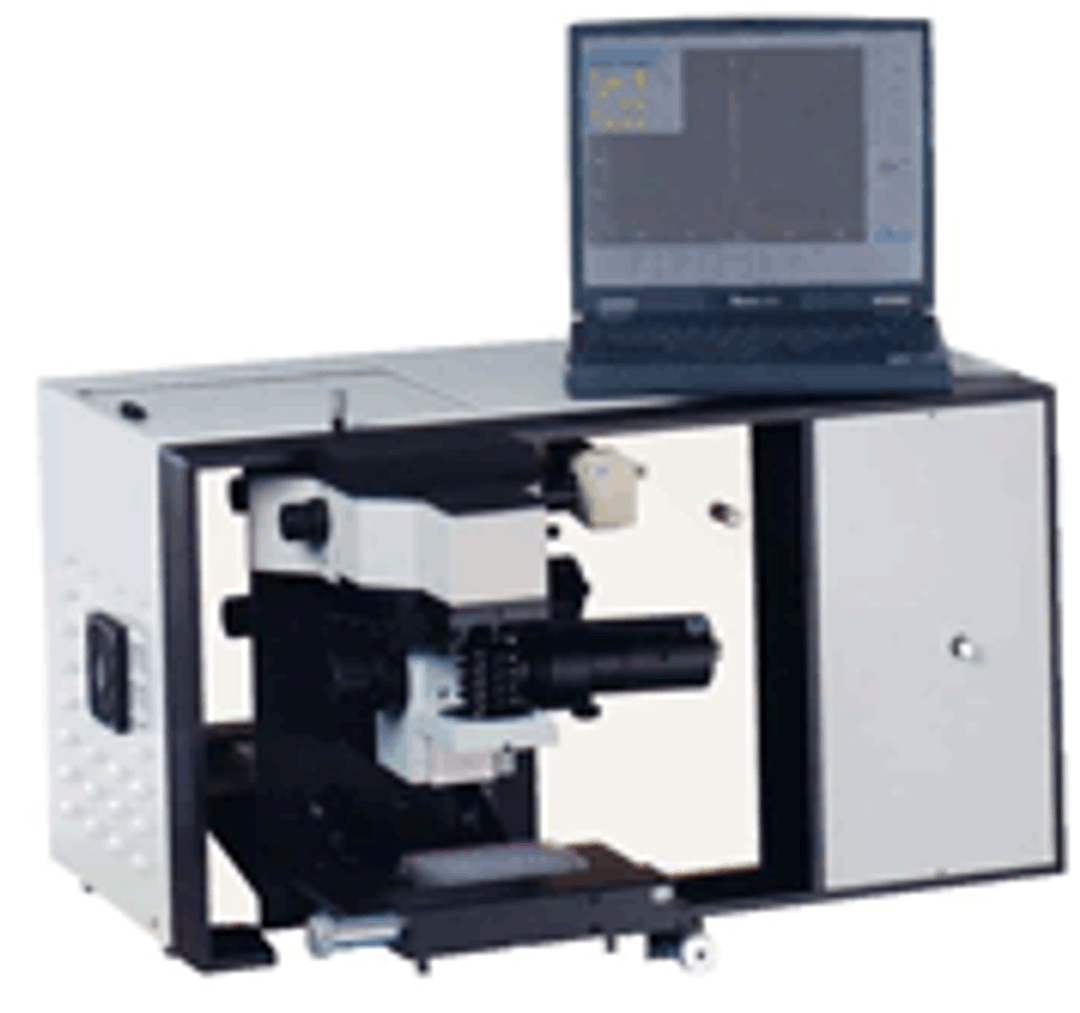
LabRAM HTS - Raman Micro/Macro Screening System
Raman Micro/Macro screening system - Automated sensitive wellplate screening- Crystal analysis and location- Polarised light microscopy and AutoFocus- Heating/cooling stages- Advanced progammable HTS software - Automated Raman analyser - HTS crystal screening - Salts/polymorphism - Pharmaceuticals - Wellplate analysis

The supplier does not provide quotations for this product through SelectScience. You can search for similar products in our Product Directory.
Reliable and stable performance.
Chemical analysis of dental materials, CNT analysis, mapping CNT devices
Short learning curve, easy calibration procedure, build-in analysis tools, ability to export data for analysis in other software. Service contracts - it's always a pain when working in academia, it easier to get new equipment than get funds for maintenance.
Review Date: 18 Nov 2020 | HORIBA Scientific
Great instrument, a must in a lab.
Material analysis
Very robust equipment. Day to day results are reliable. User friendly interface. Powerful fitting tools.
Review Date: 2 Apr 2019 | HORIBA Scientific
Good system.
Material inspection
Good system, reliabe, user-friendly interface, stable, repeatble results.
Review Date: 26 Mar 2019 | HORIBA Scientific
Raman Micro/Macro screening system
- Automated sensitive wellplate screening
- Crystal analysis and location
- Polarised light microscopy and AutoFocus
- Heating/cooling stages
- Advanced progammable HTS software
- Automated Raman analyser - HTS crystal screening - Salts/polymorphism - Pharmaceuticals - Wellplate analysis

Micro-Raman Study of the Sequence of Non-Intersecting Lines for Forged Document Investigation
In connection with investigation of fraud, counterfeiting, blackmail and anonymous letter cases, forensic experts frequently have to find out whether a document was altered after signing. In these cases the sequence of crossing printer and pen ink line often needs to be determined in order to resolve whether any of the printed text was printed after the signature. When there are no intersecting lines between the printed text and the pen ink lines, standard techniques used for sequencing are not applicable. This note demonstrates the application of micro-Raman spectroscopy to investigate the chronological sequence of printed and hand-written features on the documents even if there are no intersecting lines.
The Non Destructive and In-Situ Identification of Different Black Inks
It has been a problem for a long time for forensic scientists, customs officials and historians alike to be able to verify and authenticate printed documents just from the inks that have been used. The technique of Raman Microscopy offers a non destructive mode of ink analysis which can directly identify and characterize specific inks found on the paper surface. The following is a brief study of black inks commonly used in different desktop printers, and the identification of the source of a particular document using the LabRAM Analytical Raman Microscope from Horiba Scientific.
Confocal Raman Microspectrometry Imaging Combined with Chemometric Methods for Environmental Applications
The knowledge of the chemical composition of aerosols is of great importance due to their potential adverse effects on the environment and human health. Due to the small size of typical aerosol particles, the challenge is physicochemical characterization of aerosols at the micron scale. This application note explores the use of confocal Raman microspectrometry for the characterization of aerosol particles and other applications.
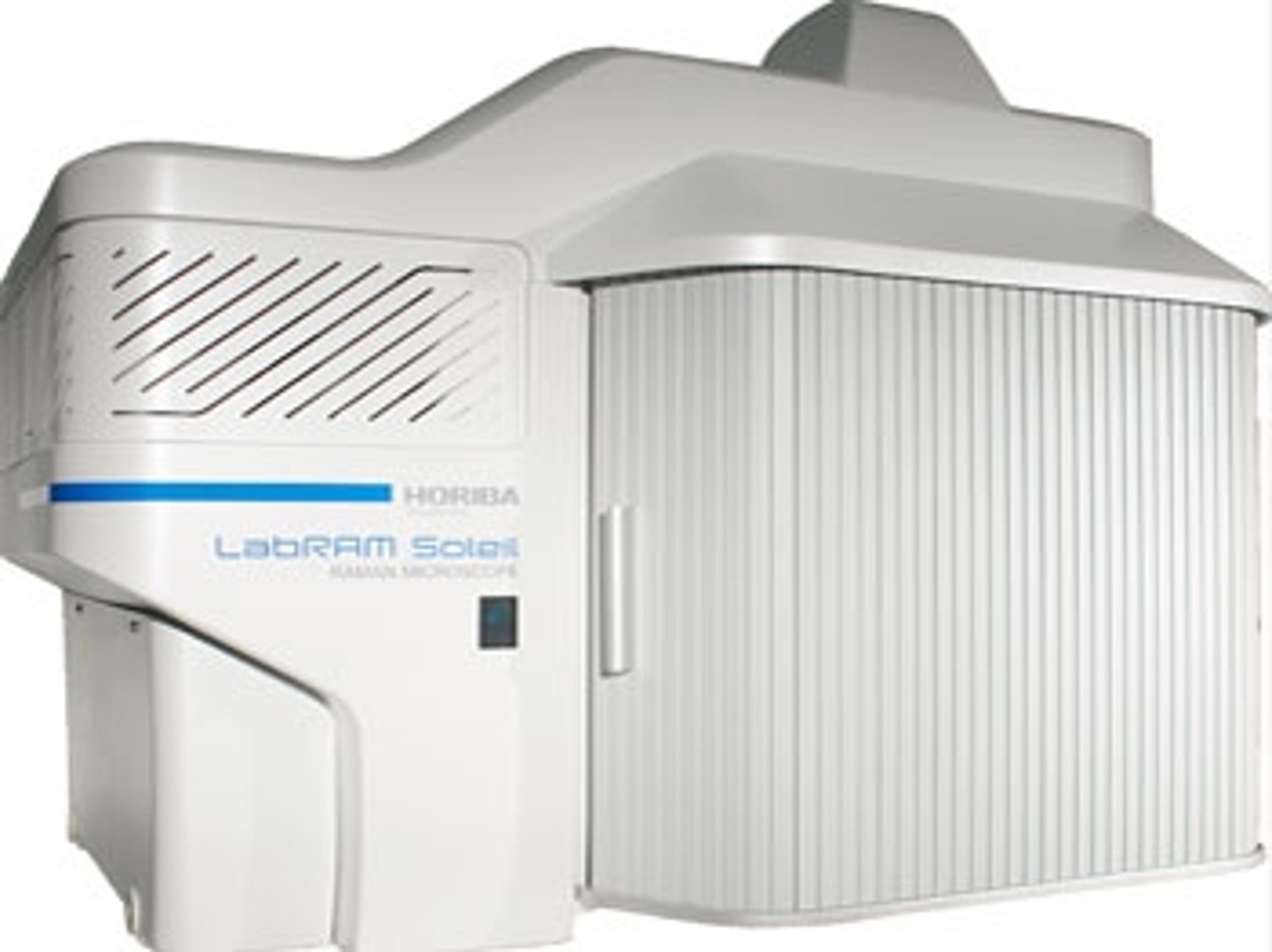
HORIBA Scientific's new LabRAM Soleil wins Bronze Pittcon Today Excellence Award
The award recognizes innovation and projected market impact