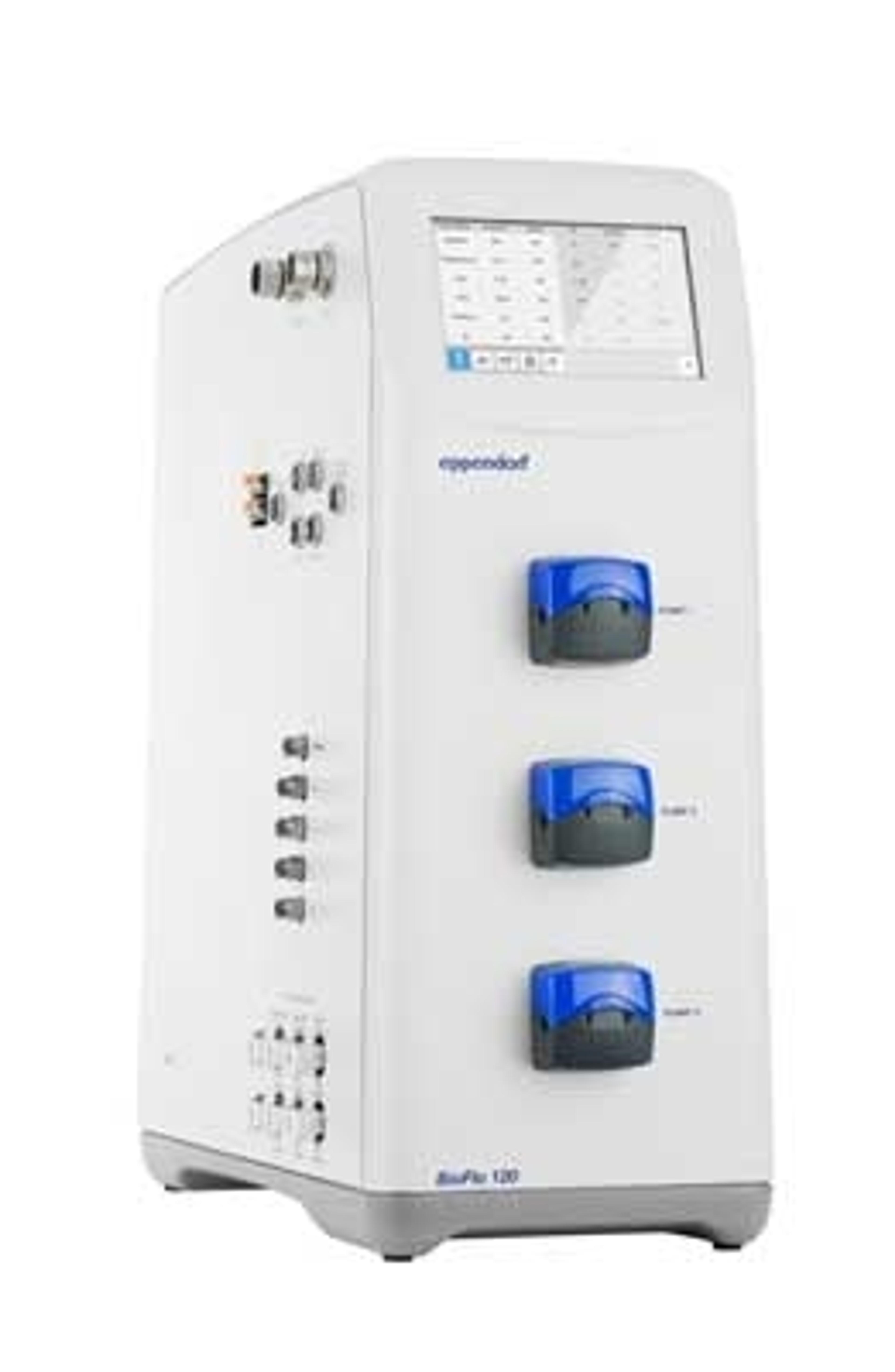
Eppendorf BioFlo® 120
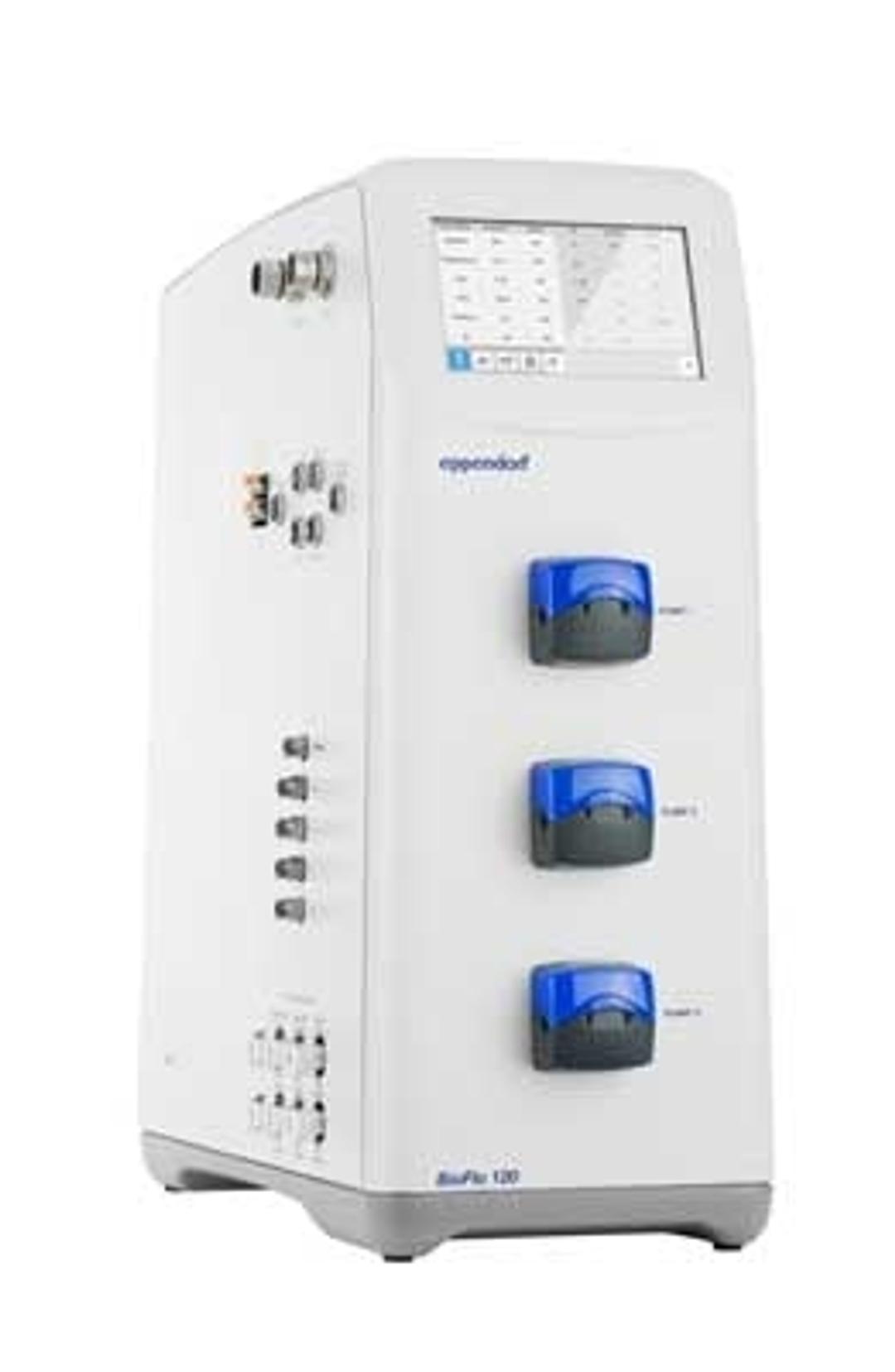
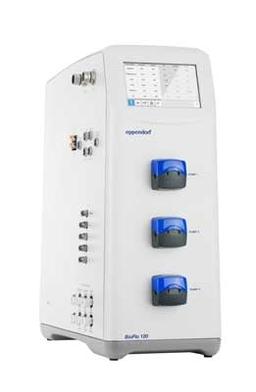
The Eppendorf BioFlo 120 offers simplicity and ease of use, without sacrificing capability. In academic, governmental or industrial research settings; for work with bacteria, yeast, fungi, mammalian, insect or plant cells: The BioFlo 120 is an attractive solution to meet bioprocessing needs. The BioFlo 120 is a bench-scale bioreactor/fermentor system that perfectly suits research and development. Its flexible design meets t…


Place your order directly with the manufacturer.
Great instrument
Manufacturing of recombinant protein.
Very easy to use and robust product. well balanced control system.
Review Date: 21 Mar 2018 | Eppendorf
I really enjoy using this product
Analytical Chemistry
I really enjoy this product, the product was very easy to use. It led me to high quality results.
Review Date: 31 Jan 2018 | Eppendorf
The Eppendorf BioFlo 120 offers simplicity and ease of use, without sacrificing capability. In academic, governmental or industrial research settings; for work with bacteria, yeast, fungi, mammalian, insect or plant cells: The BioFlo 120 is an attractive solution to meet bioprocessing needs.
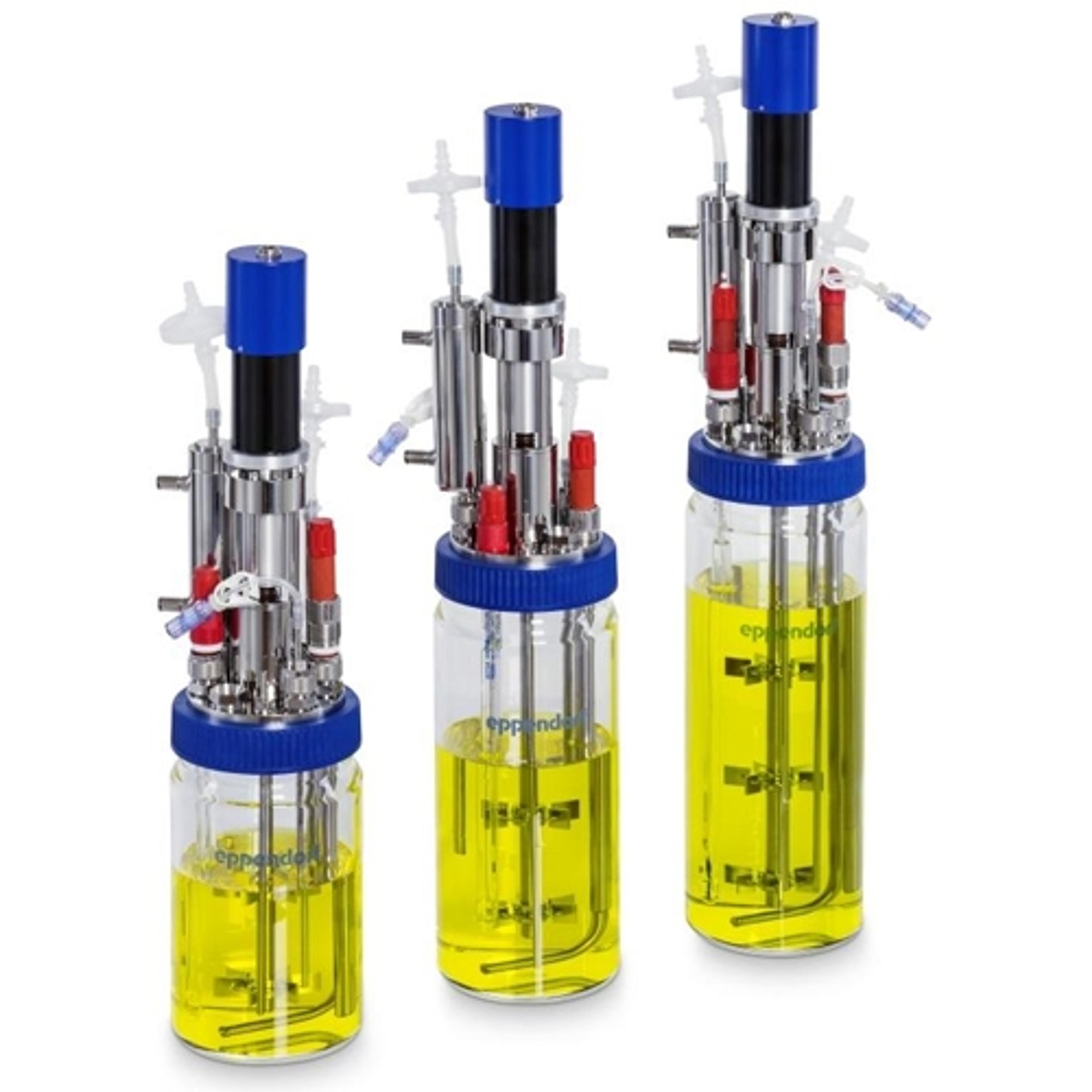
The BioFlo 120 is a bench-scale bioreactor/fermentor system that perfectly suits research and development. Its flexible design meets the wide-ranging needs of scientists in both microbial and cell culture applications. 24 interchangeable autoclavable vessels (water-jacketed or with heat blanket) are available, along with BioBLU® single-use bioreactors ranging from 250 mL to 40 L working volume. Digital Mettler Toledo® ISM sensor technology is fully integrated allowing the user to switch between pH, redox, dissolved oxygen (polarographic and/or optical), and carbon dioxide monitoring without the need for additional equipment. A high-precision thermal mass flow controller with expanded range provides the capability for low flow mammalian cell culture through high-demand microbial processes on a single control station.
Features:
- Scale-up from 250 mL to 40 L on a wide variety of autoclavable and single-use vessels
- New Auto culture modes for microbial and cell culture process control at the touch of a button.
- Universal connections for analog sensors or digital Mettler Toledo ISM sensors for increased flexibility
Applications:
- Cultivation of mammalian, stem, insect, and plant cells
- Bacterial, yeast, and fungal fermentation
- Batch, fed-batch, continuous or perfusion
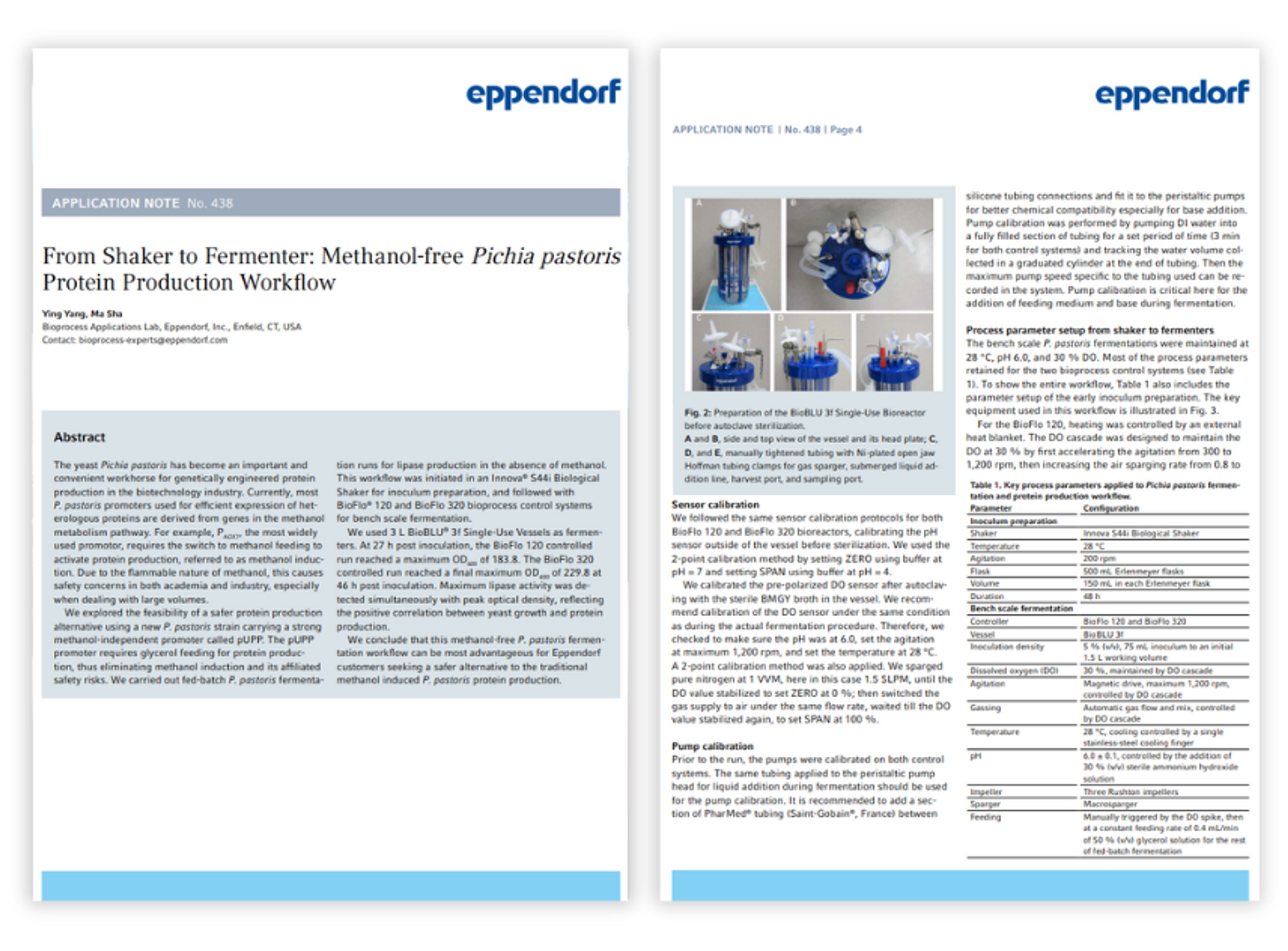
From shaker to fermenter, a methanol-free Pichia pastoris protein production workflow
Pichia pastoris is widely employed for producing recombinant proteins. Traditional systems depend on methanol-inducible promoters like PAOX1, which pose safety concerns due to methanol’s flammable nature.
Find out more about a new strain of P. pastoris that carries a glycerol-inducible promoter, pUPP, that enables safe, methanol-free expression of proteins under glycerol feeding for high‑density fed‑batch fermentation.

Microaerobic fermentation within gut physiological conditions
There is growing interest across the food and feed and biofuel industries in microaerobic fermentation, a process occurring at close to anaerobic conditions, but still requiring small amounts of oxygen. This application note describes the microaerobic fermentation of a probiotic strain, Lactobacillus acidophilus, at a very low oxygen level using BioFlo® 120 and 320 control stations.
Bioreactors and fermentors— powerful tools for resolving cultivation bottlenecks
In this white paper, Eppendorf explains the key characteristics of stirred-tank bioreactors and which organisms are typically grown in them. Using specific examples, they demonstrate how bioreactors and fermentors can help to resolve cultivation bottlenecks.
Standardizing microbiome research – Culture from discovery to production
In this poster, Eppendorf outlines a microbiome culture workflow covering the diverse culturing needs of gut microbes (including oxygen, pH, and temperature control) and the scalable bioprocess systems that are available for culture research to production.
Setup of a Microbial Hyaluronic Acid Production Process Using the BioFlo® 120 Bioprocess Control Station
Achieving optimal process conditions for microbial growth and production of a desired bioproduct needs hardware and software to monitor and control the bioprocess parameters, including the pH, temperature, and agitation of the fermentation broth. Researchers at Praj Industries, India used the BioFlo 120 bioprocess control station to produce hyaluronic acid (HA) in Streptococcus zooepidemicus at bench scale. In this application note they describe how they set up, monitored, and controlled critical process parameters, and thus present an impression of the controller’s integrated, touch screen accessible software.
Transfer of an Itaconate Production Process in Ustilago maydis to the BioFlo® 120 Bioprocess Control Station
The unsaturated dicarboxylic acid itaconate is used as a building block for the production of pharmaceuticals and adhesives, as a copolymer for synthetic resins, and is a promising starting material for biofuel production. The following application note highlights the simplicity and ease of use of the new BioFlo 120 bioprocess control station, through a successful process transfer from its predecessor, the New Brunswick™ BioFlo/CelliGen® 115.
Push-Button Simplicity: Automatic Fermentation with the BioFlo® 120 Auto Culture Mode
The Auto Culture modes, standard on the BioFlo 120 bioprocess control station, offer push-button automatic process control for some of the most common microbial (E. coli) and mammalian (Chinese Hamster Ovary, CHO) cultures. In this application note, an E. coli batch fermentation was conducted using an Auto Culture mode to demonstrate this novel feature of the BioFlo120 control station.

Standardizing microbiome research: culture from discovery to production
Download the microbiome workflow poster from Eppendorf

Eppendorf Introduces the New BioFlo® 120 Bioprocess Control Station
Life science company Eppendorf introduces the BioFlo 120, their latest bench scale fermenter/bioreactor system for research and development