
Bioreactors and fermentors— powerful tools for resolving cultivation bottlenecks
29 Jan 2020In this white paper, Eppendorf explains the key characteristics of stirred-tank bioreactors and which organisms are typically grown in them. Using specific examples, they demonstrate how bioreactors and fermentors can help to resolve cultivation bottlenecks.
Related products
Request Quote for All Products
Fibra-Cel® Disks
EppendorfFibra-Cel disks are a proven support system used to increase yields of suspension and anchorage-dependent cultures. Fibra-Cel is also available for use in disposable bags, shake flasks and other bioreactor systems.
Eppendorf BioFlo® 120
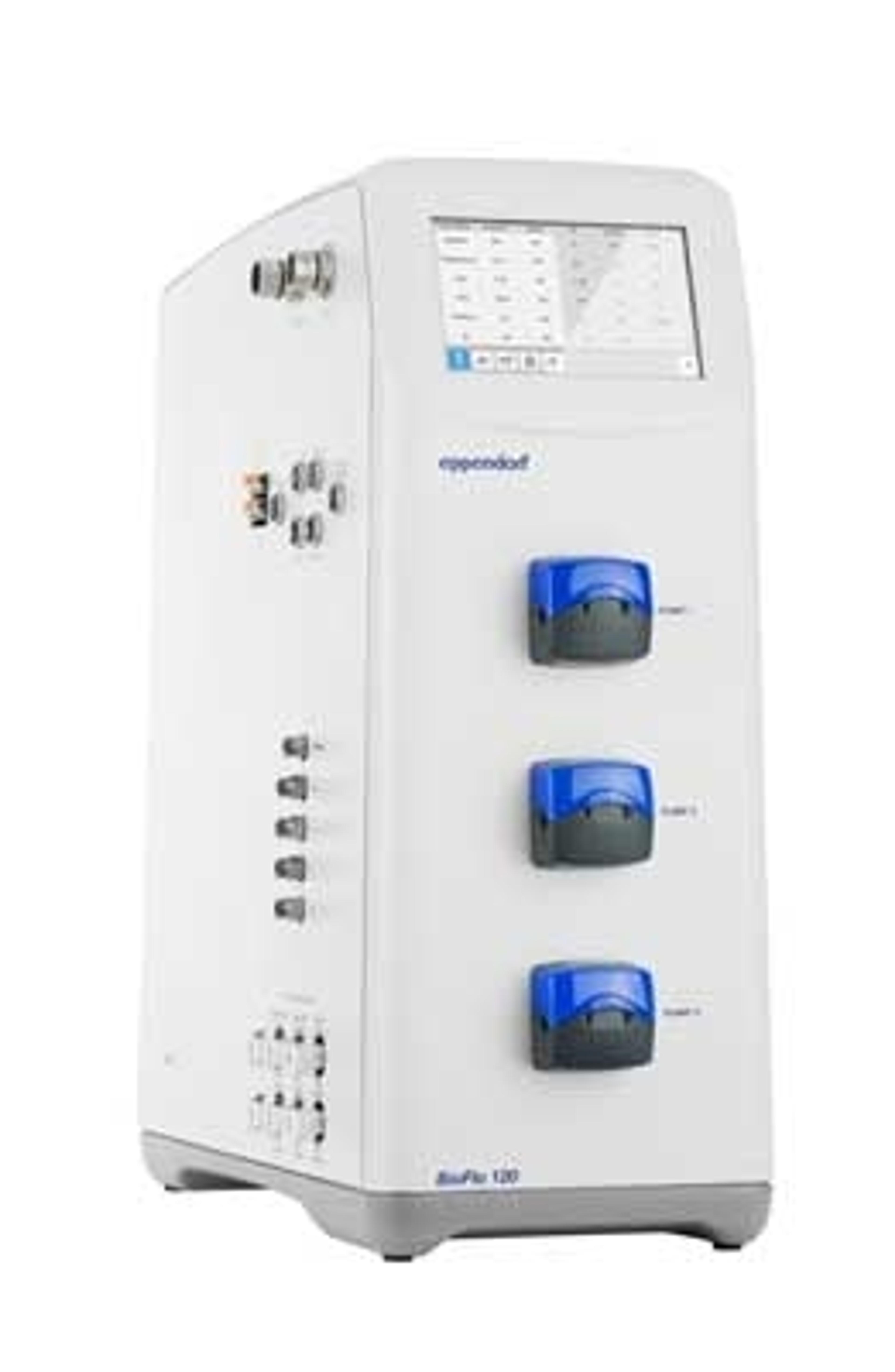
EppendorfThe Eppendorf BioFlo 120 offers simplicity and ease of use, without sacrificing capability. In academic, governmental or industrial research settings; for work with bacteria, yeast, fungi, mammalian, insect or plant cells: The BioFlo 120 is an attractive solution to meet bioprocessing needs. The BioFlo 120 is a bench-scale bioreactor/fermentor system that perfectly suits research and development. Its flexible design meets the wide-ranging needs of scientists in both microbial and cell culture applications. 24 interchangeable autoclavable vessels (water-jacketed or with heat blanket) are available, along with BioBLU® single-use bioreactors ranging from 250 mL to 40 L working volume. Digital Mettler Toledo® ISM sensor technology is fully integrated allowing the user to switch between pH, redox, dissolved oxygen (polarographic and/or optical), and carbon dioxide monitoring without the need for additional equipment. A high-precision thermal mass flow controller with expanded range provides the capability for low flow mammalian cell culture through high-demand microbial processes on a single control station. Features: Scale-up from 250 mL to 40 L on a wide variety of autoclavable and single-use vessels New Auto culture modes for microbial and cell culture process control at the touch of a button. Universal connections for analog sensors or digital Mettler Toledo ISM sensors for increased flexibility Applications: Cultivation of mammalian, stem, insect, and plant cells Bacterial, yeast, and fungal fermentation Batch, fed-batch, continuous or perfusion