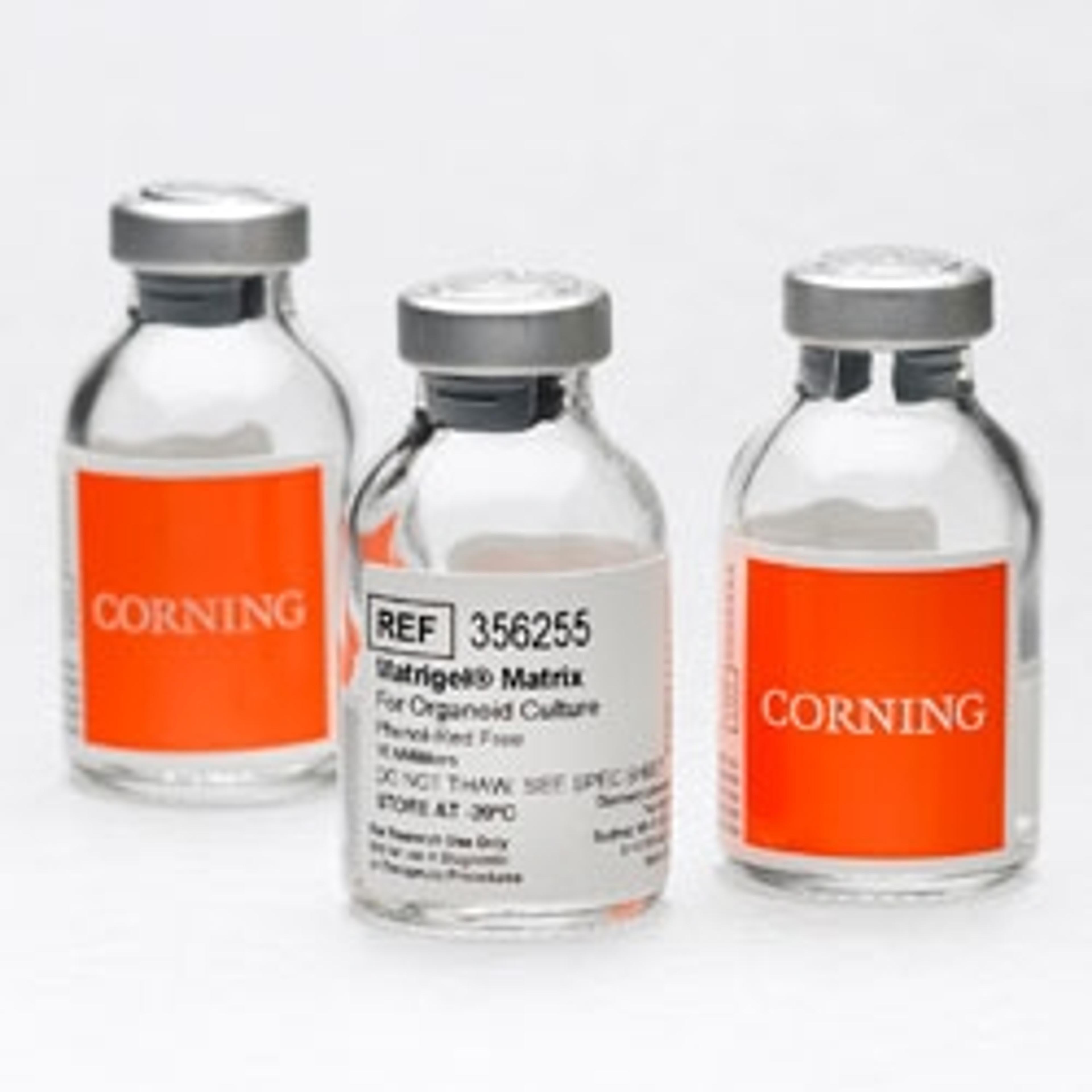
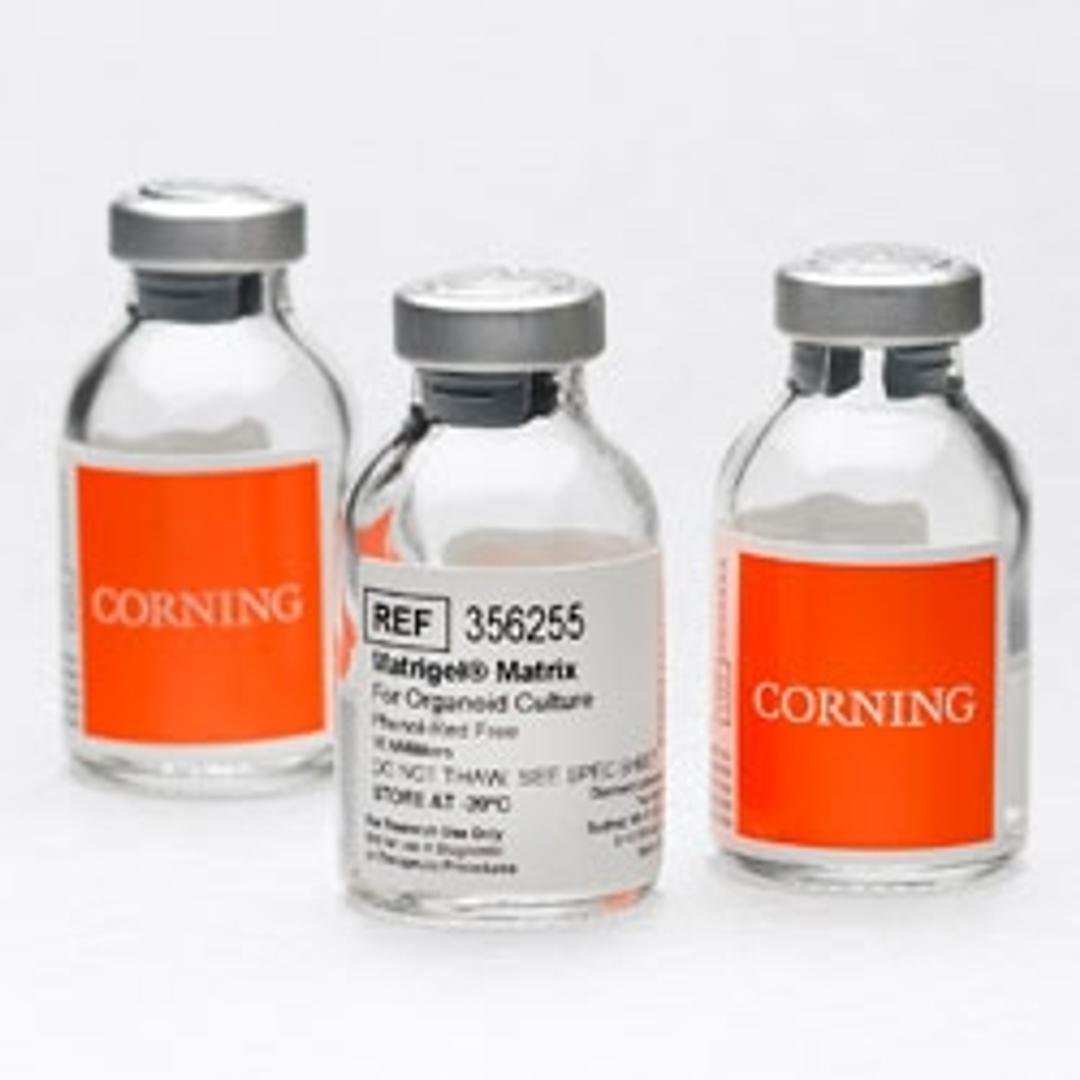
Corning Matrigel Matrix for Organoids
An optimized extracellular matrix that provides a convenient, ready-to-use solution, verified to support organoid growth and differentiation
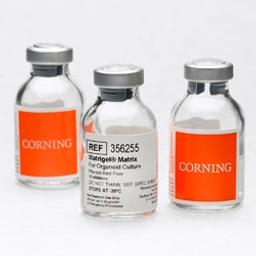

The supplier does not provide quotations for this product through SelectScience. You can search for similar products in our Product Directory.
High quality product and fantastic customer service.
Patient-derived normal and tumoral colon organoids
Fantastic product, following the manufacturer's instructions there is no problem in its handling. Very good customer service where they advise how to improve the management of your 3D cultures.
Review Date: 13 Feb 2020 | Corning Life Sciences
Good for 3D collagen gels.
3D tissue culture (collagen gel)
Good for 3D collagen gels, improves, cell proliferation and differentiation compared to collagen only constructs.
Review Date: 28 Jan 2020 | Corning Life Sciences
An optimized extracellular matrix that provides a convenient, ready-to-use solution, verified to support organoid growth and differentiation
Corning’s new Matrigel matrix for organoid culture is formulated to support organoid growth and differentiation. It is a convenient, ready-to-use solution that provides the consistency and reliability needed for successful organoid culture by employing the following steps:
Each lot is measured for its elastic modulus, which is indicative of matrix stiffness and is qualified to form stable "3D dome" structures commonly used in organoid culture. Verified to support growth and differentiation of mouse and human organoid cultures including:
- Long-term expansion of mouse small intestinal organoids for more than 7 passages with typical organoid budding morphology and marker expression
- Growth and differentiation of polarized 3D organoids from primary human airway epithelial cells expressing typical markers
Corning’s new Matrigel matrix reduces the need for time-consuming screening, while providing the reproducibility and consistency essential for organoid research.

Automation of forskolin-induced swelling assay of human intestinal organoids
In this application note, Corning Life Sciences demonstrates a precise, automated method for the forskolin-induced swelling (FIS) assay of human intestinal organoids cultured using Corning® Matrigel® matrix for organoid culture.
Liquid handling: A guide to pipetting success
Liquid handling plays a pivotal role within most laboratories and can become problematic when inappropriate tools are used, with potential issues such as difficulty handling challenging liquids, as well as volume inconsistencies, repetitive strain injuries, and decreased productivity. Selecting the most appropriate liquid handling instrument will help save time, decrease sample contamination, and improve accuracy and efficiency.
Download this free application compendium to optimize your workflows, including:
- How to enhance liquid handling procedures
- Effective ways to achieve optimum results using single- and multi-channel pipettors
- How to streamline your pipetting technique to increase precision and ensure consistency
- Expert guidance on how to improve ELISA workflows
Spheroids vs. organoids: What’s the difference?
In this infographic, explore the advantages and disadvantages of using spheroids and organoids for the creation of complex, in-vivo-like three-dimensional models, and discover which will work best for your research.
Human airway epithelial cell culture and COVID-19 research
In this application note, Corning Life Sciences highlights a range of recent publications that demonstrate the applications and advantages of using 3D cell culture models to study the systemic biology, pathogenesis, and potential treatment of human respiratory pathogens such as SARS-CoV-2.
Corning Matrigel Matrix-3D Plates for high-throughput 3D assays
In this application note, Corning Life Sciences highlights the use of pre-coated Matrigel matrix-3D plates to generate MDCK cysts for screening modulators of forskolin-induced cyst swelling, which can be used to identify potential therapies for polycystic kidney disease.
High-throughput gene expression analysis of 3D airway organoids
In this application note, Corning outlines a high-throughput method using the nCounter® PlexSet™ assay to characterize the gene expression of airway organoids generated from healthy and asthmatic primary bronchial cells.
Corning Life Sciences to share suite of 3D cell culture technologies at SLAS2021
The new solutions support evolving industry needs such as COVID-19 response, disease models, and drug discovery

3D cell culture and organoids: Potential tools in the fight against COVID-19
Dr. Shuibing Chen discusses the advantages of organoids, surprising discoveries in COVID research and her hopes for revolutionizing the future of drug therapies
New special feature: Advance your 3D cell culture research with these top resources
Explore exclusive interviews, new methods, and free download to help optimize your 3D cell culture

Harvard researcher tackles the big question in cancer research: Drug resistance
Dr. Fang Xie shares insights from his research into prostate cancer and offers hope of overcoming the growing problem of chemotherapy resistance to improve patient outcomes

19 top new resources for cancer research
Exclusive interviews, new methods, free downloads and much more to help advance your cancer research
Why HUB Organoids are key to advancing personalized cancer therapies
Dr. Sylvia Boj discusses the advantages of organoids and how these 3D tissue cultures have enormous potential to revolutionize how we treat patients and predict therapeutic response
Harnessing next-generation cell culture methods in the fight against cancer
Learn how an institute in the US is developing the latest patient-derived 3D cancer cell cultures for use in precision medicine
Trending in 3D cell culture: From targeting colorectal disease to tumor heterogeneity and patient-derived organoids
Discover the latest technologies and techniques that are revolutionizing 3D cell culture
Targeting colorectal disease through patient-derived colon cancer organoids
Researchers use 3D cell culture to uncover the link between vitamin D deficiency and intestinal stem cells

Corning expands 3D cell culture portfolio with new matrix and microplates
Corning Elplasia plates and Matrigel matrix for organoid culture are designed to help develop more predictive models for cancer and other critical diseases