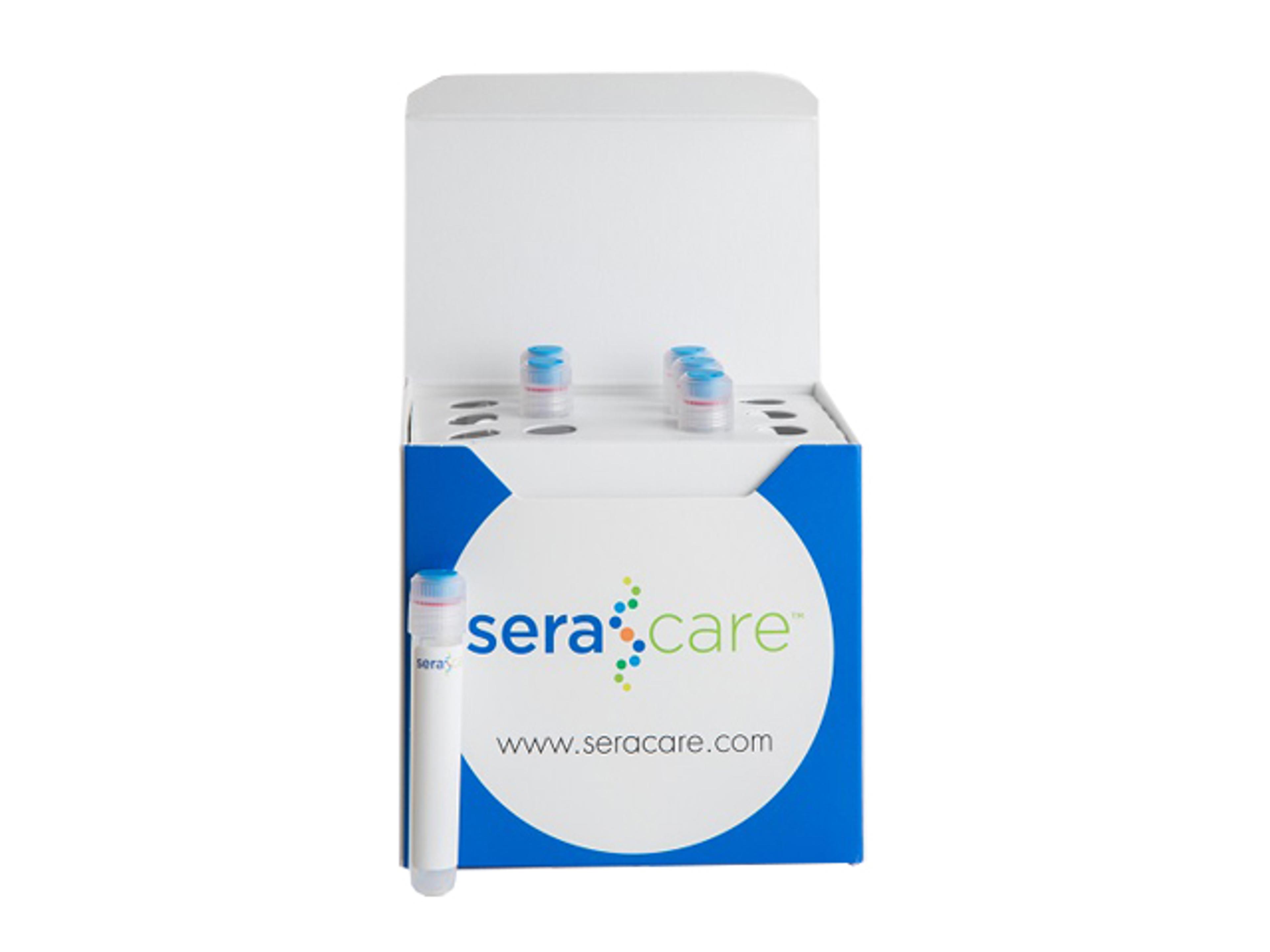
Seraseq® NGS Reference Materials
Helps expedite development and better characterize NGS-based assays
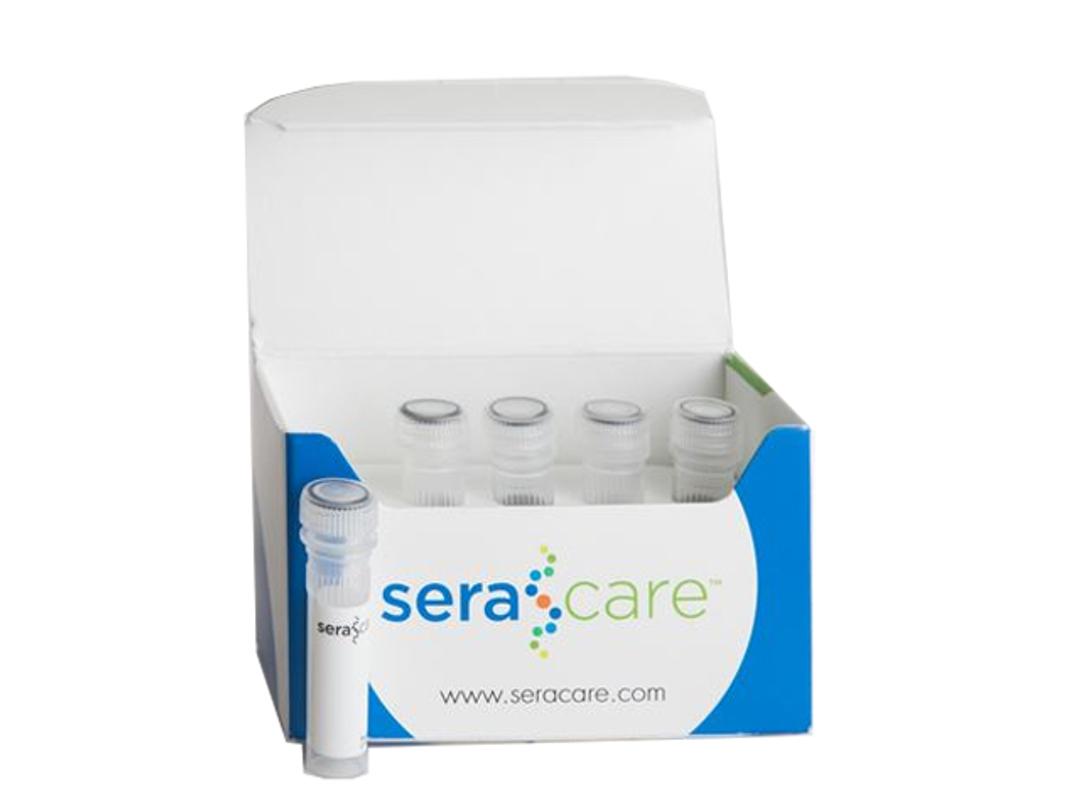



Receive your quote directly from the manufacturer.
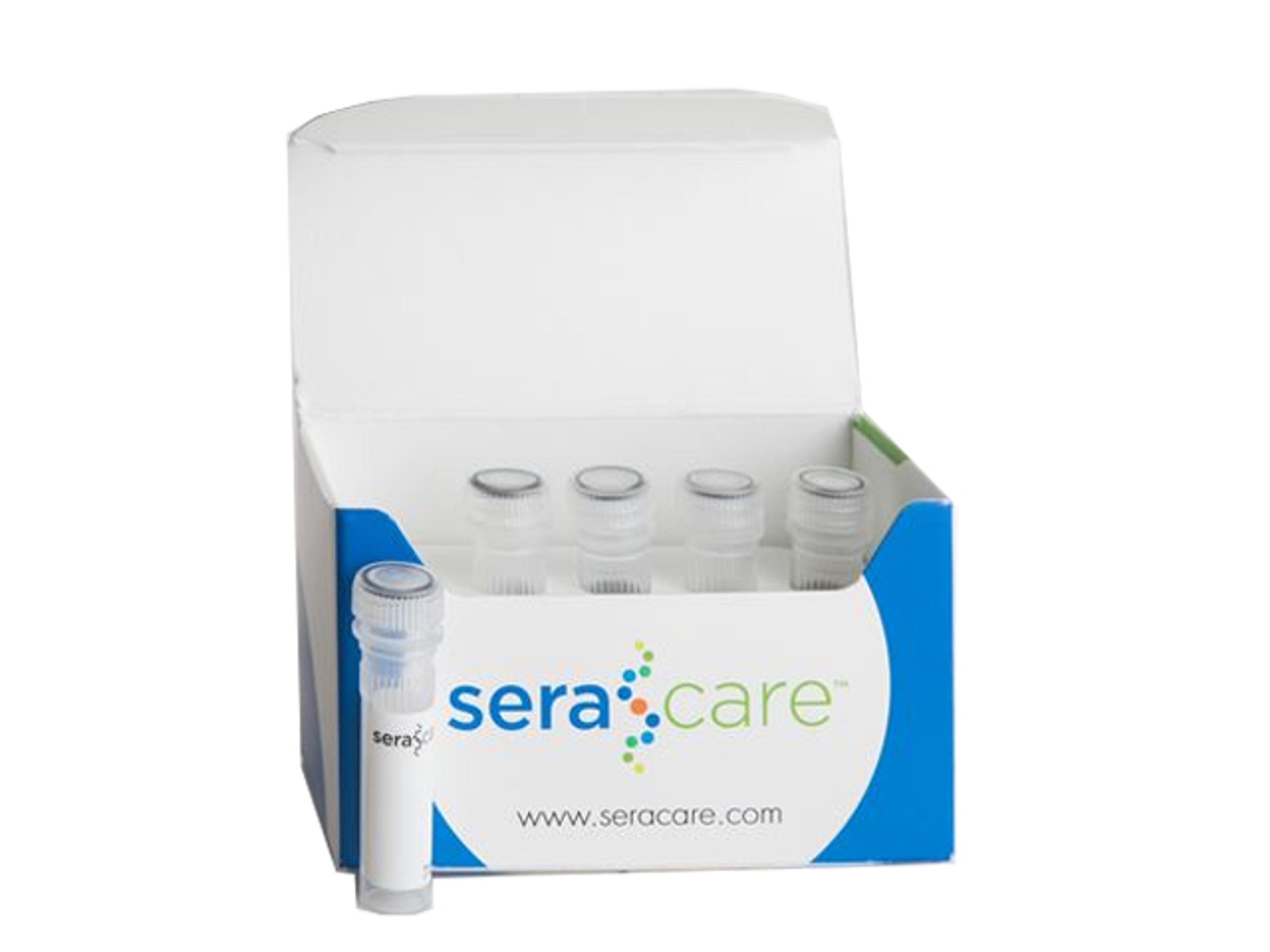
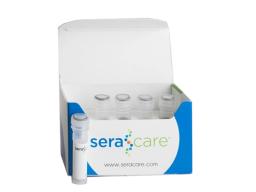
LGC Clinical Diagnostics are global leaders in clinical genomic assay implementation and routine quality control. Our portfolio of Seraseq® products enables the promise of clinical genomics with the design and manufacture of patient-like reference materials for use in the development, validation, and implementation of molecular next-generation sequencing (NGS) assays that support clinical evaluation and management of various diseases including somatic cancer, reproductive health, infectious disease, and inherited disease.
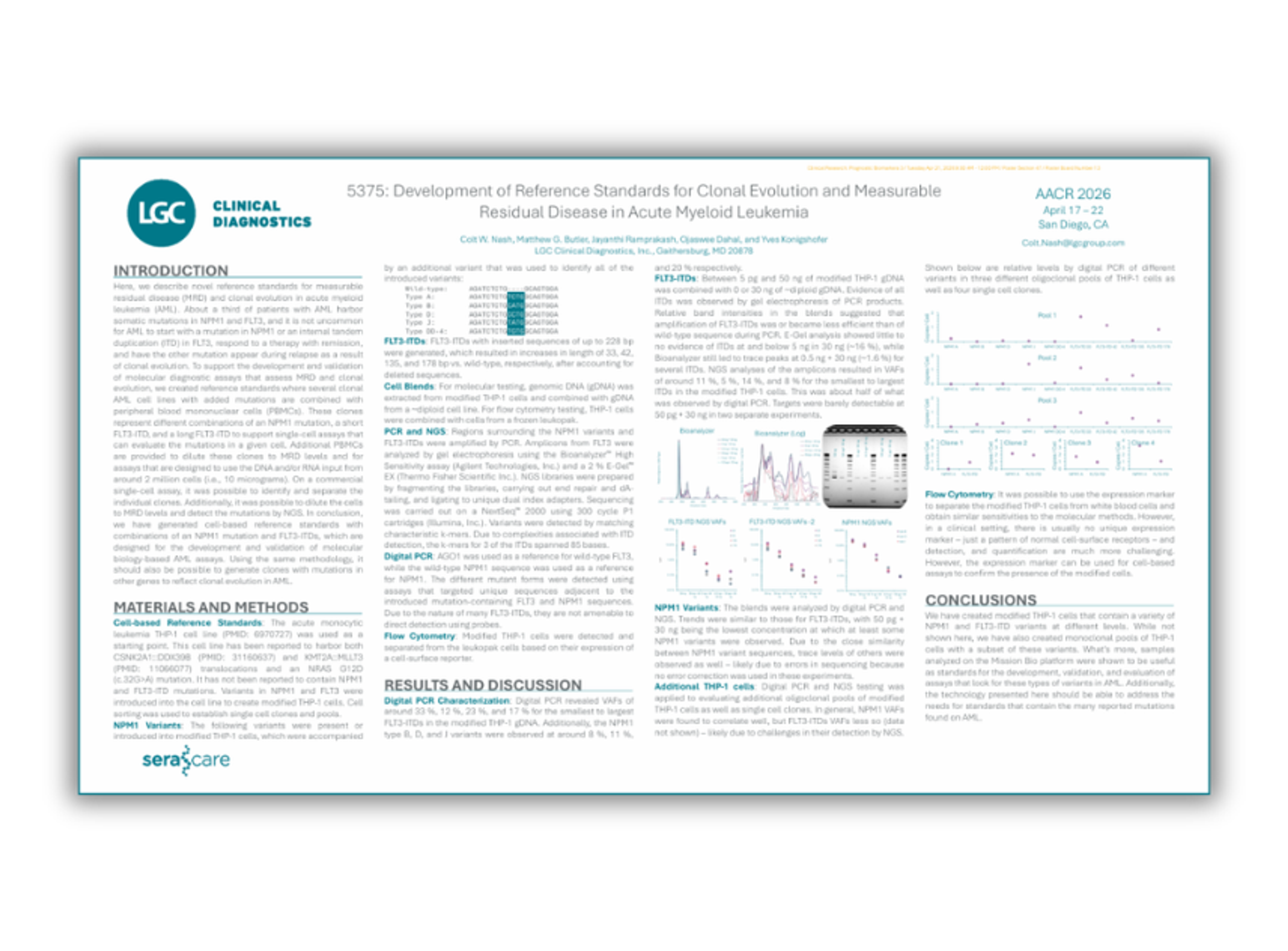
Development of reference standards for clonal evolution and MRD in acute myeloid leukemia
Discover how LGC Diagnostics & Genomics - SeraCare Clinical Diagnostics created Seraseq® reference standards where several clonal acute myeloid leukemia (AML) cell lines with added mutations are combined with peripheral blood mononuclear cells (PBMCs) to support the development and validation of molecular diagnostic assays that assess MRD and clonal evolution.
Resource details:
Resource type: Scientific poster
Page count: 1
Read time: 5 mins
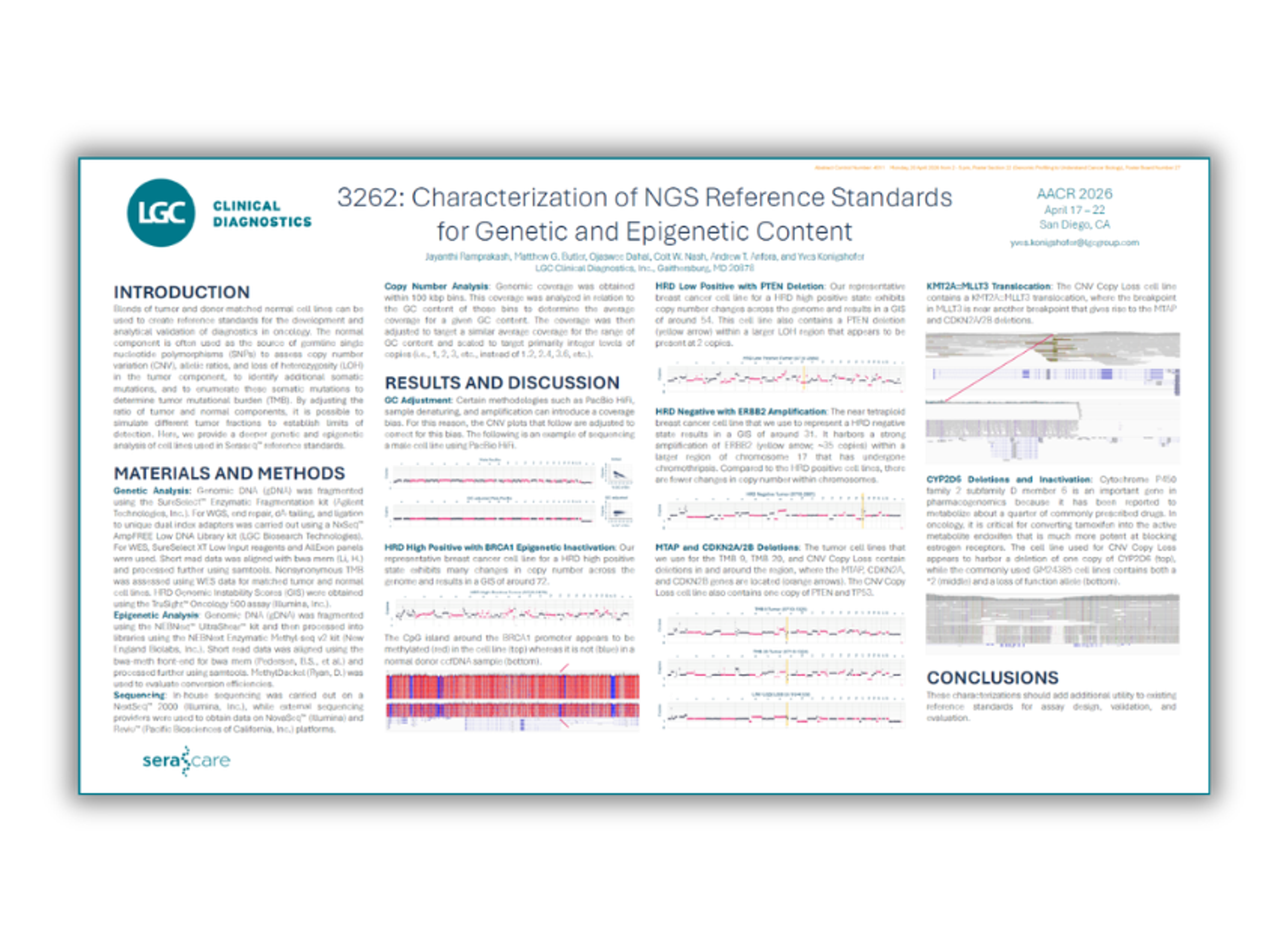
Characterization of NGS reference standards for genetic and epigenetic content
Blends of tumor and donor-matched normal cell lines can be used to create reference standards for the development and analytical validation of diagnostics in oncology. In this scientific poster, LGC Diagnostics & Genomics - SeraCare Clinical Diagnostics provides a deeper genetic and epigenetic analysis of cell lines used in reference standards.
Resource details:
Resource type: Scientific poster
Page count: 1
Read time: 5 mins
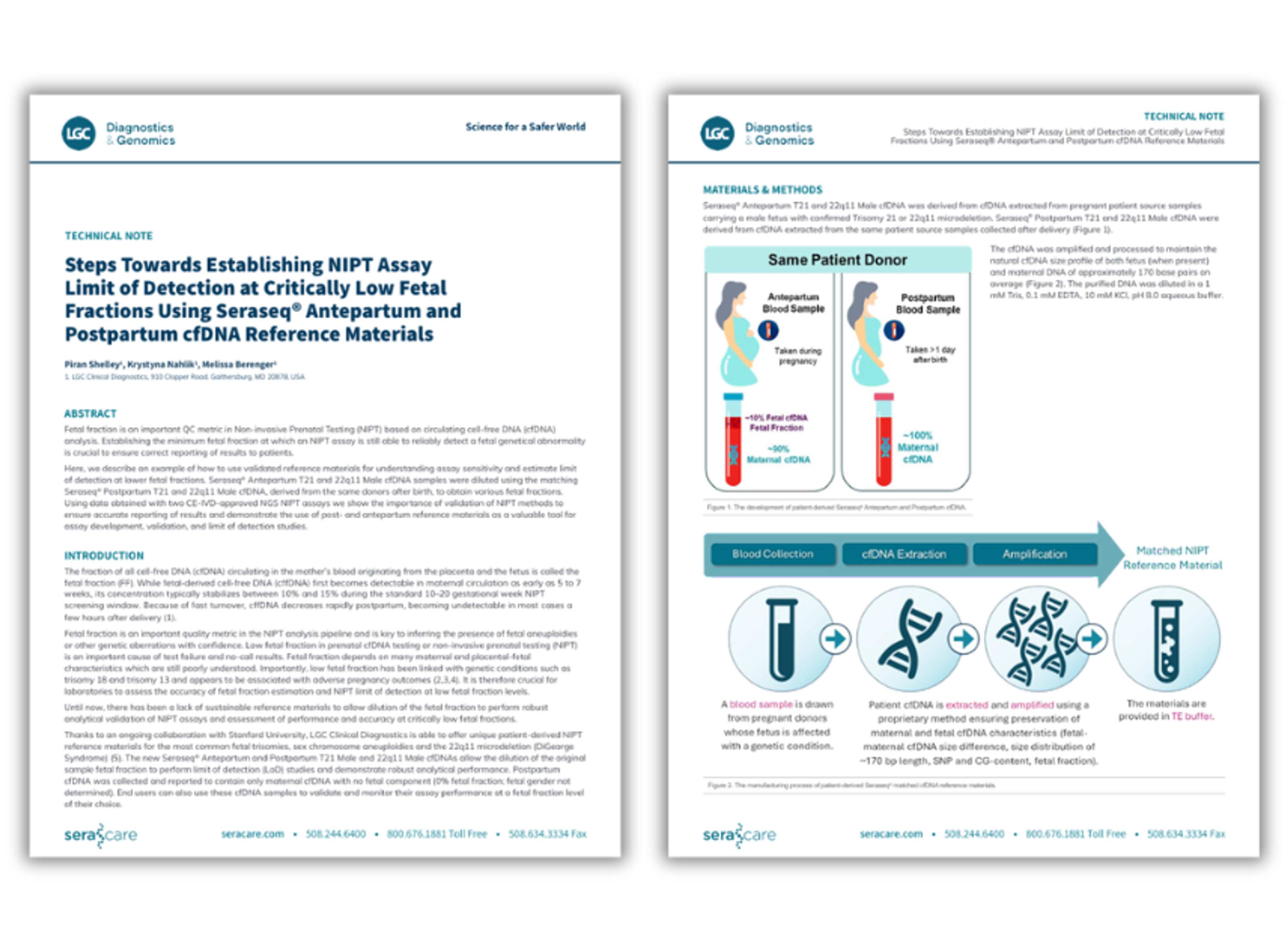
How low can fetal fraction go before your NIPT assay misses something?
Every non-invasive prenatal testing (NIPT) assay depends on sufficient fetal cell-free DNA to generate a reliable result, but does performance hold as fetal fraction declines? Discover how in partnership with Stanford University, LGC Diagnostics & Genomics – SeraCare Clinical Diagnostics used matched antepartum and postpartum cfDNA from the same donors to build a controlled fetal fraction dilution series and determined where two CE-IVD approved NIPT assays begin to lose reliability.
Resource details:
Resource type: Technical note
Page count: 6
Read time: 8 mins
Lyophilized standards for non-invasive prenatal testing validation
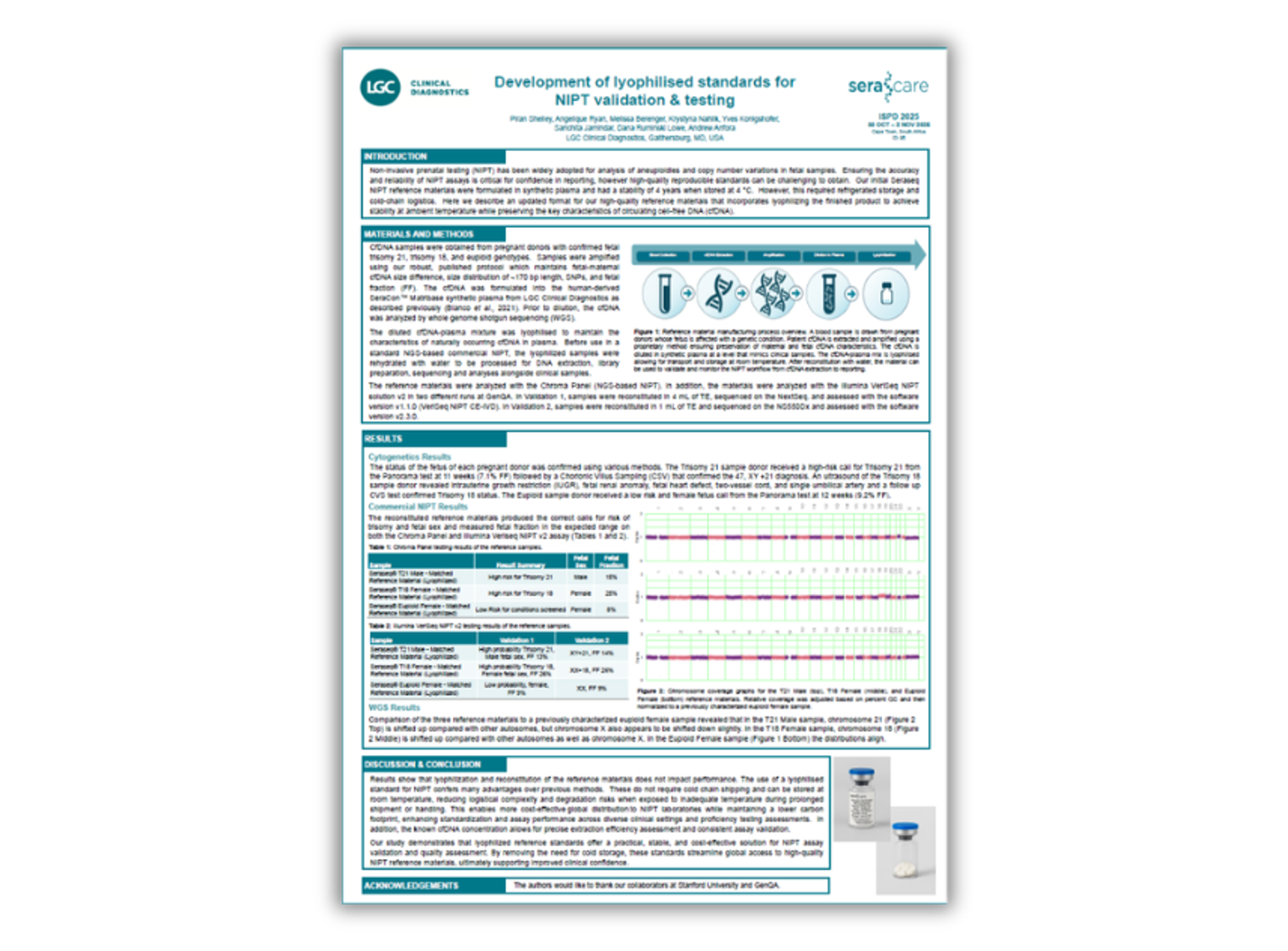
Cold chain logistics have long been a barrier to reliable non-invasive prenatal testing (NIPT) reference materials. In this scientific poster, LGC Diagnostics & Genomics - SeraCare Clinical Diagnostics presents a new lyophilized format for their Seraseq® NIPT reference materials, stable at ambient temperature while preserving the key characteristics of circulating cell free DNA. Results across two commercial NGS-based NIPT assays confirm accurate trisomy calls, fetal sex, and fetal fraction after reconstitution.
Resource details:
Resource type: Scientific poster
Page count: 1
Read time: 5 mins
Advancing pharmacogenomics testing into clinical practice through standardization and new technology
In this webinar ‘Advancing Pharmacogenomics Testing into Clinical Practice through Standardization and New Technology’, Vicky Pratt, director of scientific affairs at Agena Bioscience and past president of the Association for Molecular Pathology, and Stuart Scott, Stanford Medicine Clinical Genomics Laboratory, discuss how they share collaborative work to standardize laboratory testing and new technologies to expand the scope of pharmacogenomic testing, including long-read sequencing and bioinformatic translational tools.
What's standing between tumor-agnostic MRD and clinical adoption?
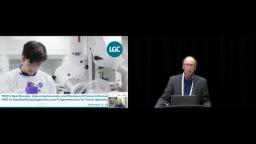
Struggling to get tumor-informed sensitivity without tumor tissue in hand? Discover where the field stands on tumor-naive MRD in this session recorded at the Association for Molecular Pathology Annual Meeting (AMP 2025). Titled ‘MRD's Next Decade: Improving Accuracy and Precision of Tumor-Informed MRD to Standardizing Epigenetics and Fragmentomics for Tumor Agnostic MRD’, hear from experts from BloodPAC, University of Washington, GUIDE.MRD, and Foundation Medicine as they break down what's standing between tumor-agnostic MRD and clinical adoption, from CHIP interference to regulatory hurdles.
MRD workshop at AMP 2025 on tumor-agnostic testing and standardization challenges
This expert panel discussion that took place at the Association for Molecular Pathology (AMP) 2025 Annual Meeting & Expo, explores current advances and future challenges in minimal residual disease (MRD) testing using liquid biopsy technologies. Featuring leaders from academia, industry, and clinical diagnostics, the conversation highlights progress in detecting circulating tumor DNA at extremely low levels, alongside the need for improved sensitivity, specificity, and standardization.
The panel examines emerging approaches such as tumor‑naive MRD testing, multi‑omics integration, including epigenetics and fragmentomics, and the growing role of AI and large datasets in improving assay performance. Key topics also include clinical validation, regulatory challenges, and the potential of MRD testing to enable earlier intervention and more personalized cancer treatment.