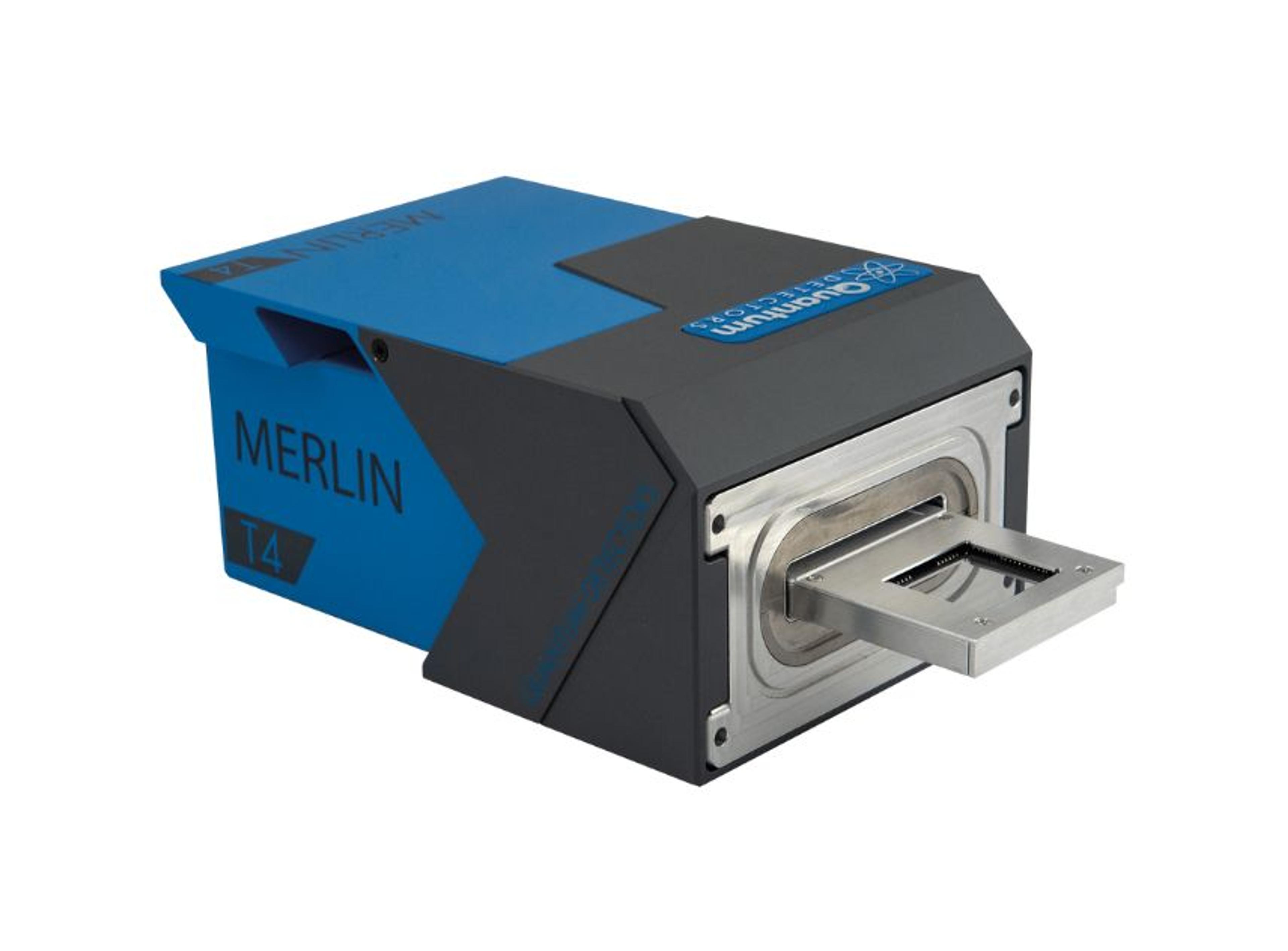
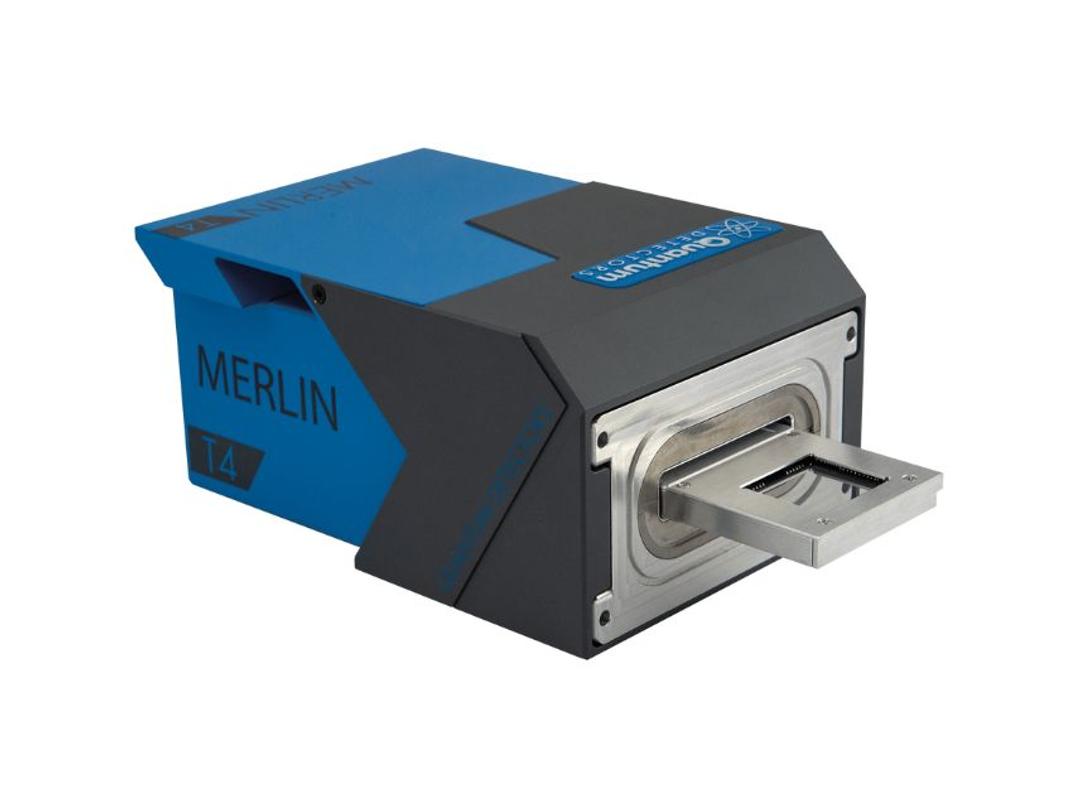
Merlin T4
Merlin T4 is a cutting-edge hybrid pixel detector engineered for ultrafast applications in STEMs. Ideal for 4D-STEM, ultrafast diffraction, and ultrafast TEM imaging of dynamic processes from all types of samples, including beam-sensitive materials.
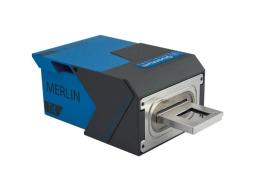

The supplier does not provide quotations for this product through SelectScience. You can search for similar products in our Product Directory.
When every nanosecond counts, traditional detectors fall short. Merlin T4 is built for researchers pushing the limits of 4D-STEM, time-resolved TEM for imaging dynamic processes, and ultrafast diffraction for structural studies. Powered by CERN’s Timepix4 ASIC, it offers a unique combination of frame-based and event-based acquisition, letting you capture what others miss — without compromise.
With Merlin T4, your 4D STEM acquisition is no longer bound by traditional detector framerates; instead, you collect 4D-STEM data at native scanning speeds. Furthermore, whether you're studying phase transitions, beam-sensitive samples, or 4D-STEM, Merlin T4 delivers the fidelity and timing you need to reveal transient material behaviours in real time.
Key Features / Benefits:
- Dual-mode: event-based and frame-based acquisition
- Up to 40,000 fps with 200 ps timing resolution
- Handles fast dynamics without data loss
- Minimises damage to sensitive samples
- Built for next-generation 4D-STEM and ultrafast TEM
Relevant Applications:
- 4D-STEM and ultrafast diffraction
- Beam-sensitive materials
- In situ experiments
- Phase mapping and dynamic nanostructures
- High-speed crystallography
Advanced 4D-STEM with Timepix4: From atomic-scale ferroelectrics to low-dose imaging of beam-sensitive materials
Wednesday, November 11 at 14:00 GMT | 15:00 CET | 09:00 EST | 06:00 PST
Discover how the speed, pixel count and event-driven capabilities of Timepix4 enable advanced 4D-STEM experiments across a range of materials challenges. Prof. Knut Müller-Caspary will introduce the Timepix4 setup and acquisition workflow at LMU Munich before presenting two scientific case studies: quantitative atomic-scale characterization of ferroelectric PZT using reciprocal TEM approaches, and the investigation of electron-beam-induced damage in metal-organic frameworks.
The webinar will conclude with an outlook on low-dose imaging strategies for beam-sensitive materials.
Certificate of attendance
If you attend the live webinar, you will automatically receive a certificate of attendance, including a learning outcomes summary, for continuing education purposes.
If you view the on-demand webinar, you can request a certificate of attendance by emailing editor@selectscience.net.
Webinar details
- Cost: Free to attend
- Location: Online
- Duration: 60 minutes
Registration is required to secure your place. If you register but can’t attend live, you will receive a link to the on‑demand recording once it becomes available.
Expanding the 4D‑STEM toolbox for advanced materials characterization
Tuesday, July 7 at 14:00 BST | 15:00 CEST | 09:00 EDT | 06:00 PDT
Four‑dimensional scanning transmission electron microscopy (4D‑STEM) is enabling new approaches to extract structural, crystallographic and phase information in advanced electron microscopy. As applications expand across materials science and nanotechnology, researchers increasingly require detector technologies that balance speed, dynamic range, timing precision and efficient data handling.
In this SelectScience® webinar, Dr. Stefano Vespucci, a leading Thermo Fisher Scientific Staff Scientist specializing in detector development and 4D‑STEM innovation, will present recent experimental results using a Timepix4‑based prototype detector in a TEM environment.
He will be joined by Dr. Matúš Krajňák, an Application Scientist at Quantum Detectors and Honorary Research Fellow at the University of Glasgow, whose research spans hybrid pixel detectors, Lorentz microscopy and ultrafast imaging.
Together, they will compare frame‑based and data‑driven acquisition modes, discuss key detector performance considerations, and share examples demonstrating how Timepix4 capabilities support high‑resolution 4D‑STEM. They will also explore the future potential of event‑driven acquisition and timestamping technologies for next‑generation electron microscopy.
Certificate of attendance
If you attend the live webinar, you will automatically receive a certificate of attendance, including a learning outcomes summary, for continuing education purposes. If you view the on-demand webinar, you can request a certificate of attendance by emailing editor@selectscience.net.
Webinar details
- Cost: Free to attend
- Location: Online
- Duration: 60 minutes
Registration is required to secure your place. If you register but can’t attend live, you will receive a link to the on-demand recording once it becomes available.
Managing 4D-STEM data with smarter acquisition
Tuesday, September 8 at 14:00 BST | 15:00 CEST | 09:00 EDT | 06:00 PDT
Modern pixelated detectors can generate tens to hundreds of gigabytes of data during a single 4D-STEM scan, creating practical challenges for acquisition, processing, and interpretation.
In this SelectScience® webinar, Arno Annys will demonstrate how event-driven electron detection can provide a more efficient representation of electron signals and help streamline the workflow from experiment to scientific insight.
Using application-based examples, the session will explore how event-driven acquisition, adaptive scanning strategies, and real-time ptychographic reconstruction can reduce the 4D-STEM data burden, support low-dose experiments, and provide immediate feedback during acquisition.
Attendees will learn how these approaches can make advanced 4D-STEM experiments more scalable, responsive, and accessible for routine use.
Certificate of attendance
If you attend the live webinar, you will automatically receive a certificate of attendance, including a learning outcomes summary, for continuing education purposes.
If you view the on-demand webinar, you can request a certificate of attendance by emailing editor@selectscience.net.
Webinar details
- Cost: Free to attend
- Location: Online
- Duration: 60 minutes
Registration is required to secure your place. If you register but can’t attend live, you will receive a link to the on‑demand recording once it becomes available.

Protein nanocrystallography with MicroED and electron-counting detectors
Tuesday, October 27 at 14:00 GMT | 15:00 CET | 10:00 EDT | 07:00 PDT
Protein nanocrystals offer exciting opportunities for structural biology, but their small size and weak diffraction signals can make them challenging to study using traditional crystallographic approaches. Advances in electron diffraction are helping researchers overcome these limitations, opening new possibilities for determining structures from samples that were previously difficult to analyse.
In this SelectScience® webinar, Dr. Marcus Gallagher-Jones, Senior Electron Microscopy Structural Biologist at the Rosalind Franklin Institute, will share how electron diffraction techniques are being used to unlock structural insights from protein nanocrystals. Drawing on his experience in structural biology and electron microscopy, Dr. Gallagher-Jones will present recent structures and discuss how emerging approaches are expanding the capabilities of macromolecular crystallography.
Discover how MicroED (microcrystal electron diffraction) and SerialED (serial electron diffraction) workflows compare, and learn how advanced electron-counting detectors and energy filtering can help maximize data quality while operating at the low electron flux required for radiation-sensitive biological specimens. By attending this webinar, you will gain practical insights into detector requirements, workflow considerations, and the latest developments in protein nanocrystallography.
Certificate of attendance
If you attend the live webinar, you will automatically receive a certificate of attendance, including a learning outcomes summary, for continuing education purposes.
If you view the on-demand webinar, you can request a certificate of attendance by emailing editor@selectscience.net.
Webinar details
Cost: Free to attend
Location: Online
Duration: 60 minutes
Registration is required to secure your place. If you register but can’t attend live, you will receive a link to the on‑demand recording once it becomes available.

Probing beam sensitive materials while preserving sample integrity with 4D-STEM and EELS
Join us for a three-part webinar series exploring the Merlin T4 from Quantum Detectors, the first hybrid pixel detector to combine frame-based and event-based imaging in a single system. From capturing elusive skyrmions to enabling ultrafast 4D-STEM and ptychography, this series showcases how hybrid detection is set to transform the future of transmission electron microscopy (TEM).
- Part 1: How to capture skyrmions and beam sensitive materials with precision | Date: August 19 at 16:00 BST / 17:00 CEST / 11:00 EDT / 08:00 PDT
- Part 2: Next-gen 4D-STEM and quantitative imaging with Timepix4 | Date: August 27 at 16:00 BST / 17:00 CEST / 11:00 EDT / 08:00 PDT
- Part 3: Probing beam sensitive materials while preserving sample integrity with 4D-STEM and EELS | Date: September 22 at 13:00 BST / 14:00 CEST / 08:00 EDT / 05:00 PDT
Monday, September 22, at 13:00 BST | 14:00 CEST | 08:00 EDT | 05:00 PDT
Understanding and controlling impurities and defects in molecular materials is critical for driving innovation in organic photovoltaics, catalytic systems, and novel composites. However, the extreme beam sensitivity of these materials poses significant challenges for probing with conventional transmission electron microscopy (TEM) techniques, often limiting resolution and damaging sample integrity.
Join Dr. Sean Collins, University of Leeds, and Kumar Vaidikar, Quantum Detectors, as they unveil cutting-edge low-dose 4D-STEM and single-atom electron energy loss spectroscopy (EELS) methods, that push measurements to the very limit of detection while preserving sample integrity. Discover how these advanced methods are revolutionizing microstructural analysis while unlocking new pathways to optimize functional performance in sustainable energy, catalysis, and advanced materials.
Who should attend?
- Materials scientists, electron microscopists, chemists, and physicists working on molecular materials, organic semiconductors, catalysis, and nanostructured composites.
- Researchers and facility users exploring advanced 4D-STEM and EELS techniques, or applying cutting-edge detectors to energy and sustainability challenges.
Certificate of attendance
If you attend the live webinar, you will automatically receive a certificate of attendance, including a learning outcomes summary, for continuing education purposes.
If you view the on-demand webinar, you can request a certificate of attendance by emailing editor@selectscience.net.
Webinar details
- Cost: Free to attend
- Location: Online
- Duration: 60 minutes
Registration is required to secure your place. If you register but can’t attend live, you will receive a link to the on‑demand recording once it becomes available.
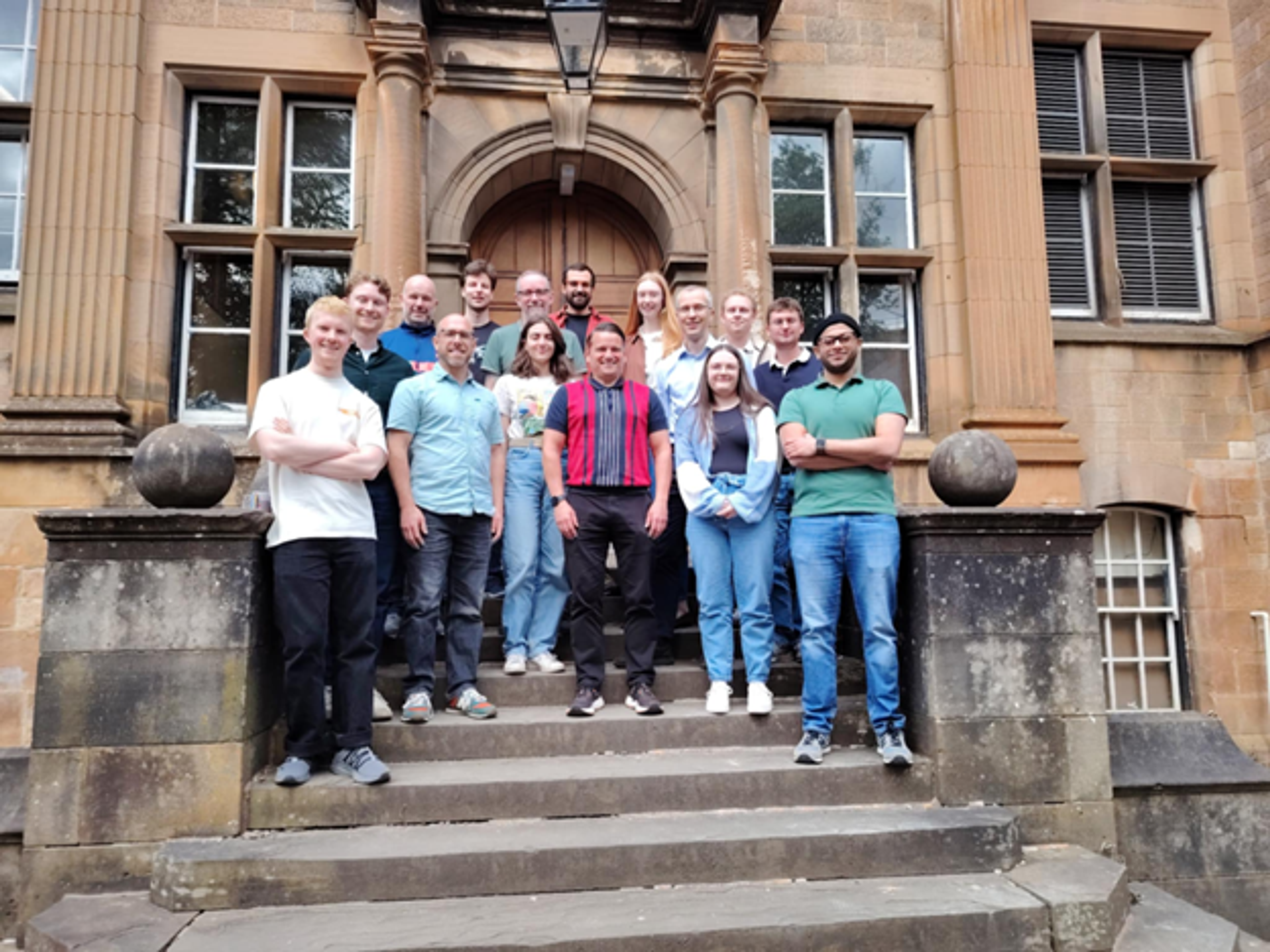
Atomic-scale imaging breaks speed barriers in Glasgow lab
Researchers harness next-generation detectors to capture magnetic dynamics in microseconds
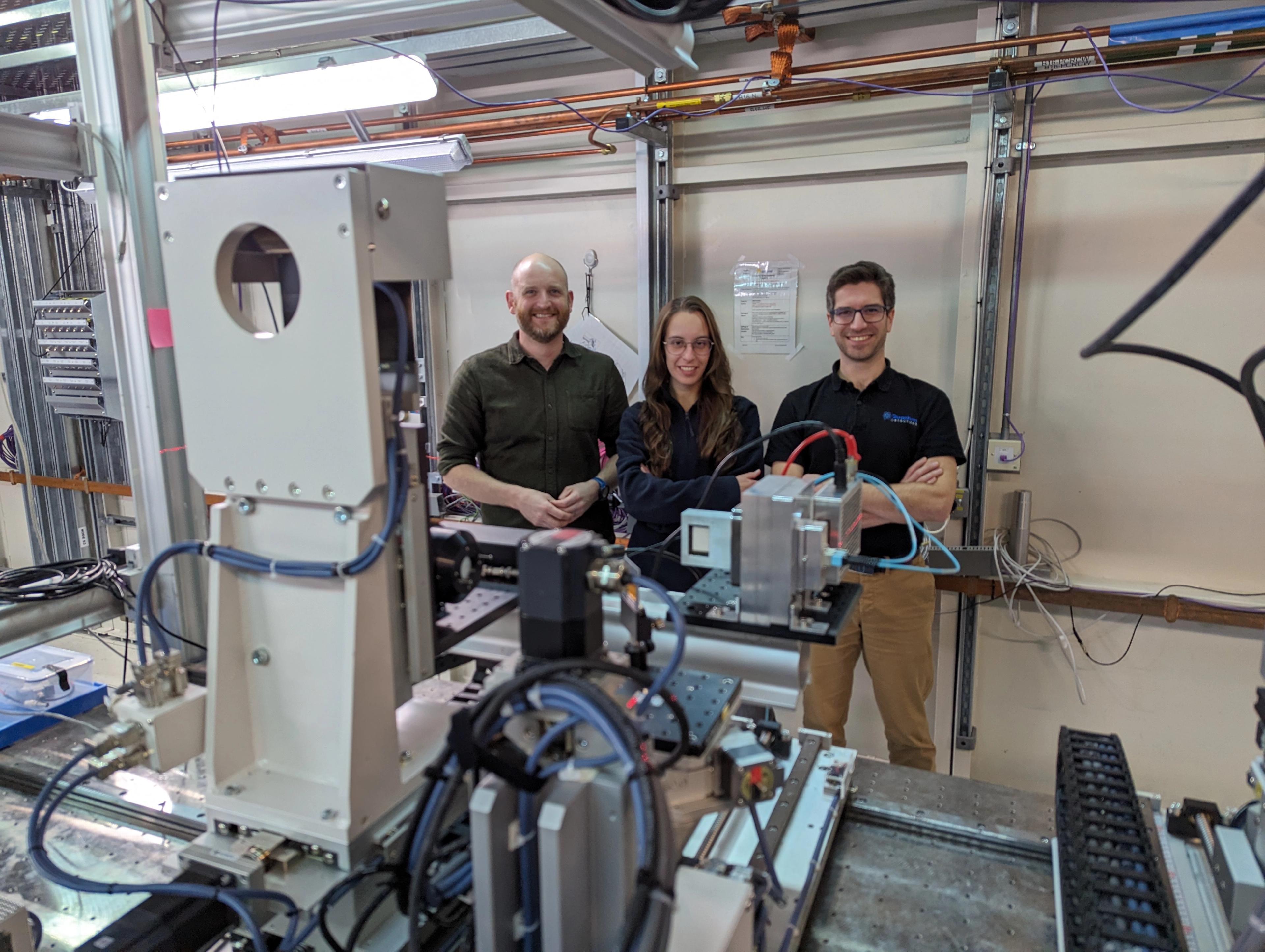
Pixel-level tuning of Timepix4 advances detector technology
Oxford researcher Nina Dimova pushes pixel-by-pixel calibration and clustering to unlock nanosecond precision in particle tracking and electron microscopy