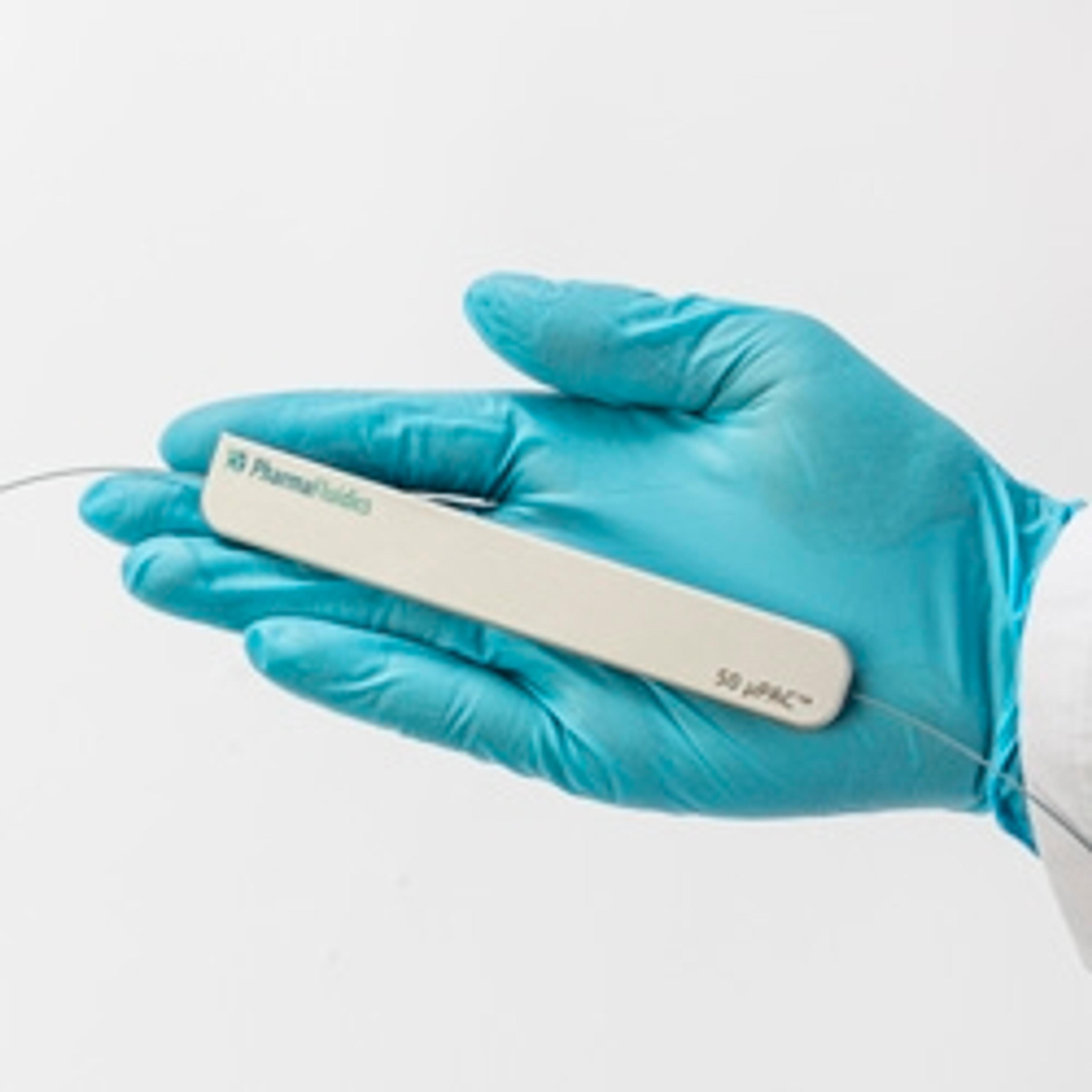
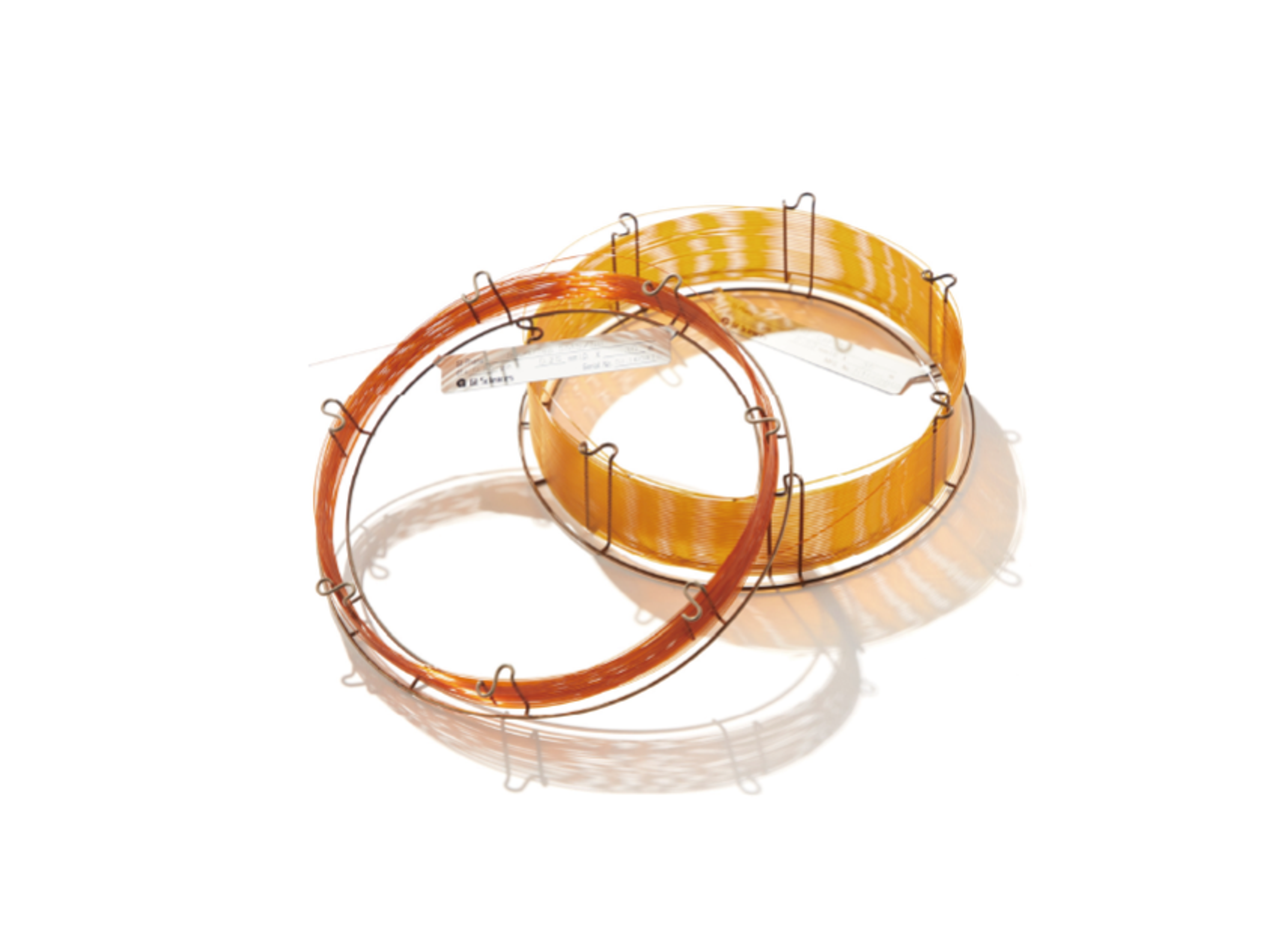
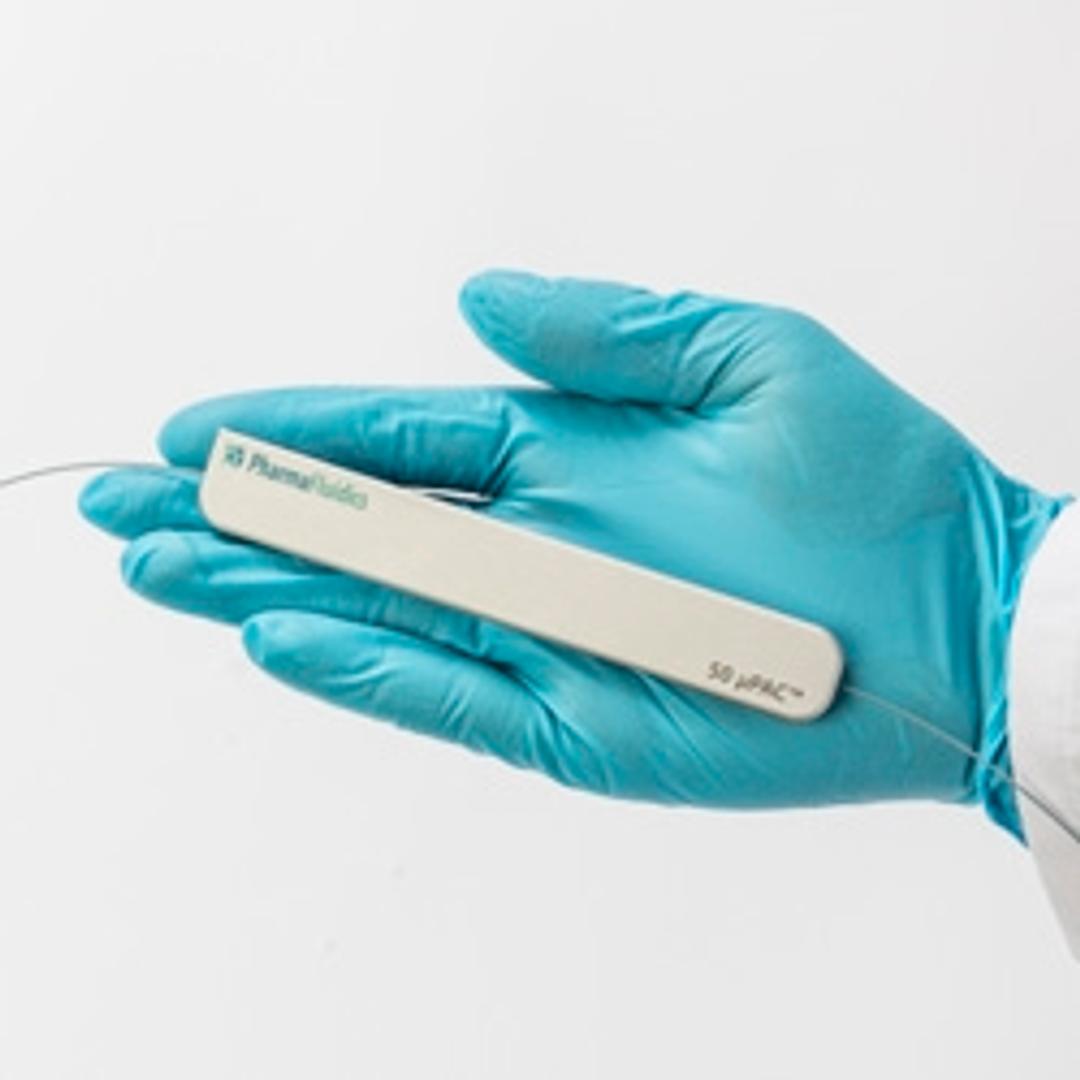
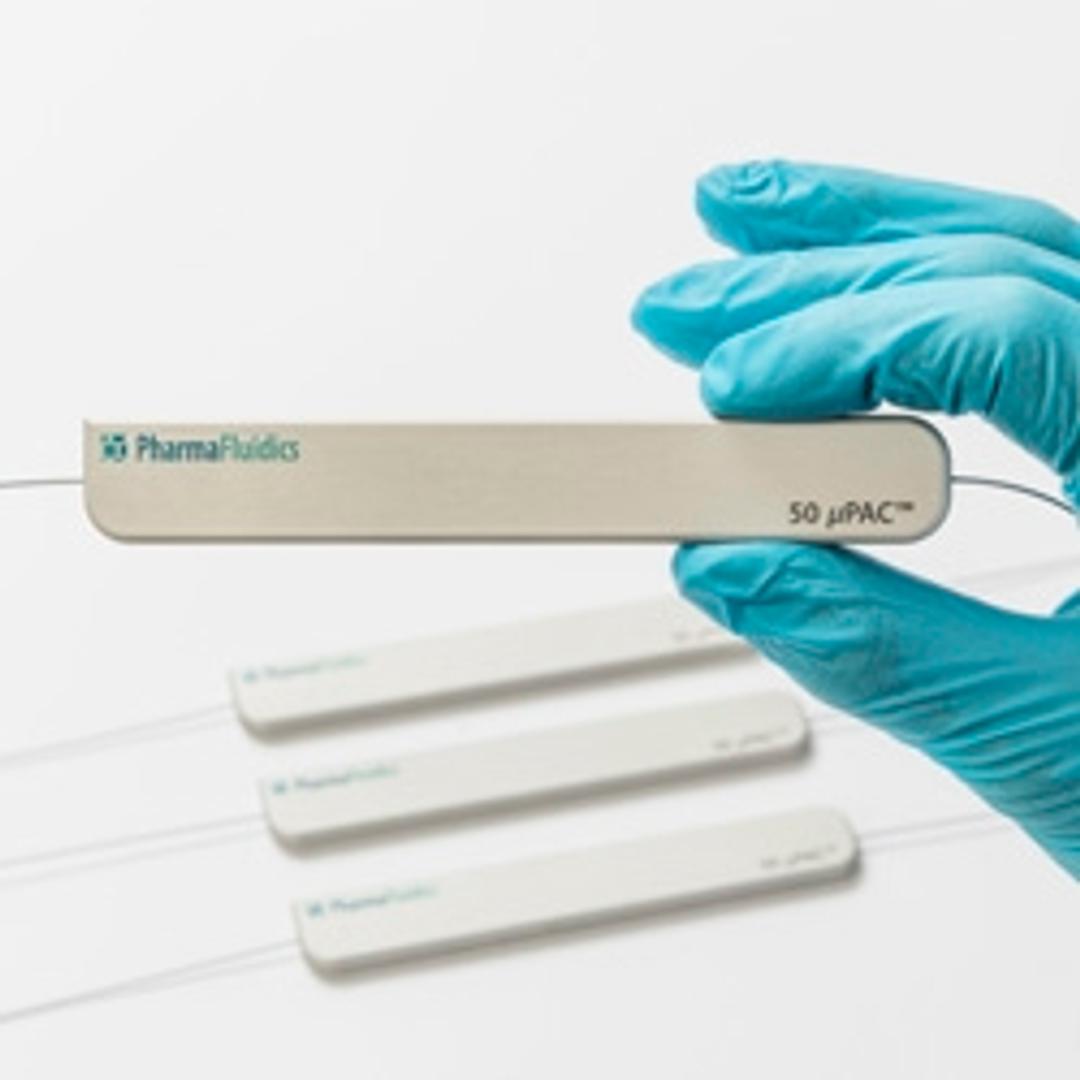
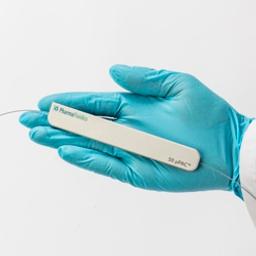
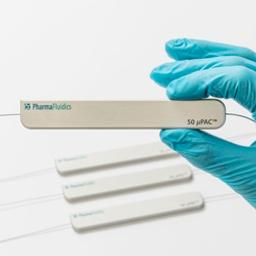
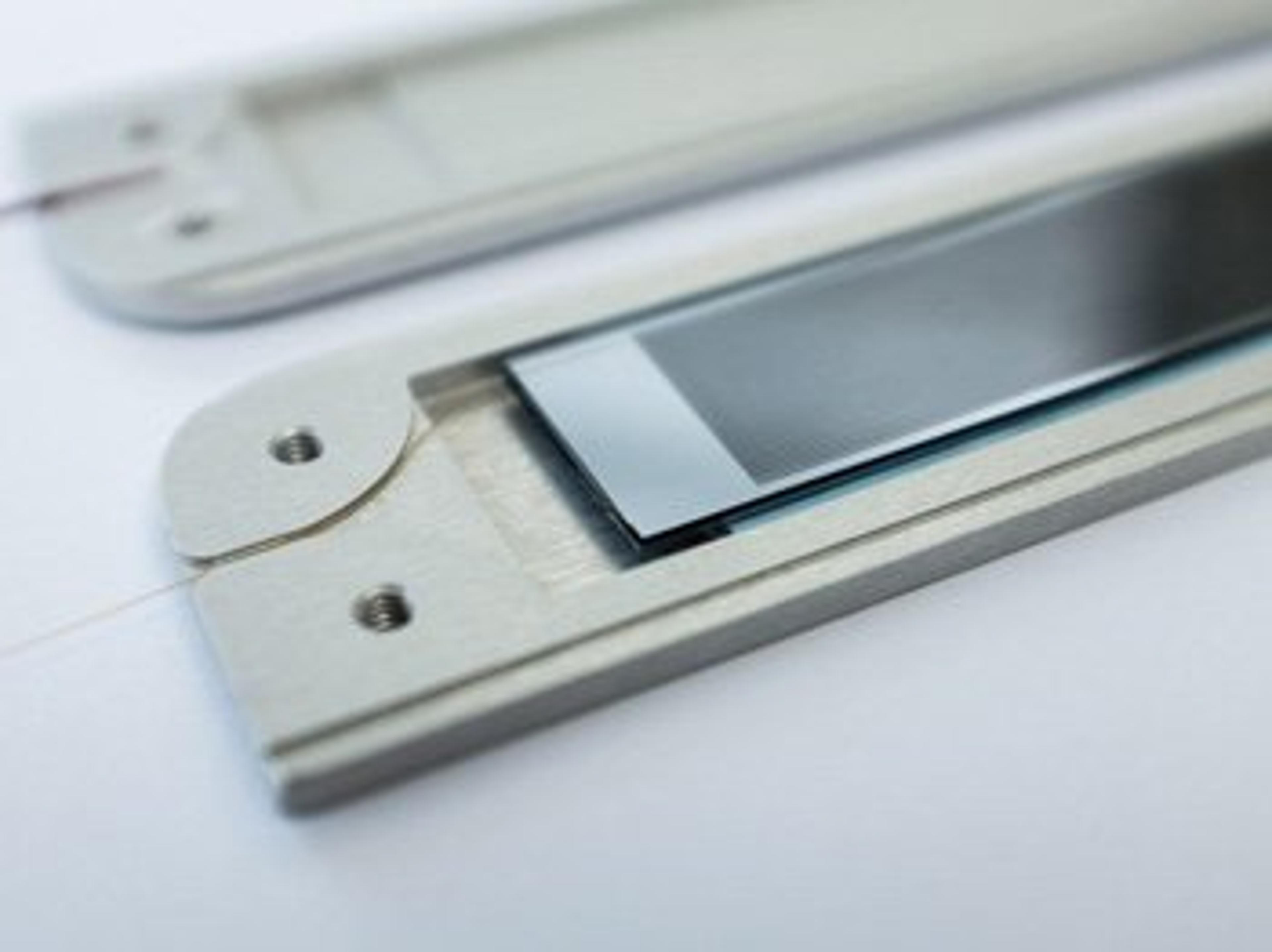
50 cm µPAC™ column
With an internal volume of 3µL, this 50 cm long RP-C18 µPAC™ column is perfectly suited to perform high throughput analyses with shorter gradient solvent times (30, 60 and 90-minute gradients) and it can be used over a wide range of flow rates, between 100 and 2000 nL/min. µPAC™ column, 50 cm length, with pillar array backbone at interpillar distance of 2.5µm, C18.
PharmaFluidics- 50cm µPAC™ columns
PharmaFluidics- 50cm µPAC™ columns





The supplier does not provide quotations for this product through SelectScience. You can search for similar products in our Product Directory.
High-performance separation tool for flow rate range between 100nl/min - 1,5µl/min and injection volume range of 4nl up to 5µl; to be used in applications for biomarker discovery (proteomics, metabolomics, lipidomics )and the analysis of biopharmaceuticals. With an internal volume of 3μL, this 50 cm long RP-C18 μPAC™ column is perfectly suited to perform high throughput analyses with shorter gradi¬ent solvent times (30, 60 and 90-minute gradients) and it can be used over a wide range of flow rates, between 100 and 2000 nL/min. µPAC™ column, 50 cm length, with pillar array backbone at interpillar distance of 2.5µm, C18.

High-throughput, routine, and comprehensive proteome analysis using a µPAC-based capillary-flow LC-MS workflow
In this application note, PharmaFluidics describes optimal LC methods for a variety of LC-MS based proteome analyses. This application note highlights PharmaFluidics' µPAC™ capLC column as a column that promises to maximize throughput of routine proteome analysis.
Non-targeted host cell protein monitoring in downstream process samples µPAC™-MS
In this application note, PharmaFluidics uses micropillar array columns (µPAC™) in combination with mass spectrometry for the characterization of host cell proteins and their monitoring during downstream processing.
µPAC™ - A New Generation of Micro-Chip Based HPLC Columns
Learn more about µPAC™ micro-Chip based HPLC columns from PharmaFluidics
Sensitive Detection of Peptides in Cytochrome C Digest Using Nano LC
Liquid chromatography coupled with mass spectrometry is a powerful analytical tool for detection and identification of chemicals in complex mixtures. With the low flow capability of Nano LC-MS, higher resolution, ion suppression tolerance and ionisation efficiency is obtained which gives greater chemical sensitivity. The low flow capability of nano-LC couples perfectly with the microfluidics of the Microsaic 4500 MiD® mass detector. The reduced solvent, nitrogen and power consumption of the Microsaic 4500 MiD® provides a lower cost and greener solution for mass detection.
Routine Proteome Analysis Using 50 cm µPAC™ Columns
The practice of bottom-up proteomics relies to a large extent on the separation performance that can be achieved with state-of-the art nano LC-MS/MS equipment. Depending on the sample complexity or the instrument time that can be dedicated to a certain sample, different LC columns and corresponding LC-MS/MS methods are often required. When aiming for comprehensive proteome analysis with deep coverage, relatively long columns (lengths up to 75 cm) are typically operated with long and shallow solvent gradients, delivering the highest chromatographic performance. This is indeed a good strategy if very complex samples need to be analyzed and when as much information as possible needs to be retrieved from these samples. However, daily routine proteome analysis often deals with much less complex samples or demands increased sample throughput, making total analysis times above 120 min undesirable or even impossible.
Why Should You Use µPAC™?
Discover 6 key reasons why you should use µPAC™ columns for your your separations.
μPAC™ Column Robustness in Bottom-Up Proteomics
The Pharmafluidics μPAC™ column's micromachined micro-pillar array technology provides distinct advantages over competitors. In this application note, Pharmafluidics discusses how sharp separation peaks, low backpressure, and resilience that allow the μPAC column to boost laboratory output.
Using the μPAC and Microsiac 4500 MiD for Cytochrome C Peptide Detection
In this application note, Pharmafluidics demonstrates the linkage of the Microsaic 4500 MiD® to the μPAC™ column, producing a compact and high-res platform for separations.
The Role of Perfect Order in LC Micro Pillar Arrays Part 2: Performance in Gradient Separations
In part 2 of this technical note, you will find further analysis of performance and efficiency in the μPACTM column, including peak gain, width, and capacity.
Ceramide Profiling Using an μPAC™ Micro-Array Column Combined with High-Res Mass Spectrometry
Ceramides, a type of sphingolipid, form a key role in skin permeability in the human body. Due to the structural diversity present, profiling ceramides requires high-fidelity chromatographic separation. In this note, the μPAC™ column is used to successfully perform this separation
Exceptional LC-MS Sensitivity and Reproducibility with PharmaFluidics’ New Trapping Column
Ir. Paul Jacobs, COO of PharmaFluidics, discusses its new micropillar array ‘trapping’ column launched at Pittcon 2018. This novel technology complements the already existing analytical column in chromatographic systems to enable higher flow rates, sample enrichment, and sample de-salting. Coupled with state-of-the-art mass spectrometry platforms, the trapping column will bring highly efficient and reproducible biomolecular separation to the user.
The µPAC™ Column: Unprecedented Separation Power with a Compact Form
In this video, discover how the µPAC™’s micromachined separation bed technology produces a miniaturized, high-performance separation tool compatible with all Nano-LC-MS equipment. The µPAC's design makes it ideal for small volumes of complex samples, such as in biomarker identification and biopharmaceutical development.

Thermo Fisher Scientific adds patterned microchip-based technology to liquid chromatography portfolio
The technology extends capabilities in column performance for biopharma and proteomics researchers

Safeguarding public health against antimicrobial-resistant bacteria
Infectious disease expert shares how robust LC columns are facilitating the analysis of complex pathogen samples
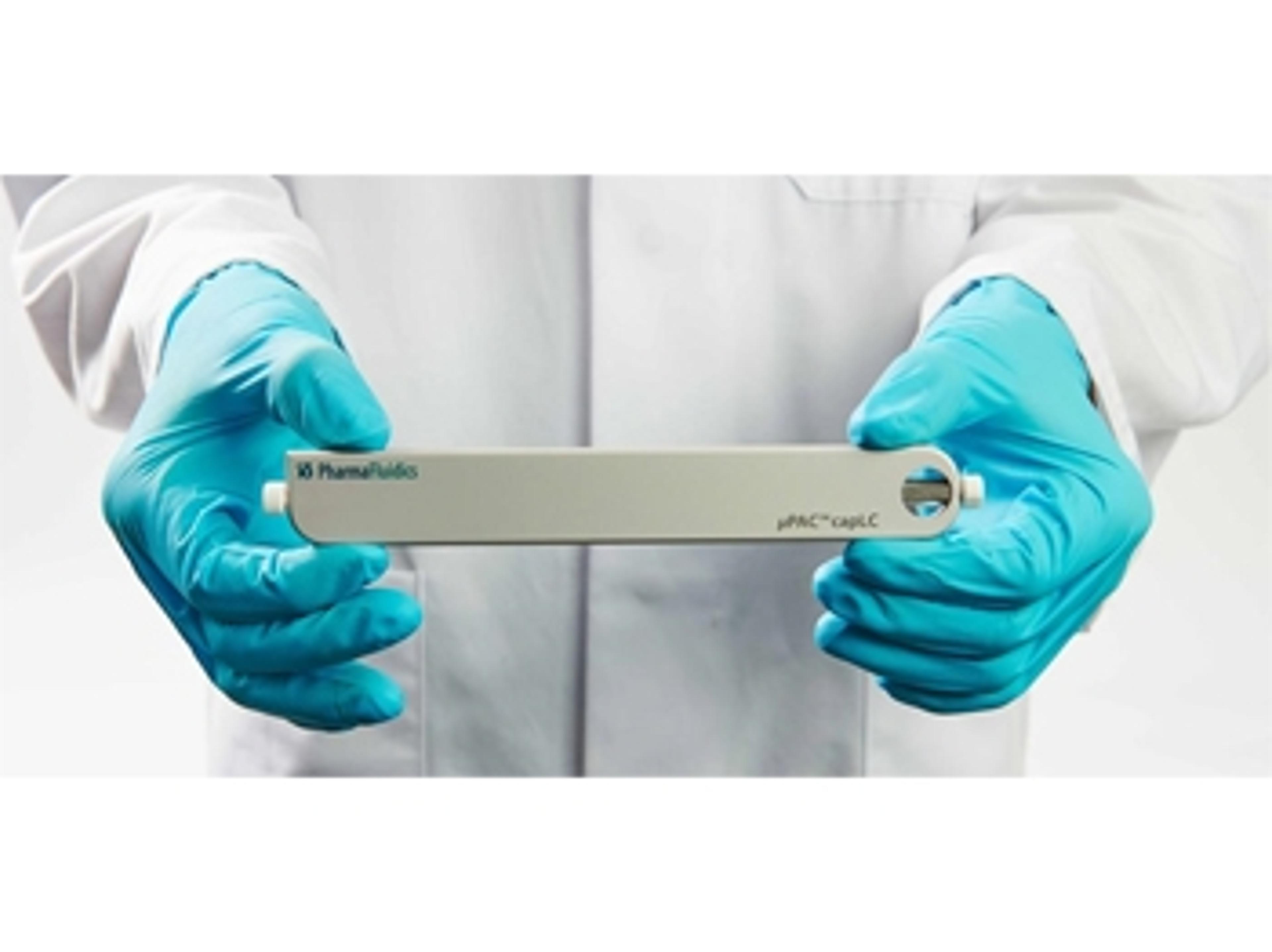
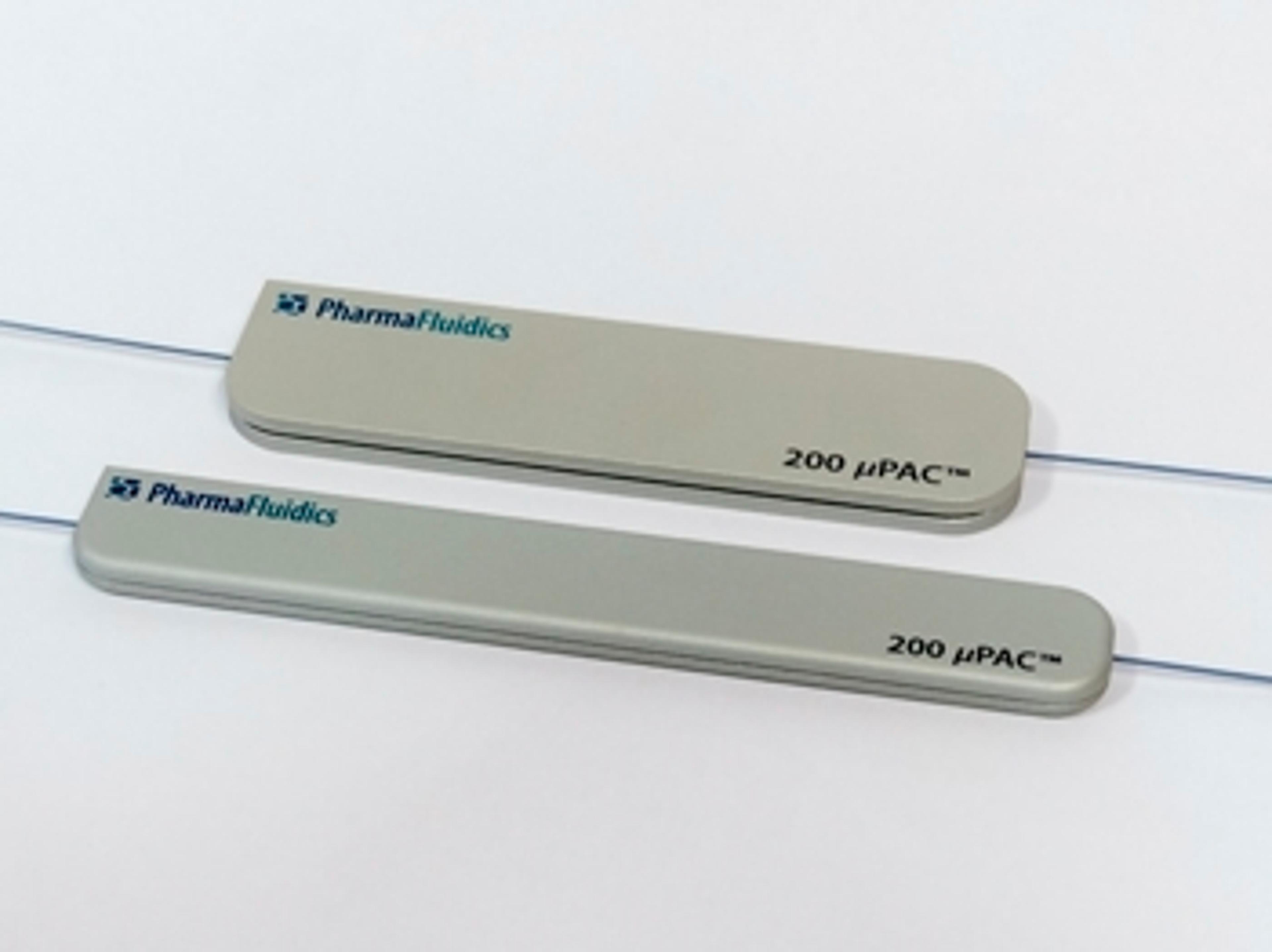
New format for PharmaFluidics’ µPAC™ columns to meet surging customer demand
We talk with the team at PharmaFluidics about how their recent changes in sourcing and production allows them to face demand from a growing community of users

How to overcome challenges with XL-MS to study whole proteomes
SelectScience speaks to the President of the German Society for Mass Spectrometry, who is using chemical cross-linking and mass spectrometry to provide deeper proteomics insights

How to Double Your IDs Using Micro Pillar Array Chromatography Columns
Watch this on-demand expert webinar on how to use µPAC™ to improve the sensitivity of single-cell proteomic samples

How to Double Your IDs for Single-Cell Proteomics Using µPAC™
Join this webinar to find out how you can use micro pillar array chromatography columns (µPAC™) to improve the sensitivity of low-input proteomic samples
How Engineers Developed a Disruptive Technology to Separate Samples
Meet Paul Jacobs, a pioneering engineer at the heart of the revolution in separations, and discover his journey to unprecedented resolution in LC-MS

11 Experts Share Biomarker Research Insights
We bring you insights, tips and knowledge from 11 experts as they tackle biomarker research using diverse methods

A Straightforward Approach for Enhancing Lipidomics Analysis
Discover the nano-LC technology enabling lipidomic research