PCR Forge cuts through the guesswork of multiplex PCR design
Explore how a free web-based design tool is removing the barriers to building robust PCR assays
26 Jun 2026
Designing a robust polymerase chain reaction (PCR) assay has never been straightforward, and for multiplex designs, where multiple primer and probe sets must function together without interference, the complexity compounds rapidly. PCR Forge™, the free web-based assay design tool from LGC Diagnostics & Genomics - Biosearch Technologies Oligo Synthesis is now in its second iteration, with new probe chemistry support and a Progressive Design Mode that guides users through difficult designs automatically.
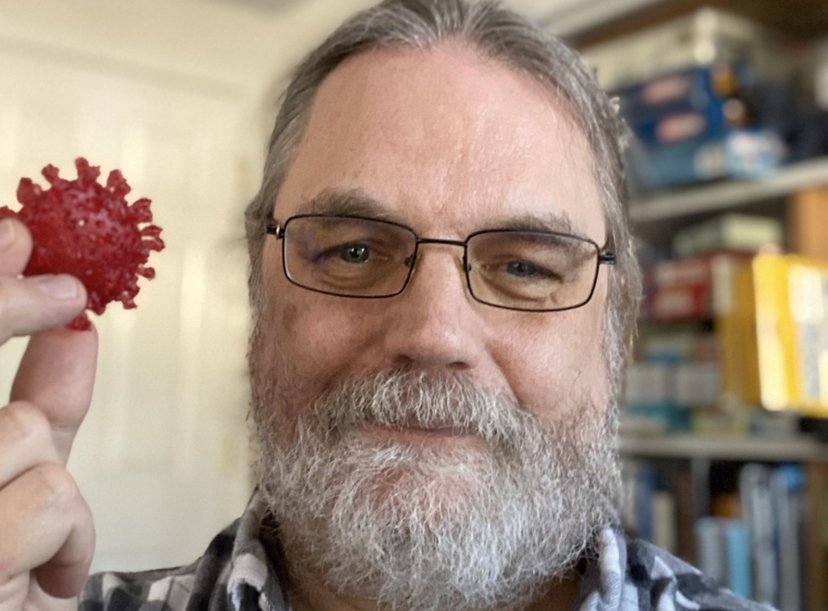
Scott Monsma, Principal Bioinformatics Scientist at LGC Diagnostics & Genomics
As PCR Forge advances beyond command‑line tools, Scott Monsma, Principal Bioinformatics Scientist at LGC Diagnostics & Genomics, picks up where SelectScience’s first look at PCR Forge left off. Since last year’s coverage, LGC Diagnostics and Genomics has added support for two new probe chemistries and introduced a design mode that guides users through difficult templates automatically. As Monsma puts it, “You look at what came out and go, ‘I don’t know what to do. It didn’t work.’”
That experience is still common for researchers relying on Primer3, the widely used open‑source primer design tool that requires command‑line operation and manual parameter editing. Its outputs arrive as plain text with no diagnostic context, making interpretation slow and prone to error. That lack of clarity creates a real barrier for newcomers, and in multiplex work, it can quickly become a dead end.
PCR Forge replaces the command line with a browser-based interface. Users paste a template sequence, choose an assay type and probe chemistry, set their parameters, and receive a ranked list of candidate designs showing primer and probe sets, melting temperatures, secondary structure scores, and diagnostic information.
Progressive Design Mode simplifies tough PCR templates
Not all templates cooperate with strict parameter settings. Complex genotyping targets requiring two probes to distinguish a single nucleotide polymorphism (SNP), and sequences prone to secondary structure formation, will often return no design when quality thresholds are set high.
Progressive Design Mode steps automatically through pre-configured parameter groups if earlier, stricter attempts fail. These groups, Strict, Moderate and Relaxed, represent increasingly flexible design constraints, allowing the software to widen the search space only when necessary.
“You start the design, and it works on Strict first, but if it couldn't find anything, it tries the Moderate design group, and then Relaxed if needed,” Monsma explains. “The groups are defined and saved ahead of time, so the progression is transparent: users know exactly which constraints are being relaxed and in what order. Especially for novice users, this is a gentle way of changing multiple things at once to make it a little bit easier to find an assay.”
Branching into new probe chemistries: MGB and LNA
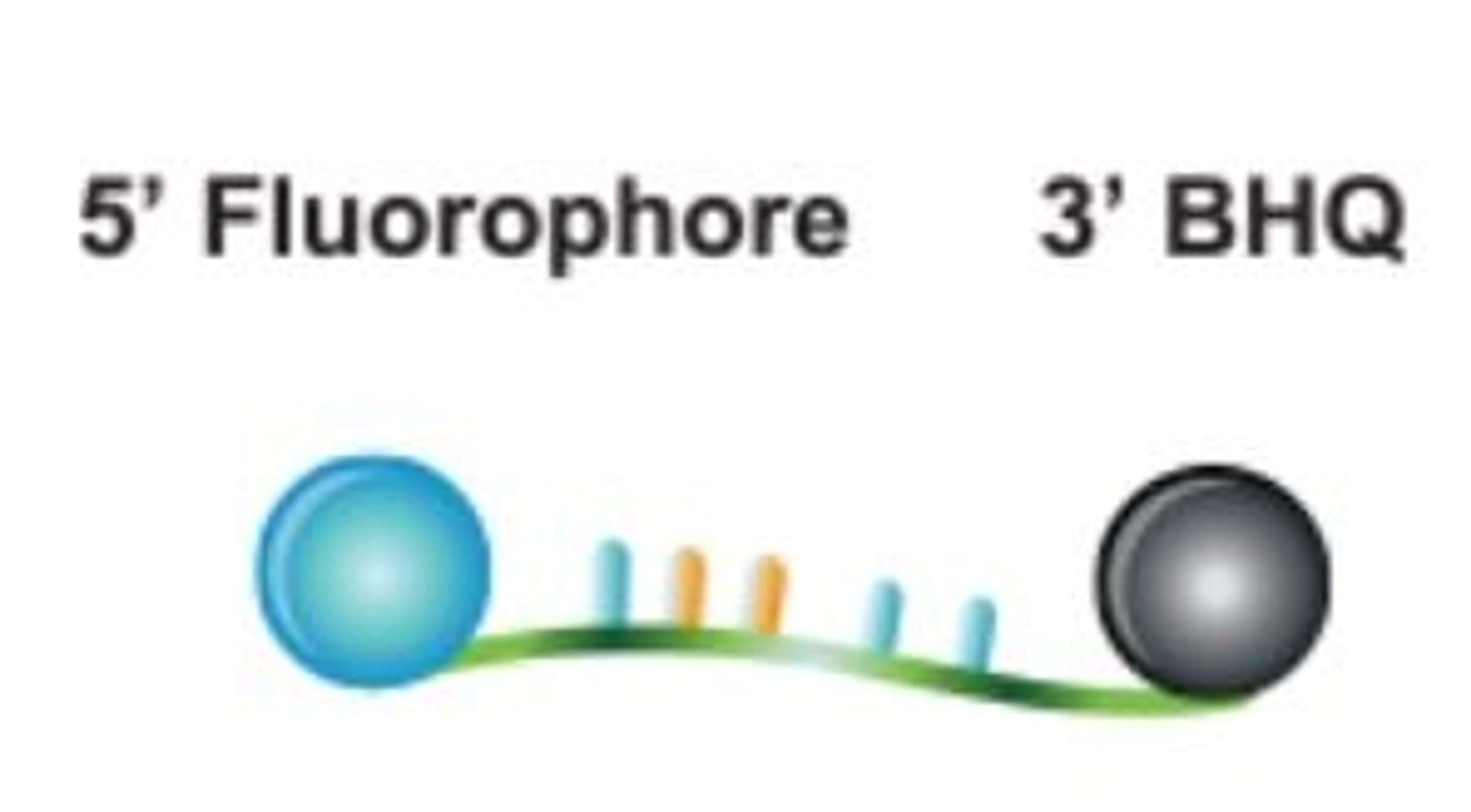
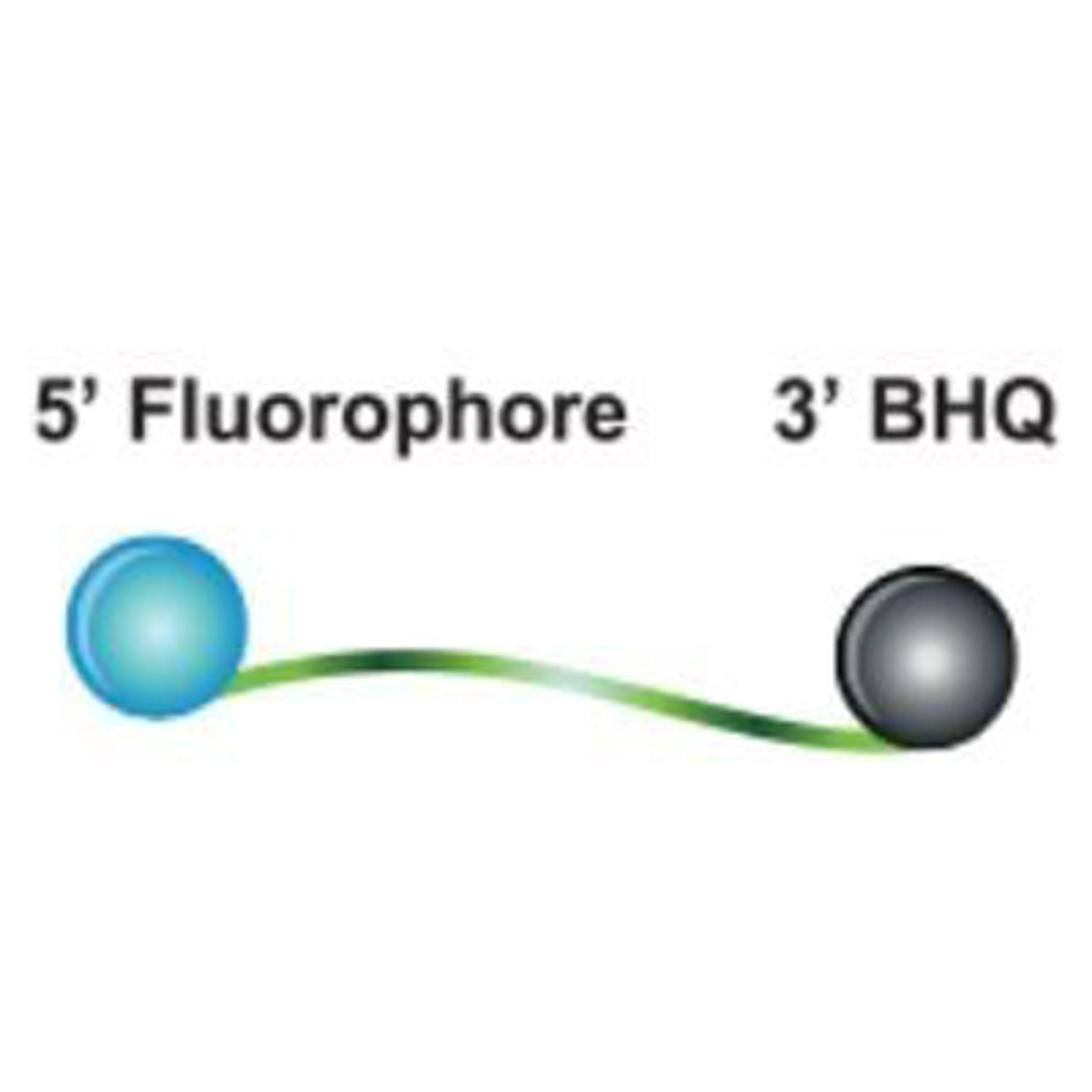
PCR Forge already supported standard BHQplus™ probes, built from conventional bases with a Black Hole Quencher fluorescent label. The two new chemistries address a fundamental challenge in quantitative PCR (qPCR) and genotyping assay design: achieving a high melting temperature in a short probe sequence.
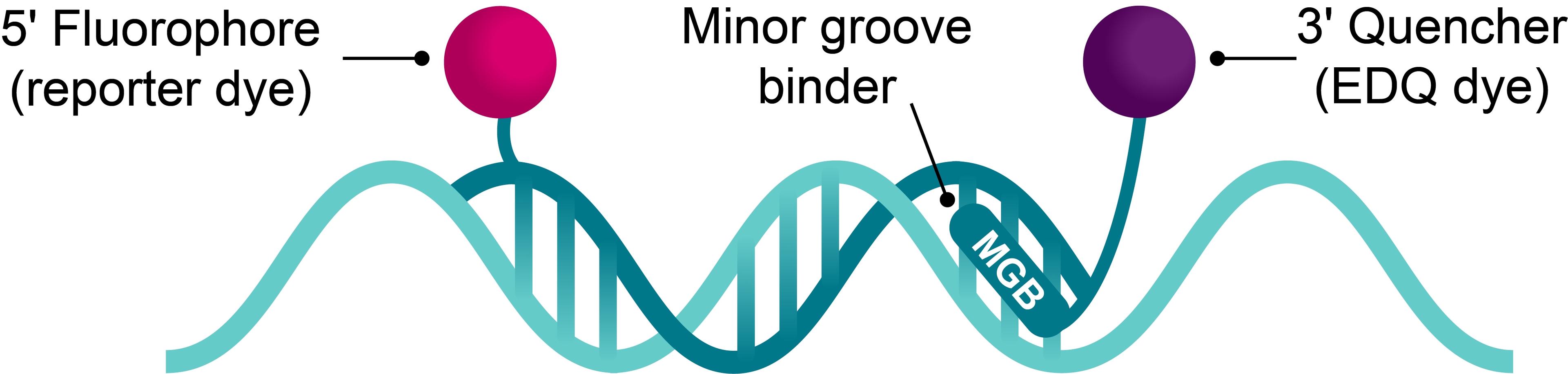
Minor groove binder (MGB) probes solve the problem by attaching to the 3' end of an otherwise standard-base probe. The groove binder substantially increases binding affinity without altering any of the bases themselves.
“It's still standard bases, but this minor groove binder really increases the melting temperature because it wants to bind to the DNA,” Monsma says. “The result is probes as short as 14 to 16 bases reaching melting temperatures around 70°C, a combination that standard probes of equivalent length cannot match.”
Locked nucleic acid (LNA) probes solve the same problem by a different mechanism. They incorporate locked nucleic acid bases directly into the probe sequence at positions of greatest analytical importance. For SNP genotyping, the algorithm places LNA bases at the SNP position and on either side, creating a cluster of three high-affinity bases precisely where allele discrimination matters most.
Both chemistries are selectable within the standard design workflow, with the software automatically applying the appropriate spacing rules and placement constraints.
Making sense of PCR design roadblocks
When a design attempt returns no result, PCR Forge surfaces failure information as a ranked list of tests showing how many primer or probe candidates were eliminated by each criterion, in a format designed to be read at a glance. “You can really sit back and just look out for any larger failure numbers in reporting,” Monsma says. “I see 1,100 of my sense primers had a Tm higher than 62. That's because my max Tm was set to 62. So, I go back to primer parameters and increase it.”
Monsma also offers a practical tip for faster design cycles: keep the template sequence to roughly the size of the intended PCR product, rather than submitting a much longer flanking region. “If you only give PCR Forge 200 bases for a product around 150 bases long, it can succeed. If you put in 1,000, it's going to take a while, and you may not actually find something.” Reducing the search space makes each attempt faster and more likely to converge.
Multiplex design that keeps pace with modern research challenges
One capability that sets PCR Forge apart is its support for multiplex assay design. Up to five templates can be submitted simultaneously, and the algorithm validates every oligo in every design against every other oligo in the panel, checking for cross-reactivity before returning a candidate set.
“We check every primer and probe in one design against all of the others, trying to come up with a set that can work together without primer-dimer issues,” Monsma says. “That's not offered by any of the competitors or other software that we know of.”
We check every primer and probe in one design against all of the others, trying to come up with a set that can work together without primer-dimer issues... that's not offered by any of the competitors or other software that we know of.
Scott Monsma Principal Bioinformatics Scientist at LGC Diagnostics & Genomics
The value of that capability becomes clear in surveillance applications. During the COVID-19 pandemic, Monsma used the underlying design engine to monitor mutations accumulating under existing assay oligos, including those in the Centers for Disease Control and Prevention (CDC)-designed assays in widespread use, and to generate alternate designs that would remain functional as new variants emerged. Designing replacement assays on demand across panels of thousands of oligos would have been technically prohibitive with command-line tools.
Research questions are getting more complex, and the assays needed to answer them are too. Multi-target detection, pathogen surveillance, and genomic profiling all depend on primer and probe panels that hold together under real reaction conditions, and validating those interactions by hand is no longer realistic.
Try PCR Forge today.
For further reading, explore LGC's guide to qPCR probe selection or read an exclusive interview with Senior Scientist Lindy McClelland, who shares how LGC Forge supported her through assay development.
* LNA® is a registered trademark of QIAGEN Group.
Links
Related content

Top tips for robust qPCR results
Your one-stop shop for ensuring reliable and reproducible results from qPCR
Optimising and validating multiplex qPCR assays

Web-based design software streamlines multiplex PCR assay development
Discover how free software can help design oligos for PCR assays, reducing guesswork and enabling creation of effective diagnostic assays
Tags
Frequently asked questions
Show frequently asked questions
How does PCR Forge improve multiplex PCR assay design compared to Primer3 for qPCR and genotyping?
PCR Forge™ replaces command-line workflows with a browser-based interface from LGC Diagnostics & Genomics. It designs multiplex PCR assays for up to five templates at once, checking every primer and probe for cross-reactivity and primer-dimer issues. Unlike Primer3’s plain-text output, PCR Forge provides ranked designs with melting temperatures, secondary structure scores, and diagnostic failure information for faster, clearer optimization.
What is Progressive Design Mode in PCR Forge and how does it help with difficult PCR templates?
Progressive Design Mode automatically steps through Strict, Moderate, and Relaxed parameter groups when strict settings fail to produce a PCR assay. Each group widens design constraints in a predefined, transparent order. This helps users, especially novices, handle challenging templates such as SNP genotyping targets or sequences with strong secondary structure, increasing the chances of finding workable primer and probe sets.
Which probe chemistries does PCR Forge support, including MGB and LNA probes, and why are they important?
PCR Forge supports BHQplus™, minor groove binder (MGB), and locked nucleic acid (LNA) probe chemistries for qPCR and SNP genotyping. MGB probes use a 3′ minor groove binder to raise melting temperature in short probes, while LNA probes incorporate locked nucleic acid bases, especially around SNP sites, to boost affinity and allele discrimination. The software automatically applies spacing and placement rules for each chemistry.