
What scientists really want from a raw materials supplier
New survey data reveals what scientists value most when sourcing chemical raw materials, and where Glentham Life Sciences is closing the gaps
15 Sept 2026
A recent market survey of professionals working across academic research, diagnostics, biotechnology, pharmaceutical and government labs set out to understand how scientists source the chemical raw materials, reagents and fine chemicals their work depends on. The results paint a clear picture of what buyers prioritize, where current suppliers fall short, and which materials are proving hardest to obtain.
In this SelectScience® article, we look at what the survey reveals about scientist priorities and sourcing pain points, and how Glentham Life Sciences, a supplier of fine chemicals and raw materials to the diagnostics and life science industries, has used these findings to sharpen its own approach to quality, supply and stock availability.
Product quality remains the top priority
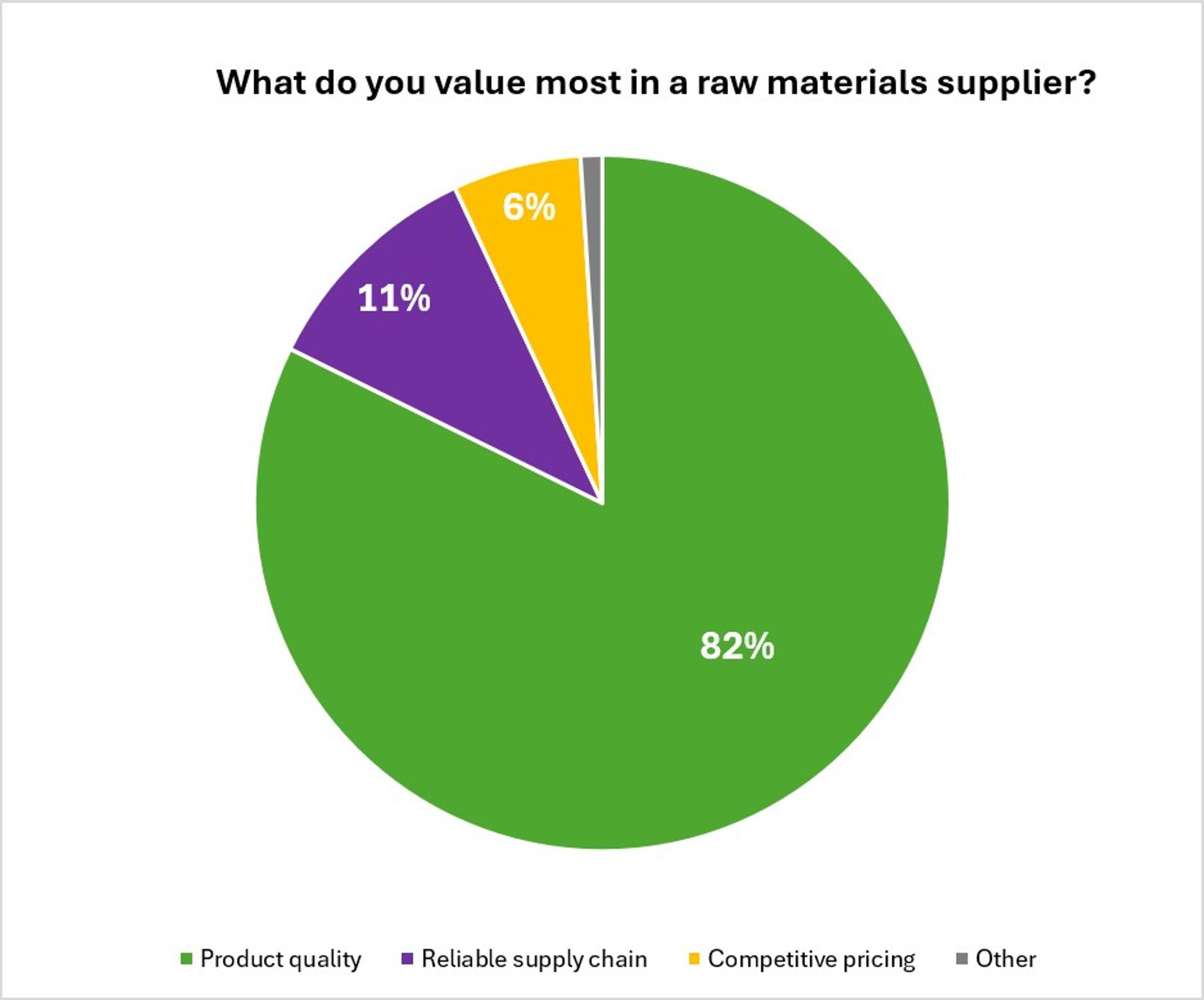
When asked to rank what they value most in a raw materials supplier, respondents were decisive. 82% placed product quality first, well ahead of a reliable supply chain, which was the clear second-place priority, and competitive pricing in third. Batch-to-batch variation, inconsistent specifications and quality non-conformances were named as recurring frustrations, adding delays that respondents said they could ill afford.
Bethan Wiltshire, Lead Quality Control Technician and Communications Coordinator at Glentham Life Sciences, isn't surprised by where quality lands. “Product quality is the standout priority for customers, and we completely agree,” she says. “Being able to trust the quality and consistency of raw materials is crucial for the industry.”
That belief runs through the company's own founding principles. “Quality is at the very core of Glentham Life Sciences,” she says, “and is one of the founding principles on which the company was built.”
Wiltshire points to the company's in-house laboratory as the backbone of that commitment. “Our in-house laboratory has expertise in high-performance liquid chromatography (HPLC), gas chromatography (GC), titration, infrared (IR) spectroscopy and ultraviolet-visible (UV-Vis) spectrophotometry, among other techniques,” she says. “Our products are tested according to processes outlined in our ISO 9001 Quality Management System, with results provided on certificate of analysis (COA) documentation supplied with every batch.”
Glentham is extending this capability further, developing quality control facilities at its German site to bring the same testing standards to its European operations. For laboratories running validated methods, that consistency matters as much as the result: a material that performs differently from one batch to the next can force a re-validation that costs far more time than the batch was worth. A COA supplied with every batch also means the paperwork is already in hand for audit trails and regulatory submissions, rather than something to chase after the order arrives.
Hear further insights from Wiltshire in this SelectScience video interview:
Rising costs and long lead times bite hardest
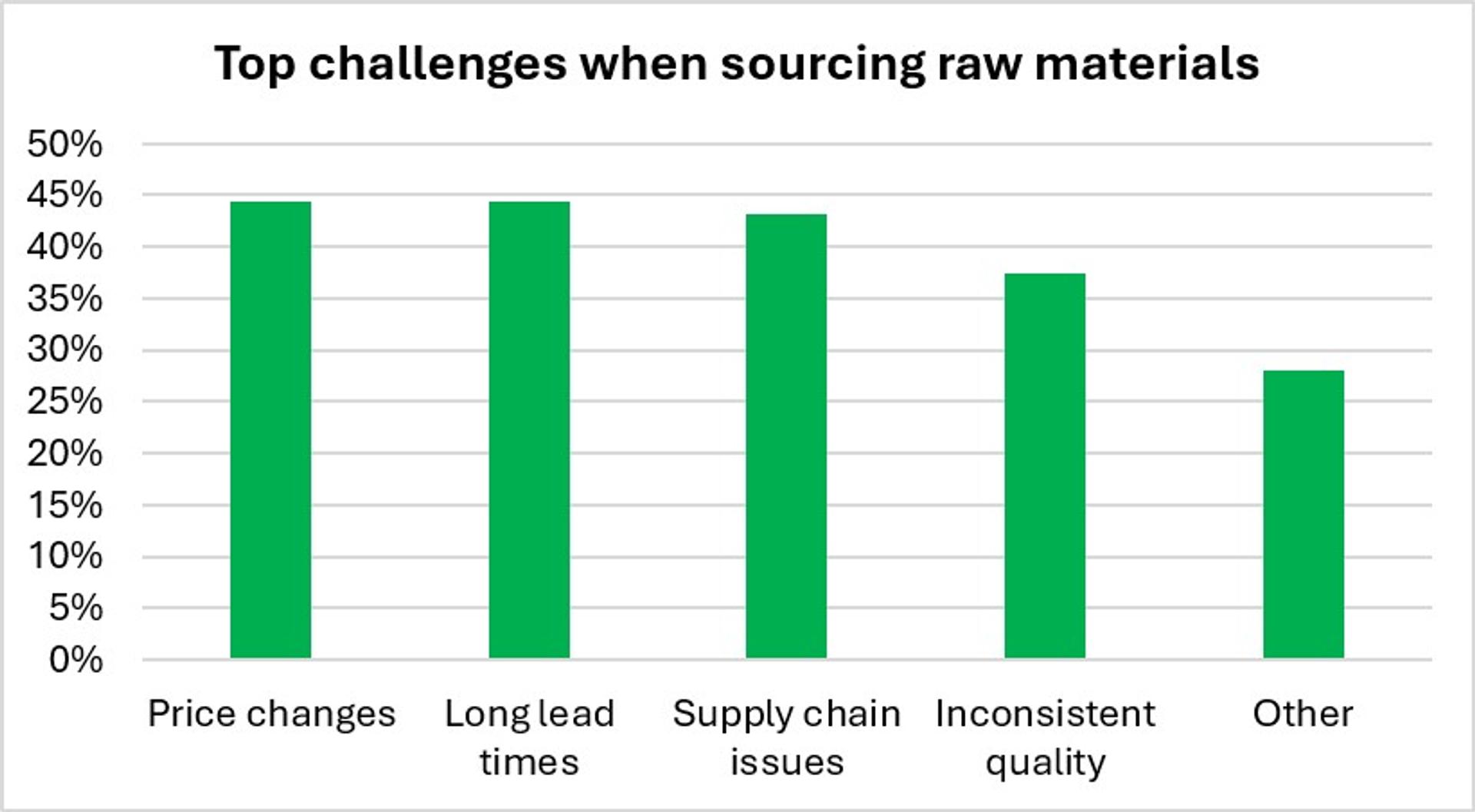
Beyond quality, the survey identified everyday frictions in sourcing raw materials. Price changes and long lead times each affected 44% of respondents, supply chain issues affected 43%, and inconsistent quality was cited by 38%. Smaller but still significant proportions pointed to multi-batch sampling and testing costs, at 19%, and contractual commitments that limit flexibility, at 8%. Global supply chains have grown less predictable in recent years, and geopolitical instability has made securing a consistent supply of raw materials harder for buyers and suppliers alike. Bulk stockholding and in-house testing, covered in more detail below, are Glentham's answer to several of these pressures at once: shorter effective lead times through guaranteed stock, and fewer quality non-conformances to begin with.
Certain raw materials still hard to find
Some raw material categories prove especially hard to source consistently. Enzymes topped the list, cited by 24% of respondents, followed by antibiotics at 17% and dyes and stains at 16%. Amino acids and buffers were each flagged by 7%, though close to 40% said none of the listed categories gave them consistent trouble.
Antibiotics prove a particular case in point: "Antibiotics, from the common to the specialist, form one of Glentham's core product ranges," Wiltshire says. "However, they're also one of the raw materials customers find hardest to source." These difficulties, she adds, often come down to specialist handling as much as availability, and it's an area Glentham has invested in directly: its UK warehouse maintains a dedicated storage area and a specialized packing facility for beta-lactam antibiotics, preventing the cross-contamination risk that makes this category so hard for suppliers to handle reliably.
Not every core range shares that difficulty. Buffers are the clearest contrast: one of Glentham's most-purchased category, drawn on by 68% of respondents, and one of the least likely to cause sourcing problems, a reflection of how extensive and consistently specified Glentham's own buffer range is. Dyes and stains sit further along that scale, used by 57% of respondents but still flagged as hard to source by a sizable number of respondents, an opening for Glentham's own range to stand out on availability as well as quality.
Bulk storage keeps critical materials available
Supply chain reliability was the survey's clear second priority, and it is an area where storage capacity makes a tangible difference. “With supply chain reliability being one of the industry's top priorities as well as one of its top challenges, its importance is clear,” Wiltshire says. Glentham holds bulk stock of more than 4,500 products across warehouses in the UK and Germany, supplying customers across the EU and further afield. “Our storage capacity allows us to offer guaranteed stock levels and call-off orders, ensuring that key materials are available when needed,” she adds.
In practice, that means a customer can agree stock levels upfront and draw down against them as projects need, rather than placing a fresh order and waiting each time. Combined with its buffers, antibiotics, and dyes and stains ranges, that stockholding gives scientists a concrete answer to two of the survey's top concerns: whether a material will be right, and whether it will arrive on time.
Across every section of this survey, the message for suppliers is the same: earn trust with consistent quality, back it up with dependable stock, and make sure the materials scientists rely on most are also the ones you can deliver without fail. Glentham's combination of in-house testing, ISO 9001-governed quality systems, and bulk-stocked antibiotics, buffers, and dyes and stains ranges puts that message into practice. Scientists sourcing any of these materials can explore Glentham's full raw materials range to see how it holds up against their own priorities.
Find out more from Sam White, Co-Founder and Director of Glentham Life Sciences, in this SelectScience video interview:
Links
Tags
Frequently asked questions
Show frequently asked questions
How does Glentham Life Sciences ensure high product quality for raw materials and fine chemicals?
Glentham Life Sciences places product quality at the core of its operations, reflecting the 82% of surveyed scientists who rank quality as their top priority. The company uses an in-house laboratory with HPLC, GC, titration, IR and UV-Vis techniques, and tests products under an ISO 9001 Quality Management System. Every batch is supplied with a certificate of analysis (COA) to support audits and regulatory submissions.
What sourcing challenges do scientists face for enzymes, antibiotics, dyes and stains, and how does Glentham address them?
Survey respondents reported enzymes (24%), antibiotics (17%), and dyes and stains (16%) as particularly hard to source, often due to specialist handling needs. Glentham Life Sciences has invested in dedicated UK storage and a specialized packing facility for beta-lactam antibiotics to prevent cross-contamination. Its extensive, consistently specified buffer and dyes and stains ranges aim to improve availability and reliability for diagnostics, biotechnology, and pharmaceutical laboratories.
How does Glentham Life Sciences improve supply chain reliability and stock availability for laboratories in the UK, EU and beyond?
Supply chain reliability ranked second after quality in the survey, with 44% citing long lead times and 43% supply chain issues. Glentham Life Sciences holds bulk stock of more than 4,500 products across warehouses in the UK and Germany. This capacity enables guaranteed stock levels, call-off orders, and shorter effective lead times, helping ensure critical antibiotics, buffers, dyes and stains are available when scientists need them.