Fundamentals of protein aggregation and modern measurement techniques

9 Sept 2026

Protein aggregation remains one of the most significant challenges in biopharmaceutical development. Aggregates can form during production, purification, formulation, storage, and administration, with sizes ranging from tiny oligomers to visible particles. Detecting, characterizing, and mitigating these species is critical for maintaining product quality, stability, and patient safety.

Explore in this whitepaper the fundamentals of protein aggregation and the modern techniques used to predict, measure, and characterize it throughout development. Learn how dynamic light scattering (DLS), size-exclusion chromatography with multi-angle light scattering (SEC-MALS), and backgrounded membrane imaging (BMI) provide complementary insights to support confident decisions, strengthen product quality, and advance safer biotherapeutics.

Resource details:

Resource type: Whitepaper
Page count: 16
Read time: 22 mins

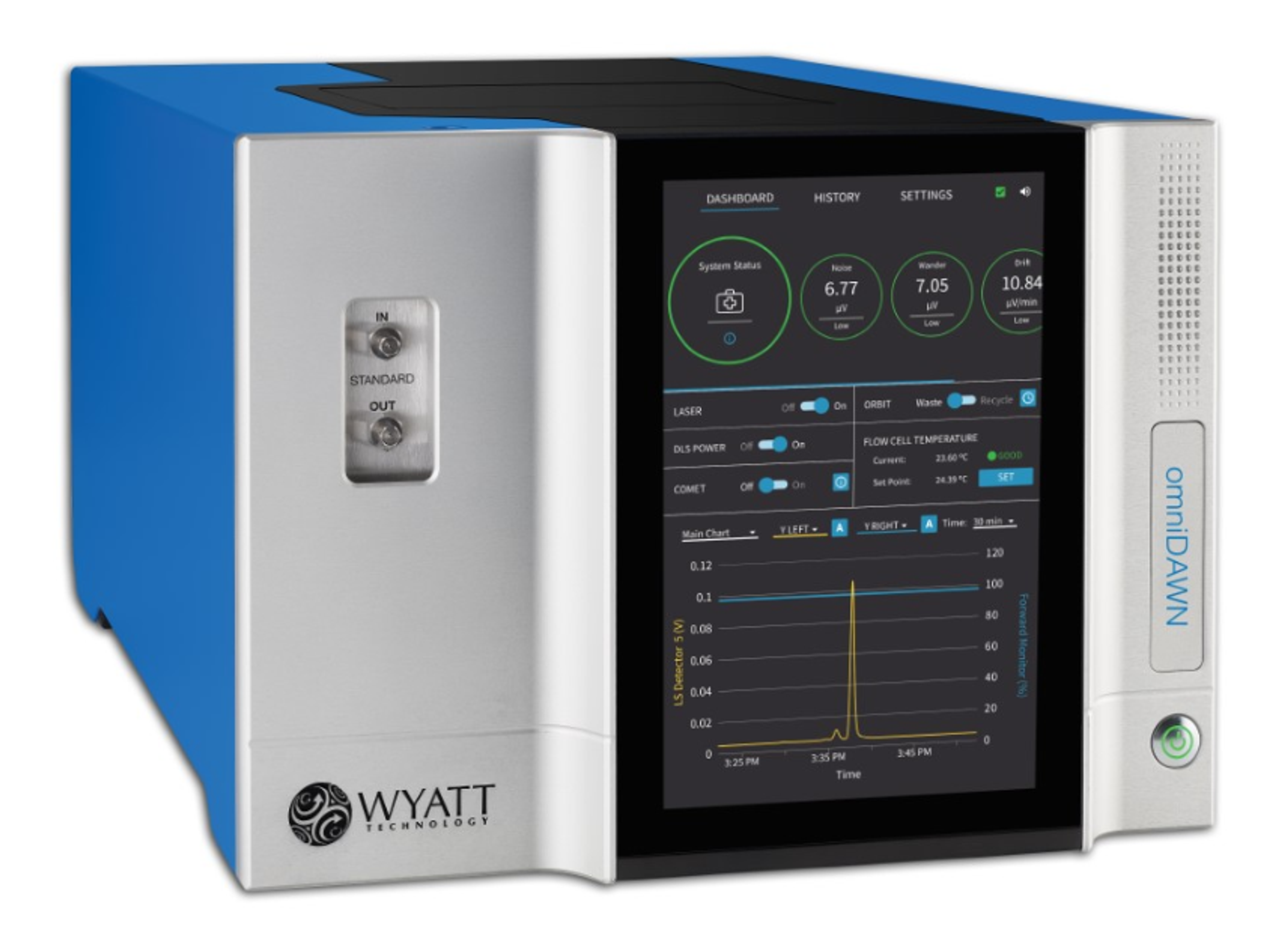
omniDAWN™ Multi-angle Light Scattering (MALS) Instrument

Waters

Delivering up to 4× faster runs with half the sample, the omniDAWN™ multi-angle static light scattering (MALS) photometer is purpose-built for UPLC™ and UHPLC systems for non-destructive absolute molar mass and size characterization of macromolecules and nanoparticles in solution.

(0)

Links

Tags

OligonucleotidesOligonucleotides are small nucleic acid polymers, usually less than 20 bases in length. Oligonucleotides can be made via enzymatic cleavage or more commonly by chemical synthesis with polymerases. Their use includes FISH, southern blots, microarrays and as primers in PCR. High fidelity synthesis kits and detection systems are available for easy production and detection, respectively.UHPLC and HPLCHigh performance liquid chromatography (HPLC) and ultra high performance liquid chromatography (UHPLC), also known as UPLC, are analytical techniques used to separate, identify and quantitate components of complex mixtures including biological samples such as proteins and lipids as well as chemical mixtures of pesticides, drugs and oils. Both techniques are liquid chromatographic methods but differ by operating pressures (HPLC < 6000 psi < UHPLC ). Components of HPLC and UHPLC systems include columns, detectors, pumps, autosamplers and column heaters. Explore a range of UHPLC and HPLC columns for your specific sample needs including reverse phase, normal phase, ion exchange, HILIC, ion exclusion and size exclusion columns. For more specialized HPLC, explore FPLC, countercurrent LC and simulated moving bed systems. Find the best UHPLC and HPLC equipment in our peer reviewed product directory: compare products, check customer reviews and receive pricing direct from manufacturers.Particle CharacterizationParticle characterization instruments are used to determine particle size distribution, shape, surface area, zeta potential, density and porosity of particles and materials. Multiple tecchniques are available for determining particle size, shape and count including dynamic light scattering (DLS), laser diffraction, electrozone (Coulter technique), imaging particle analysis and single particle optical sensing. Determine the density of your material with a gas pycnometer or examine its surface area and porosity with gas adsorption analyzers and mercury porosimeters. Find the best particle characterization instruments in our peer-reviewed product directory: compare products, check customer reviews and receive pricing direct from manufacturers.BiopharmaceuticalsBiopharmaceuticals are proteins and other compounds (such as nucleic acids) produced by living organisms that have uses as therapeutics or for in vivo diagnostics. The most well known example of a biopharmaceutical product, and the first to be approved for therapeutic use, was recombinant human insulin.Antibody Drug Conjugates