Thermo Scientific™ Dionex™ AutoTrace™ 280 Solid-Phase Extraction Instrument
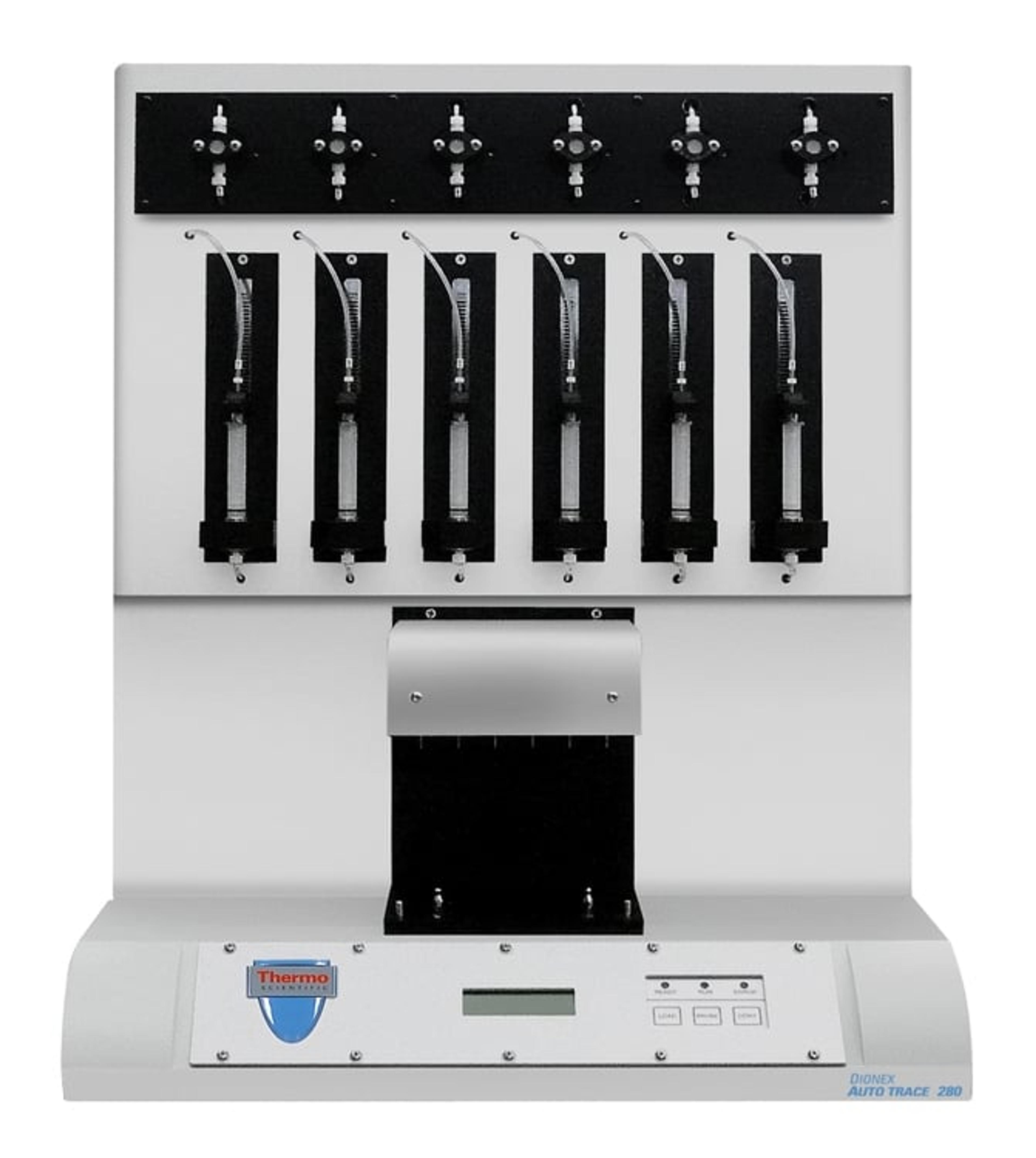
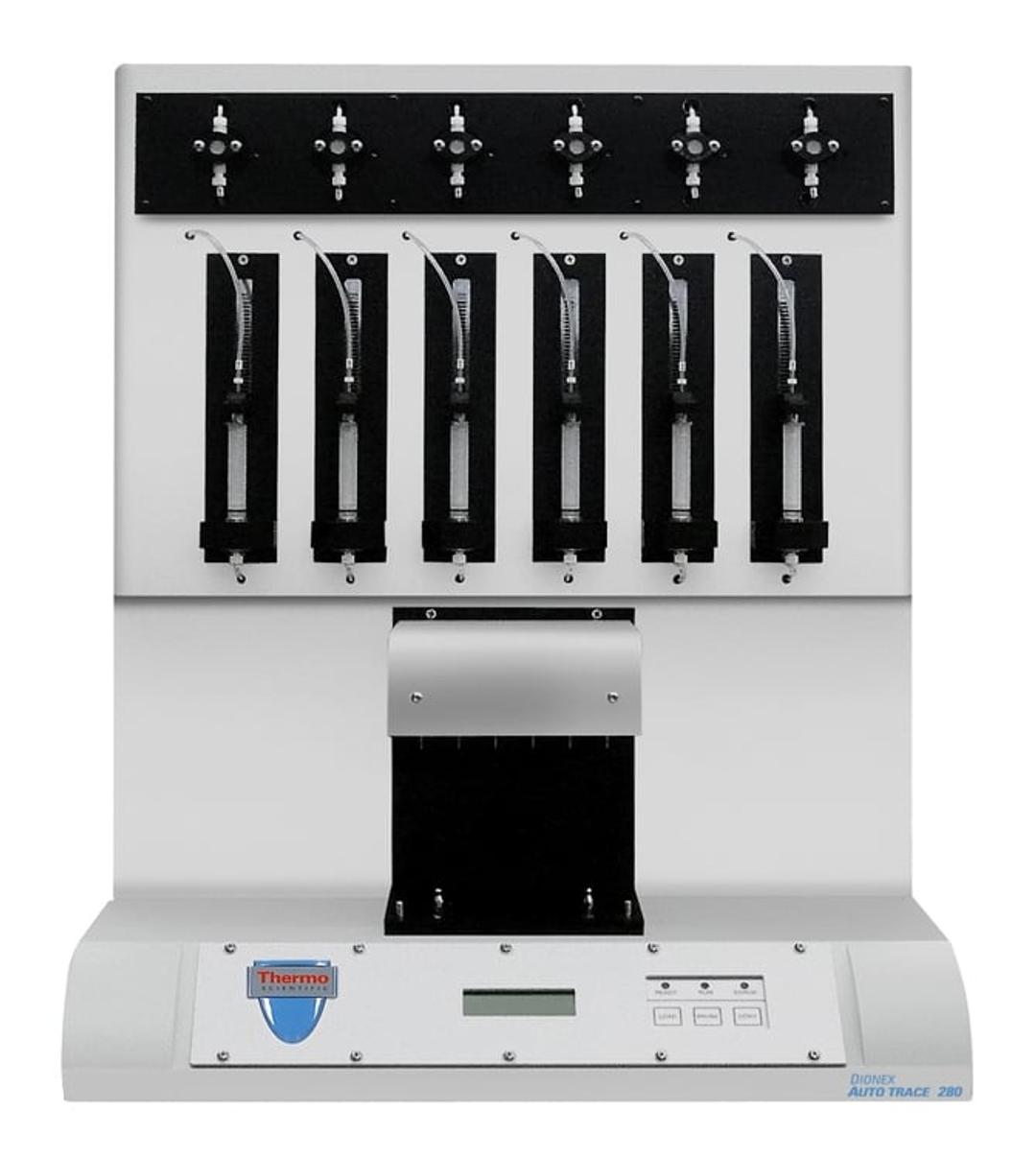
The Thermo Scientific™ Dionex™ AutoTrace™ 280 Solid-Phase Extraction (SPE) instrument is a powerful, high-throughput workstation dedicated specifically for automating SPE. The Dionex AutoTrace 280 instrument automates the cartridge or disk conditioning, sample loading, rinsing, and eluting steps for large volume aqueous solution extractions (20 mL to 20 L).The unit can process up to six samples in parallel, automatically condi…



The supplier does not provide quotations for this product through SelectScience. You can search for similar products in our Product Directory.
The Thermo Scientific™ Dionex™ AutoTrace™ 280 Solid-Phase Extraction (SPE) instrument is a powerful, high-throughput workstation dedicated specifically for automating SPE.
The Dionex AutoTrace 280 instrument automates the cartridge or disk conditioning, sample loading, rinsing, and eluting steps for large volume aqueous solution extractions (20 mL to 20 L).
The unit can process up to six samples in parallel, automatically conditioning, washing, and eluting SPE cartridges or disks with a choice of up to five reagents. The unit also segregates aqueous and solvent waste using separate waste lines for efficient, cost effective waste handling.
AutoTrace 280 Solid-Phase Extraction Instrument Features:
- Use SPE technology for liquid-liquid extraction
- Automated sample loading of liquids onto SPE cartridges
- Automated eluting of SPE cartridges with organic solvent
- Closed systems with a fan to vent solvent vapors
- Positive pressure loading and elution of samples and solvents
Benefits:
- Reduced solvent usage and elimination of glassware
- Does not require technician involvement to maintain a reservoir of liquid in the SPE cartridge
- Does not require technician involvement to control the flow of organics solvent through the SPE cartridge
- No hood required
- Provides constant flow of liquids through SPE cartridges

Extraction of Semivolatile Organic Compounds from Water Using AutoTrace 280 Solid-Phase Extraction Cartridges
This application note describes the use of the Dionex AutoTrace 280™ instrument for extraction of semi volatile organic compounds from water samples. With the Dionex AutoTrace 280 system, the compounds of interest are trapped on SPE adsorbents, then eluted with liquid solvents to generate an extract that is ready for analysis.
Rapid Determination of Nitrobenzenes in Drinking Water Using Automated SPE with GC-ECD
This application note demonstrates the use of automated SPE with GC-ECD for the determination of 15 nitrobenzene compounds in finished drinking water. The automated Thermo Scientific™ Dionex™ AutoTrace 280 Solid Phase-Extraction instrument was used in conjunction with the Thermo Scientific™ TRACE™ 1310 gas chromatograph using an Instant Connect micro ECD. This work optimizes SPE and gas chromatography conditions and the results show high sensitivity (MDL of 0.02 ug/L) for the 15 nitrobenzene compounds specified in HJ 648-2013.
Improving Sample Preparation Workflow with Automated Evaporation
Evaporation is a sample preparation technique that is often performed following extraction. Evaporation techniques may present a challenge to laboratories when they are not entirely automated. The Thermo Scientific™ Rocket™ Evaporator system automates the concentration process following extraction using a Thermo Scientific™ Dionex™ ASE™ Accelerated Solvent Extractor system or a Thermo Scientific™ AutoTrace™ 280 Solid-Phase Extraction instrument. The Rocket Evaporator eliminates the challenges experienced with nitrogen stream evaporation or rotary vacuum evaporation such as solvent bumping, need for a fume hood, and lack of end point detection.
Determination of Pesticide Residues in Drinking Water using Automated Solid-Phase Extraction and Gas Chromatography with Nitrogen Phosphorus Detection
Organophosphorous pesticides have been widely used to prevent and treat plant diseases and pests in agricultural products and as a result, excessive residual pesticide content is frequently reported in drinking and surface water sources. A number of organophosphorous pesticides are acutely toxic to human and animal life, making the detection of residual organophosphorous pesticides a growing concern. This application note addresses the detection of trace amounts of organophosphorus pesticides in water and optimizes the conditions for solid-phase extraction (SPE) and chromatographic analysis using the Thermo Scientific™ Dionex™ AutoTrace 280 Solid-Phase Extraction instrument and the Thermo Scientific™ TRACE™ 1300 Series gas chromatograph with a nitrogen-phosphorus detector (NPD).
Automated Solid Phase Extraction of 14 Explosives in Tap Water Based on U.S. EPA Method 8330 Using Hydrophilic Reversed-Phase Cartridge Followed by HPLC with UV Detection
This application note investigates the concentration of 14 Explosives in fortified tap water by automated SPE using the Dionex AutoTrace 280 and a new polymeric sorbent SolEx SPE HRPHS cartridge.
Automated Solid-Phase Extraction of Oraganochlorine Pesticides from Drinking Water
In this poster a new method to automate the capture and elution of organochlorine pesticides from drinking water is described. Twenty chlorinated pesticides were extracted from drinking water using a Thermo Scientific™ Dionex™AutoTrace™ 280 Solid-Phase Extraction instrument and the Thermo Scientific™ Dionex™ SolEx™ C 18 cartridges with good recoveries. The traditional LLE method also showed good recoveries, but was time consuming and labor intensive.
Automated Extraction and Determination of Human Hormones in Drinking Water Using Solid-Phase Extraction and HPLC with UV Detection
This Technical Note describes the use of high-surface-area SPE (Dionex SolEx SPE HRPHS) to extract seven sex hormones from drinking water using the Dionex AutoTrace 280 SPE instrument. Extracts were subsequently quantified using high-performance liquid chromatography (HPLC) to determine the recovery.
Keeping up with an expanding PFAS landscape
PFAS screening and quantification are crucial topics in many industries including environmental, food and beverage, and medical industry. Dr. John Bowden, assistant professor at the University of Florida, discusses the challenges of analyzing these persistent chemicals and highlights the historical context of PFAS research. He also explores the US EPA's proposed monitoring rules and various validated quantification methods, emphasizing the importance of high-purity standards and automated processes in achieving reliable results.

Monitoring Semivolatile Organic Compounds for Environmental Health
Find application notes, brochures and workflows on semi-volatile organic compound testing

Detection and Removal of Estrogen Contamination from Drinking Water
SelectScience® studies recent research by the U.S. Environmental Protection Agency (EPA) into the prevalence of estrogenic compounds in the water supply