
Monitoring Semivolatile Organic Compounds for Environmental Health
Find application notes, brochures and workflows on semi-volatile organic compound testing
16 Dec 2016

Image: Shutterstock/Federico-Rostagno
Editorial Review by Lois Manton O’Byrne, Editor, SelectScience®
Semi-volatile organic compounds (SVOC) include hydrocarbons, aldehydes, ethers, phenols, organic acids, ketones, amines, amides, nitroaromatics, PCBs, PAHs and phthalates. Semi-volatile compounds can be naturally occurring or man-made. Man-made sources enter the environment as pesticides, herbicides, flame retardants, cleaning agents, textile/electronic manufacturing solvents and many other industrial uses and processes.
Semi-volatile environment sampling and extraction methods
Environmental analysis for SVOCs focuses on the extraction, identification and quantitation of contaminants. Several different extraction techniques can be used to remove semi-volatile contaminants from aqueous or solid/semisolid matrices.
Water sample extraction of SVOCs has traditionally been carried out using liquid-liquid extraction techniques. These techniques, although effective, use large volumes of organic solvent and require extensive user intervention or monitoring. Read this application note to learn about an alternative method involving use of the Thermo Scientific™ Dionex™ AutoTrace™ 280 Solid-Phase Extraction (SPE) instrument that saves time, solvent and user intervention.
Extraction techniques for solid/semisolid samples include soxhlet (SLE), automated soxhlet (ASLE), microwave assisted (MAE), supercritical fluid (SFE), accelerated solvent extraction (ASE) and ultrasonic extraction. Learn more about determination of PCBs in fish tissue samples using ASE in this application note .
Chromatographic separation techniques
SVOC separation and detection is often carried out using chromatographic techniques such as gas chromatography (GC), high performance liquid chromatography (HPLC) and ion chromatography (IC).
Most environmental laboratories rely on GC for SVOC quantitation. An example can be seen in this application note, for EPA Method 8081 which describes detection of organochlorine pesticides using a Thermo Scientific™ TRACE™ 1310 Gas Chromatograph used with a Thermo Scientific™ TriPlus RSH™ Autosampler, an Instant Connect Split/Splitless (SSL) Injector and an Instant Connect Electron Capture Detector (ECD) for TRACE 1300 Series GC.
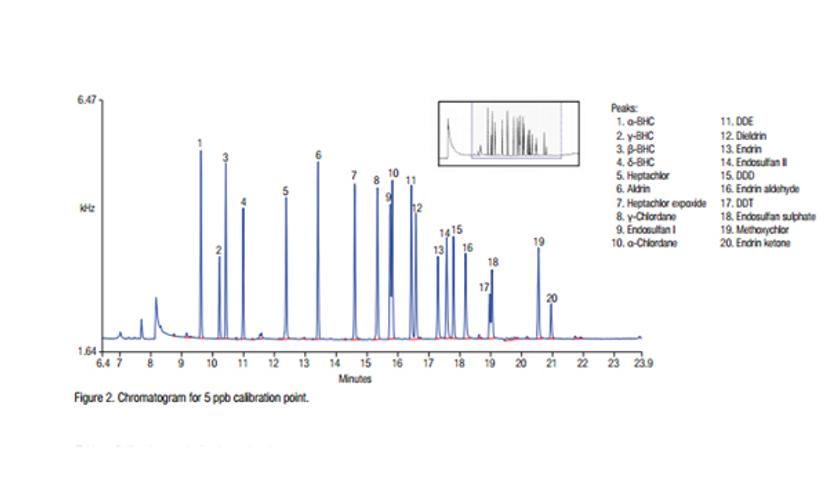
Figure 1: Chromatogram for 5 ppb calibration point1
HPLC is typically used to analyze compounds such as PAHs, nitro-aromatics and explosives. An example of the use of HPLC in this type of analysis can be seen in this application note “Determination of Polycyclic Aromatic Hydrocarbons (PAHs) in Tap Water Using On-Line Solid-Phase Extraction Followed by HPLC with UV and Fluorescence Detections".
Another interesting application of HPLC in SVOC analysis is for the identification of explosive residues in soil and groundwater, as a result of disposal of by military and armament manufacturers. Download this application note for EPA method 8330 to find out more about a method involving use of a the DionexAutoTrace280 SPE and the Thermo Scientific™ Dionex™ SolEx™ SPE HRPHS cartridge to concentrate the explosive residues, followed by HPLC.
While GC and HPLC are used for the initial separation of sample components, mass spectrometry (MS) is required to isolate the target compounds and remove unwanted interferences. MS is also able to address the additional challenges faced by the influence of conflicting chemical properties and chromatographic resolution limitations on columns.
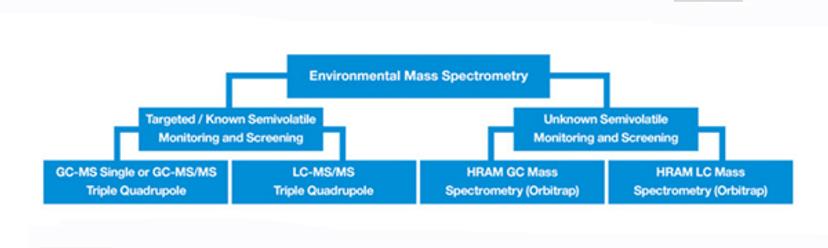
Figure 2: Flow chart showing environmental mass spectrometry techniques2
The Thermo Fisher Scientific SVOC Analysis Page provides further information on the use of MS for SVOC analysis, including this application note on combining hardware, software and chromatography to improve the GC/MS analysis of SVOCs.
References:
1. Application Note: Detection of Organochlorine Pesticides by GC-ECD Following U.S. EPA Method 8081
2. Thermo Fisher Semivolatile Organic Compounds (SVOC) Analysis Page
Related products
Request Quote for All Products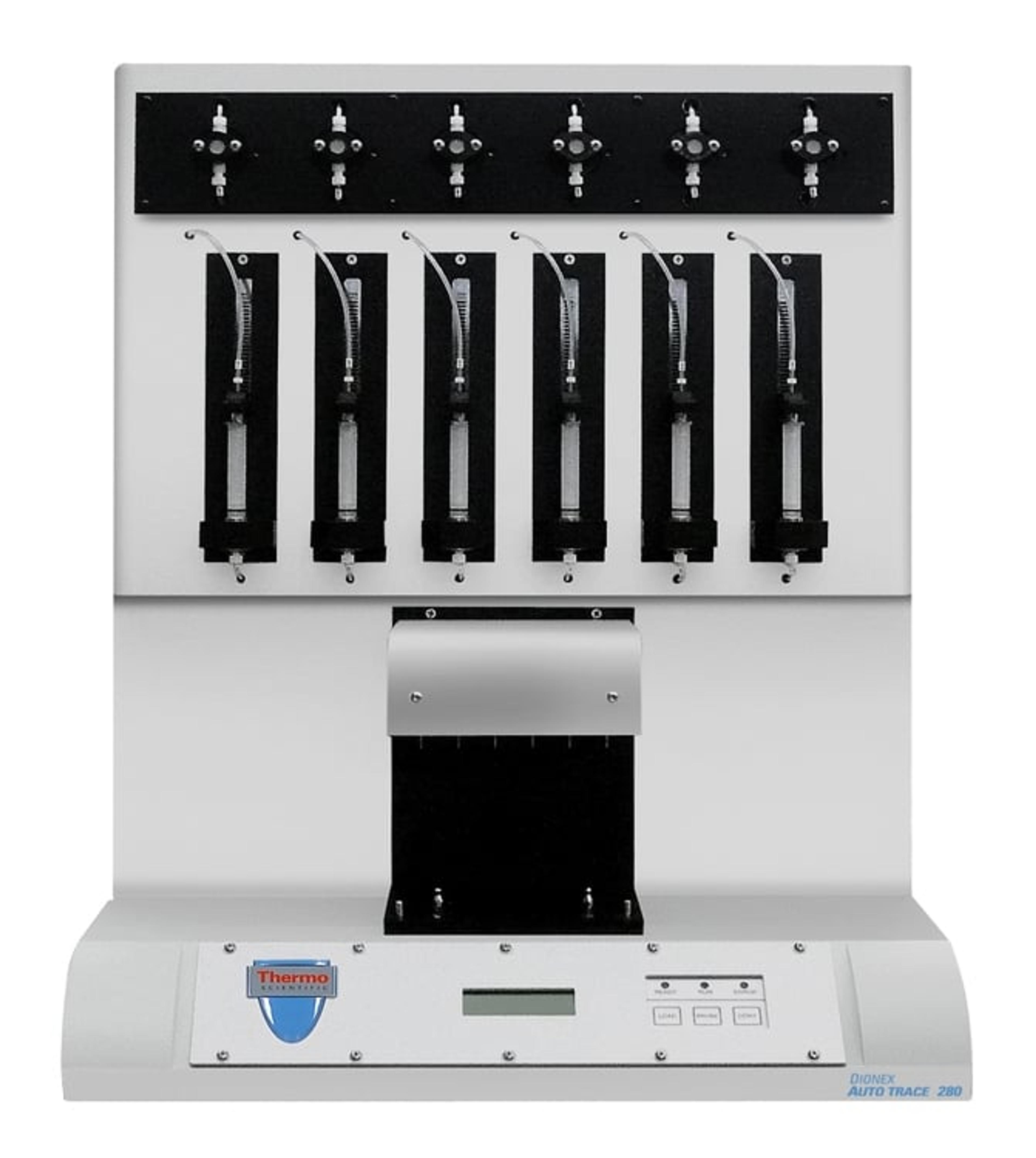
Thermo Scientific™ Dionex™ AutoTrace™ 280 Solid-Phase Extraction Instrument
Thermo Fisher ScientificThe Thermo Scientific™ Dionex™ AutoTrace™ 280 Solid-Phase Extraction (SPE) instrument is a powerful, high-throughput workstation dedicated specifically for automating SPE. The Dionex AutoTrace 280 instrument automates the cartridge or disk conditioning, sample loading, rinsing, and eluting steps for large volume aqueous solution extractions (20 mL to 20 L).The unit can process up to six samples in parallel, automatically conditioning, washing, and eluting SPE cartridges or disks with a choice of up to five reagents. The unit also segregates aqueous and solvent waste using separate waste lines for efficient, cost effective waste handling.AutoTrace 280 Solid-Phase Extraction Instrument Features: Use SPE technology for liquid-liquid extraction Automated sample loading of liquids onto SPE cartridges Automated eluting of SPE cartridges with organic solvent Closed systems with a fan to vent solvent vapors Positive pressure loading and elution of samples and solvents Benefits: Reduced solvent usage and elimination of glassware Does not require technician involvement to maintain a reservoir of liquid in the SPE cartridge Does not require technician involvement to control the flow of organics solvent through the SPE cartridge No hood required Provides constant flow of liquids through SPE cartridges