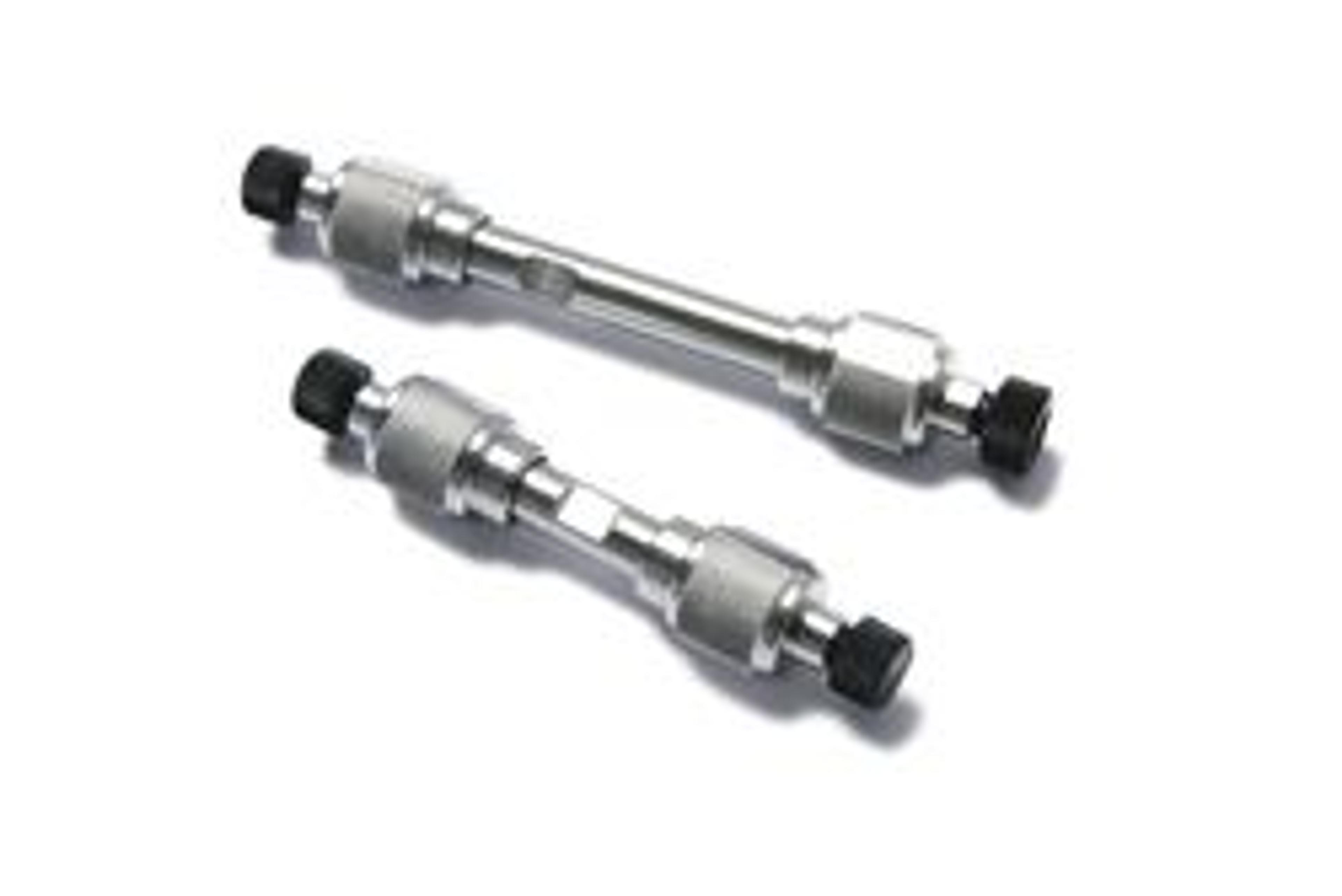
Purospher® STAR HPLC and UHPLC columns
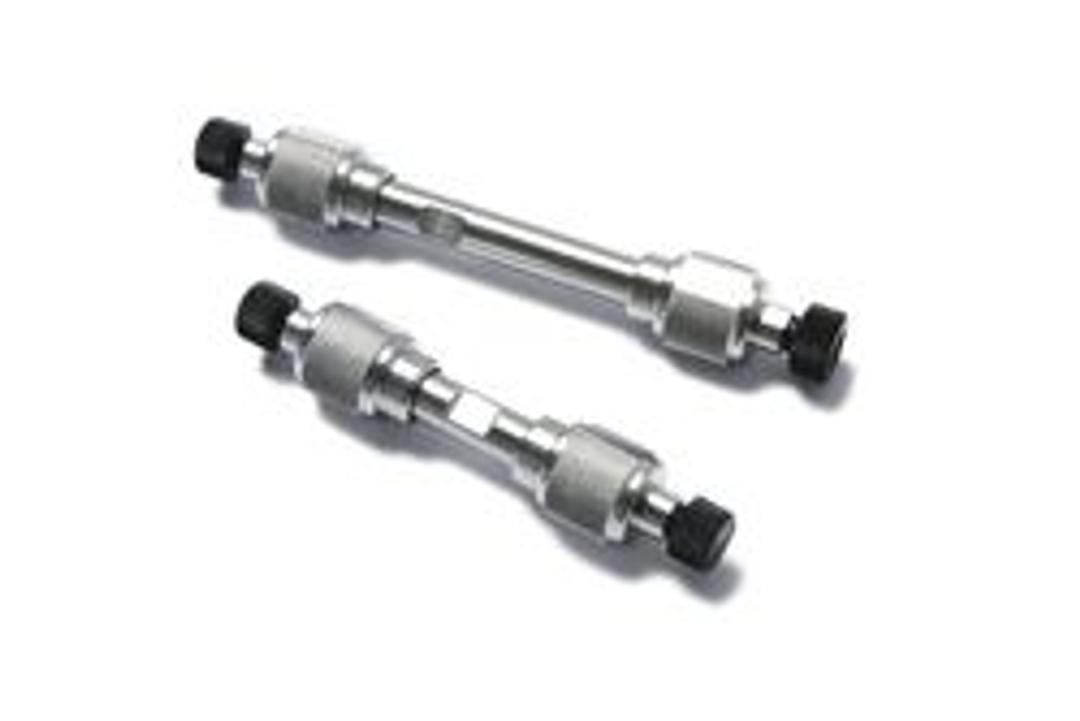
The base silica of Purospher® STAR columns is 99.999 % pure. Furthermore, meticulous care is given to quality control over all aspects of silica structure and chemistry. The excellent converge of the surface and the purity of the material ensures excellent peak symmetry for acidic, basic and even for chelating compounds. Accurate results with excellent peak shape for all types of analytes Outstanding resolution due…

The supplier does not provide quotations for this product through SelectScience. You can search for similar products in our Product Directory.
Excellent results.
Testing raw materials and pharmaceutical products
Very good reproducibility and separation column. The cartridges are very cheap. It would be useful to do more marketing of this product. It is easy to use and is a good price.
Review Date: 10 Jun 2020 | Merck KGaA, Darmstadt, Germany
Analysis of herbal products
I use Merck Purospher C-18 columns for regular testing of herbal products. I find this column good and long lasting.
Review Date: 17 Nov 2014 | Merck KGaA, Darmstadt, Germany
Robust, has a long life-time, and is applicable for a wide range of compounds.
Review Date: 31 Aug 2011 | Merck KGaA, Darmstadt, Germany
The base silica of Purospher® STAR columns is 99.999 % pure.
Furthermore, meticulous care is given to quality control over all aspects of silica structure and chemistry. The excellent converge of the surface and the purity of the material ensures excellent peak symmetry for acidic, basic and even for chelating compounds.
- Accurate results with excellent peak shape for all types of analytes
- Outstanding resolution due to high separation efficiency
- Proven reliability and reproducibility from run to run and batch to batch
- Universal compatibility with best all-round performance according to Tanaka
- Maximum flexibility in method development and choice of mobile phase
- pH stability from pH 1.5 – 10.5
- Suitable for up to 100 % aqueous mobile phases
- Highest sensitivity and suitability for LC-MS applications

Solutions for Mass Spectrometric Detection from Merck Millipore
Mass spectrometry (MS) is nowadays an established routine detection method that can be coupled to various techniques in the laboratory. In contrast to more simple detectors such as ultraviolet-visible (UV-Vis) or fluorescence, MS generates data about molecular masses and detailed structural parameters and is by far more sensitive in the wide majority of applications. Many sophisticated as well as affordable systems are available, covering various fields of use such as quantification and qualification experiments, and a number of these systems are described in this compendium.
Pharmacopoeial Requirements - How to Change a Regulated Method
Over the last two centuries massive progress has been made around the globe to make drugs safe for consumers, both on a national as well as on an international level, thus assuring the potency of commercially available drug products. Depending where (in which country or region) a finalized drug product will be used it must meet the specified regulations and thus many pharmaceutical companies work from several pharmacopoeias. One of the more important improvements is the requirement for impurity profiling or in other words the analysis of related substances (RS) monographs. Assay and potency methods as well as identification of impurities are carried out with various analytical techniques. HPLC has especially been widely exploited for impurity profiling methods.
Analysis of Irbesartan - an Example of Scaling USP Methods
In this application note, the Irbesartan USP method is used as an example when transferring an HPLC method from one column dimension to another, from one sorbent particle size to another, or from one type of HPLC instrumentation to another. Four different conditions were evaluated, two within allowed changes, and two that would require complete revalidation (using a too short column, with too small particle size and not scaling the linear velocity accordingly).