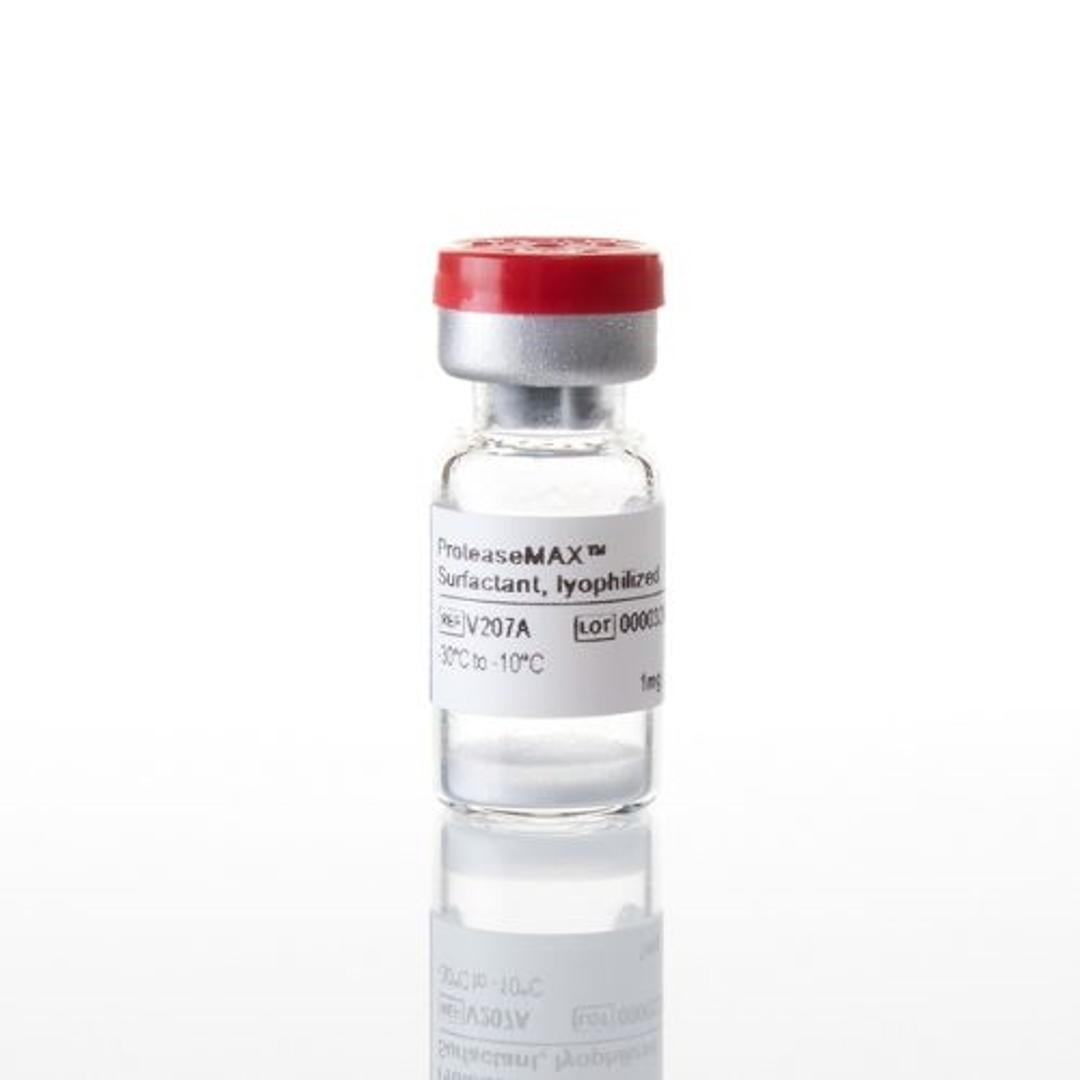
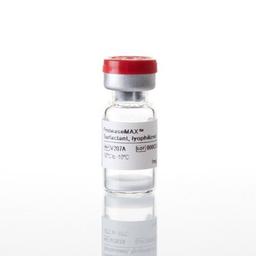
ProteaseMAX™ Surfactant, Trypsin Enhancer
ProteaseMax™ Surfactant is a high-quality reagent for use in protein and peptide sample preparation. ProteaseMax™ Surfactant solubilizes proteins and ensures fast and improved protein digestion with trypsin or chymotrypsin. It is designed to degrade over the course of a digestion reaction, yielding products that are compatible with downstream methods such as mass spectrometry (MS) and liquid chromatography (LC). For…

Receive your quote directly from the manufacturer.
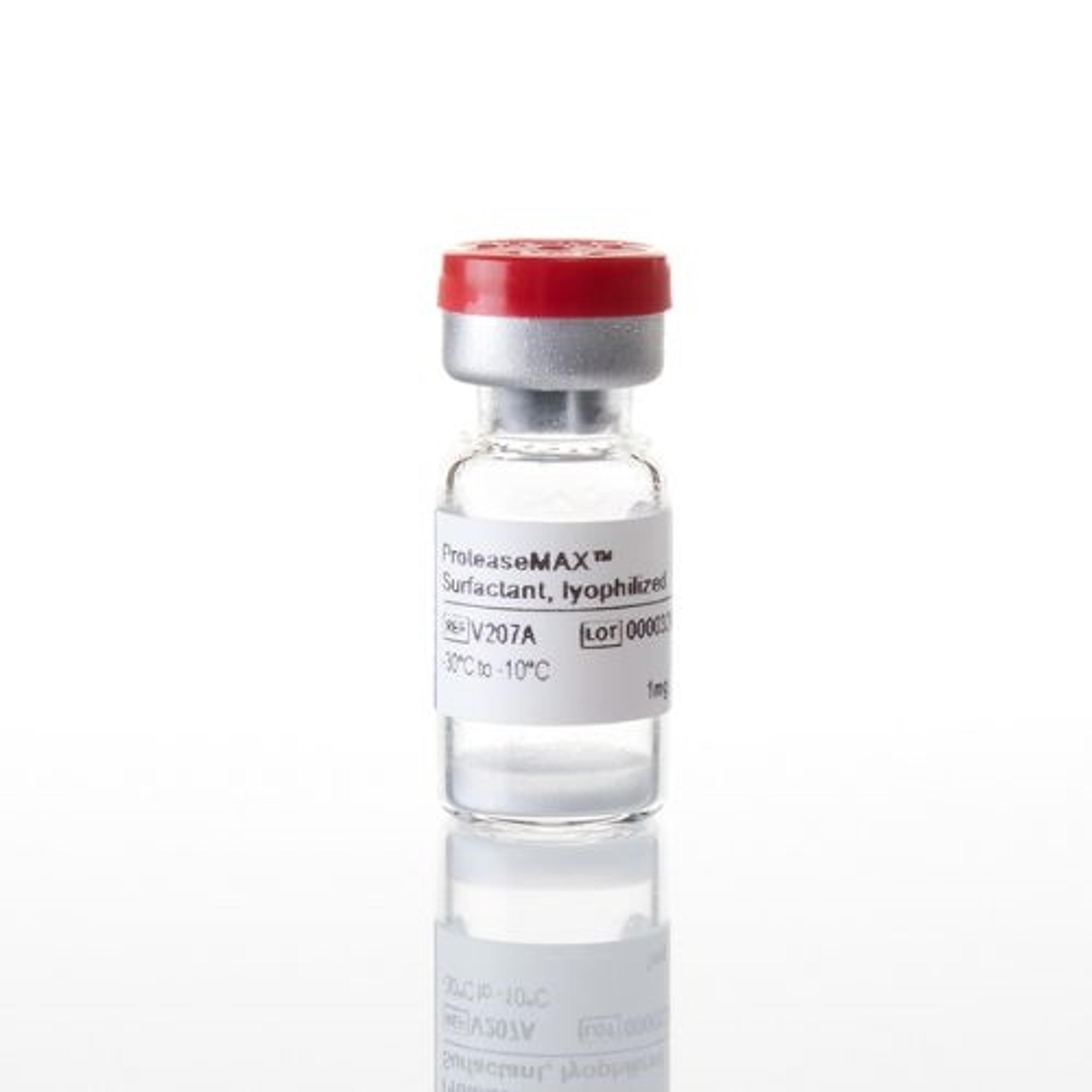
ProteaseMax™ Surfactant is a high-quality reagent for use in protein and peptide sample preparation.
ProteaseMax™ Surfactant solubilizes proteins and ensures fast and improved protein digestion with trypsin or chymotrypsin. It is designed to degrade over the course of a digestion reaction, yielding products that are compatible with downstream methods such as mass spectrometry (MS) and liquid chromatography (LC).
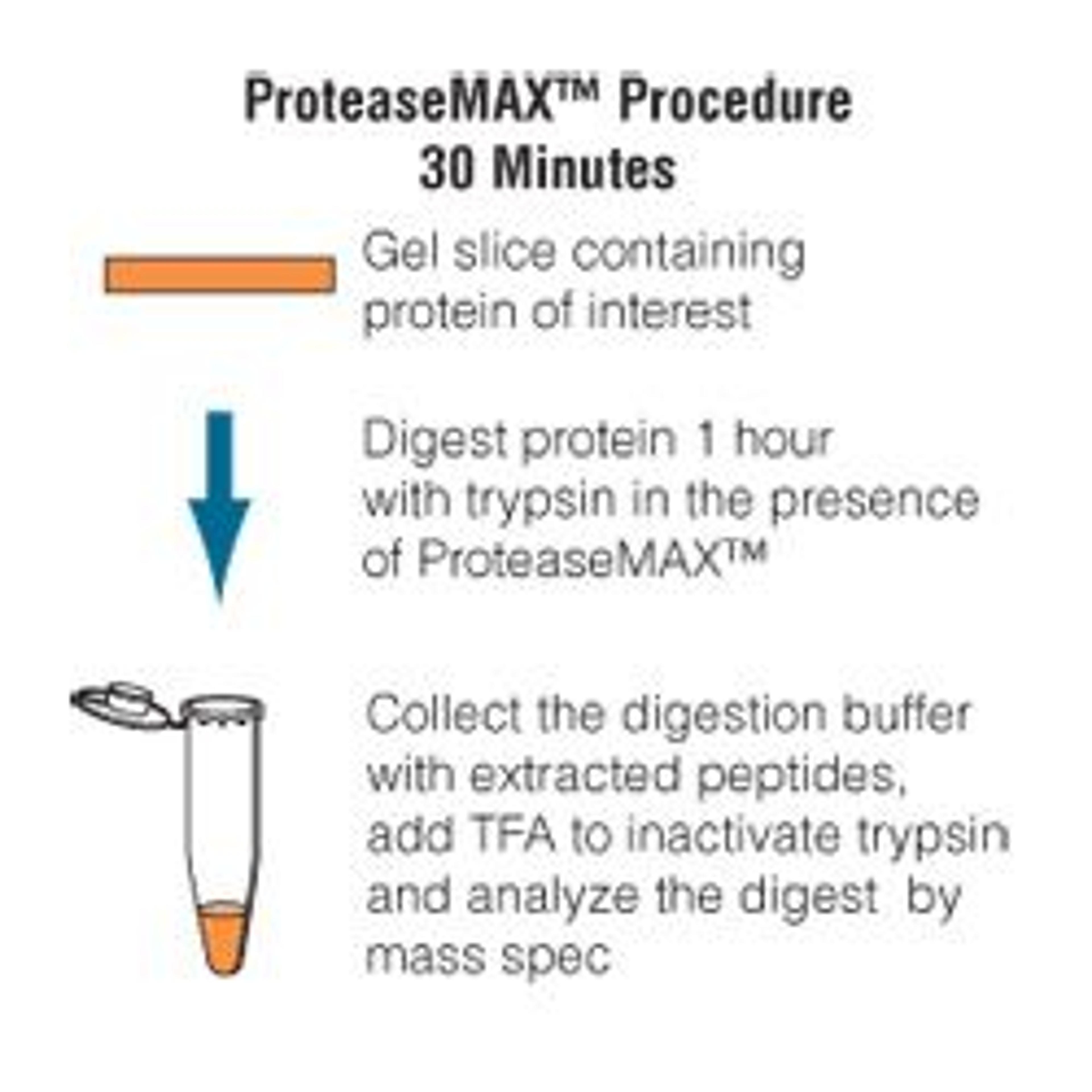
For in-gel protein digestion, ProteaseMax™ Surfactant also improves the recovery of peptides. ProteaseMax™ Surfactant can be used with existing in-gel or in-solution digestion protocols.

Selecting the Right Tool for In-Gel and In-Solution Protein Digestion
A variety of problems can occur with in-gel and in-solution protein analysis; poor peptide recovery is common in in-gel digestion whereas incomplete digestion is often seen in in-solution digestion. In this application note, a tailored method for in-gel protein digestion is employed using ProteaseMax, a mass spectrometry compatible surfactant, aimed at minimizing missed tryptic cleavages, leading to increased protein identifications, higher accuracy of protein quantitation and better analytical reproducibility.
The Use of an Acid and Heat-Labile Surfactant for In-Gel Digestion
This poster shows how peptide recovery is significantly improved with the use of the mass spectrometry-compatible surfactant ProteaseMAX™. Peptide losses are also minimized leading to increased protein coverages and higher probability of protein identification for low-abundance proteins. Complete peptide extraction and low losses are necessary for comprehensive analysis and to detect proteins in low nanogram levels.