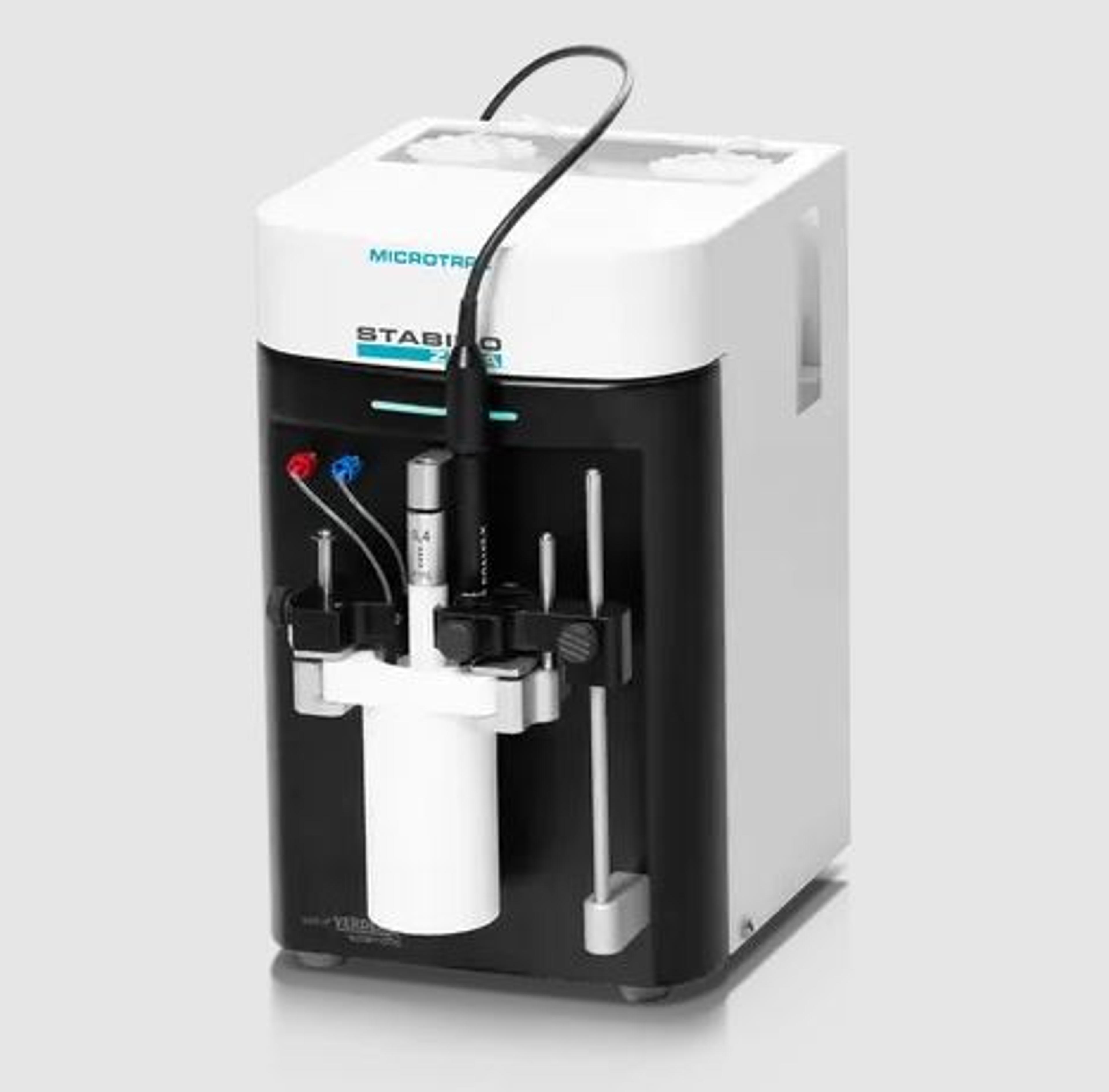
Zeta Potential Analyzer STABINO ZETA
Accurate measurement of zeta potential and colloidal stability, including fast titrations

Receive your quote directly from the manufacturer.
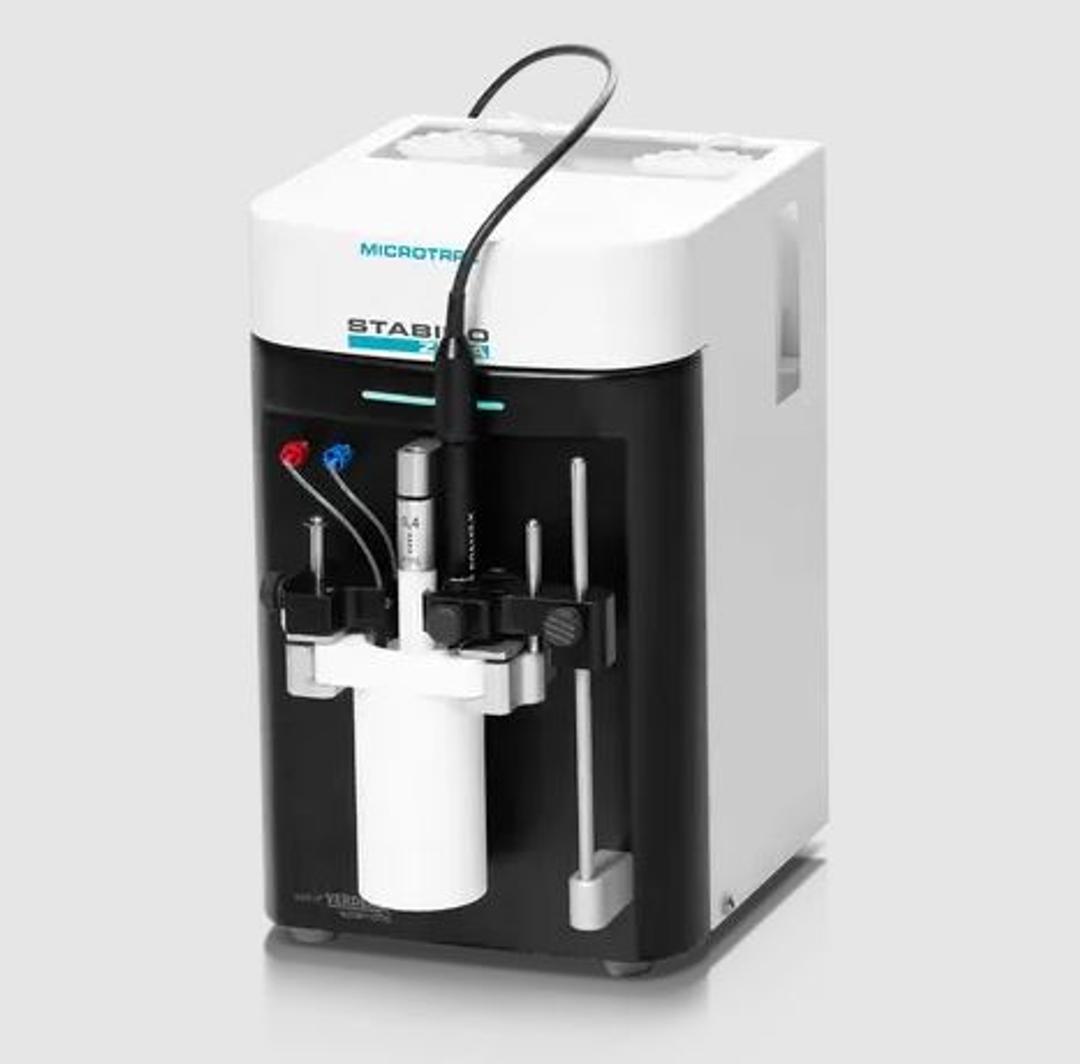
The STABINO ZETA has a high resolution and data point density, which allows very fast, precise and reproducible zeta potential measurements. It is possible to measure the zeta potential of particles in the range of 0.3 nm to 300 µm in a concentration range of up to 40 volume percent. Regarding the optimized measurement technology, the STABINO ZETA can measure up to 5 parameters simultaneously and within a few seconds: Zeta potential, streaming potential, conductivity, pH value, and temperature. In combination with our unique NANOTRAC FLEX, the particle size can also be measured as a sixth parameter simultaneously in the same sample.
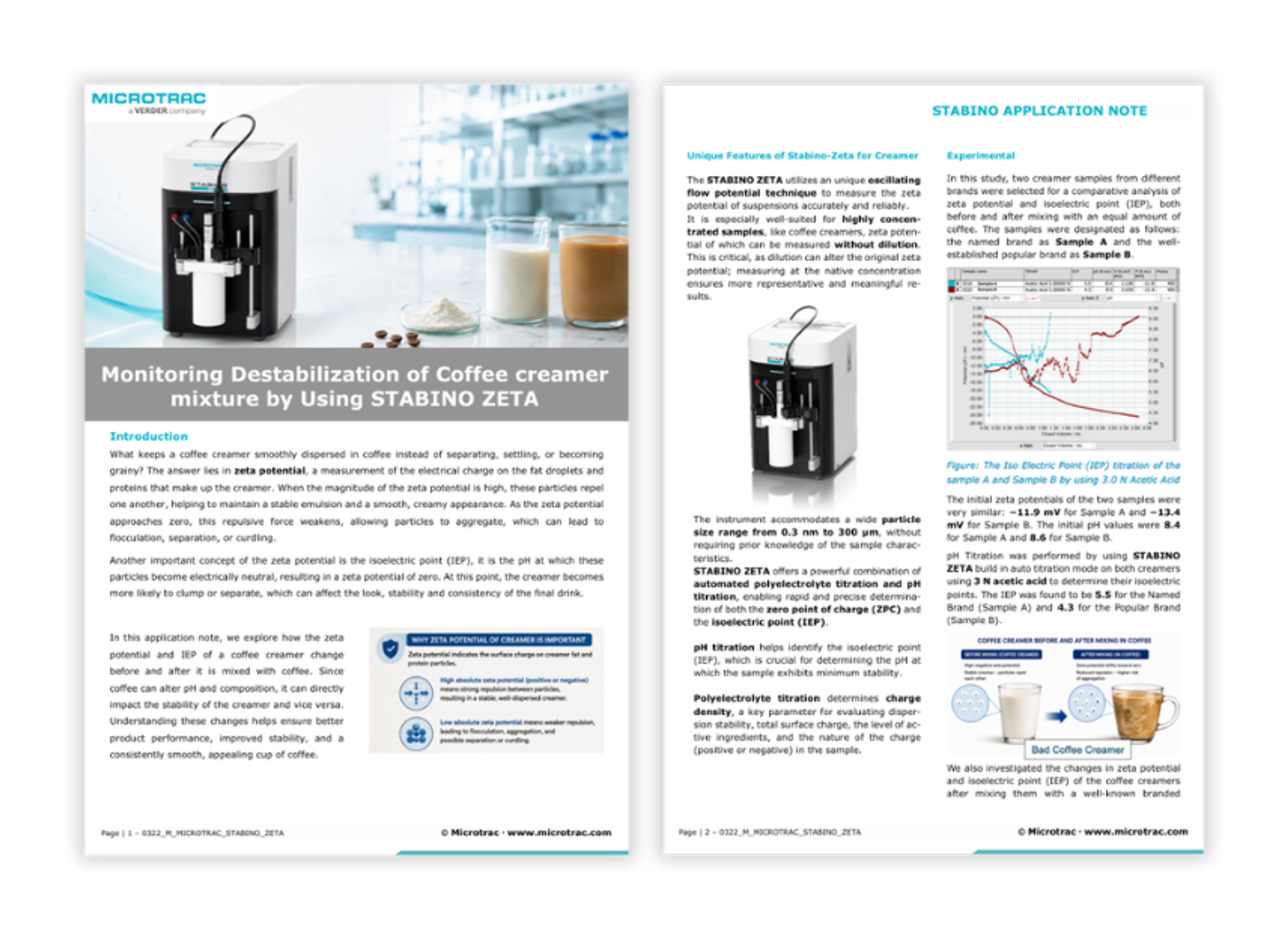
Monitoring destabilization of coffee creamer mixture using STABINO ZETA
This resource explores how zeta potential and isoelectric point (IEP) measurements can be used to evaluate the stability of coffee creamers before and after mixing with coffee. Using the STABINO ZETA instrument from Microtrac, researchers compared two commercial creamers and demonstrated how changes in pH influence particle interactions, aggregation, and the risk of phase separation.
The study found that creamers with a larger difference between their initial pH and isoelectric point exhibited greater colloidal stability after mixing with coffee. These findings show the value of zeta potential analysis for understanding emulsion behaviour, improving formulation development, and predicting long-term product stability in food and beverage applications.
Resource details
- Resource type: Whitepaper
- Page count: 3
- Read time: 6 mins
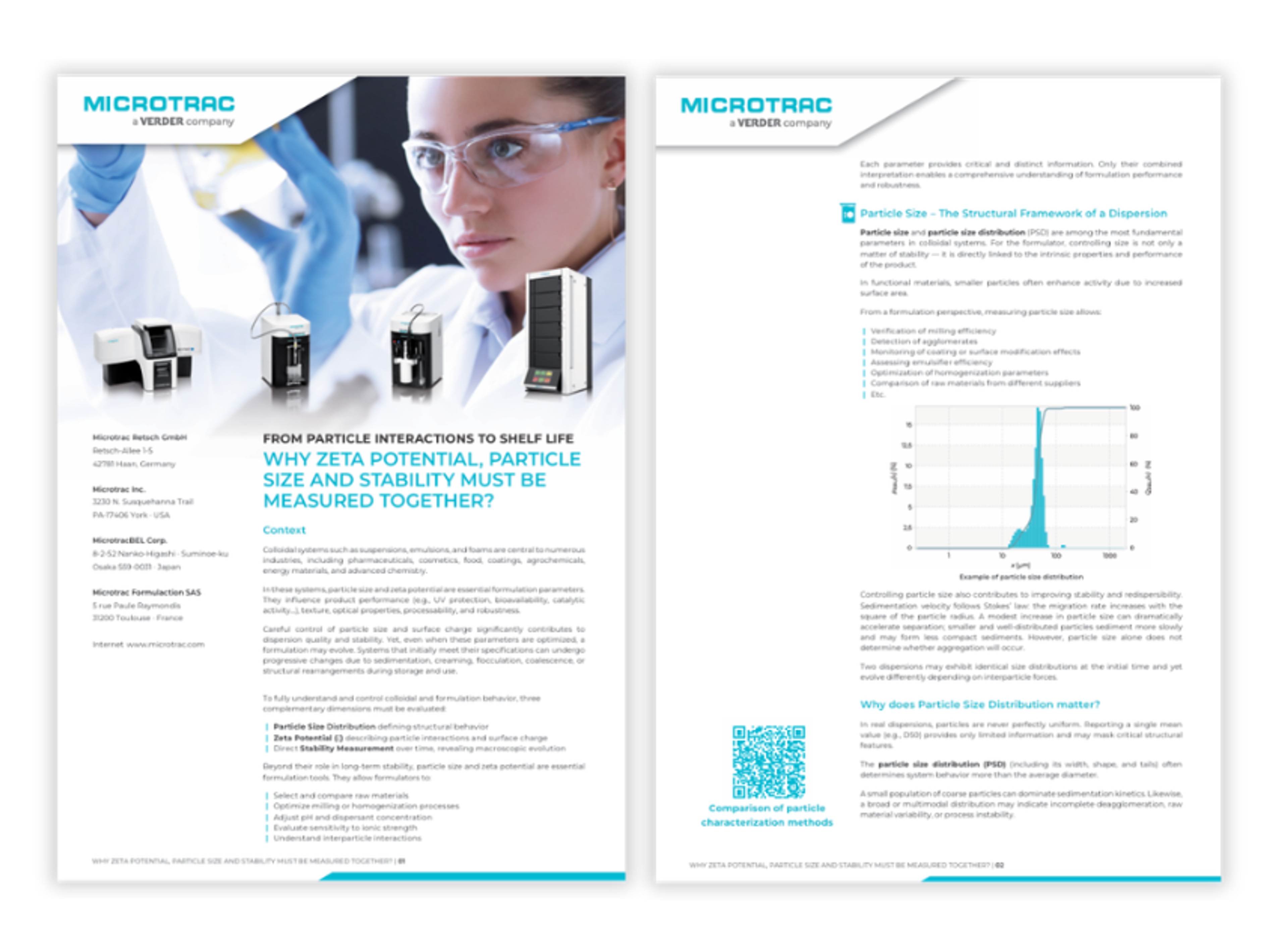
Understanding particle size, zeta potential, and stability in dispersion systems
This whitepaper explains why particle size, zeta potential, and stability must be evaluated together to fully understand and control colloidal systems. Particle size defines the structural framework of a dispersion, while zeta potential provides insight into interparticle interactions and aggregation behavior. However, only direct stability measurements reveal how formulations evolve over time through processes such as sedimentation, flocculation, and phase separation. Discover how by integrating these complementary parameters, researchers can better predict product performance, improve formulation design, and ensure long‑term stability across applications in pharmaceuticals, food, and materials science.
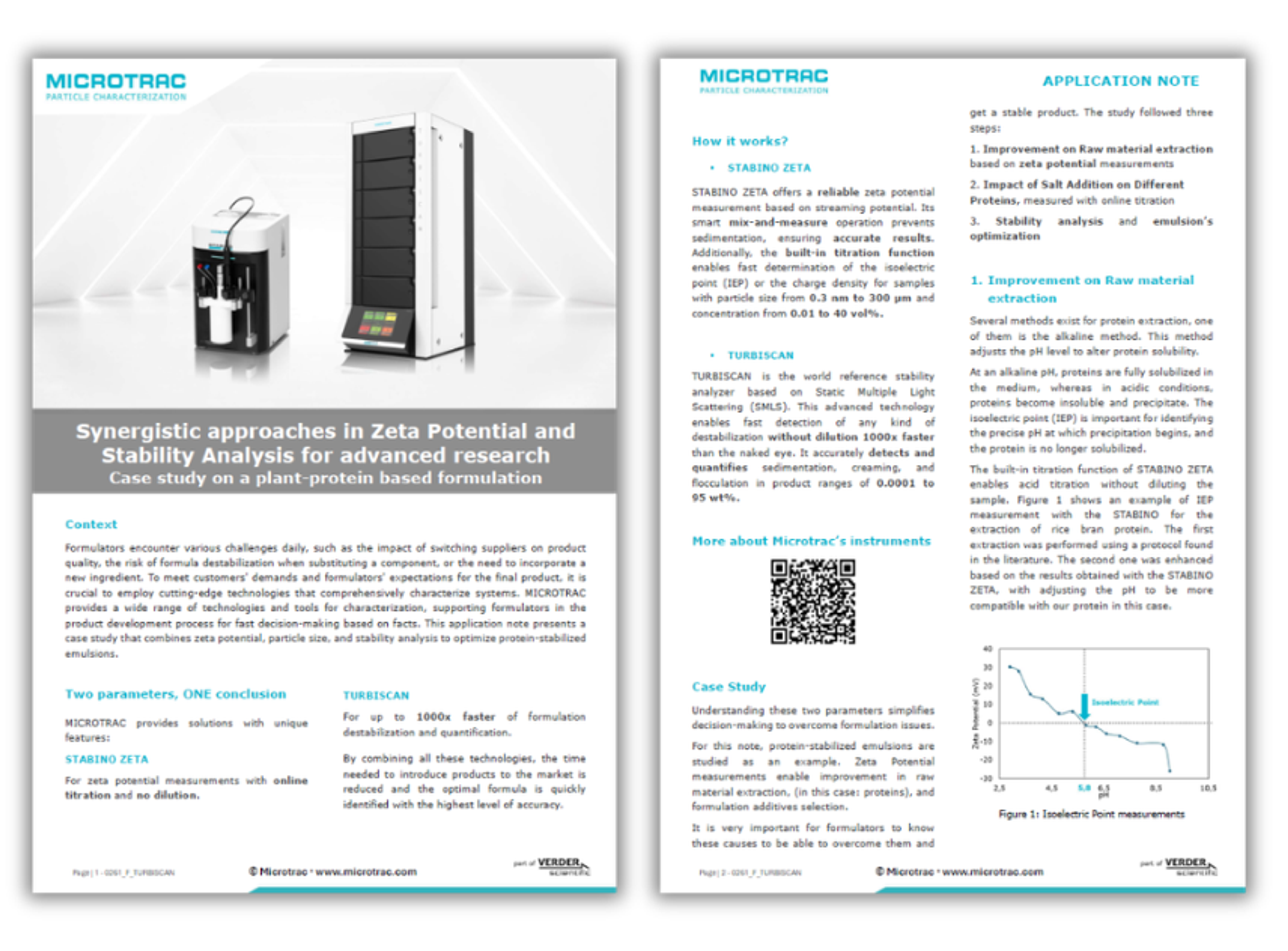
Synergistic approaches in zeta potential and stability analysis for advanced research
Download this in-depth application note to explore how combining STABINO ZETA and TURBISCAN technologies from Microtrac enhances formulation development from raw material extraction to final product stability—faster, without dilution, and more reliably.
In this case study, discover how Microtrac’s instruments were used to:
- Optimize protein extraction via zeta potential and isoelectric point (IEP) measurements
- Analyze salt impact on proteins through automated titration
- Identify the most stable emulsion with real-time, dilution-free stability profiling
Whether you're working on complex emulsions or novel biomaterials, this real-world study demonstrates how a data-driven approach can help you save time, reduce guesswork, and formulate with confidence.