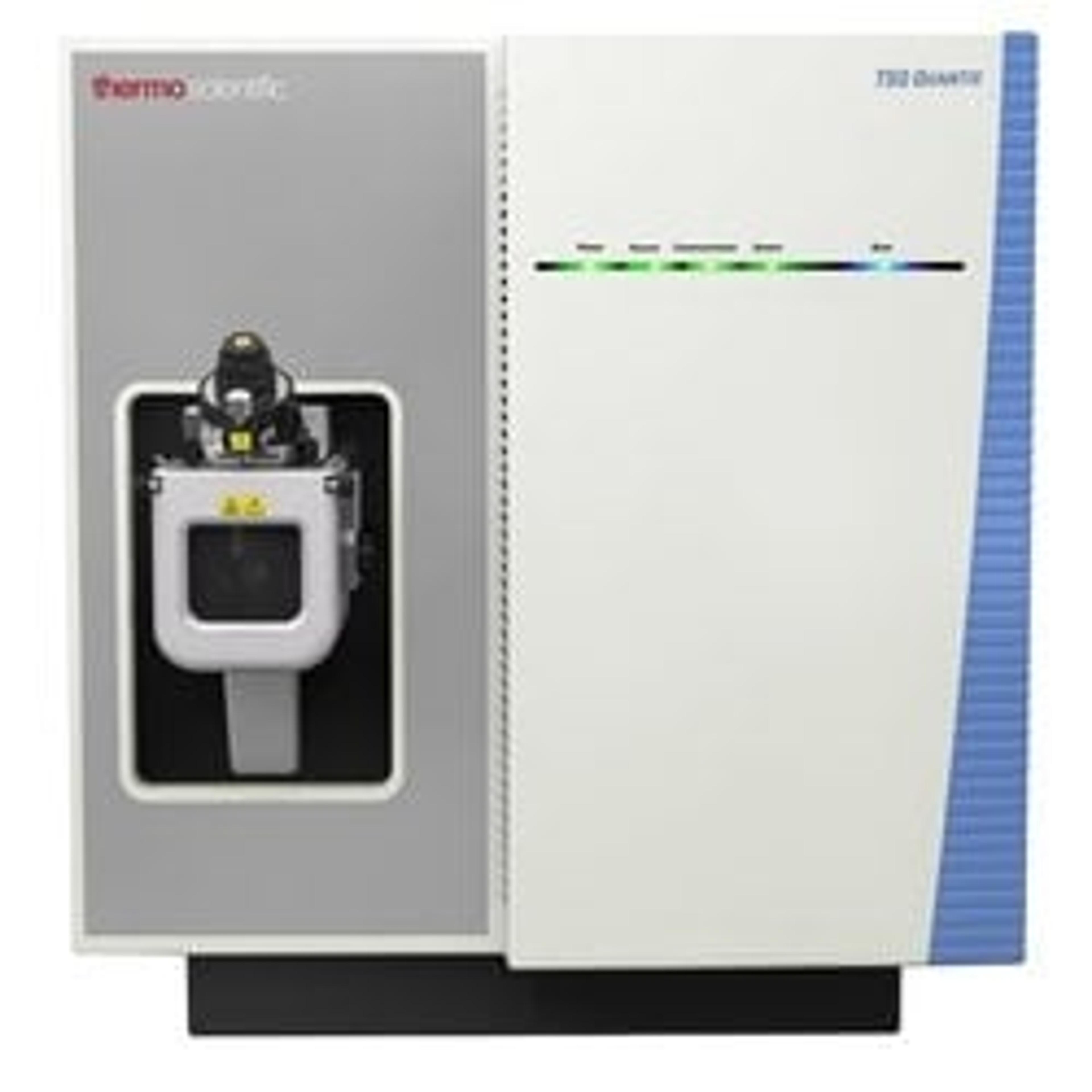
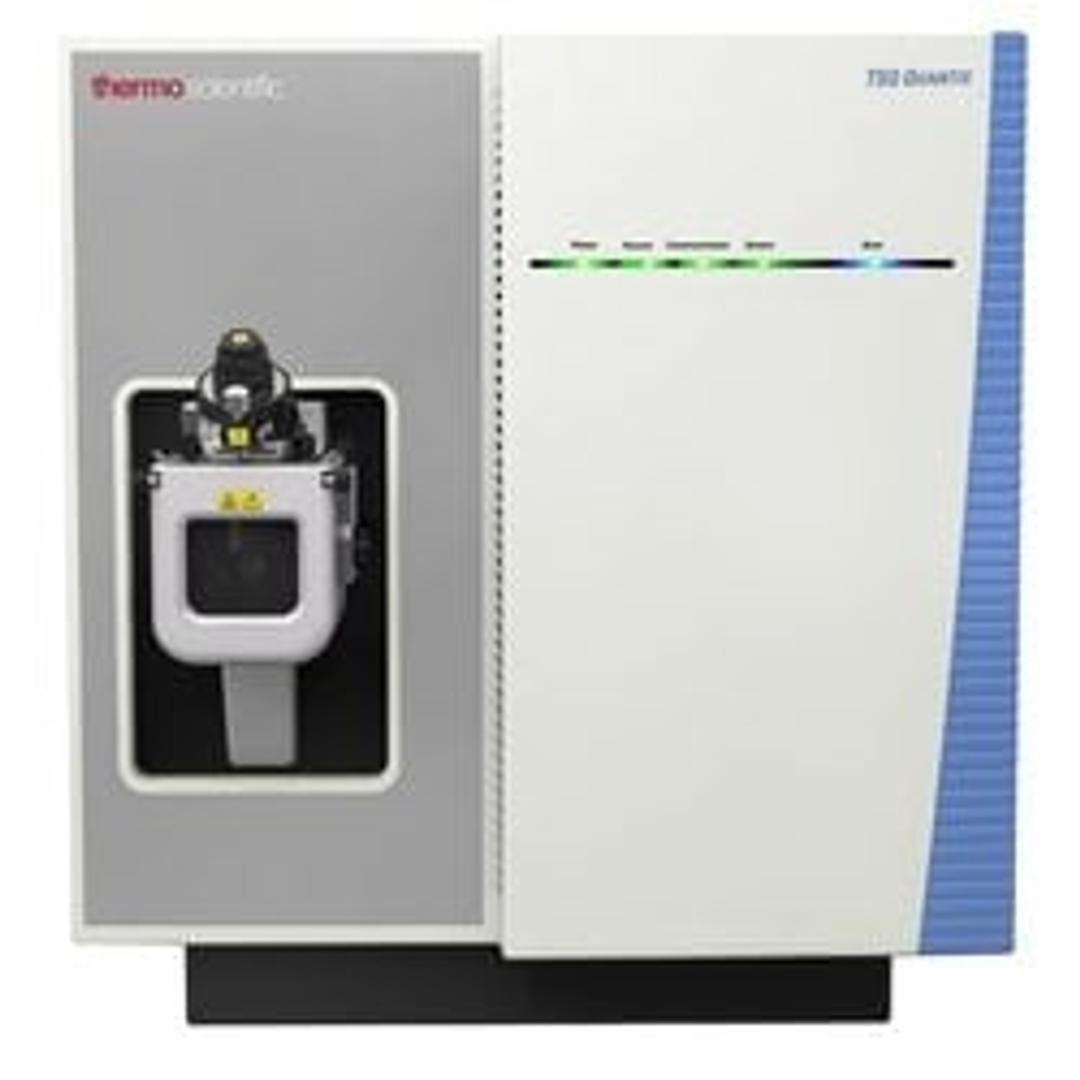
Thermo Scientific™ TSQ Quantis™ Triple Quadrupole Mass Spectrometer
Easily answer critical analytical challenges during targeted quantitation workflows in your laboratory. With its segmented quadrupoles, faster rod drivers, and improved electron multipliers, the Thermo Scientific™ TSQ Quantis™ Triple Quadrupole Mass Spectrometer delivers unprecedented robustness with best-in-class sensitivity for everyday use and for every user.

The supplier does not provide quotations for this product through SelectScience. You can search for similar products in our Product Directory.
It is a powerful tool that provides high sensitivity, specificity, and throughput.
Analyse metabolites in biological samples and target molecules
The TSQ Quantis™ Triple Quadrupole Mass Spectrometer is a cutting-edge instrument designed for advanced analytical workflows. It is a powerful tool that provides high sensitivity, specificity, and throughput, making it ideal for a wide range of applications such as pharmaceutical analysis, metabolomics, and environmental testing. In this review, I will delve into the features, benefits, and drawbacks of this instrument, along with my personal experience using it. Features: The TSQ Quantis™ Triple Quadrupole Mass Spectrometer is equipped with advanced features that make it stand out from other mass spectrometry instruments. Firstly, it has a high resolution and accurate mass measurement capability, which enables it to detect and quantify analytes with precision. This feature is particularly useful in applications such as metabolomics where the identification of unknown compounds is critical. Additionally, the instrument has an extended dynamic range, which allows for the analysis of both low and high abundance compounds in a single run. The TSQ Quantis™ Triple Quadrupole Mass Spectrometer also has a fast scan speed, which increases the instrument's throughput. The instrument can acquire up to 500 transitions per second, which is essential in high-throughput applications such as drug discovery. Furthermore, the instrument has an advanced ion source technology, which enables the analysis of a wide range of compounds, from small molecules to macromolecules. Benefits: The TSQ Quantis™ Triple Quadrupole Mass Spectrometer offers several benefits, making it an excellent investment for analytical laboratories. Firstly, its high sensitivity and specificity enable the detection of trace amounts of compounds in complex matrices. This is particularly useful in environmental testing, where the detection of contaminants in soil or water samples is crucial. Additionally, the instrument's high throughput reduces the analysis time, leading to faster results and increased productivity. The TSQ Quantis™ Triple Quadrupole Mass Spectrometer is also easy to use, even for those who are new to mass spectrometry. The instrument has an intuitive user interface, and the software is user-friendly, making it easy to operate. Furthermore, the instrument has a self-cleaning ion source, which reduces maintenance and downtime, ensuring Personal Experience: I had the opportunity to use the TSQ Quantis™ Triple Quadrupole Mass Spectrometer in my laboratory, and my experience with the instrument was positive. The instrument was easy to set up, and the software was intuitive, making it easy to use. Additionally, the instrument's fast scan speed and high sensitivity allowed for the detection of low abundance compounds in complex matrices, leading to accurate results. The TSQ Quantis™ Triple Quadrupole Mass Spectrometer also had a robust design, and the instrument's self-cleaning ion source reduced maintenance and downtime, ensuring maximum uptime. However, the instrument's high cost and complexity may be a barrier to smaller laboratories.
Review Date: 14 Apr 2023 | Thermo Fisher Scientific
Excellent
Analyze drugs and metabolites in biological samples
Very robust instrument
Review Date: 13 Feb 2023 | Thermo Fisher Scientific
I can't complain this instrument except the low resolution.
metabolomics
The TSQ Quantis MS has a great sensitivity to most of chemicals. It also has outstanding robustness and reproducibility. Good choice for industrial use.
Review Date: 15 Jul 2021 | Thermo Fisher Scientific
It is user friendly.
Analytical Chemistry
The Thermo Fisher TSQ triple quadrupole mass spectrometer is easy to use. The software that comes with it which is the Xcalibur is user friendly and good for processing data.
Review Date: 26 Mar 2019 | Thermo Fisher Scientific
Easily answer critical analytical challenges during targeted quantitation workflows in your laboratory. With its segmented quadrupoles, faster rod drivers, and improved electron multipliers, the Thermo Scientific™ TSQ Quantis™ Triple Quadrupole Mass Spectrometer delivers unprecedented robustness with best-in-class sensitivity for everyday use and for every user.
Brochures

Meeting Canada's cannabis safety standards
Whether you’re setting up your first lab or scaling operations. Thermo Fisher Scientific offers a complete range of instrument workflows to help you comply with Canadian cannabis testing regulations.
Determination of BTEX and volatile organic compounds (VOCs) in drinking water by GC-MS/MS coupled to static headspace and solid-phase microextraction sampling
In this application note, Thermo Fisher Scientific outlines the analytical performance of static headspace (SHS) and solid-phase microextraction using Arrow technology (SPME Arrow) for the determination of benzene, toluene, ethylbenzene, and xylenes (BTEX) and chlorinated and brominated volatile organic compounds (VOCs) in drinking water using a Thermo Scientific™ TSQ™ 9000 triple quadrupole GC-MS/MS system. SHS sampling provided adequate sensitivity to meet the regulatory limits set at 0.3 μg/L for the investigated VOCs and BTEX, with the exception of vinyl chloride. For this compound, the SPME Arrow technique was used to reach the regulatory limits set at 0.1 μg/L.
Environmental analysis of PCBs at reduced running costs using hydrogen as carrier gas
In this application note, Thermo Fisher Scientific compares the performance of a triple quadrupole mass spectrometer coupled to a gas chromatograph (GC) using hydrogen versus helium as the carrier gas for analyzing polychlorinated biphenyls (PCBs). PCBs are industrial chemicals banned since 1977 due to environmental concerns. The study aims to meet acceptance criteria outlined in US EPA Method 1668. The note discusses the structure and toxicity of PCBs, regulations surrounding them, and the application of GC-MS/MS for analysis.
A reliable and simple FIA-MS/MS method for the quantitation of amino acids and acylcarnitines in dried blood spots
This application note from Thermo Fisher Scientific details a FIA-MS/MS method using the Thermo Scientific™ Vanquish™ MD HPLC and Thermo Scientific™ TSQ Quantis™ MD MS. The method, validated with ClinSpot™ LC-MS/MS Complete Kits, enables the detection of 12 amino acids and 13 acylcarnitines from dried blood spot samples. It fulfills the requirement for semi-quantitative determination of these compounds, crucial for newborn screening.
Analytical methods for veterinary drug residue testing in meat and dairy products
Food safety is of paramount importance to public health, and animal products destined for human consumption are closely monitored by global food agencies to ensure that Maximum Residue Limits (MRLs) are not exceeded.
In this veterinary drug residue testing eBook, we consider the Thermo Fisher Scientific suite of LC-MS/MS technologies and their add-ons through a range of case studies demonstrating their use in meat and milk veterinary drug residue testing. We will explore how these analytical methods can tackle specific groups of compounds or high-throughput simultaneous screening of multiple residues, overcoming muscle matrix problems and improving Limits of Quantification (LOQs).
Highly sensitive and robust LC-MS/MS solution for quantitation of nitrosamine impurities in metformin drug products
In this application note, Thermo Fisher Scientific demonstrates robust and sensitive quantitation of 10 nitrosamines with a Thermo Scientific™ TSQ Quantis™ mass spectrometer and uses the LC-SRM-MS method to quantify nitrosamine impurities in metformin drug products.
Testing Robustness: Immunosuppressant Drugs in Blood with a TSQ Quantis MS for Clinical Research
Mass spectrometry is a popular choice of technology in clinical research for the quantitation of immunosuppressant drugs in whole blood samples. A sensitive and robust instrument is required for reliable quantitation workflows. In this study, the robustness of the TSQ Quantis triple quadrupole mass spectrometer for analysis of immunosuppressant drugs in whole blood samples in demonstrated.
Quantification of Antidepressants in Human Plasma or Serum by Liquid Chromatography-Tandem Mass Spectrometry
In this application note, an analytical method for clinical research for the quantification of 23 antidepressants in human plasma or serum is reported. The analysis includes:
atomoxetine, bupropion, citalopram, desmethylfluoxetine, desmethylmirtazapine, desmethylsertraline, dosulepin, duloxetine, threo-dihydrobupropion, fluoxetine, fluvoxamine, mianserin, milnacipran, mirtazapine, moclobemid, hydroxybupropion, opipramol, paroxetine, reboxetine, sertraline, tranylcypromine, trazodone, and venlafaxine.
Quantification of Benzodiazepines in Human Plasma or Serum by Liquid Chromatography Tandem Mass Spectrometry for Clinical Research
In this application note, a clinical research analytical method for the quantification of 35 benzodiazepines in human plasma or serum is reported. The panel includes :
3-hydroxybromazepam, 7-aminoclonazepam, 7-aminoflunitrazepam, 7-aminonitrazepam, α-OH-alprazolam, α-OH-midazolam, α-OH-triazolam, alprazolam, bromazepam, chlordiazepoxide, clobazam, clonazepam, demoxepam, desalkylflurazepam, desmethylflunitrazepam, diazepam, estazolam, flunitrazepam, flurazepam, lorazepam, lormetazepam, medazepam, midazolam, nitrazepam, norclobazam, nordiazepam, oxazepam, prazepam, temazepam, tetrazepam, trazodone, triazolam, zaleplon, zolpidem, and zopiclone.
Addressing Current Trends and Challenges in Clinical Research with Mass Spectrometry
In this white paper, Suparna Mundodi, Marketing Manager, Clinical Research at Thermo Fisher Scientific, interviews experts Marilyn Huestis, recently retired from the National Institute on Drug Abuse, Michael Vogeser, specialist in Laboratory Medicine and senior physician at the Hospital of the University of the Ludwig-Maximilians-University Munich, Germany, and Lawrence Andrade, Director of Research and Development, Dominion Diagnostics. Their discussion focuses on current trends and challenges in clinical research.

Methods for the analysis of SVOCs in water samples
Explore cutting-edge approaches for advancing semi-volatile organic compounds (SVOCs) analysis in water samples

Updated software solutions enable new insights and productivity
Thermo Scientific software suite improvements deliver enhanced performance, usability, and integration across a wide range of workflows
New eBook series covers techniques to optimize mass spec and liquid chromatography results
Collect our three guides for robust and reliable technologies to enable scientists in forensic and clinical laboratories
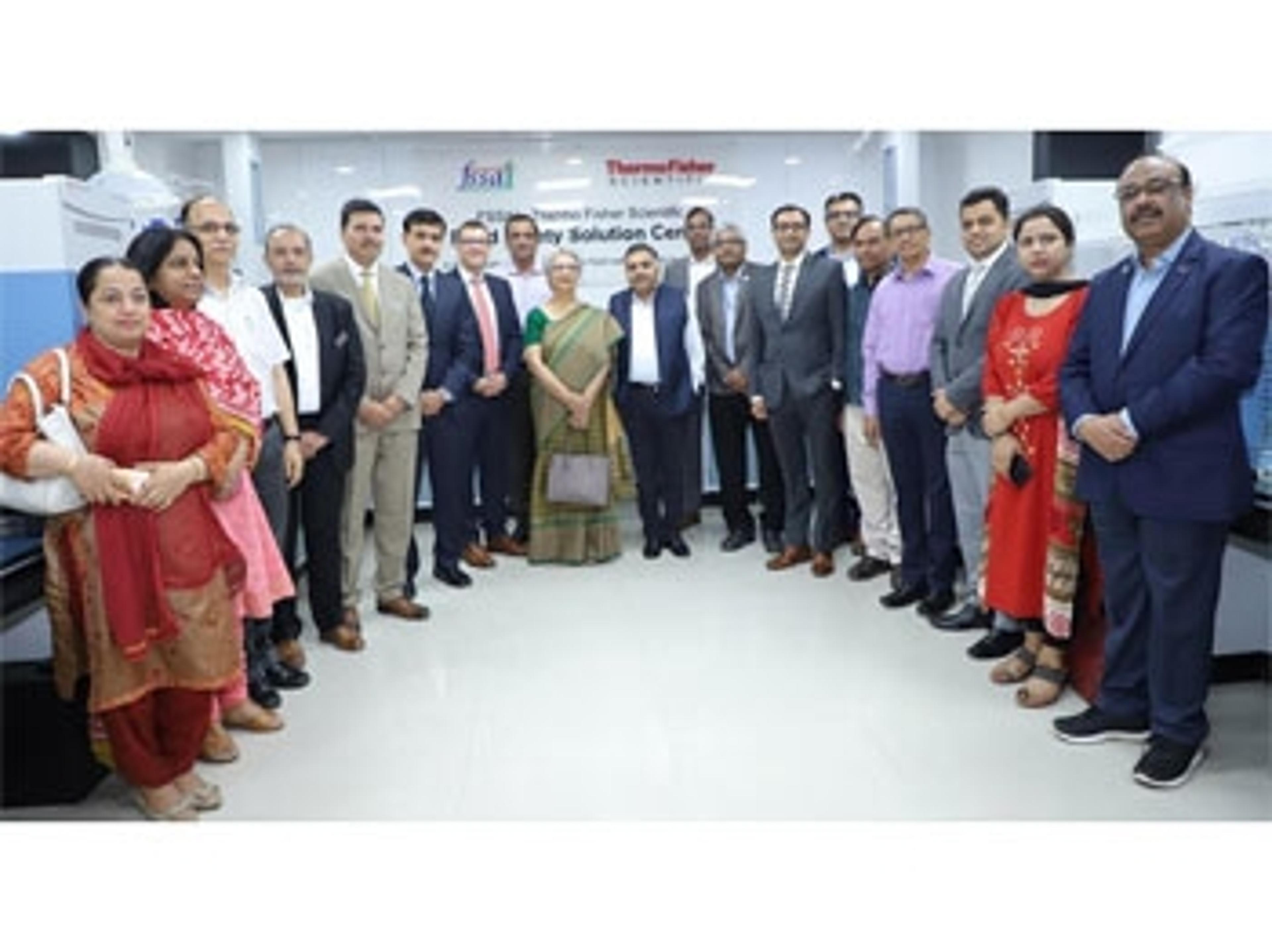
Thermo Fisher Scientific Opens Food Safety Customer Solution Center in India
Collaboration with the Food Safety and Standards Authority of India to develop next-generation chromatography and mass spectrometry workflow solutions