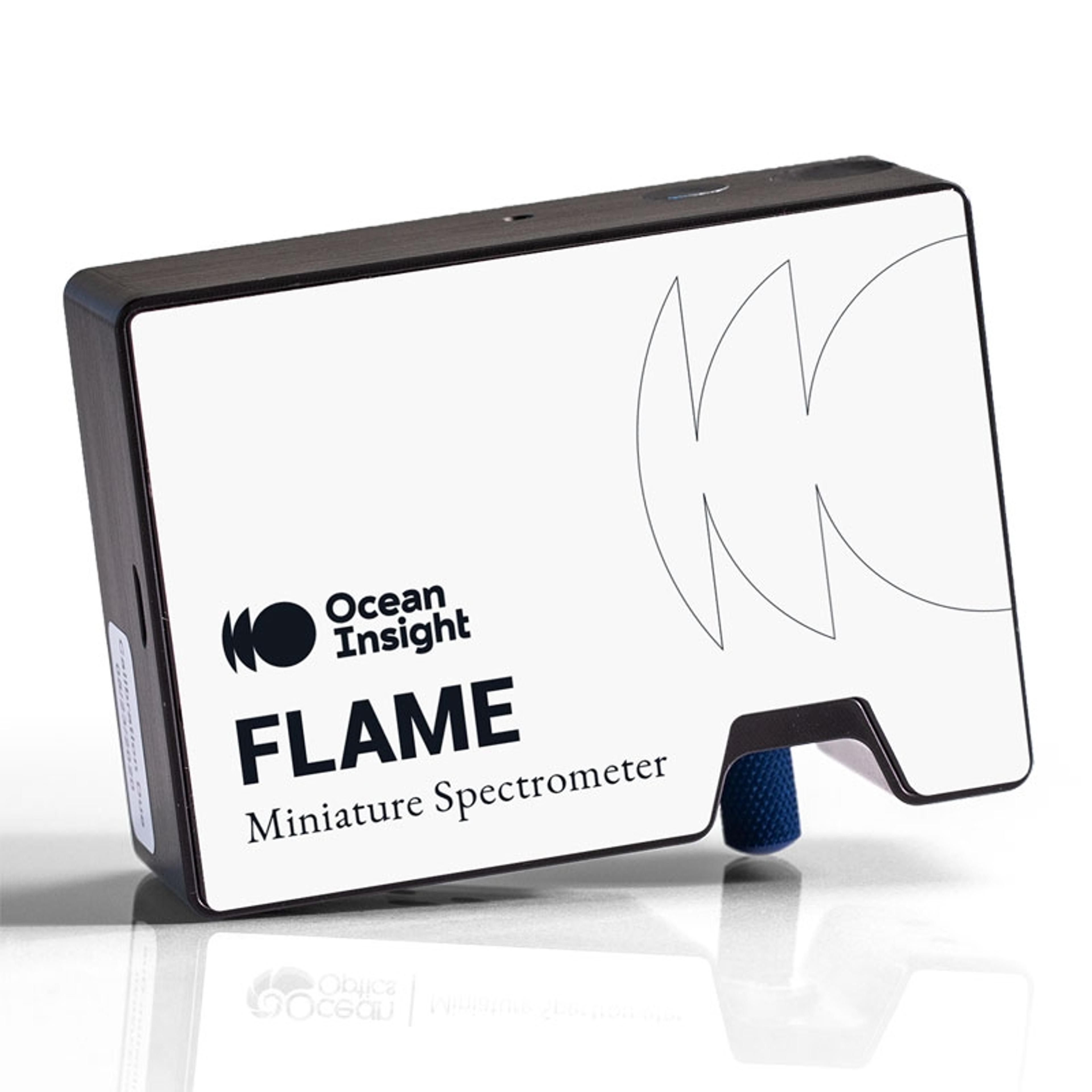
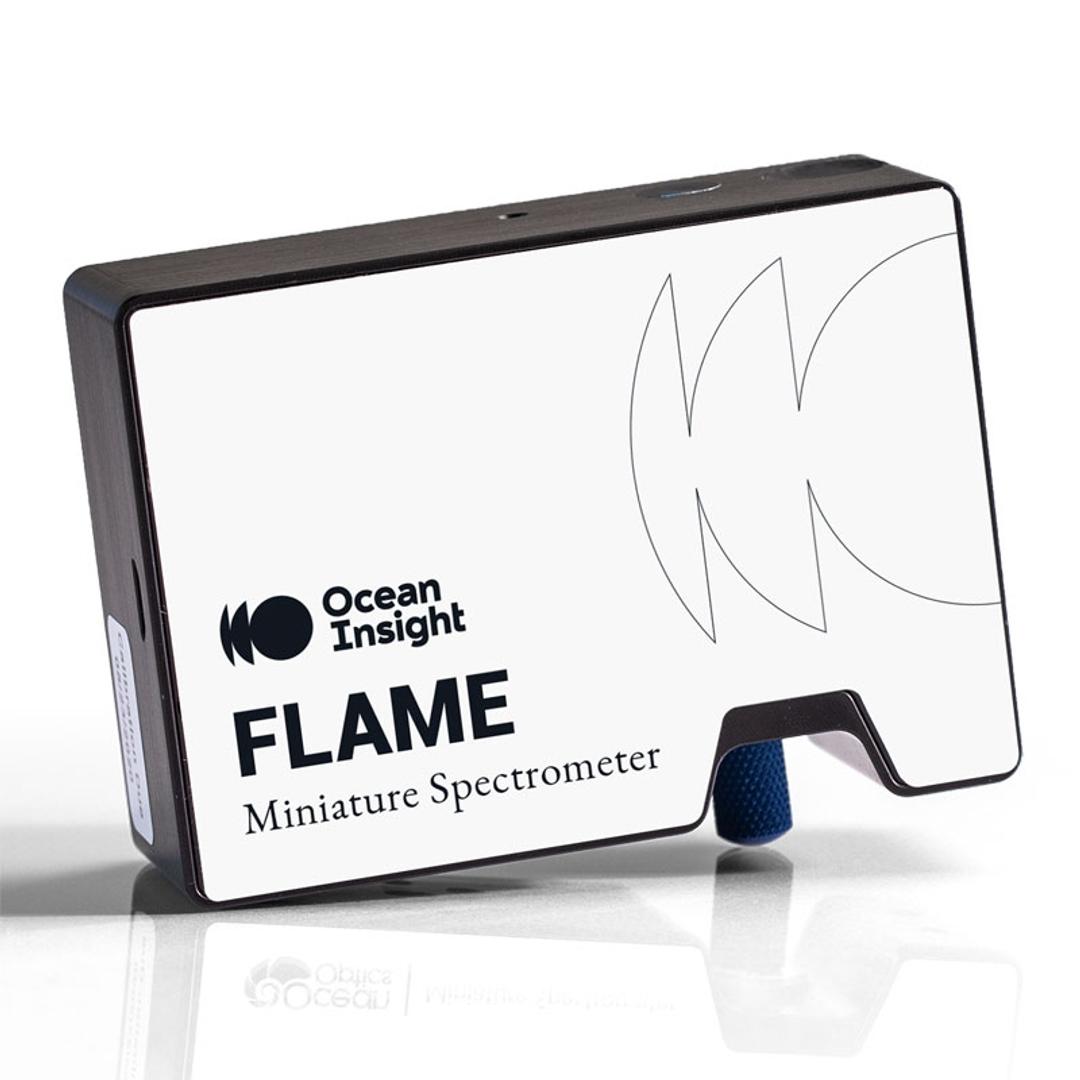
Flame Spectrometer - High Thermal Stability, Interchangeable Slits
The Flame spectrometer is built using industry-leading manufacturing techniques that help deliver high thermal stability and low unit to unit variation — without compromising the flexibility and configurability that are the hallmark of Ocean Optics miniature spectrometers.

The supplier does not provide quotations for this product through SelectScience. You can search for similar products in our Product Directory.
Easy and powerful to use!
Analyze fiber connectors
The spectrometer is easy to use. As a programmer, I could easily start using it in my own application (LabVIEW), but provided software is also intuitive and allows me to quickly start working with this device. What is more - the customer service is really helpful and works really fast - that is a huge positive! If it comes to results, that is exactly what I needed. Worth every money.
Review Date: 13 Dec 2021 | Ocean Optics
Awesome results, with best outcomes.
Analyze nutraceutical compounds in kokum
Very convenient to use, I get the results the same in all the trials, which plays a very crucial role in the success of my research.
Review Date: 15 Mar 2021 | Ocean Optics
Simple to use, user-friendly and accurate.
Portable biosensor construction for robust point-of-care use
The product is simple to operate. The results are good, reproducible, and comparable to other high-cost benchtop spectrometers!
Review Date: 16 Dec 2020 | Ocean Optics
The Flame spectrometer is built using industry-leading manufacturing techniques that help deliver high thermal stability and low unit to unit variation — without compromising the flexibility and configurability that are the hallmark of Ocean Optics miniature spectrometers. New features such as interchangeable slits, indicator LEDs and simple device connectors deliver more freedom and less frustration.
Whether you are an educator looking for an instrument to teach students the basic principles of spectroscopy, a research lab looking to make a breakthrough, or an engineer working to integrate a spectrometer into an OEM system, the Flame will provide you with the performance and features you need to make your UV-Vis spectroscopy application successful.

On-line Quality Control Measurements in Varying Conditions
Modern miniature spectroscopy is well suited for process environments, where real-time monitoring of raw stock, routine processes and finished goods is critical. Modularity of spectrometers, light sources and sampling optics allows for deeper implementation of instrumentation into the process flow, and makes it much simpler to optimize setups. With the use of a new generation of robust, repeatable and stable instrumentation like the Flame spectrometer, manufacturers can more easily assess sample quality under rigorous conditions. In this application note, we investigate the thermal stability of a Flame spectrometer system for process line transmission measurements at different temperatures.
Spectroscopy of Sports Drinks
Beverages designed to replenish vital nutrients have been around since the late 1920s, when they were first developed to provide essential nutrients to the sick. In the decades since then, these beverages have grown to a multibillion dollar industry globally. Consumers are faced with a dizzying array of choices, with drink composition ranging from simple water, sugar and electrolytes to more complex mixtures containing natural ingredients with added vitamins and nutrients. Inspired by the recent proliferation of sports drinks and the vast array of choices consumers have available, we were curious to explore the composition of several sample beverages using modular spectroscopy.
Transitioning to Flame from the USB Series Spectrometers
The Flame Spectrometer is the latest generation of Ocean Optics’ miniature fiber optic spectrometers, improving on our versatile, general-purpose USB2000+ and USB4000 spectrometers. The Flame is built using industry leading manufacturing techniques that help deliver high thermal stability and low unit-to-unit variation without compromising the flexibility and configurability that are the hallmark of the design.
Noise in Spectrometers - Part 1
Unavoidable is the thermal, random motion of the electrons in the detector, which leads to signals that are not caused by light, often referred to as the “dark” signal. The dark signal is usually determined in a separate measurement without a light source, but due to its random nature this dark signal introduces noise in the spectrum. While the dark spectrum is generally subtracted from spectra prior to further analysis, its variability introduces some uncertainty into each measurement.
The Challenges of Environmental Monitoring
Air, water and soil samples are extremely complex requiring high sensitivity and advanced data processing for trace level detection.. Additional challenges come with the need for remote monitoring stations requiring autonomous operation in harsh environments 24 hours a day, 7 days per week. The challenge increases even further when remote monitoring stations are in difficult to reach, isolated locations where servicing the instrument regularly is not an option. For these reasons, components and instrumentation must be reliable performing in a range of ambient conditions for long-term measurements spanning days, weeks or even months.

Pesticides & Contamination: SelectScience Special Feature
From potency testing and profiling to multi-residue and trace-level detection, find out the latest techniques and technologies advancing the field of pesticide and contaminant testing