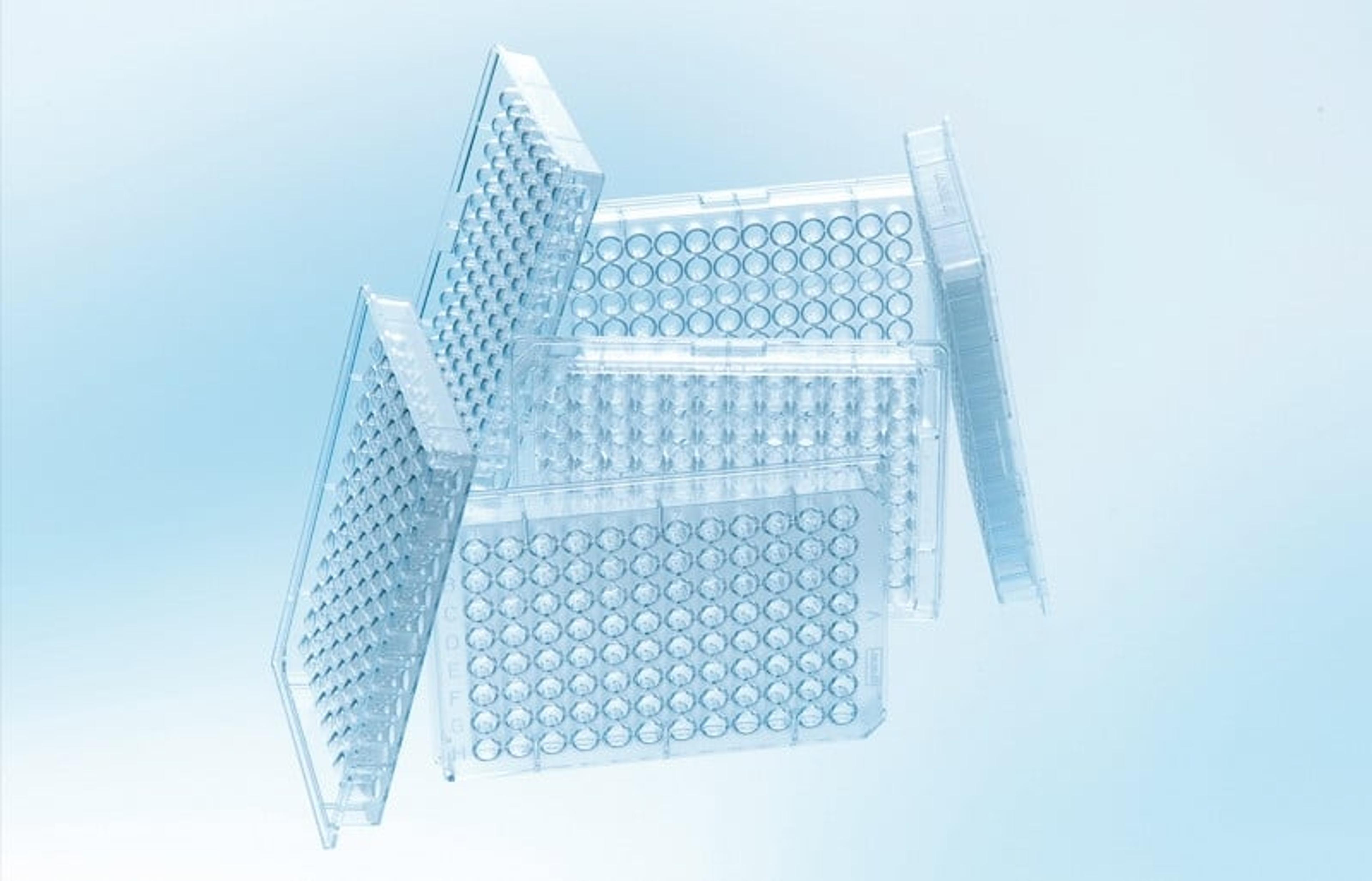
96 Well CELLSTAR® Cell Culture Microplates
High-quality microplates for cell culture
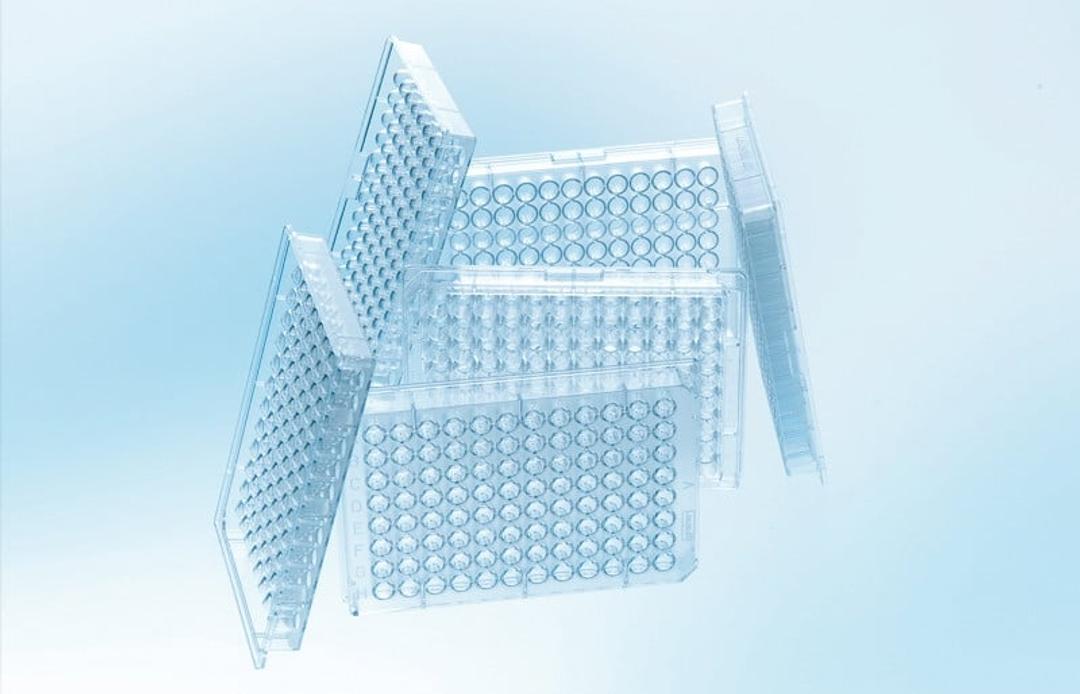
96 Well CELLSTAR® Microplates (clear)
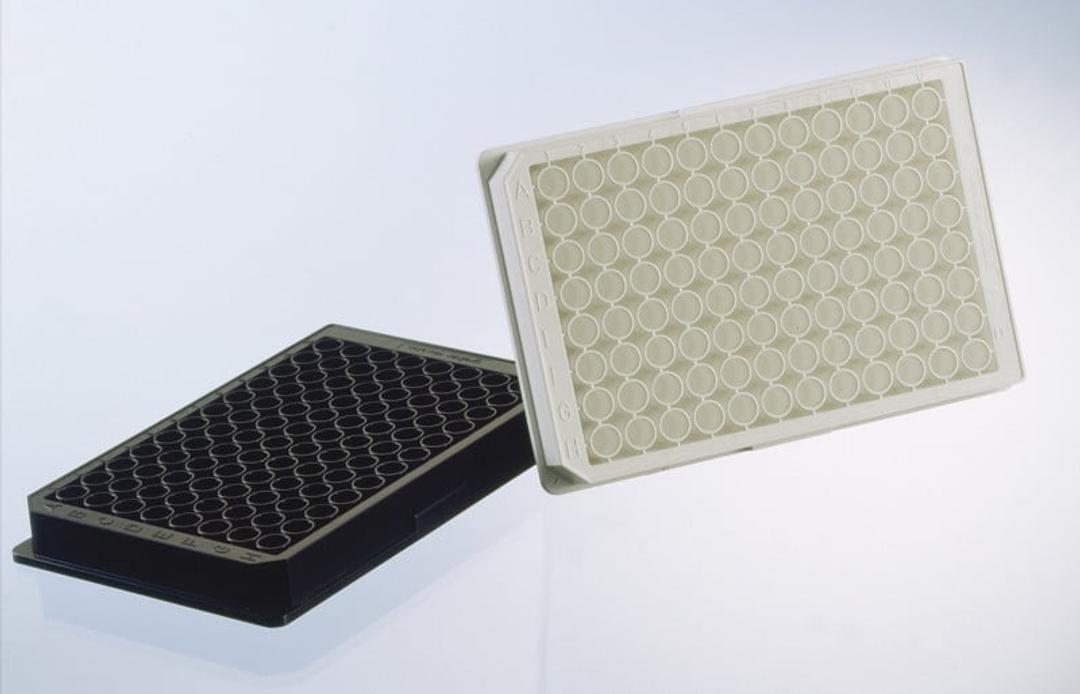
96 Well CELLSTAR® Microplates (black and white)
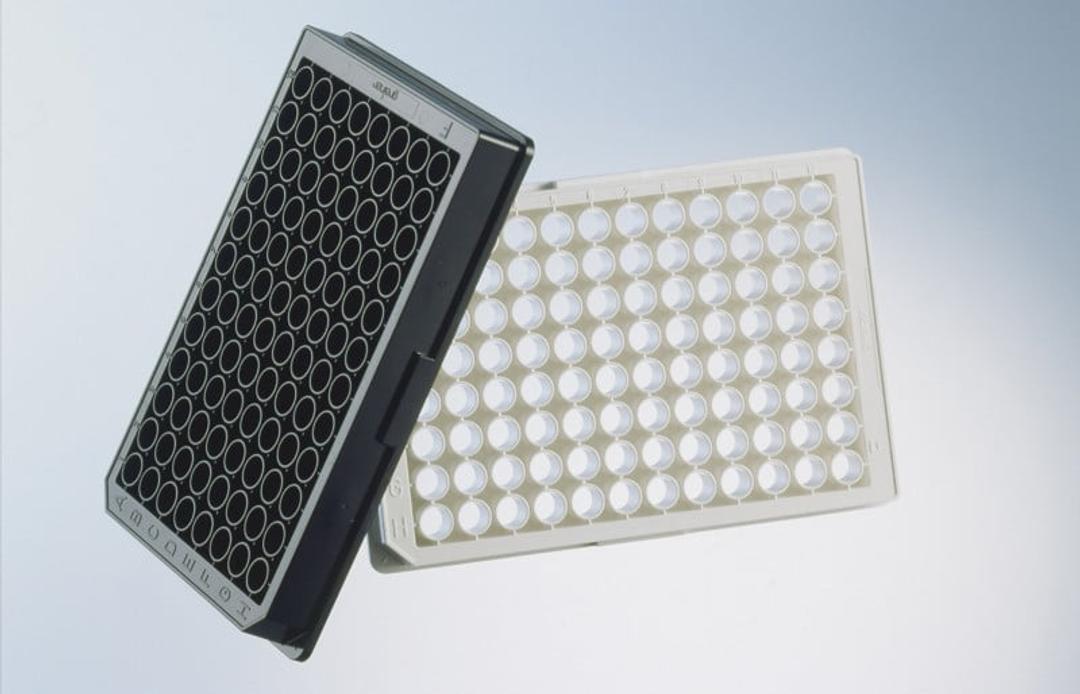
96 Well CELLSTAR® Microplates (µClear® film bottom)

The supplier does not provide quotations for this product through SelectScience. You can search for similar products in our Product Directory.
Cell culture treated 96 well microplates are available in the following versions:
- With U-, V- and F-bottom
- Clear, black and white
- Standard or half area microplates
- Black and white “clear bottom” plates (µClear®)
- Chimney well design, raised wells and condensation rings in lids prevent cross-contamination
- With or without lid
- Improved cell adhesion through physical surface treatment
- Barcode-labelled on request
Features:
- Lid enables gas exchange with minimal evaporation
- High clarity of the clear microplates for optimal microscopic examinations
- Stackable
- Alphanumeric well coding
- Individually wrapped peel-off bags
- Consecutive lot numbering
Brochures

Microplate selection guide
In this brochure, Greiner Bio-One GmbH aims to offer an overview of microplates, focusing on their applications and suitability for different research needs. Advancements in research technologies have led to various platforms used across different fields. Researchers face the task of selecting microplates tailored to their specific applications from a wide array of options. This brochure aims to provide a detailed solution to microplate selection.
Cultivation and differentiation of human adipose derived mesenchymal stem cells
In this application note, Greiner Bio-One GmbH highlights products from the CELLSTAR® and CELLCOAT® lines, when used in conjunction with StemPro® differentiation kits, as highly suitable for the in vitro differentiation of adipose tissue derived stem cells (ADSCs). Commercially available ADSCs are identified as a valuable stem cell resource that can be efficiently expanded on TC treated CELLSTAR® cell culture labware without compromising their tri-lineage differentiation potential.
UV/VIS Spectroscopy in Microplates UV-Star, μClear, MICROLON and CELLSTAR
Ultraviolet-visible (UV/VIS) spectroscopy is a classical analytical method for determining the chemical constitution of a substance and its concentration in aqueous solution. UV/VIS spectroscopy is usually conducted in quartz glass cuvettes. However, cuvettes do not provide sufficient throughput when dealing with large amounts of samples, and microplates can be used to speed up work. In this application note from Greiner Bio-One, learn about how transparent microplates (CELLSTAR®, MICROLON) or microplates with a clear film bottom (μClear®, UV-Star®) are frequently used in UV/VIS spectroscopy. UV/VIS is a subclass of spectroscopy which uses visible light and adjacent near ultraviolet (UV) ranges for the determination of the concentrations and the characterization of dissolved substances.
High-Throughput Spheroid Formation for Compound Screening Using Magnetic 3D Bioprinting
This study presents a method developed for 3D cell culture using magnetic bioprinting to track functional changes in beating and calcium signaling in response to exposure to cardiotoxic compounds.
Development of Spheroids Derived from Tumor Biopsies and Patient-Derived Xenografts Using Magnetic 3D Bioprinting
The successful development of precision medicine assays is highly dependent on the availability of quality biosources. One such biosource is patient-derived tumor tissue, either from primary or metastatic tumors. This study uses a 3D cell culture platform, magnetic 3D bioprinting, to print spheroids from metastatic tumor tissue and PDX models.
Cultivation and Differentiation of Human Adipose Derived Mesenchymal Stem Cells
Adipose derived stem cells are a valuable stem cell resource in both research and regenerative medicine. In this application note from Greiner Bio-One it is shown that they can easily be expanded on tissue culture treated CELLSTAR® plates without loss of their tri-lineage differentiation potential. CELLCOAT® Collagen I plates were shown to enhance the establishment of osteogenic characteristics such as calcium deposition in the extracellular matrix and expression of alkaline phosphatase.