Life Sciences Scientists' Choice Awards winners announced during Virtual Summit

DeNovix, Sartorius, NuAire and Sony Biotechnology among those recognized during celebration of top technologies advancing life sciences

11 May 2020


Sarah Thomas
Associate Editor

Editorial article

Scientists' Choice Awards, 2020
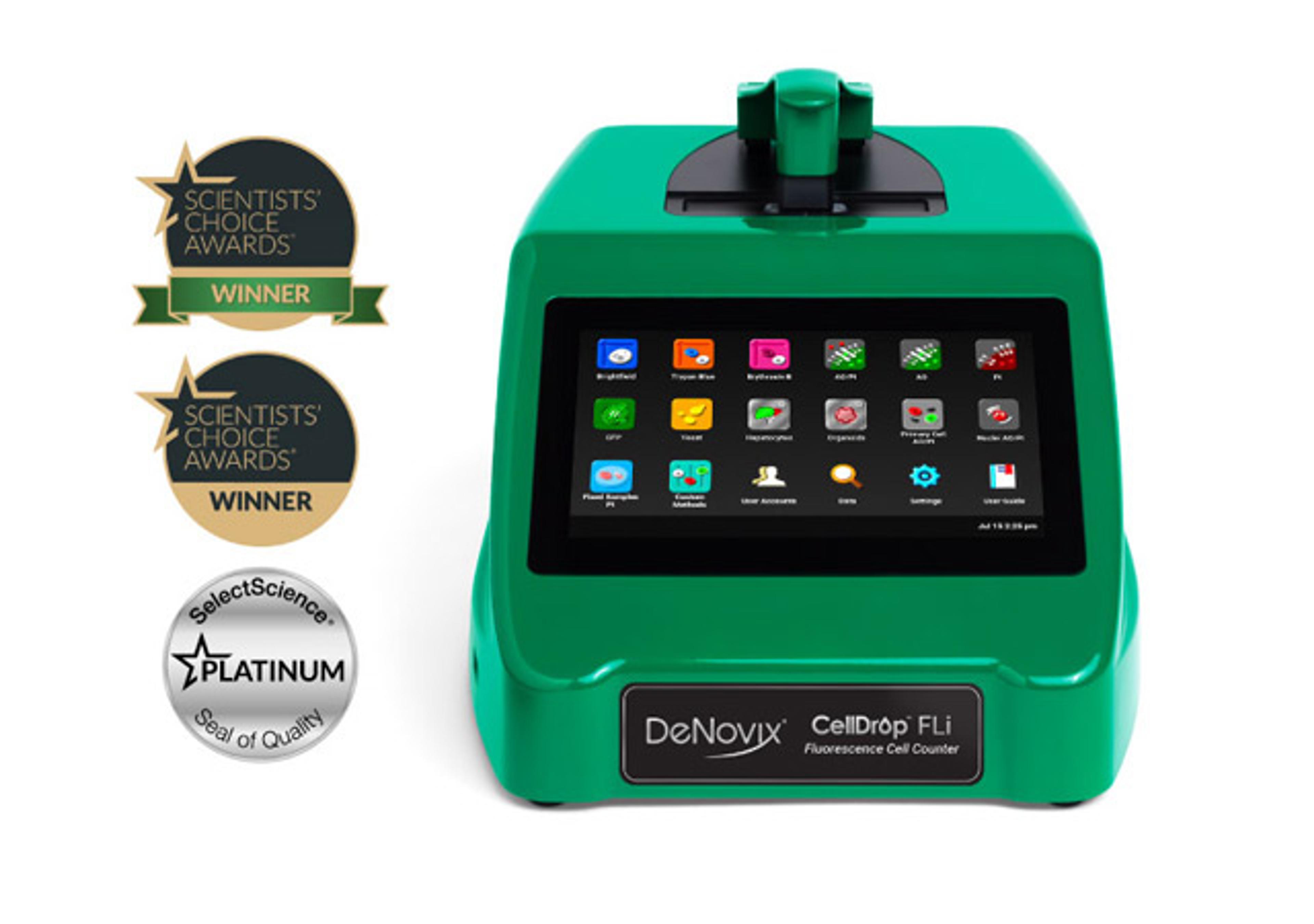
Best New Life Sciences Product of goes to the DeNovix CellDrop™ Cell Counter, from DeNovix

The winners of the 2020 Scientists’ Choice Awards for Life Sciences have been announced live from the inaugural SelectScience Virtual Summit on Cancer and Immunology Research. Once again, scientists around the globe were invited to participate by nominating, reviewing and voting for the best lab products in the field.

Following the postponement of physical conferences as a result of the COVID-19 outbreak, the winners and nominees of these prestigious awards were recognized at a special online ceremony held during the SelectScience®Virtual Summit on Cancer and Immunology Research 2020. The summit highlighted the latest innovations in cancer and immunology research from institutions all over the world and featured talks by top scientists and technology innovators. Read on to discover this year’s award winners.

Best New Life Sciences Product of 2019

Nominated and voted for by scientists across the globe, the award for Best New Life Sciences Product of 2019 went to the DeNovix CellDrop™ Cell Counter, from DeNovix. With a drive towards sustainability and reducing the environmental impact of the laboratory, the DeNovix CellDrop™ Cell Counter, with its unique DirectPipette™ Technology, incorporates a novel sample loading method that eliminates the need for disposable plastic slides typically required for routine cell counting. The CellDrop features both dual fluorescence and brightfield optics and a variable height chamber, enabling accurate measurement across a wide range of cell densities and sizes. Additionally, its easy-to-use software and 7″ touchscreen interface enable users to perform and manage applications with ease across multiple users.
It held off a strong field featuring a further 11 shortlisted products.

The 11 runners-up were:

Life Sciences Video Interview of the Year - in association with The Scientists'​ Channel

Scientists Choice Awards, Video of the Year, Life Sciences
The Video Interview of the Year features Dr. Aleksandra Dukic, in association with NuAire

This year’s winning video, ‘A novel target to inhibit glioblastoma invasion’, was an interview featuring Dr. Aleksandra Dukic, postdoctoral researcher at the Institute for Cancer Research, Oslo University Hospital.

In the film, Dukic describes a novel target for inhibiting glioblastoma cancer invasion into surrounding brain tissue and the importance of this work in addressing the need for innovative therapeutics to combat this aggressive cancer. Hear how the culture and analysis of glioblastoma patient-derived cells are vital to her work.

Runners-up for Life Sciences Video Interview of the Year included a video interview with Prof. Jane Dyson, Scripps Research Institute, describing her work using NMR to investigate intrinsically disordered proteins and cell functionality, and an interview with Dr. Theodossis Theodossiou, Institute for Cancer Research, Oslo University Hospital, on the photodynamic treatment of cancer.

Reviewers’ Choice Award™ for Life Sciences Company of the Year
Scientist Choice Awards, Reviewers’ Choice Award™ for Life Sciences Company of the Year
Zymo Research won Reviewers’ Choice Award™ for Life Sciences Company of the Year 2019

Picking up this award, Zymo Research provides innovative, reliable, and high-quality laboratory tools for DNA, RNA, and epigenetic research. Although historically recognized for its innovative DNA and RNA purification technologies, Zymo Research has recently received much attention for its rapidly expanding epigenetics portfolio of products.

Branding itself “The Epigenetics Company”, it is their objective to develop and provide the most comprehensive set of research tools for DNA methylation analysis and epigenetics research available today. Zymo Research won the Reviewers' Choice Life Sciences Company of the Year award in recognition of the amount of positive feedback it has received from scientists sharing their opinions on the SelectScience website over the past year.

Life Sciences Article of the Year
Scientist Choice Awards, Article of the Year 2019
Article of the Year goes to 'Isolating T Cells for Adoptive Immunotherapy'

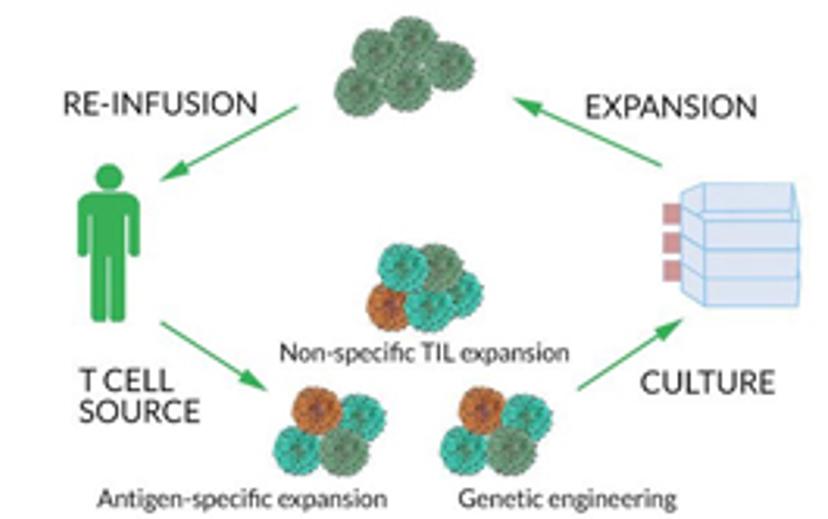
In this years' winning article, Dr. Eric Tran & Miranda Gilchrist, from the Providence Cancer Institute, and Andrew Berger, from the Fred Hutchinson Cancer Research Center​, highlight their work exploring the promising approach of using adoptive immunotherapy to fight cancer.

The article, titled ‘Isolating T Cells for Adoptive Immunotherapy’ and produced in association with Sony Biotechnology, demonstrates the advantages of adoptive T-cell immunotherapy and its process optimizing using efficient and easy-to-use flow cytometry technology. Within, Tran remarks: "It has now been demonstrated that immunotherapy can actually mediate durable responses, and sometimes cures, in these otherwise incurable cases."

Runners-up for Life Sciences Article of the Year were; Microglia and brain disease – The good, the bad and the good that turns bad – an interview with Dr. Timothy Hammond, Sanofi (formerly Boston Children’s Hospital); and Next-Generation Immunotherapy: Combining virus-specific T Cells with other immuno-oncology technologies to treat solid tumors, featuring the work of Dr. John Connolly, CSO, Tessa Therapeutics.

Application eBook of the Year

Application eBooks are a popular new SelectScience feature which aim to provide scientists with a range of useful resources on a certain topic, packaged into an affordable and engaging downloadable guide. In this category, the winner was our ‘Ultimate cell culture workflow compendium’ eBook, produced in partnership with Sartorius Group, which pulls together everything you need to ensure successful cell culture in your lab, including a range of compatible products and guides on how to use them most effectively.

Runners-up for Life Sciences Application eBook of the Year were Live-cell analysis: From culture to assay and Microbial detection: Solutions for microbiology quality control.

Life Sciences Webinar of the Year

The Webinar of the Year was ‘The journey from metabolomics to mechanisms with mass spectrometry’. Presented by Dr. Nicola Zamboni, from the Institute for Molecular System Biology, ETH Zurich, and in association with Agilent Technologies, the winning webinar showcases how mass spectrometry can be used investigate metabolic networks and how it has been utilized in research for more than two decades, for its speed, sensitivity, robustness, coverage, and flexibility.

Runners up for Life Sciences Webinar of the Year were; From boutique to global chimeric antigen receptor T Cells as a model for dlinical development and commercialization, presented by Dr. Bruce Levine, University of Pennsylvania, in association with Sartorius Group; and Sample preparation and cell isolation for multiplexed single cell sequencing analysis, presented by Cole Jones, 10x Genomics and Dr. Deena Soni, Sony Biotechnology.

Life Sciences Email of the Year

Scientist Choice Awards, Email of the Year 2019
Miltenyi Biotec wins the Life Sciences Email of the Year

Miltenyi Biotec collected this year’s award for the email 'Help shape the future of cell-based assays.’ The winning email was promoting a survey of cell biologists to learn more about the latest practices and trends in cell-based assay techniques and technologies, while also raising money for a great cause, the American Association of Cancer Research Foundation (AACR).

Runners-up for Life Sciences Email of the Year were an email by Corning Life Sciences covering the future of 3D cell culture and featuring an interview with Dr. Tram Ngo, Senior Associate Scientist at the SBP Medical Discovery Institute, and this email from Sartorius Group, which highlighted a downloadable infographic on developing monoclonal antibodies.

Reviewers' Choice Award: Life Sciences Customer Service of the Year

The Customer Service of the Year award went to DeNovix in recognition of achieving the highest after-sales service review rating on SelectScience. DeNovix CEO Fred Kielhorn said: "We are very proud to be awarded the Reviewers’ Choice Award for Life Sciences Customer Service of the Year. At DeNovix we understand that our instruments and assays are used at critical points in laboratory workflows. It is key to the DeNovix approach to the life science market that when our customers require our support they receive a fast resolution. Having our applications, software and engineering teams working closely together and focused on our customers enables us to achieve this.

Visit the Scientists' Choice Awards website for more information.

CellDrop™ Automated Cell Counters

DeNovix

Reduce consumable costs and improve lab sustainability with patented DirectPipette™ technology, or use slide mode for ultimate measurement flexibility. The CellDrop features dual fluorescence and brightfield optics, variable height sample chamber to make cell counting fast, simple, and reproducible.

(451)

Links

Tags

Capillary ElectrophoresisCapillary electrophoresis (CE) is used to separate molecules based on charge, size and hydrophobicity. Pressure, voltage or a vacuum is used to introduce the sample to fused silica capillaries. Fluorescence, UV/Vis, UV or diode array detectors are used to visualize components. Types of CE systems include capillary electrochromatography (CEC), capillary zone electrophoresis and capillary gel electrophoresis. Find the best capillary electrophoresis equipment in our peer-reviewed product directory: compare products, check customer reviews and receive pricing direct from manufacturers.ElectrophoresisElectrophoresis equipment is used to separate mixtures of protein, DNA or RNA, based on their electric charge, size and other physical characteristics, by passing them through a medium such as a polyacrylamide gel, an agarose gel or a capillary tube. Electrophoresis equipment includes horizontal and vertical gel electrophoresis chambers, isoelectric focusing systems, 2D electrophoresis and capillary electrophoresis instruments. Precast gels with a gradient can be used or gels can be hand cast. Samples are run alongside ladders or markers to identify the approximate size of a molecule. Separated proteins and nucleic acids in the gel can be stained or probed with fluorescent markers and then imaged and detected using gel documentation instruments, transilluminators, densitometers and scanners. Find the best electrophoresis equipment in our peer-reviewed product directory: compare products, check customer reviews and receive pricing direct from manufacturers.Gas ChromatographyGas chromatography (GC) is an analytical technique used to separate and quantitate mixtures of small and volatile compounds. Gas chromatographs or GC systems include components such as GC columns, detectors, pumps and autosamplers. Choose from packed or capillary GC columns, flame ionization (FID), photoionization (PID) electron capture detectors and selective or non-selective detectors. Find the best gas chromatographs in our peer-reviewed product directory: compare products, check customer reviews and receive pricing direct from manufacturers.UHPLC and HPLCHigh performance liquid chromatography (HPLC) and ultra high performance liquid chromatography (UHPLC), also known as UPLC, are analytical techniques used to separate, identify and quantitate components of complex mixtures including biological samples such as proteins and lipids as well as chemical mixtures of pesticides, drugs and oils. Both techniques are liquid chromatographic methods but differ by operating pressures (HPLC < 6000 psi < UHPLC ). Components of HPLC and UHPLC systems include columns, detectors, pumps, autosamplers and column heaters. Explore a range of UHPLC and HPLC columns for your specific sample needs including reverse phase, normal phase, ion exchange, HILIC, ion exclusion and size exclusion columns. For more specialized HPLC, explore FPLC, countercurrent LC and simulated moving bed systems. Find the best UHPLC and HPLC equipment in our peer reviewed product directory: compare products, check customer reviews and receive pricing direct from manufacturers.LC-MSLC-MS (liquid chromatography-mass spectrometry) systems and equipment are used for separation and quantitative analysis of complex mixtures, combining liquid chromatography and mass spectrometry. Quantify proteins, contaminants, pesticides or screen for drug metabolites with a high level of sensitivity. LC-MS systems and equipment include reverse phase, normal phase and specialized columns integrated with various MS detectors such as time-of-flight (TOF), quadrupole, orbitrap or ion trap mass analyzers. LC-MS/MS instruments equipped with a qTOF or triple quadrupole analyzer give greater sensitivity and resolving power to your analysis. Find the best LC-MS equipment in our peer-reviewed product directory: compare products, check customer reviews and receive pricing direct from manufacturers.Mass SpectrometryMass spectrometry (MS) is a powerful analytical technique used to identify and quantify molecules based on the mass-to-charge ratio of gas-phase ions. It provides detailed information about the structure, composition, and properties of compounds and is widely used across fields such as environmental monitoring, materials science, drug discovery and development, food and beverage testing, and wider chemical research. Key MS techniques include tandem mass spectrometry (MS/MS), liquid chromatography–mass spectrometry (LS-MS) and inductively coupled plasma (ICP-MS). Choosing from these wide range of techniques and technologies can be a daunting task, so keep up to date with scientific applications, performance expectations, and customer reviews here all in one place. Visit our product directory to receive quotes direct from the manufacturer. UV-Visible SpectroscopyUltraviolet-visible (UV-Vis) spectrophotometers are used to measure the interaction of UV and visible light with a sample, including transmission, reflectance & absorbance. The two major instrument classes are single-beam or double-beam spectrophotometers. More specialized equipment includes colorimeters, spectroradiometers and refractometers. Portable and microvolume spectrophotometers are also available. For the modular spectroscopy lab, explore a range of light sources for combination with a spectrograph/spectrometer and optics. Find the best UV-Vis spectroscopy products in our peer-reviewed product directory: compare products, check customer reviews and receive pricing direct from manufacturers.AntibodiesAntibodies are used in techniques such as confocal and fluorescence microscopy, flow cytometry, ELISA, ELISPOT, immunohistochemistry, western blotting and immunopreciptation. Select specific antigen reactivity, high specific affinity, low non-specific binding, monoclonal or polyclonal, primary or secondary antibodies and associated conjugates such as an enzyme or dye for visualization.BiosensorsBiosensors are devices used to detect an analyte using biological molecules specific to the analyte coupled to a detector. Biosensor instruments may be photometric, typically using surface plasma resonance (SPR), electrochemical or QCM (quartz crystal microbalance) biosensors. Biosensors should be selective, portable, robust and sensitive and have a fast response time. Systems may be manual or automated and usually have associated software.Western BlottingWestern blotting equipment is used to transfer and identify specific proteins within a sample, reveal protein modifications, as well as give a semi-quantitative estimation of their concentration. Western blotting equipment includes all apparatus necessary to transfer proteins from gel to membrane and subsequent processing steps. Protein transfer can be performed by electroblotting with wet, semi-dry and dry transfer systems onto nitrocellulose and PVDF membranes. Blocking, washing and labeling of membranes follows, involving buffers, blocking reagents, blotting / incubation trays, labeling reagents, immunoblotting assays, antibodies and conjugates. Automated equipment for these steps is available to accelerate your lab workflow. Finally, detection and imaging of proteins can be conducted using gel documentation and imaging systems. Find the best western blotting equipment in our peer-reviewed product directory: compare products, check customer reviews and receive pricing direct from manufacturers.Cell Adhesion AssaysCell adhesion assays are used to quantitate attachment and analyze the molecular mechanisms for extracellular matrix adhesion, cell migration and sensitivity to inhibitors. Find the best cell adhesion assay equipment in our peer-reviewed product directory: compare products, check customer reviews and receive pricing direct from manufacturers.Cell / Tissue CultureCell culture or tissue culture is used to study the biology of cells or tissues and to isolate cellular products in an environment which can be manipulated and well defined. Accurately control your culture environment with bioreactors or culture incubators, bind your cells to a surface or together with an extracellular matrix. Distinguish cell types with differential media or proliferate cells with certain characteristics using selective media. Enrich your media with supplements such as growth factors, sera and vitamins. Find the best cell and tissue culture products, kits and equipment in our peer-reviewed product directory: compare products, check customer reviews and receive pricing direct from manufacturers.Genome AnalysisGenomics, the study of genomes, includes functional genomics, evolutionary genomics and comparative genomics. There are many genomic technologies such as DNA sequencing of whole genomes, computational biology and bioinformatics. DNA and nucleic acids must be isolated and concentrated from cells for analysis with kits, automated analyzers and software. Other useful technologies for studying genomics include PCR, microarrays and electrophoresis.ELISAEnzyme-linked immunosorbent assays (ELISA), also known as enzyme immunoassays (EIA), are used for the detection and quantification of proteins, peptides and antibodies in a sample. ELISA often comes in kit format, with pre-selected antibody pairs to detect specific proteins or biomarkers of diseases such as diabetes and obesity, or cardiovascular and neurological disorders. Detection is made possible with chemiluminescent, fluorescent or colorimetric substrates and detection instruments such as microplate / ELISA readers. Other kits available include: Enzyme-linked immunospot (ELISPOT) assays for the quantification of protein-producing cells and chemiluminescent immunoassays (CLIA) kits. Find the best ELISA kits and products in our peer-reviewed product directory: compare products, check customer reviews and receive pricing direct from manufacturers.GlycobiologyGlycobiology encompasses research into the biological functions, synthesis and structures of glycans, including glycoproteins, glycolipids, proteoglycans and free oligosaccharides. Mass spectrometers and their software are commonly used in the study of glycobiology, along with structure predicting tools, chromatography and NMR.