
State-of-the-art scientific tools key to advancing healthcare research
Dr. Komal Javarappa discusses the critical technologies supporting translational research and patient care at JSS AHER
22 Jun 2026

Dr. Komal Javarappa is an Assistant Professor at the University Sophisticated Instrumentation Centre (USIC), JSS AHER
In Mysuru, southern India, researchers at JSS Academy of Higher Education & Research are using the latest scientific instruments to tackle some of the most pressing questions in human health.
The institution brings together clinicians, biologists, chemists, technologists, and students across medicine, pharmacy, life sciences, and biomedical sciences. Its work spans infectious disease, cancer, the gut microbiome, blood disorders, and genetic conditions, all united by a common goal: turning discoveries made at the bench into better care for patients.
Dr. Komal Javarappa, Assistant Professor at JSS AHER’s University Sophisticated Instrumentation Centre, is one of the people helping researchers push this work forward. Alongside his research into blood disorders, he and the USIC team support PhD students and scientists in using technologies ranging from flow cytometry and cell sorting to mass spectrometry, sequencing, and advanced microscopy. Below, he explains why the USIC facility was set up, how its instruments are being used, and why access to the right technology can change the kinds of questions researchers are able to ask.
Democratized access to high-end healthcare tech
One of the main reasons JSS AHER created its USIC facility was to give researchers access to advanced technologies that might otherwise be difficult or expensive to use.
“It was established with a clear vision to catalyse high-impact research and innovation that directly benefits society,” says Javarappa. By making high-end instruments available at an affordable cost, he says, the centre helps bridge “a critical gap between scientific potential and practical capability”.
For Javarappa, the facility is also about training the next generation of scientists. It is designed to help researchers “ask deeper questions, generate high-quality data, and translate discoveries from bench to bedside”.
The centre has been supported by the Department of Science and Technology (DST) and the Department of Biotechnology (DBT), Government of India, alongside investment from JSS AHER to acquire advanced platforms, including a flow cytometry cell sorter. Together, Javarappa says, these efforts are helping to “strengthen research infrastructure, accelerate scientific discovery, and deliver tangible benefits to society”.
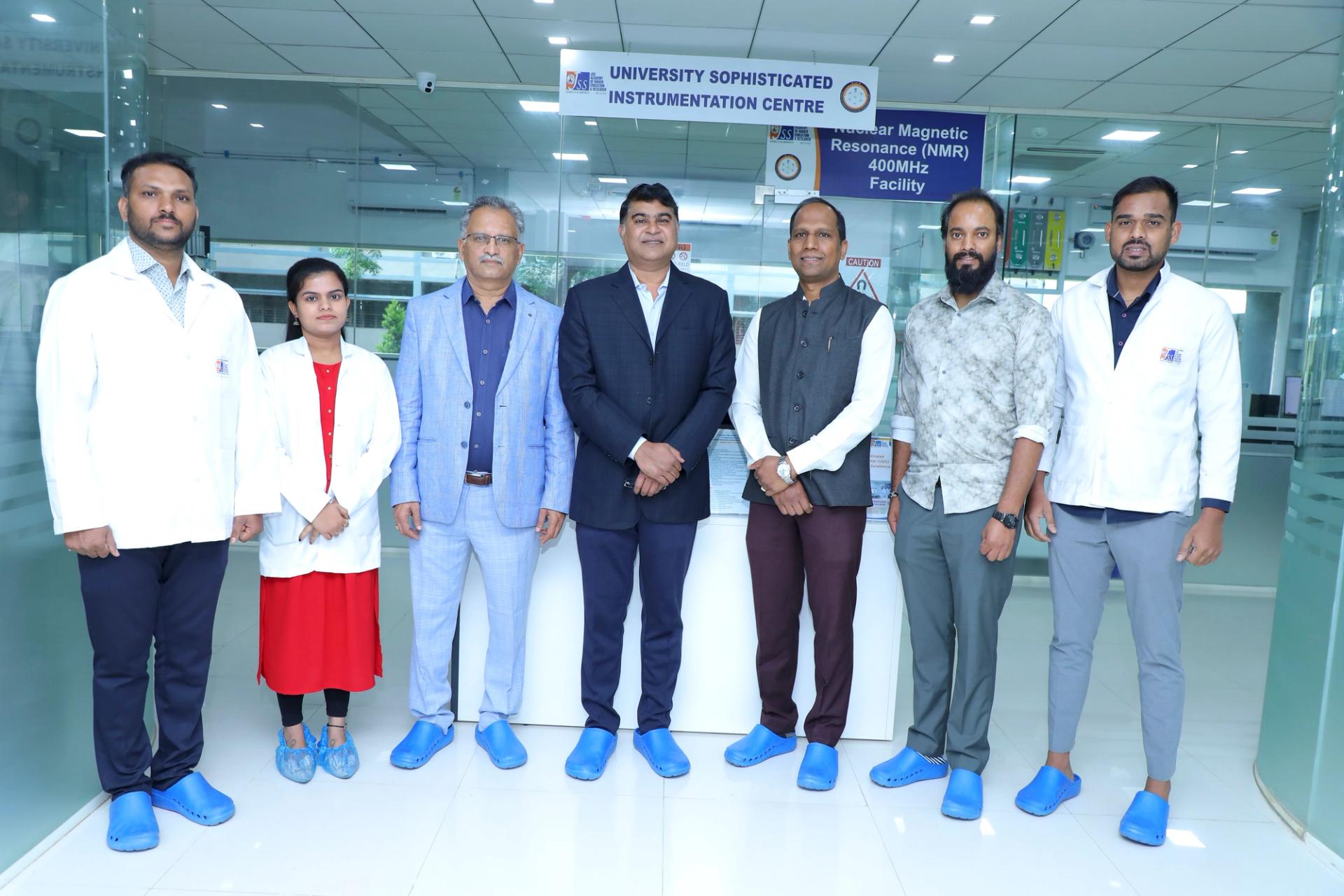
The USIC team at JSS AHER, led by Dean of Research Dr Prashant M. Vishwanath, brings together specialists in flow cytometry, mass spectrometry, confocal microscopy, next-generation sequencing, NMR and GC-MS to support researchers using the centre’s advanced instrumentation
Support for a breadth of life sciences research
The USIC facility supports scientists working across life sciences, pharmacology, and clinical research. Javarappa's own work focuses on blood disorders, particularly how disease processes interact with the gut microbiome and influence treatment outcomes. Alongside this, he oversees the facility's flow cytometry platforms, including a high-parameter analyser and cell sorter, helping researchers with everything from experimental design and sample preparation to data analysis
“A major focus of the facility is immunological research, where investigators utilize flow cytometry to study immune cell dynamics, disease mechanisms, and responses to therapeutic interventions,” he explains. “In addition, researchers are leveraging advanced technologies such as next-generation sequencing to study genetic mutations and disease mechanisms, particularly in hematological conditions.”
Some groups are exploring natural products and phytochemicals with potential anticancer or antimicrobial properties, while others are investigating whether existing drugs can be repurposed as cancer therapies.
“There is also significant research dedicated to understanding the role of the gut microbiome in disease progression and treatment response, as well as studies investigating the genetic basis of rare and inherited disorders,” adds Javarappa.
Life sciences researchers equipped with state-of-the-art tech
The University Sophisticated Instrumentation Centre (USIC), JSS AHER is supported by a highly experienced and multidisciplinary team committed to advancing cutting-edge research and delivering technical expertise across a wide range of sophisticated analytical platforms. The centre functions under the leadership of Dr. Prashant M. Vishwanath, Dean (Research), a distinguished physician-scientist who fosters the integration of clinical and translational research. The dedicated USIC team comprises Dr. Yogish Kumar, Dr. Rashmi D., Dr. Preethi, Dr. Jyothi M.N., Mr. Partha Sarathi, Mr. Nandish, Ms. Ashwini, and Dr. Nandini, who collectively provide expert support in instrumentation, experimental design, technical training, and advanced research services.
Underpinning this research is a carefully curated and high-spec suite of instruments. For cell-based research, the facility houses a BD FACS Lyric flow cytometry analyser and BD FACS Aria III cell sorter. Together, these allow researchers not only to analyse immune cells and biomarkers, but also to isolate specific cell populations for further study.
“The BD FACS Lyric analyser’s intuitive interface, automation features, and high reproducibility make it well-suited for routine applications, while also supporting advanced studies such as immune phenotyping, biomarker discovery, cell signalling, and preclinical research,” says Javarappa.
The BD FACS Aria III cell sorter adds high-speed, high-purity sorting, allowing researchers to isolate rare or specific cell populations. “Despite its advanced features, it remains user-friendly and can be efficiently operated by trained researchers without extensive infrastructure requirements,” he adds.
The facility also includes a SCIEX TripleTOF 6600 LC-HRMS system, which supports high-resolution mass spectrometry for proteomics, metabolomics, lipidomics, and biomarker discovery. “A key advantage of the platform is its support for both data-dependent acquisition (DDA) and data-independent acquisition (SWATH®), allowing researchers to perform in-depth proteomic and metabolomic analyses while also enabling digital archiving of datasets for future reanalysis,” says Dr. Rashmi. “The system is also a powerful tool for biomarker discovery, particularly in large-scale studies aimed at advancing disease diagnostics and precision medicine.”
For clinical and research investigations spanning genomics, transcriptomics, and proteomics, USIC has its own Genome Lab Facility, equipped with Sanger sequencing, next-generation sequencing, automated library preparation, droplet digital PCR, and microarray platforms.
“The GeneStudio Sanger sequencer facilitates high-accuracy, low-throughput DNA sequencing for validation studies, mutation analysis, and cloning applications,” explains Dr Jyothi M.N. The Ion Torrent NGS platform, supported by automated library preparation through Ion Chef, enables rapid and scalable sequencing for targeted sequencing, whole exome sequencing, whole transcriptome profiling, microbiome analysis, and bacterial whole-genome studies.
The facility also includes Bio-Rad droplet digital PCR and Agilent microarray platforms. Together, Jyothi says, these support high-throughput gene expression analysis and can help detect rare mutations, copy number variations, low-abundance targets, genotypes, and epigenetic changes.
“Overall, the facility provides an integrated setup for sequencing, expression profiling, and molecular quantification,” she says.
For chemical and structural analysis, USIC houses JEOL nuclear magnetic resonance spectroscopy and a Thermo Scientific TSQ 9610 GC-MS/MS system
“We chose JEOL because of its strong combination of analytical performance and user-friendly operation,” says Mr. Parthasarathi S. Its Delta software, he adds, allows even newer users to perform tasks such as magnet shimming, parameter optimisation, pulse sequence modification, and quantification with a short learning curve. The instruments are also designed for straightforward maintenance, with removable probes that simplify cleaning and servicing, helping to reduce downtime.
The GC-MS/MS system adds highly sensitive analysis for trace detection and impurity profiling of residual solvents, pesticide residues, environmental contaminants, and metabolites in complex samples. “The Thermo Scientific TSQ 9610 is highly preferred due to its advanced design, superior sensitivity, and operational efficiency,” says Mr. Nandish and Ms. Ashwini A major advantage, they explain, is the NeverVent AEI ion source, which allows source maintenance and column changes without fully venting the mass spectrometer, reducing delays between experiments.
Finally, USIC offers a cutting-edge imaging facility centred on the Leica STELLARIS 5 confocal microscope.
“Unlike conventional confocal systems, STELLARIS 5 offers a highly flexible and tunable imaging platform,” Dr. Preethi explains. Its white light laser system can excite fluorophores across a wide wavelength range, avoiding the constraints of fixed laser lines and making it well suited to complex multicolour experiments and novel probes.
The system also integrates TauSense fluorescence lifetime technology, which Javarappa says allows researchers “not just to see structures but to gain functional insights”, including metabolic states, molecular interactions, and changes in the cellular microenvironment.
The promising future of translational research
Looking ahead, Javarappa is most excited by the convergence of advanced technologies and translational research. In his own work on blood disorders, he sees opportunities to combine flow cytometry, cell sorting, and microbiome analysis to better understand disease mechanisms and, ultimately, support improved diagnostics, patient stratification and more targeted therapies.
More broadly, he says JSS AHER is well placed to become a leading hub for interdisciplinary and translational research, supported by its academic expertise, clinical infrastructure, patient samples, and advanced instrumentation through USIC. “The continued investment in state-of-the-art technologies and collaborative ecosystems will further strengthen its impact,” he asserts.
Finally, he is enthusiastic about the centre’s role in training the next generation of scientists and clinicians, equipping them with both technical expertise and the ability to work across disciplines. “Ultimately, the future lies in building sustainable, collaborative research environments that can deliver innovative, accessible, and impactful solutions for healthcare, both in India and globally,” he concludes.
Related products
Request Quote for All Products
Sanger Sequencing
GENEWIZ, Inc.The Sanger sequencing services are well-equipped to handle DNA sequencing including single-tube, high-throughput and glycerol DNA sequencing projects
TSQ™ 9610 Triple Quadrupole GC-MS
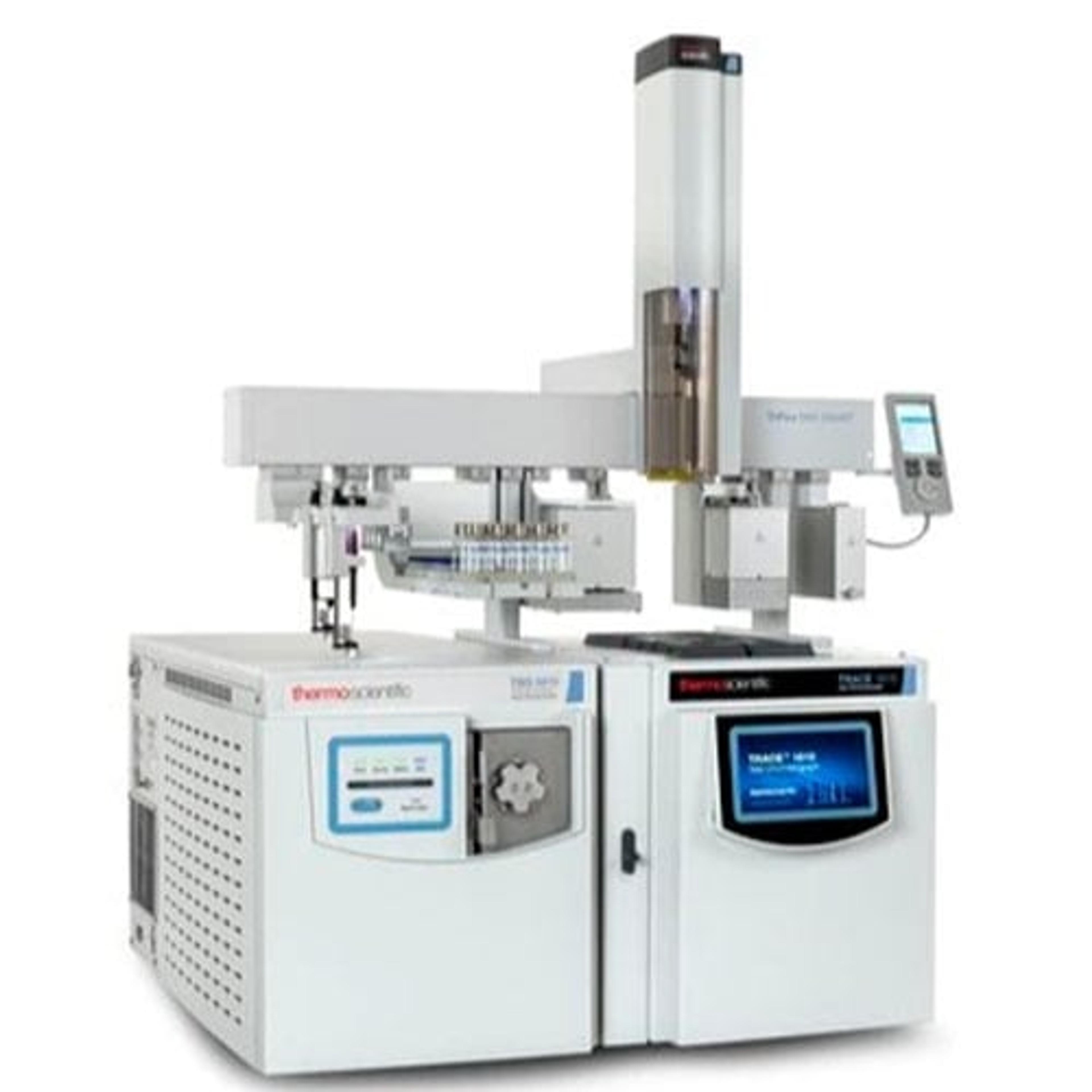
Thermo Fisher ScientificFeaturing new extended linear dynamic range combined with proven high sensitivity, stay ahead of the toughest regulatory methods and business demands with the Thermo Scientific™ TSQ™ 9610 Triple Quadrupole GC-MS/MS System. User-centric Thermo Scientific™ NeverVent™ technology, extended-life detector, and intelligent software eliminate unnecessary downtime to maximize your sample throughput and return on investment.
Related content
Mass Spectrometry & Advances in the Clinical Laboratory (MSACL) 2025 Montreal
Translating pre-clinical research to clinical care for improved patient outcomes.
Tags
Frequently asked questions
Show frequently asked questions
How does the USIC facility at JSS Academy of Higher Education & Research in Mysuru support translational healthcare research?
The USIC facility at JSS AHER in Mysuru democratizes access to high-end technologies like flow cytometry, mass spectrometry, next-generation sequencing, NMR, GC-MS/MS, and confocal microscopy. It enables clinicians, biologists, chemists, and technologists to study infectious disease, cancer, gut microbiome, blood disorders, and genetic conditions, turning bench discoveries into improved diagnostics, patient stratification, and targeted therapies.
What advanced instruments at JSS AHER’s USIC are used for immunology, hematology, and biomarker discovery research?
USIC houses BD FACS Lyric and BD FACS Aria III for immune phenotyping, cell sorting, and hematological research, plus a SCIEX TripleTOF 6600 LC-HRMS for proteomics, metabolomics, lipidomics, and biomarker discovery. The Genome Lab includes GeneStudio Sanger sequencing, Ion Torrent NGS with Ion Chef, Bio-Rad droplet digital PCR, and Agilent microarrays for mutation analysis, gene expression, microbiome studies, and precision medicine.
How is JSS AHER’s USIC facility advancing microbiome, cancer, and rare disease research in India?
Researchers at JSS AHER’s USIC investigate how the gut microbiome affects blood disorders, disease progression, and treatment response. They use next-generation sequencing, flow cytometry, and mass spectrometry to study genetic mutations, rare and inherited disorders, and to discover biomarkers. Teams also explore natural products and phytochemicals with anticancer or antimicrobial properties and repurpose existing drugs as cancer therapies, strengthening India’s translational research ecosystem.