
Cambridge spinout reveals overlooked PFAS gut microbiome link
Cambiotics’ co-founder Dr. Anna Lindell traces how PFAS move through the gut, and how microbes are fighting back
19 Aug 2026
Emerging evidence shows that per‑ and polyfluoroalkyl substances (PFAS) can accumulate directly within gut microbial communities, revealing an internal clearance pathway that has been largely uncharacterized and raising new questions about how these chemicals interact with the human microbiome.
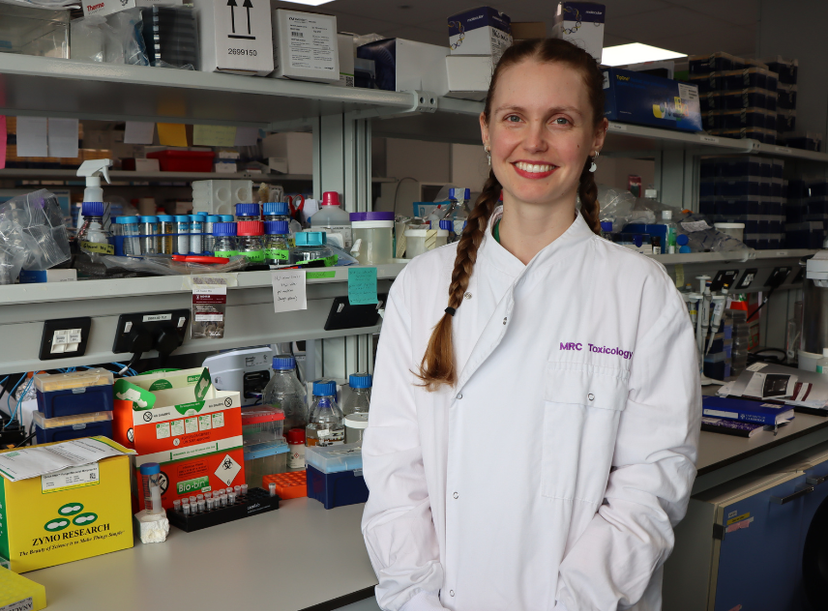
Dr. Anna Lindell, Co-founder and Vice President of Technology at Cambiotics. Photo courtesy of Rachel Fellows, MRC Toxicology Unit, University of Cambridge.
Although PFAS are well known for their persistence and ability to bioaccumulate in human tissues, the discovery that they can concentrate inside gut bacteria introduces a new dimension to PFAS exposure science. This interaction occurs within a microbiome that plays a critical role in metabolism, immune regulation, and chemical transformation, prompting researchers to examine how PFAS accumulation may influence microbial activity and, ultimately, host physiology.
For scientists working in PFAS toxicology and microbial ecology, the focus now turns to understanding how microbial‑level accumulation integrates into broader models of PFAS toxicity, exposure pathways, and the microbiome’s susceptibility to persistent environmental contaminants.
Dr. Anna Lindell, Co-founder and Vice President of Technology at Cambiotics, brings these findings to light as she speaks with SelectScience®, sharing insights from her research investigating how PFAS bioaccumulate in human gut bacteria. She also discusses how the startup aims to develop probiotic products containing specific bacteria that can help the body remove and excrete unwanted compounds such as PFAS.
What first drew you into microbiology, and how has that early curiosity shaped the direction of your career?
Dr. Lindell: There are so many uncertainties when it comes to the interaction of the bacteria living in our gut with the human body and our environment. Correlations of the gut microbiota and various states of disease as well as our environment have been established, but mechanisms underlying these links often remain unknown. Therefore, I was delighted to be given the opportunity to do my Ph.D. in Prof. Kiran Patil’s lab at the MRC Toxicology Unit, University of Cambridge, investigating the interaction of environmental pollutants with human gut bacteria.
From your perspective, what makes PFAS such a significant problem?
Dr. Lindell: The same qualities that make PFAS so useful for production of consumer products and industrial processes, also make them problematic for human and environmental health. PFAS are incredibly stable, so they break down very slowly over time, which leads to accumulation of PFAS in the environment, animals and the human body. Today, PFAS pollution is so widely spread, that no matter where we are on this planet, you cannot escape or avoid them and, despite the health implications, there are no efficient or scalable options to remove PFAS from the environment or the human body.
What sparked your interest in investigating PFAS bioaccumulation in human gut bacteria, and what were the most significant findings from that research?
Dr. Lindell: Initially we did not set out to focus specifically on PFAS. We performed a larger screening including many different pollutant groups, such as pesticides, bisphenols, nitrosamines, PFAS, etc. We were surprised to find that certain gut bacteria could bioaccumulate PFAS to a high degree. The novelty of this finding and the scale of the PFAS problem led us to focus our investigation specifically on PFAS compounds. We found that certain species of human gut bacteria can take up PFAS from their surrounding environment at a wide range of concentrations. We demonstrated this in mice colonized with these high PFAS accumulating bacteria and we saw an increased fecal PFAS excretion, therefore highlighting a fascinating new aspect to the role of gut bacteria in health: helping to remove persistent chemicals from the body.
What led you to co-found Cambiotics and what is the company’s mission?
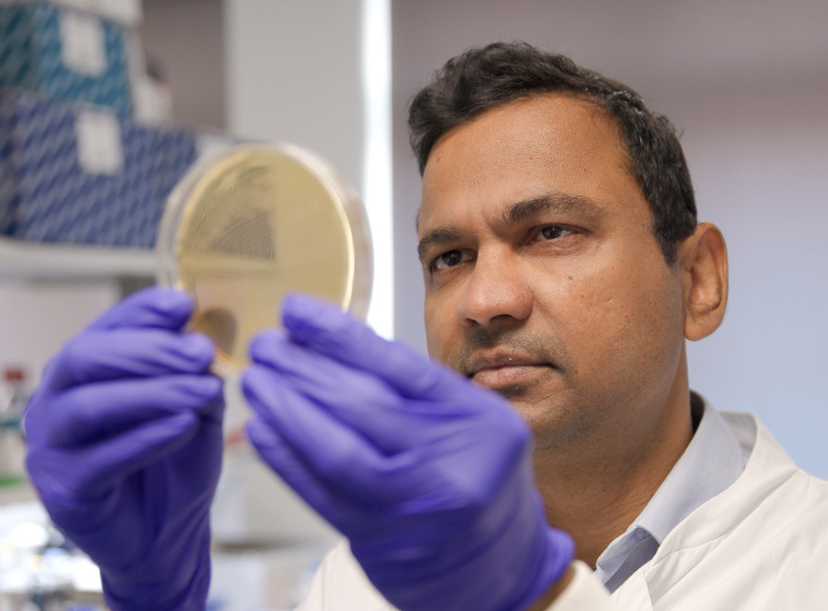
Prof. Kiran Patil, MRC and ERC Investigator, MRC Toxicology Unit, University of Cambridge. Photo courtesy of Jonathan Settle, University of Cambridge.
Dr. Lindell: At Cambiotics we aim to develop precision probiotic products to help the body remove unwanted compounds, such as PFAS. We were driven by the lack of solutions available and the hope of translating our scientific findings into a strategy that can help tackle the bigger PFAS problem. While I now work full time on the technology development at Cambiotics and Prof. Kiran Patil continues his role as a group leader at the MRC Toxicology Unit at the University of Cambridge, we continue to collaborate very closely, and Prof. Patil contributes to both the scientific and business direction of our company as an advisor and member of our board. Our long-term focus is that we want to broaden our scope from a focus on PFAS to other xenobiotic compounds.
Why is it critical that scientists continue to study PFAS and their bioaccumulation in the human body?
Dr. Lindell: There are several unknown risks associated with PFAS. This large group of thousands of chemicals have been linked to a number of diseases, such as increased cancer risk, decreased fertility, and decreased immunity. However, only very few PFAS, such as perfluorooctanoic acid (PFOA) and perfluorooctane sulfonate (PFOS), have been well studied leaving the vast majority with limited or no comprehensive toxicity data. This in turn poses a problem: as the better studied PFAS chemicals become tightly regulated, they are often replaced with other PFAS derivatives that are far less researched, leaving their risks largely unknown. In addition, people are exposed not only to single chemicals but to complex mixtures, and the health effects of these combined exposures often remain poorly understood.
What do you see as the most significant unanswered question about PFAS bioaccumulation that the scientific community still needs to address?
Dr. Lindell: It is well known that PFAS pollution and accumulation is harmful to our environment and personal health, but we are still lacking effective and scalable solutions to solve its persistence. As a society, we need to tackle the PFAS problem from all angles: reducing production, limiting further pollution, and accelerating the search for sustainable alternatives that allow industry to function without harming the planet. We also need reliable, scalable solutions to remove PFAS from both the environment and the human body. At Cambiotics, we are focused on advancing this last area by creating new approaches to help clear PFAS from the body.