Life Sciences and General Lab Scientists’ Choice Awards 2025 winners announced

Logos Biosystems, SPT Labtech and BMG LABTECH among those recognized

21 May 2025

Charlie Carter
Life Sciences Editor

Editorial article

The world’s most innovative and effective technologies advancing life sciences have been recognized in the latest release of the 2025 Scientists’ Choice Awards®.

Each year, SelectScience® invites its scientist readers and members from around the globe to participate by nominating, reviewing, and voting for the lab products that have had the greatest impact on their work. Read on to reveal your chosen winners.

Best New Life Sciences Product of 2024
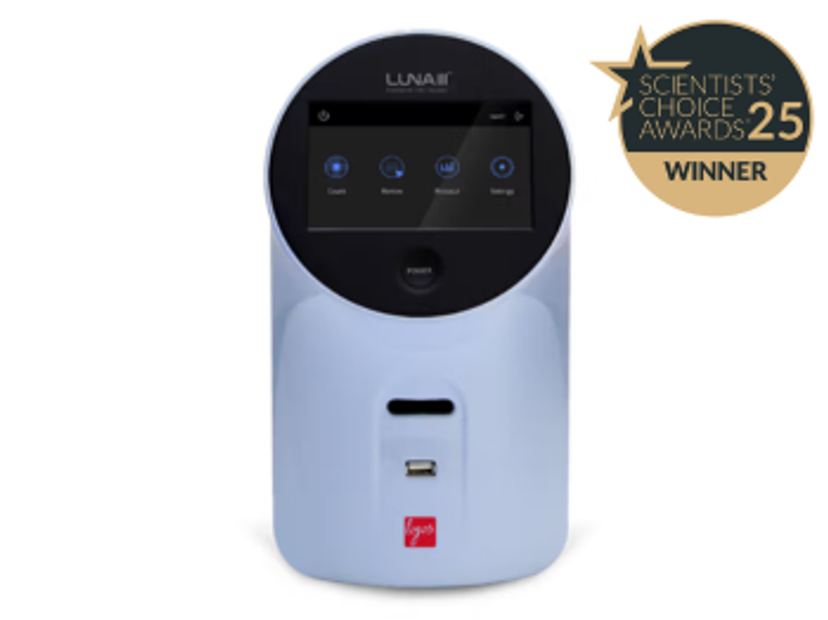
TheLuna III cell counter with the 2025 Scientists' Choice Awards winner badge

LUNA-III™ Automated Cell Counter by Logos Biosystems was voted Best New Life Sciences Product of 2024

The award for Best New Life Sciences Product of 2024 goes to the LUNA-III™ Automated Cell Counter by Logos Biosystems, as voted for by scientists around the world. The LUNA-III™ provides accuracy with advanced algorithms, precise autofocusing, reusable slides, non-toxic dyes, network access, re-analysis options, and a compact, user-friendly design.

The runners up are:

Best New General Lab Product of 2024

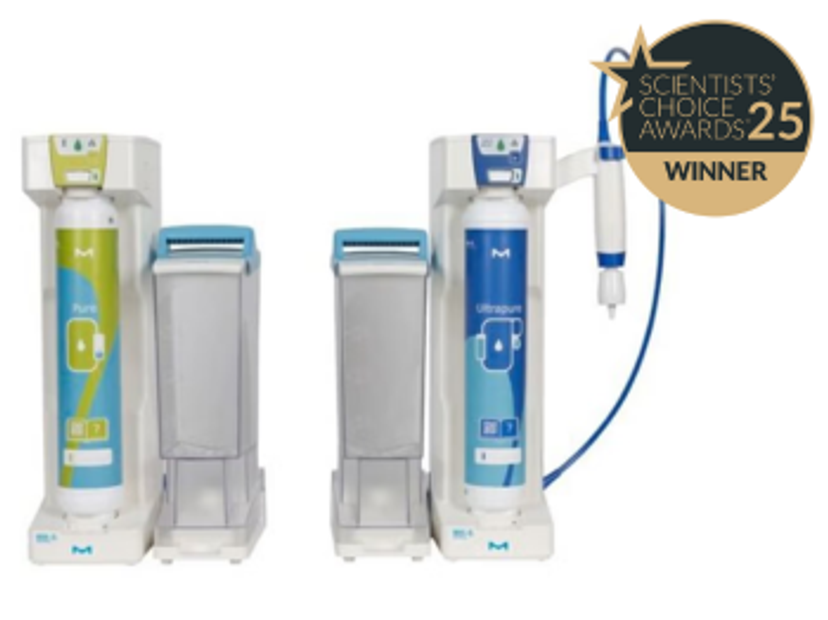
The Milli-Q® SQ 2Series Water Purification System with 2025 Scientists' Choice Awards winners badge

The Milli-Q® SQ 2Series Water Purification Systems from Merck was voted Best New General Lab Product of 2024

The award for Best New General Lab Product of 2024 goes to the Milli-Q® SQ 2Series Water Purification Systems by Merck. These new water purification systems are simple, robust, innovative and completely scalable, so they can be integrated into any laboratory setup.

The runners up are:

Reviewers' Choice Life Sciences Company of the Year

NanoEntek has been awarded the Reviewers’ Choice Award for Life Sciences Company of the Year. The award recognizes the consistent positive feedback its products have received in the past year from scientists worldwide via SelectScience product reviews.

Life Sciences Webinar of the Year

This year’s Webinar of the Year is awarded to 10x Genomics for the webinar titled, Advancing neurodegeneration research with single-cell and spatial multiomics. During this presentation, Agnieszka Ciesielska, Science and Technology Advisor, 10x Genomics, explores how single-cell and spatial technologies provide a multidimensional view of biology that can lead to groundbreaking insights into Alzheimer’s and Parkinson’s diseases.

Life Sciences Editorial Article of the Year

The winning article is titled ‘London’s Natural History Museum transforms molecular research' and features technology from SPT Labtech. In this article, Yuen Ting Chan, Senior Automation Specialist and Molecular Biologist, and Dr. Piotr Cuber, Senior Molecular Biologist and Robotics Specialist, from NHM's Molecular Laboratories, share how advanced automation and robotics are enabling these labs to push the boundaries of research to analyze the genetic makeup of ancient species and modern ecosystems.

Life Sciences Application eBook of the Year

The Life Sciences Application eBook of the Year Award goes to Tecan for ‘Unlock AI-driven 2D and 3D cell analysis’. This application compendium presents an in-depth analysis of how advances in cell-based technology are bringing higher levels of automation, reproducibility, and flexibility to cell-based research.

Life Sciences Video of the Year – in partnership with The Scientists' Channel®

This year’s winning video is awarded to a presentation titled ‘The dynamic future of ADCs in oncology' produced in collaboration with Cytiva. In this interview, Dr. Alejandro D. Ricart, discusses the exciting advancements in antibody-drug conjugates (ADCs) for treating cancers like leukemia, lymphoma, and solid tumors.

Life Sciences Email of the Year

The winner in the Email of the Year category goes to Molecular Devices® for an email that highlights its cell imaging assays guide. The free eBook demonstrates how you can streamline and simplify complex cell assays; giving you rich, high-content data quickly and easily.

Life Sciences Innovative Content of the Year

The winner in the Innovative Content category goes to ‘How to troubleshoot microplate assays and optimize detection with your microplate reader' produced in associate with BMG LABTECH. The content hub is an in-depth exploration of how to fine-tune microplate reader settings to align with specific microplate features, backed by evidence on how these adjustments directly influence data quality.

Do you use any of these lab products? Share your opinion today by leaving a lab product review>>

Visit the Scientists’ Choice Awards website for more information.

Tags

Cell / Tissue CultureCell culture or tissue culture is used to study the biology of cells or tissues and to isolate cellular products in an environment which can be manipulated and well defined. Accurately control your culture environment with bioreactors or culture incubators, bind your cells to a surface or together with an extracellular matrix. Distinguish cell types with differential media or proliferate cells with certain characteristics using selective media. Enrich your media with supplements such as growth factors, sera and vitamins. Find the best cell and tissue culture products, kits and equipment in our peer-reviewed product directory: compare products, check customer reviews and receive pricing direct from manufacturers.MicroplatesMicroplates are multi-well plates used to increase the throughput of biological investigations. The number of wells microplates contain can range from 6 to 3243 wells, with the 96-well format being the most commonly used. Microplates can come tailored for a range of applications including cell culture, PCR, filtration, storage, non-binding surface, protein crystallization, as well as pre-coated, deep well and normal Standard microplates. Additionally, options for microplate colors include clear , black, white or black with clear bottom and white with clear bottom for absorbance microplate reader applications. Find the best microplates for your lab in our peer-reviewed product directory: compare products, check customer reviews and receive pricing direct from manufacturers.High-Throughput ScreeningHigh-throughput screening (HTS) is an automated drug discovery technique for identification of active compounds against a compound library. Use HTS readers and integrated assay preparation / analysis workstations to screen your compounds. Identify active compounds against various HTS libraries, including membranes, proteins and peptides and HTS cell lines. Find the best high-throughput screening products in our peer-reviewed product directory: compare products, check customer reviews and receive pricing direct from manufacturers.Microplate Readers / DetectorsMicroplate readers are used to automate the detection and analysis of labeled or label-free components in microplates during assays or live-cell monitoring. Microplate readers are generally distinguished by their mode of detection. Types include absorbance, luminescence, fluorescence intensity, fluorescence polarization, TRF / FRET and multimode microplate readers. Microplate readers deliver a high throughput of samples by reading multiple wells simultaneously, with the 96-well format the most commonly used. As a result, microplate readers are often used in the drug discovery, bioassays, research and pharmaceutical industries for screening applications. Microplate loading can also be automated, with robotic microplate stackers to increase throughput. Find the best microplate readers in our peer-reviewed product directory: compare products, check customer reviews and receive pricing direct from manufacturers.High-Content ScreeningHigh-content screening (HCS), also known as high-content analysis (HCA), is a high-throughput technique used in drug discovery to identify substances that alter the phenotype of cells. HCS uses fluorescent microscopic imaging and automated image analysis to investigate cellular events such as apoptosis, cell viability, GPCR activation, oxide production, neurite outgrowth, and cell signaling. Find the best fluorescent labeling reagents, cellular assays, and high-content imaging systems in our peer-reviewed product directory: compare products, check customer reviews and receive pricing direct from manufacturers.Gene Expression and Molecular CloningMolecular cloning is a set of techniques that utilizes vectors to transfer recombinant DNA into host cells and is an essential tool for investigating the expression of genes and proteins in bacterial or mammalian cells. A variety of vectors optimized for gene cloning and expression in a range of host organisms are available, alongside competent cells for genetic replication. Here, you can explore a range of molecular tools, high-quality genomic and cDNA libraries, premade clones, transformation and transfection reagents and mutagenesis or gene expression detection assays and expression arrays. Find the best gene expression and molecular cloning products in our peer-reviewed product directory: compare products, check customer reviews and receive pricing direct from manufacturers.Flow Cytometry / Cell CountingFlow cytometers are used to count, sort and examine multiple characteristics of cells. Other cell analysis equipment includes image cytometers, cell counters, fluorescence-activated cell sorters (FACS), magnetic-activated cell sorters (MACS), and a range of flow cytometry assay kits. Flow cytometers can reveal information on cell viability, cell proliferation, apoptosis and cell cycle progression, as well as identify cell populations and intracellular or cell-surface molecules. Additionally, some flow cytometers, known as FACS, have an additional sorting function after analysis. Cell counters and image cytometers count live and dead cell populations and can also conduct cell proliferation assays. Find the best flow cytometers, cell counters and cell sorters in our peer-reviewed product directory: compare products, check customer reviews and receive pricing direct from manufacturers.Water PurificationThere are a number of water purification methods available to remove contamination from laboratory water. These systems include demineralization, reverse osmosis, filtration and ultrafiltration. A combination of methods is sometimes necessary to achieve purified water suitable for use in experiments.SLASThe Society for Laboratory Automation and Screening (SLAS) is an organization focused on laboratory automation, high-throughput screening, and biotechnology innovation. SLAS promotes scientific advancements through conferences, publications, and industry collaborations. Scientists Choice AwardsEach year, the SelectScience Scientists' Choice Awards celebrate the best products in the industry, as nominated and voted for by our scientist members.Scientists Choice Awards News