
Immune profiling brings scientists closer to personalized treatments for ALS
Dr. Ben Murdock explains how flow cytometry is uncovering immune signatures in amyotrophic lateral sclerosis and how these could help guide new treatment strategies
27 Aug 2026

Dr. Ben Murdock, Research Assistant Professor of Neurology at the University of Michigan
Amyotrophic lateral sclerosis (ALS) is a progressive neurodegenerative disease in which motor neurons in the brain and spinal cord break down, leading to muscle weakness, loss of movement, and eventually the failure of muscles needed to eat and breathe. There is currently no cure, treatment options remain limited, and much about the disease is still not understood.
However, the field is moving forward. Dr. Ben Murdock, Research Assistant Professor of Neurology at the University of Michigan, is among those helping to reframe how ALS is understood and how it might one day be treated. For more than a decade, Murdock has been investigating a previously underrecognized aspect of ALS: the role of the immune system.
“When I first started, it was like trying to convince people that Bigfoot existed. A lot of neurologists really did not want to believe that there was an immune component to ALS,” Murdock tells SelectScience. “What I’ve wanted to do is show that the immune system not only is involved in ALS, but it can be used for diagnosis, prognosis, drug discovery, and ultimately, treatment of the disease.”
From ALS diagnosis and prognosis to personalized treatment
For this work, Murdock’s lab relies heavily on flow cytometry, using it to phenotype cells in the peripheral blood of ALS patients with the goal of identifying which immune populations may be contributing to disease progression. This means looking closely at populations such as neutrophils, natural killer (NK) cells, monocytes, and T cells, then asking whether particular immune patterns are linked to disease speed, severity, or treatment response.
Murdock’s group has already shown that peripheral immune markers can improve the accuracy of ALS prognosis. In previous work, the team used flow cytometry-derived immune profiles to distinguish patients likely to progress more quickly from those likely to progress more slowly. The team is now extending this approach toward earlier disease detection. Murdock notes that they have a paper under review using peripheral immune phenotypes to distinguish between people with ALS and those without it. This is especially valuable because ALS is difficult to diagnose early and progresses rapidly.
However, Murdock’s ambitions for immune profiling go beyond diagnosis. If immune signatures can reveal what is driving progression in different patients, they could also help determine which therapeutic strategy is most likely to work. “One of the things we really want to do with this technology is identify groups of patients that will benefit from different types of treatment,” he explains.
That includes using immune profiles to uncover druggable pathways, whether through new therapies or the repurposing of existing medicines. One drug of interest is tofacitinib, an FDA-approved immunomodulatory drug that can reduce the activity of NK cells, which have been linked to ALS progression. “We found if we take patients’ natural killer cells out of their body, put them in a dish, and see how cytotoxic they are, we can actually use a person’s immuno-profile to predict which patients would respond best to the drug,” Murdock says.
This raises the possibility of repurposing existing immunomodulatory drugs for specific patient groups. The appeal, Murdock explains, is that immune cells can be targeted while they circulate in the blood, before they traffic to sites of damage or inflammation in the central nervous system. This could avoid some of the challenges of delivering drugs across the blood-brain barrier. “If we can catch them in transit, we can use much lower levels of the drug with fewer off-target effects,” he says. “We're really excited to do that and use immunomodulation to extend the lifespan of ALS patients.”
A personalized approach to ALS treatment
An immune-targeted approach is unlikely to work in the same way for every patient. In fact, one of the most striking findings from Murdock’s work is just how heterogeneous the immune component of ALS appears to be.
In a paper currently under review, Murdock’s team identified patient subgroups with markedly different immune profiles. “We found one immune profile that is very pro-inflammatory, with a high level of neutrophils,” he says. “But to our surprise, we also found a subgroup of patients that seemed to have more immune exhaustion or senescence, so almost the exact opposite. They’ve had this disease for so long that the immune system seems to be burned out.”
For Murdock, this helps explain discrepancies seen in earlier studies and clinical trials. It also points to the need for a more personalized treatment approach. “We think, at least for the immune system, there are some patients that will benefit maybe from an anti-inflammatory treatment, especially against neutrophils,” he says. “But there are some patients who are lacking immune activation and may need some sort of boost.”
The aim now is to use immune profiling to separate these patient groups more clearly and determine what treatment to use with whom.
How spectral flow cytometry changed ALS understanding
For this research, Murdock’s lab uses the ID7000 spectral flow cytometer from Sony. The move to spectral flow came after years of work with conventional flow cytometry, which had helped the team identify immune cell populations linked to ALS progression, but could not always provide enough context.
“We were looking at a lot of different cell populations – neutrophils, monocytes, NK cells, CD56 bright NK cells, T cells – and we found a number of different subpopulations or surface markers in each of those groups that may contribute to disease,” Murdock explains. The challenge was determining whether these represented multiple distinct subpopulations or a single cell population carrying several relevant markers.
With conventional flow cytometry, only a limited number of markers could be measured in a single panel, forcing the team to divide their analysis across multiple stains. Spectral flow cytometry overcomes this by allowing more markers to be measured on the same individual cells, helping the team see whether disease-associated markers cluster together.
The shift has also made the workflow more efficient. Previously, Murdock might have had to run eight different panels for a single patient sample. “Now with spectral flow, we can do a lot more markers, and we only have it split up amongst an unstained control and a full stain,” he says. “That saves time, it saves money, and it has really allowed us to increase our productivity. It's made everything much higher throughput.”
Another benefit Murdock highlights is the robustness of the ID7000 hardware, particularly the plate reader – something he doesn’t take for granted. Earlier in his career, he spent three months generating mouse models, only for a clogged plate reader to “consume them all, well by well”. With the ID7000, he says, the system handles these problems differently.
“Any time you get some sort of clog (and we do get clogs, you don't always process cells perfectly) the software will automatically stop. It'll run a cleaning cycle, leave an error message, and then it'll move on to the next well,” shares Murdock. “That's really allowed us to set it and forget it. I'm a lot less hesitant to leave my samples unattended, and it's freed up a lot of extra time.”
A future where ALS is a livable disease
Murdock is realistic about the prospect of a cure for ALS, but believes more immediate progress could come from slowing the disease.
“I think a cure is a long way off, unfortunately, but I think what we can do is get new drug treatments soon. I think that’s a very reasonable goal,” he states. “If we can get it to a point where we can just stop disease progression, it becomes something like, ‘I have ALS, this is really inconvenient’. This is a lot better than the alternative, which a progressive disease where you lose functionality and the ability to walk, talk, eat, and breathe.”
“That’s one of the short-term goals for the field,” Murdock concludes. “To make ALS a livable disease so that people can still have time with their families and basically live a normal life, just with additional treatment.”
Watch the full SelectScience interview with Dr. Ben Murdock here
Related products
Request Quote for All Products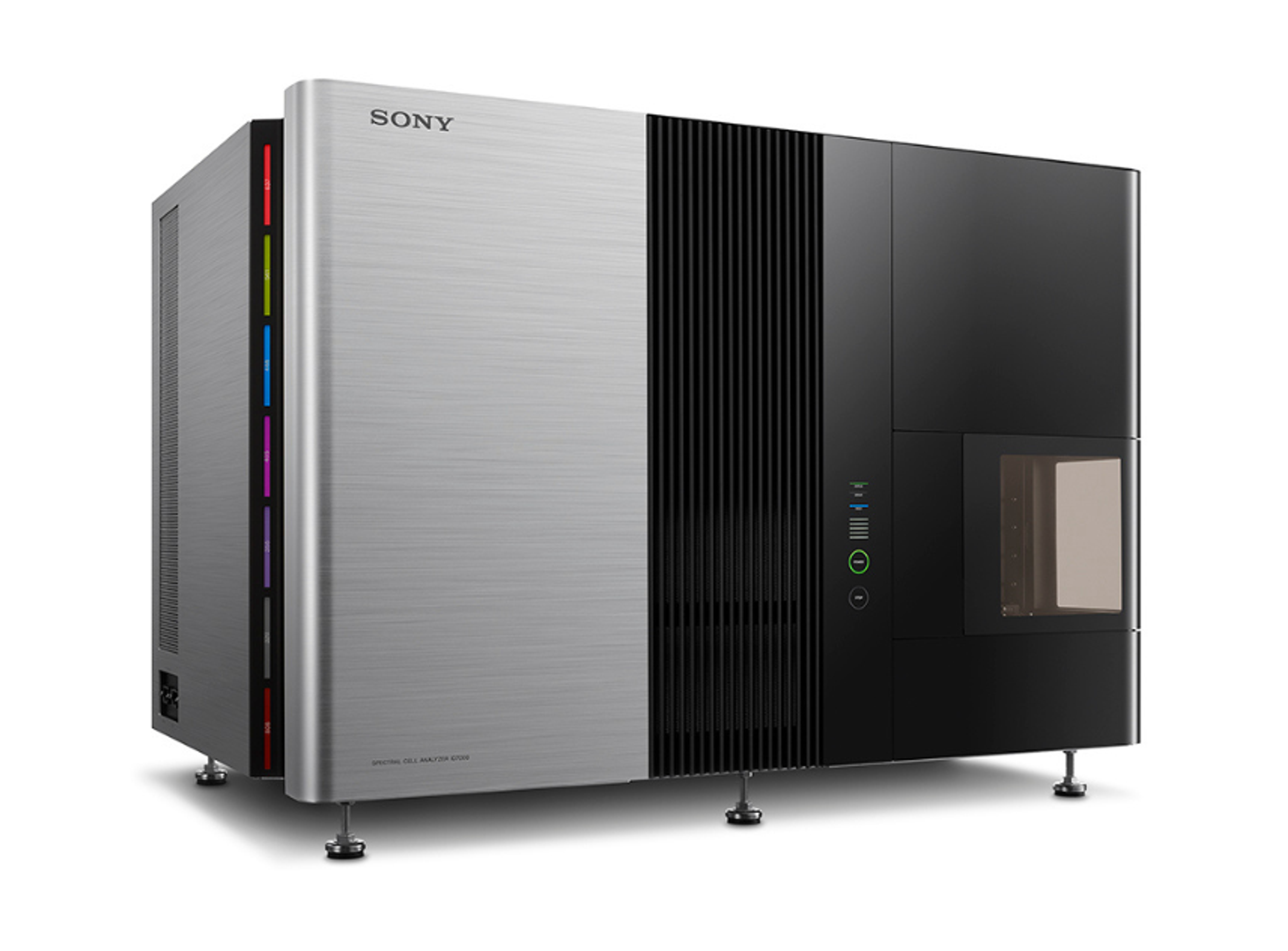
ID7000™ Spectral Cell Analyzer
Sony BiotechnologyA high-parameter spectral cytometer, the ID7000 delivers comprehensive information about heterogeneous cell populations, with high sensitivity to detect dim and rare populations.
Links
Tags
Frequently asked questions
Show frequently asked questions
How is Dr. Ben Murdock using immune profiling and flow cytometry to improve ALS diagnosis and prognosis?
Murdock’s lab at the University of Michigan uses flow cytometry to phenotype immune cells in peripheral blood from ALS patients, focusing on neutrophils, NK cells, monocytes, and T cells. By linking specific immune patterns to disease speed and severity, his team has shown that peripheral immune markers can improve ALS prognosis and is now extending this approach toward earlier, more accurate ALS diagnosis.
What role do natural killer (NK) cells and tofacitinib play in emerging ALS treatment strategies?
Murdock’s group found that NK cells are linked to ALS progression. They test patients’ NK cell cytotoxicity in vitro and use each person’s immune profile to predict who might respond best to tofacitinib, an FDA-approved immunomodulatory drug that reduces NK cell activity. This supports a precision-medicine strategy to repurpose existing immunomodulatory drugs for specific ALS patient subgroups.
How does the Sony ID7000 spectral flow cytometer advance ALS immune research and personalized treatment?
The ID7000 spectral flow cytometer lets Murdock’s lab measure more markers on individual immune cells than conventional flow cytometry, revealing complex ALS-associated immune subpopulations. This higher-dimensional profiling helps identify pro-inflammatory and immune-exhausted ALS subgroups, supports personalized immunomodulatory strategies, increases throughput, saves time and money, and provides robust, automated clog handling that enables reliable, unattended sample processing.