
Novogene Europe launches Untargeted Metabolomics Service at Cambridge Omics Centre
Novogene expands its Cambridge Omics Centre with new untargeted metabolomics capabilities.
16 Jul 2026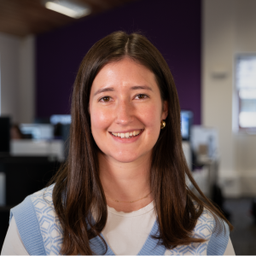
Novogene Europe has launched its Untargeted Metabolomics Service at the Cambridge Omics Centre in the Bio-Innovation Centre, Cambridge, UK. The new liquid chromatography–mass spectrometry (LC-MS) workflow is designed to help academic, biotech and biopharma researchers across the UK and Europe connect molecular data with biological function by adding metabolite-level insight to genomics, transcriptomics, microbiome and broader life science studies.
Expanding multiomics capabilities for life science research
The Untargeted Metabolomics Service supports discovery-led research by profiling small-molecule changes that sit closer to phenotype, enabling researchers to explore the biochemical activity underlying complex biological systems. By integrating metabolite-level data with existing genomic and transcriptomic information, the service aims to support studies into disease mechanisms, microbiome interactions, treatment response, biomarker discovery, translational research and pathway-level biology.
Built around Thermo Scientific™ Vanquish™ UHPLC coupled with Orbitrap™ Exploris™ 120 high-resolution accurate-mass mass spectrometry, the new LC-MS workflow uses an extensive reference library to deliver comprehensive, high-resolution metabolite profiling across suitable biological sample types. This capability complements Novogene Europe’s established strengths in genomics, transcriptomics, sequencing and bioinformatics.
Strategic role of metabolomics in Novogene’s multiomics portfolio
Metabolomics is the first launch in a broader phase of capability expansion through Novogene’s Cambridge Omics Centre at the Bio-Innovation Centre. Located within one of the UK’s most established life science and technology ecosystems, the Centre is a key hub for Novogene’s multiomics strategy.
Metabolomics is particularly important to this strategy because it connects upstream molecular information with downstream biochemical activity, helping researchers move from molecular measurement towards deeper biological insight. The launch reinforces Novogene Europe’s long-term commitment to supporting customers from experimental planning and data generation through to bioinformatics and biological interpretation, drawing on Novogene’s global scale, scientific expertise and technical capability.
“Launching Untargeted Metabolomics through our Cambridge Omics Centre is an important step in strengthening Novogene Europe’s multiomics capabilities and supporting researchers with a more integrated view of biology,” said Tingting Zhou, VP of Novogene Europe.
“As research questions become more complex, customers increasingly need to connect genomic and transcriptomic information with functional biochemical insight. Metabolomics adds a powerful layer to this picture, helping researchers explore disease mechanisms, microbiome interactions, treatment response and pathway-level biology.
Want the latest science news straight to your inbox? Become a SelectScience member for free today>>
Links
Tags
Frequently asked questions
Show frequently asked questions
What is Novogene Europe’s Untargeted Metabolomics Service and where is it based?
Novogene Europe’s Untargeted Metabolomics Service is a liquid chromatography–mass spectrometry (LC-MS) workflow launched at the Cambridge Omics Centre in the Bio-Innovation Centre, Cambridge, UK. It provides comprehensive, high-resolution metabolite profiling to help academic, biotech and biopharma researchers across the UK and Europe add metabolite-level insight to genomics, transcriptomics, microbiome and broader life science studies.
How does the Untargeted Metabolomics Service support multiomics and disease research?
The Untargeted Metabolomics Service profiles small-molecule changes that sit closer to phenotype, enabling exploration of biochemical activity in complex biological systems. By integrating metabolite-level data with genomic and transcriptomic information, it supports studies into disease mechanisms, microbiome interactions, treatment response, biomarker discovery, translational research and pathway-level biology within Novogene Europe’s broader multiomics portfolio.
What technologies power Novogene Europe’s metabolomics workflow at the Cambridge Omics Centre?
Novogene Europe’s new LC-MS metabolomics workflow is built around Thermo Scientific™ Vanquish™ UHPLC coupled with Orbitrap™ Exploris™ 120 high-resolution accurate-mass mass spectrometry. Using an extensive reference library, this setup delivers comprehensive, high-resolution metabolite profiling across suitable biological sample types and complements Novogene Europe’s established strengths in genomics, transcriptomics, sequencing and bioinformatics.