How to develop a protein purification strategy
22 Sept 2025
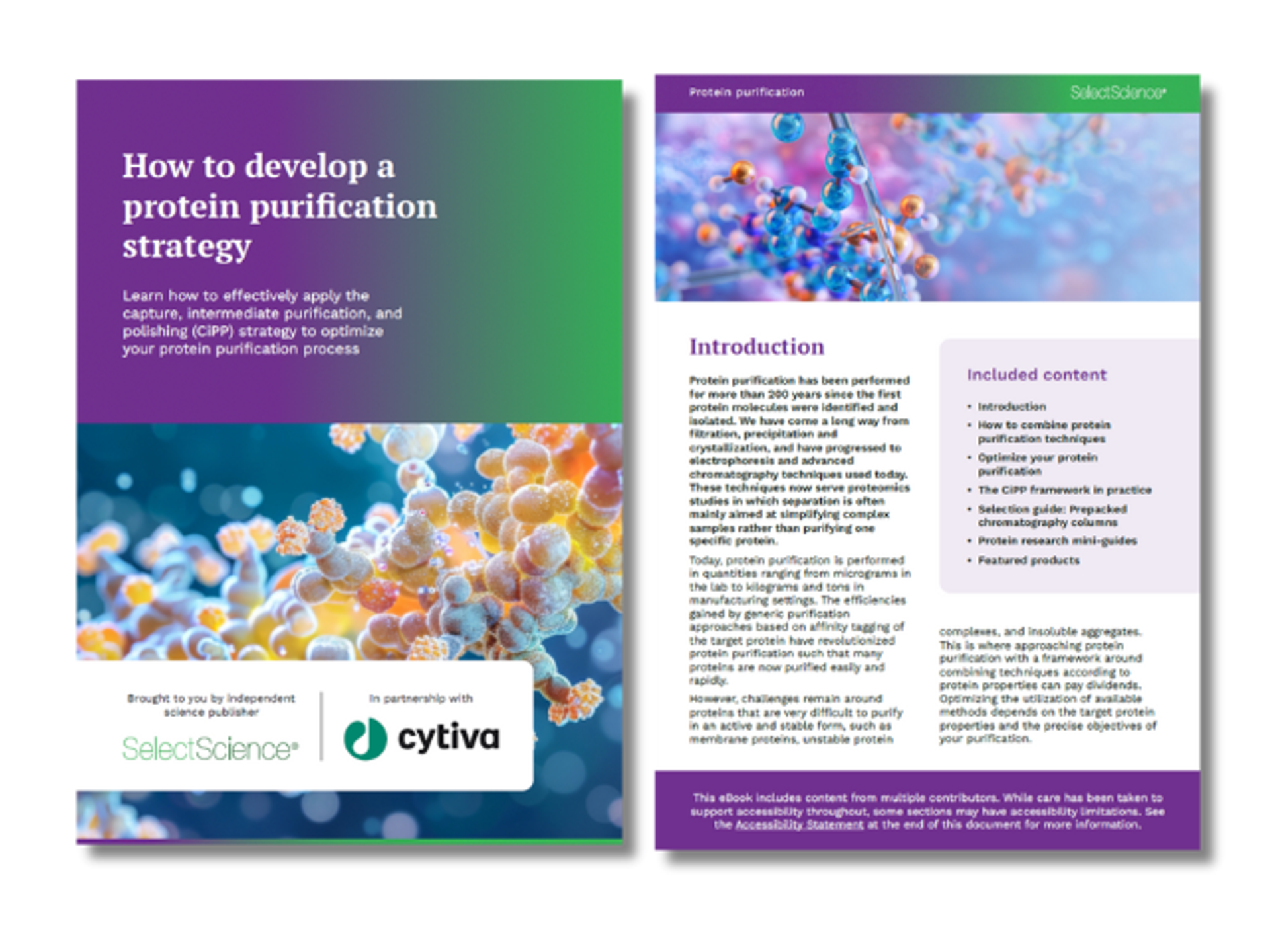
Protein purification is rarely a one-size-fits-all process. From recombinant proteins and antibodies to complex protein assemblies, developing an effective purification strategy requires balancing purity, yield, activity, and workflow efficiency.
This SelectScience eBook explores how to develop a structured protein purification strategy using the capture, intermediate purification, and polishing (CiPP) framework. Learn how protein properties, purification objectives, and chromatography selection influence protocol design, and discover practical approaches for combining techniques to maximize separation power while minimizing sample handling.
Through expert guidance, workflow examples, and technique selection tools, you'll gain a clearer understanding of affinity chromatography, ion exchange chromatography, hydrophobic interaction chromatography, and size exclusion chromatography, helping you build more robust and efficient purification workflows.
Key topics explored:
- How to combine protein purification techniques
- Optimize your protein purification
- The CiPP framework in practice
- Prepacked chromatography columns selection guide
- Protein research mini-guide
Resource details:
- Document type: SelectScience guide
- Page count: 67
- Read time: 100 mins
- Edition: 1st
Tags
Frequently asked questions
Show frequently asked questions
What is the CiPP protein purification strategy?
The CiPP framework consists of capture, intermediate purification, and polishing steps. Together, these stages help scientists isolate, purify, and refine proteins while balancing purity, yield, and workflow efficiency.
How do I develop a protein purification strategy?
An effective strategy starts with defining purification objectives, understanding target protein properties, selecting appropriate chromatography techniques, and determining the level of purity required for the application.
Which chromatography techniques are used for protein purification?
Common techniques include affinity chromatography, ion exchange chromatography (IEX), hydrophobic interaction chromatography (HIC), and size exclusion chromatography (SEC), each separating proteins based on different properties.
How do I choose the right chromatography method for my protein?
The choice depends on factors such as protein size, charge, hydrophobicity, affinity characteristics, purity requirements, and downstream application.
What is the difference between protein capture and polishing?
Capture focuses on isolating, concentrating, and stabilizing the target protein, while polishing removes remaining contaminants and impurities to achieve the required purity level.
How can I improve protein purity without sacrificing yield?
Combining complementary chromatography techniques and minimizing unnecessary sample handling can help achieve an effective balance between purity, recovery, and process efficiency.