
Gri3D Hydrogel Microcavity Plates product manual
1 Jul 2026This product manual provides detailed guidance on the use of Gri3D® Hydrogel Microcavity Plates for high-throughput organoid and spheroid culture. The platform uses PEG-based hydrogel microcavities to generate uniform 3D cell models within a standard 96-well format, supporting reproducible experimental conditions.
The manual outlines workflows for plate preparation, cell seeding, maintenance, and downstream applications. Organoids form within confined microcavities in a single focal plane, enabling efficient imaging and quantitative analysis. The system also supports automated handling and safe medium exchange via a dedicated pipetting port.
Resource details:
- Resource type: Product brochure
- Page count: 18
- Read time: 28 mins
Related products
Request Quote for All Products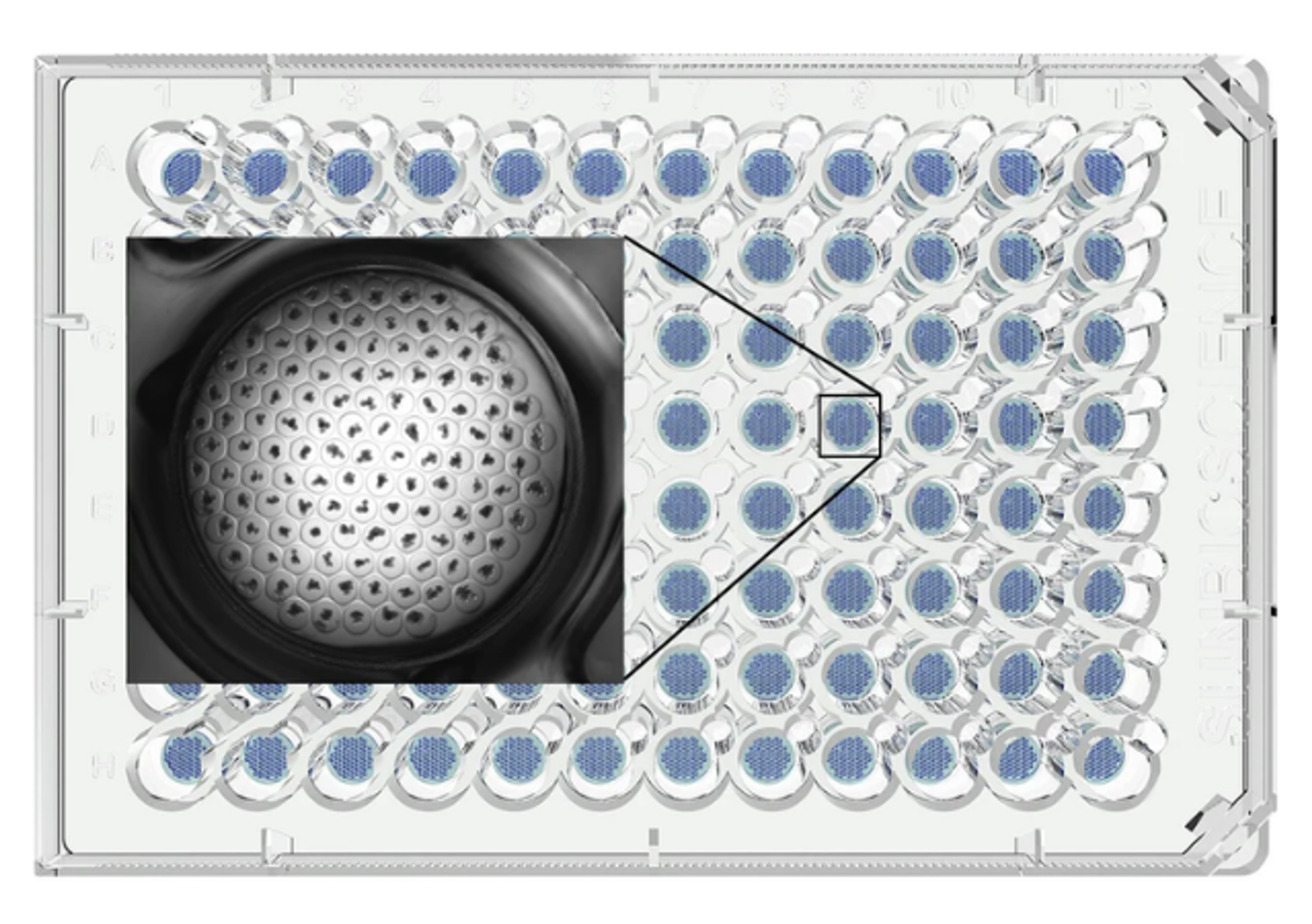
Gri3D® Hydrogel Microcavity Plates
InSpheroThe InSphero Gri3D® Plates are designed to revolutionize 3D cell culture by offering unparalleled precision, scalability, and reproducibility. Each plate features a high-density array of hydrogel microcavities engineered to promote the uniform formation of organoids, enabling researchers to generate physiologically relevant 3D models with ease.