ResourceSeparations
Extraction of a Full Suite of Semivolatile Compounds from Drinking Water using Automated Solid Phase Extraction
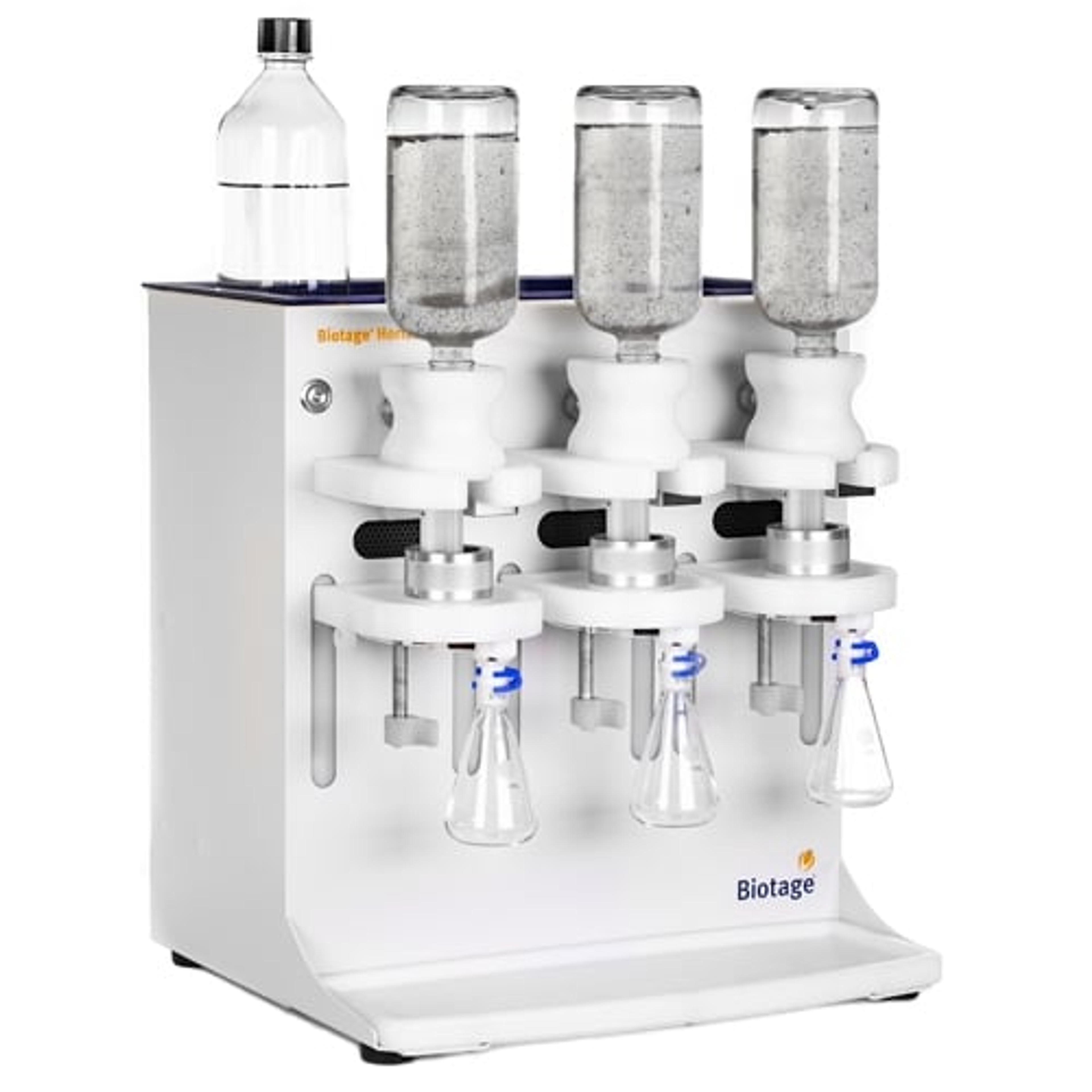
21 Jun 2017Countries around the world have put regulations in place to monitor drinking water quality for a wide range of hazardous compounds, for example EPA Method 525.2. This application note details a study in which the SPE-DEX® 5000 was used to extract the EPA Method 525.2 analytes from six prepared water samples. It was found that the SPE-DEX® 5000 system provided uniform performance and a hands-off approach to the extraction step and gave high reproducibility and precision, demonstrating the utility of solid phase extraction.
Links
Tags
Solid-Phase ExtractionSolid-phase extraction (SPE) is used for clean-up, extraction and concentration of semi-volatile or non-volatile analytes from complex mixtures including blood, urine and food samples. Multiple formats are available for conducting SPE, including prepacked SPE cartridges, disks and microplates, as well as SPE sorbent powders for manual packing. SPE systems can be used to automate the process and extract multiple samples at once. Solid-phase microextraction (SPME) and supported liquid extraction (SLE) products are also available in the same formats. Find the best SPE, SLE and SPME equipment in our peer-reviewed product directory: compare products, check customer reviews and receive pricing direct from manufacturers.GC-MS GC-MS (gas chromatography-mass spectrometry) instruments and equipment are used to separate, quantify and identify mixtures of small and volatile compounds, such as polycyclic aromatics, fatty acids and alcohols. Often used in drug detection, forensic investigation and environmental analysis for pesticides and contaminants, GC-MS is a powerful addition to your lab’s analytical capabilities. GC-MS/MS instruments equipped with a qTOF or triple quadrupole analyzers can give greater sensitivity and resolution to your analysis. Find the best GC-MS instruments and equipment in our peer-reviewed product directory: compare products, check customer reviews and receive pricing direct from manufacturers.EPA MethodsEPA methods are procedures approved by the U.S. Environmental Protection Agency for monitoring and analyzing environmental pollutants, including air, water, and soil samples. These methods are critical in ensuring public health and environmental safety. Explore EPA methods and tools in our peer-reviewed product directory; compare products, check reviews, and get pricing directly from manufacturers.Chromatography Method DevelopmentChromatography method development is the process of designing and optimizing chromatographic techniques to separate and analyze complex mixtures. This includes selecting appropriate stationary and mobile phases, determining flow rates, and optimizing detection methods. Successful method development is essential for high-quality results in fields like pharmaceuticals, food safety, and environmental analysis. Explore chromatography method development tools in our peer-reviewed product directory; compare products, check reviews, and get pricing directly from manufacturers.Water Content AnalysisWater content analysis is crucial for determining the moisture levels in food, pharmaceuticals, chemicals, and other materials. Accurate measurement ensures product quality and shelf-life. Explore water content analysis tools in our peer-reviewed product directory; compare products, check reviews, and get pricing directly from manufacturers.Solid Phase Extraction (SPE)Solid phase extraction (SPE) is a sample preparation technique used to separate and concentrate analytes from complex mixtures. It is widely used in environmental, pharmaceutical, and clinical analysis. SPE provides higher sensitivity and selectivity compared to traditional liquid-liquid extraction methods, making it essential for accurate and reproducible results. Explore SPE tools and systems in our peer-reviewed product directory; compare products, check reviews, and get pricing directly from manufacturers.Drinking Water AnalysisAnalytical methods used to test the purity of drinking water include determining the level of contaminants abides to the level set by the Environmental Protection Agency (EPA).