Endless possibilities with the Gri3D platform

26 Jun 2026

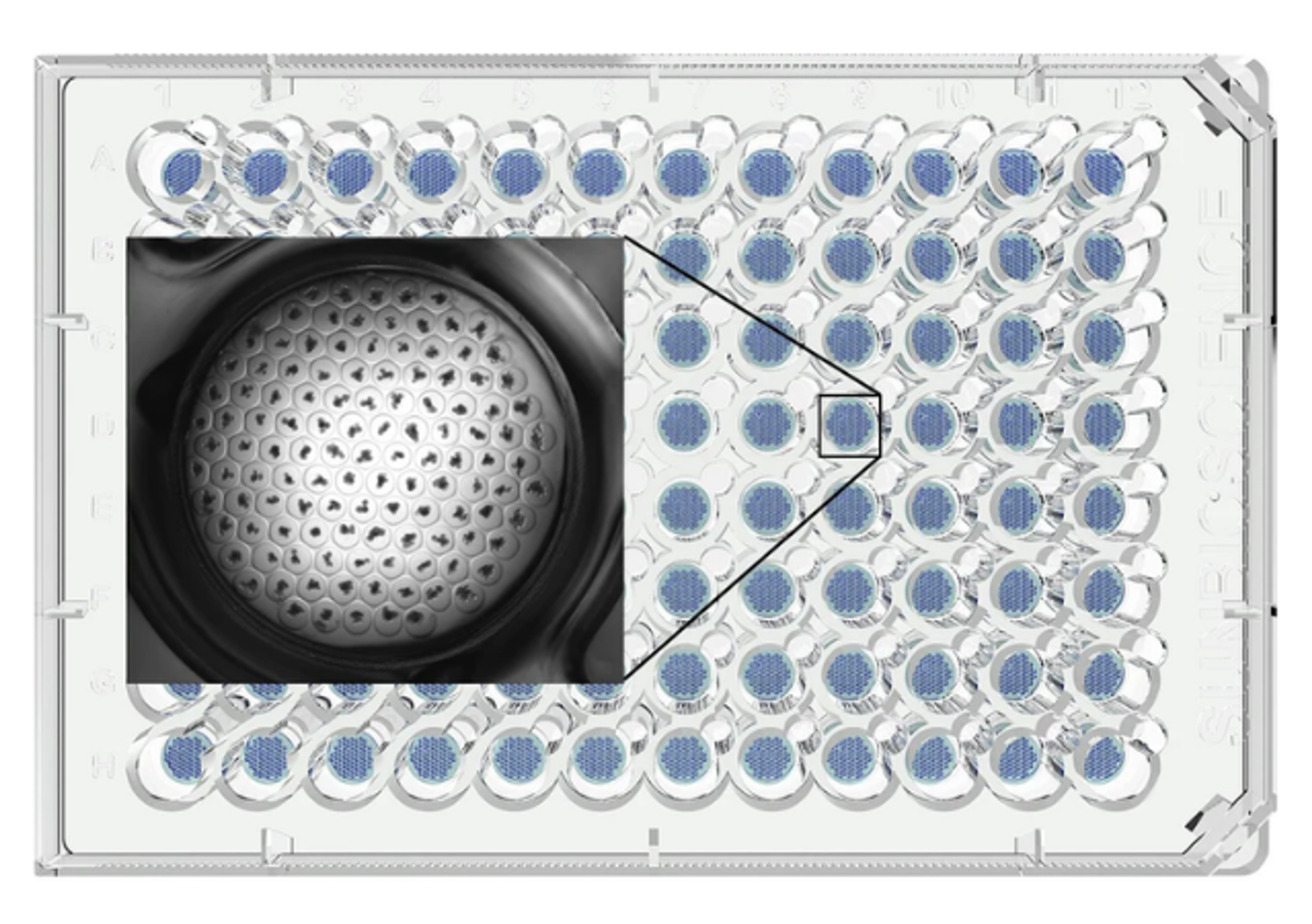
This brochure presents the Gri3D® platform as a standardized approach to organoid culture, addressing limitations of traditional methods such as variability in size, positioning, and throughput. Discover how by using hydrogel-based microcavities, the system enables uniform organoid formation in a single focal plane, improving reproducibility and scalability.

The platform supports automation-compatible workflows for cell seeding, medium exchange, and downstream analysis. It is designed for high-content imaging and screening, enabling applications across multiple biological models including oncology, stem cell biology, and tissue-specific organoids.

Resource details:

  • Resource type: Product brochure
  • Page count: 3
  • Read time: 5 mins

Gri3D® Hydrogel Microcavity Plates

InSphero

Gri3D® Plates are designed to revolutionize 3D cell culture by offering unparalleled precision, scalability, and reproducibility. Each plate features a high-density array of hydrogel microcavities engineered to promote the uniform formation of organoids, enabling researchers to generate physiologically relevant 3D models with ease.

(6)

Links

Tags

Cell / Tissue CultureCell culture or tissue culture is used to study the biology of cells or tissues and to isolate cellular products in an environment which can be manipulated and well defined. Accurately control your culture environment with bioreactors or culture incubators, bind your cells to a surface or together with an extracellular matrix. Distinguish cell types with differential media or proliferate cells with certain characteristics using selective media. Enrich your media with supplements such as growth factors, sera and vitamins. Find the best cell and tissue culture products, kits and equipment in our peer-reviewed product directory: compare products, check customer reviews and receive pricing direct from manufacturers.High Content ImagingHigh content imaging is a method combining two or more fluorescent microscopy experiments to identify substances that alter a cell’s phenotype in a desired manner. The process is adapted to multi-well plates and both the image acquisition and analysis are automated.3D Cell CultureCulturing cells in three dimensions allows more physiologically relevant observations to be made regarding cellular interactions and gene expression. 3D models provide a more accurate representation of cells in vivo and are more stable than 2D cultures, making them very useful for long-term studies.High Throughput ScreeningOrganoids