iLite® Custom Development & Cell-based Services
With their proprietary technology, the iLite® technology Svar can develop Report Gene Assays – that area cleverly designed, sensitive and specific cell based reporter-gene system with luciferase readout. Svar can develop assays for virtually any pharmaceutical target that allow an easy, rapid and accurate test format for a wide range of applications, such as Immunogenicity and Potency assays.




The supplier does not provide quotations for this product through SelectScience. You can search for similar products in our Product Directory.
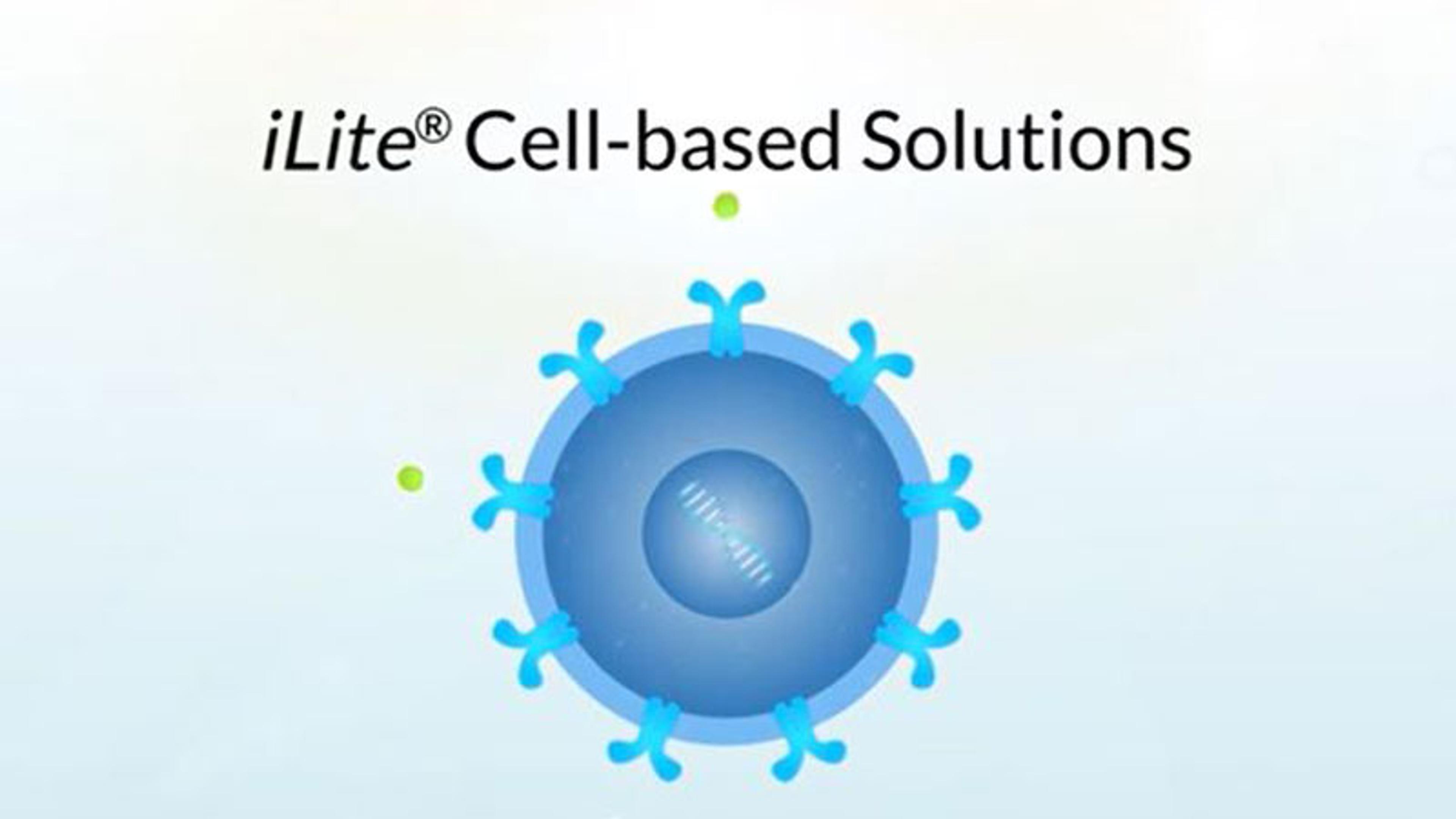
iLite® technology is a powerful cell-based technique used to measure and quantify molecules in biological samples. It has applications throughout the drug development process as well as for monitoring biological drugs.
Svar Life Science offers iLite cells for a long list of targets. However, should your target not be included on the list, they can create a custom iLite cell line tailored for your needs. In addition, Svar offer a wide range of custom services to support drug development programs from discovery to lot release.
The benefits of iLite technology
Each iLite cell has receptors on its cell surface which are specific for the molecule for which the cell line was designed. Upon binding of the molecule to its receptor, a luciferase reporter gene is activated. Following cell lysis and the addition of a substrate, the luciferase protein can be measured using a luminometer. As a unique feature, iLite cells contain a second reporter gene which is used for normalization purposes. It can be used to compensate for serum matrix effects or for differences in cell number for example. iLite cells are shipped in an assay-ready format, which offers great convenience and improved reproducibility while at the same time saves time and labor.
Addressing the analytical gaps in modern therapeutic development
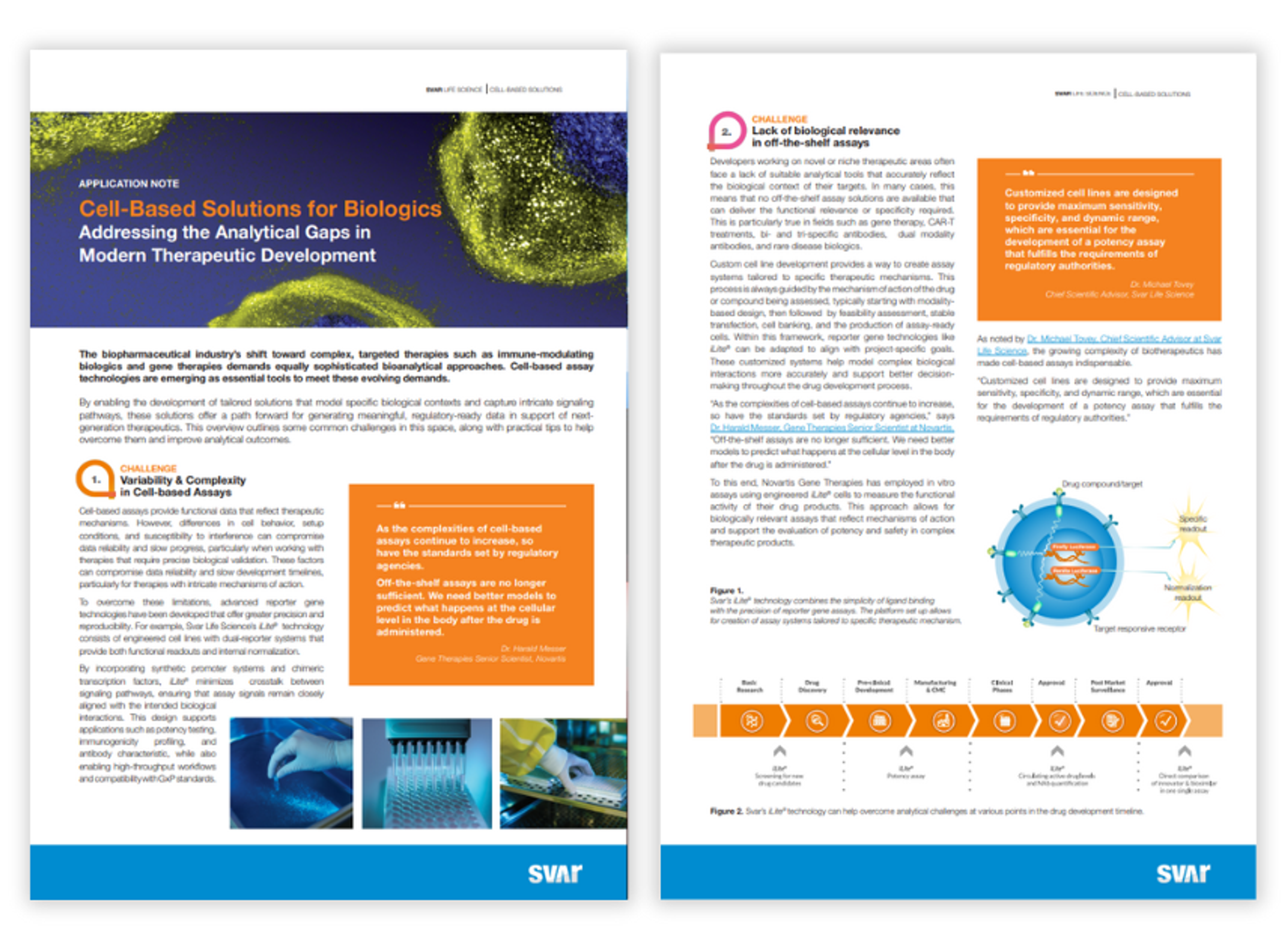
As biopharmaceuticals evolve toward complex modalities like gene therapies and immune-modulating biologics, traditional analytical methods often fall short. Cell-based assays are rising as essential tools but developing robust, context-specific solutions remains challenging.
Discover how tailored cell-based assay strategies can overcome these hurdles and support regulatory-ready data generation. Explore the key challenges and find practical guidance to help advance your analytical capabilities for next-generation therapeutic development.
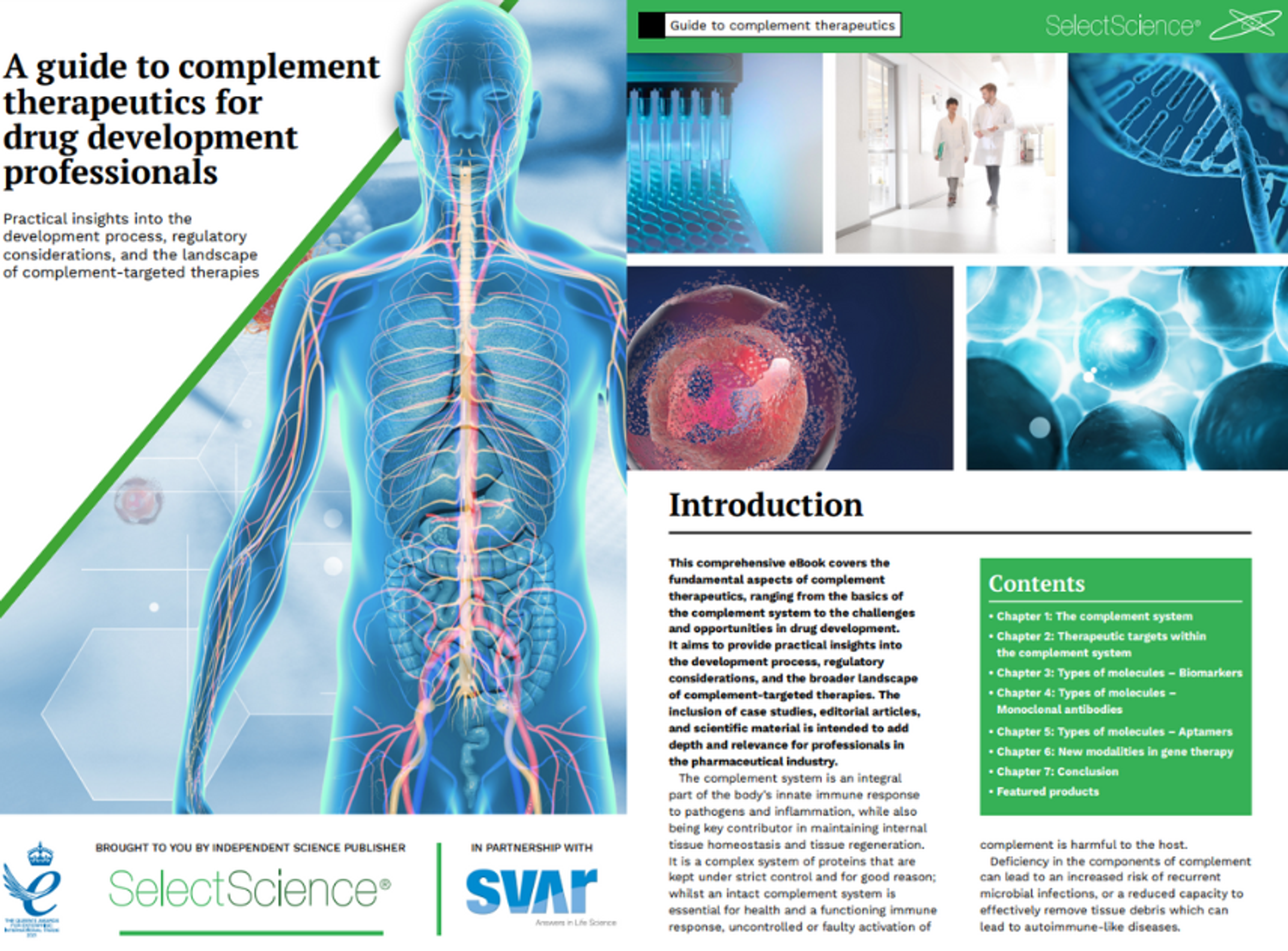
A guide to complement therapeutics for drug development professionals
This comprehensive eBook covers the fundamental aspects of complement therapeutics, ranging from the basics of the complement system to the challenges and opportunities in drug development.
It aims to provide practical insights into the development process, regulatory considerations, and the broader landscape of complement-targeted therapies. The inclusion of case studies, editorial articles, and scientific material is intended to add depth and relevance for professionals in the pharmaceutical industry.
Download to:
- Discover an introduction of the complement system
- Gain an understanding of the fundamental components of complement
- Explore the complement’s prospective therapeutic targets
- Engage with in-depth discussions on biomarkers, monoclonal antibodies (mAbs), and aptamers
- Understand the significance of complement within novel modalities like gene therapy

Following the complement paths: Complement system roadmap
In this scientific poster, SVAR Life Science outlines three complement pathways including the classical pathway, lectin pathway, and alternative pathway from the initiation of complement through to cell lysis.
How to design MOA reflective cell-based potency assays
In this downloadable article, learn how Svar Life Sciences' iLite® cell-based reporter gene assays can help meet the analytical challenges of creating bioassays for gene therapy projects.
iLite Technology: How it works
In this video, Svar Life Science demonstrates iLite® technology, a powerful cell-based technique used to measure and quantify molecules in biological samples. It has applications throughout the drug development process as well as for monitoring biological drugs.

Navigating the complexities of cell-based assays in GMP QC testing: The journey to robust assays
Deepen your understanding of cell-based assays and the process of developing robust cell-based assays for GMP QC testing in modern drug development
Biosimilar development: Experts discuss analytical characterization toolkits for antibody therapeutics
Experts from Xbrane Biopharma discuss the biosimilar development process and how bioassays are the driving force behind reduced cost and accelerated timelines

The future of drug development for complex pathologies: Versatile cell-based assays and customizable cell lines
Cell-based assay expert shares how to overcome your cell-based challenges and drive the development of cutting-edge biotherapeutics

The value of assay-ready cells in providing biologically relevant data for robust therapeutic development
Find out how one contract lab is able to support a diverse range of cell-based projects using assay ready cells

The development of robust cell-based assays for gene therapy: Behind the scenes at Novartis
Learn about the key considerations and challenges with developing cell-based assays that represent the functionality and safety of gene therapy products

How biosimilars are expanding options for patient care
Discover how the industry is improving patient care by delivering innovative solutions that support faster and more cost-effective treatment

Harnessing the power of cell-based assays: New tools and techniques in 2021
From tackling COVID-19 variants to therapeutic discovery, novel organoids and more, advance your assay research with these exclusive interviews and free resources

Researchers develop a promising new therapy to tackle metabolic liver disease, NASH
Dr. Erik Tillman shares his virtual company’s quest to find an effective new life-changing treatment for non-alcoholic steatohepatitis