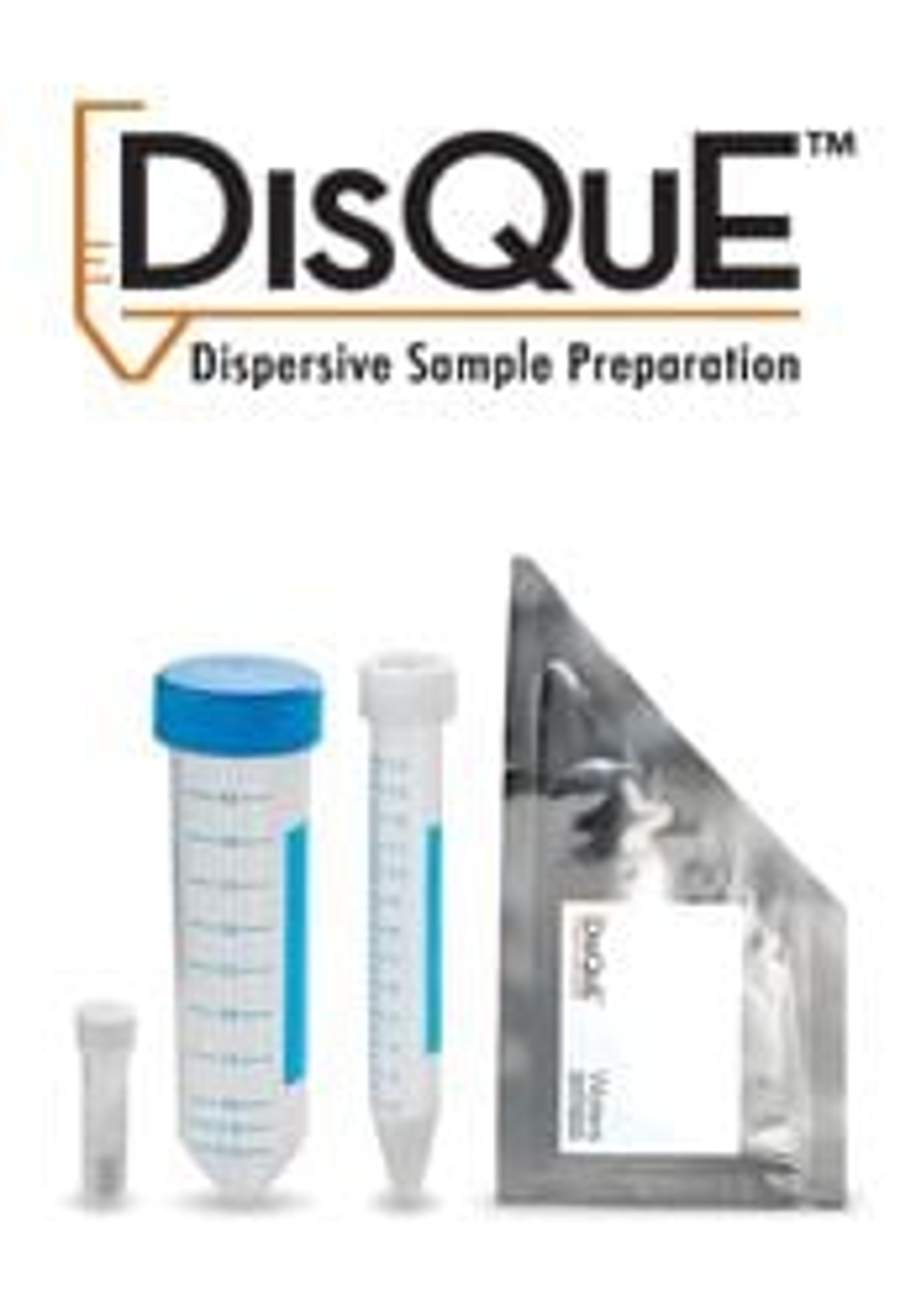
DisQuE Quechers, AOAC Method Sample Preparation Kit, Pouches
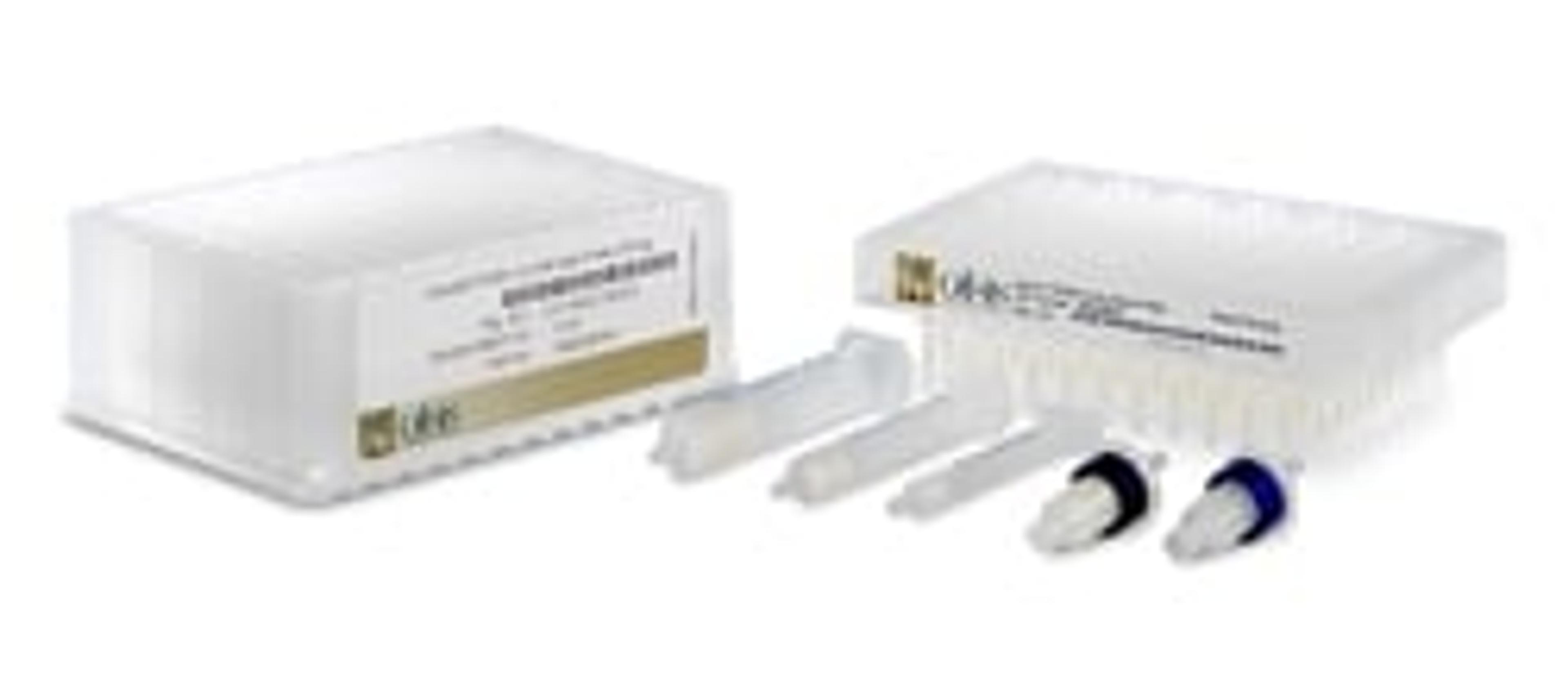
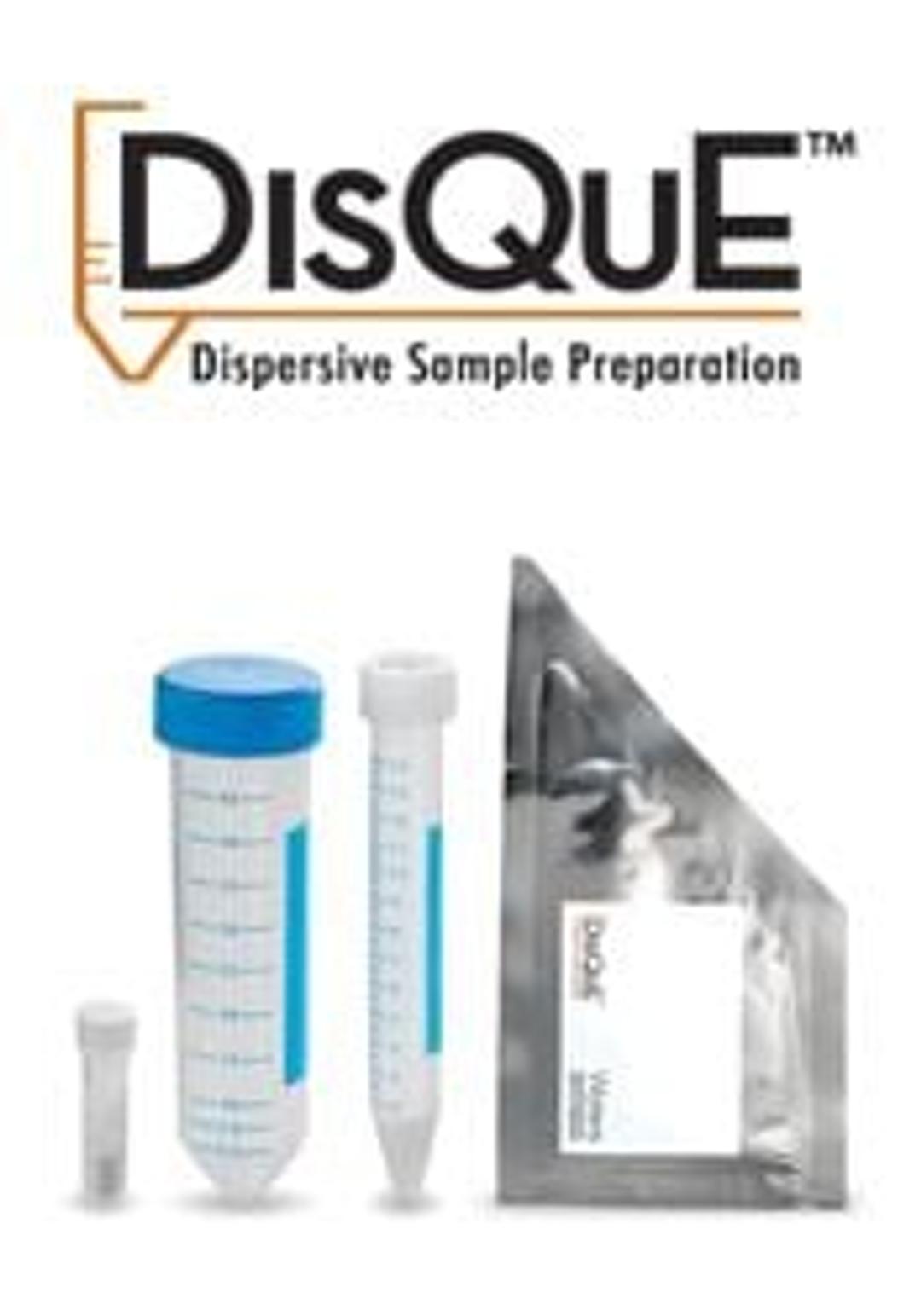
DisQuE Dispersive Sample Preparation used for QUECHERS Method AOAC Method 2007.01. The kit consists of 100 units each of salt pouches, empty 50mL centrifuge tubes and clean-up tubes. Each DisQuE pouch contains 6 grams of magnesium sulphate and 1.5 grams of sodium acetate. Each 2 mL DisQuE Clean-Up tube contains 150 mg of magnesium sulphate and 50 mg PSA (primary-secondary amine SPE sorbent)

Place your order directly with the manufacturer.
DisQuE Dispersive Sample Preparation used for QUECHERS Method AOAC Method 2007.01. The kit consists of 100 units each of salt pouches, empty 50mL centrifuge tubes and clean-up tubes. Each DisQuE pouch contains 6 grams of magnesium sulphate and 1.5 grams of sodium acetate. Each 2 mL DisQuE Clean-Up tube contains 150 mg of magnesium sulphate and 50 mg PSA (primary-secondary amine SPE sorbent)

Addressing the global challenge of PFAS contamination
Per- and polyfluoroalkyl substances (PFAS) are a class of synthetic chemicals that pose significant environmental and health challenges due to their persistence and bioaccumulation. PFAS testing is one of the most pressing issues facing analytical labs today. As global attention grows, so does the demand for reliable answers.
Technologies such as liquid chromatography-tandem mass spectrometry (LC-MS/ MS) and high-resolution mass spectrometry (HRMS) can be essential for assessing PFAS contamination accurately. Discover how advanced LC-MS/MS and HRMS technologies are helping scientists and regulators tackle PFAS challenges head-on.
From sample preparation to data analysis, explore how Waters Corporation provides the tools needed to measure, manage, and mitigate the impact of PFAS, driving scientific progress and regulatory compliance.
Oasis PRiME HLB Cartridges and DisQuE QuEChERS Products for UPLC-MS/MS Mycotoxin Analysis in Cereal Grains
Ingestion of food containing only parts-per-billion (µg/kg) concentration of some mycotoxins may cause severe illness. Therefore, sensitive and reliable analytical methods are required to determine mycotoxins in foods and feeds. An improved QuEChERS extraction procedure was shown to be effective for simultaneous extraction of 12 mycotoxins from wheat, rice and maize flours.
Determination of Triphenylmethane Dyes and Their Metabolites in Shrimp Using QuEChERS Extraction and the ACQUITY UPLC H-Class System with Xevo TQD
This application note reports a highly sensitive and efficient LC-MS/MS method for simultaneously analyzing MG, LMG, CV, LCV, and BG using the Waters® ACQUITY UPLC H-Class System with the Xevo TQD.
Multi-Residue Pesticide Analysis in Tea: Optimized Cleanup After QuEChERS Extraction for UPLC-MS/MS and GC-MS/MS Analysis
This application note presents QuEChERS extraction and SPE-based cleanup strategies for multi-residue pesticide analysis of dried teas. The tea sample is first equilibrated with water before extraction using the DisQuE pouch for CEN QuEChERS. Then, three aliquots are taken for further analysis.
LC-MS/MS Analysis of Pesticide Residues in Rice and Unexpected Detection of Residues in an Organic Rice Sample
The use of pesticides in various stages of cultivation of basmati rice has increased in order to improve its production yield. A multi-residue pesticide method has been developed for the determination of pesticides in basmati rice. This application note shows the analysis of over 200 pesticides using a simple QuEChERS sample preparation procedure, followed by UltraPerformance LC® (UPLC®) couple to tandem quadrupole mass spectrometry.
Multi-Residue Pesticide Analysis in Dried Chili Powder: Optimized Cleanup after QuEChERS Extraction for UPLC-MS/MS and GC-MS/MS Analysis
This application note presents QuEChERS extraction and SPE-based cleanup strategies for multi-residue pesticide analysis of chili powder, a highly resinous and oily material obtained from dried chili pepper fruits. For the analysis of chili powder, the sample is first equilibrated with water before extraction using the DisQuE pouch for CEN QuEChERS.
A Validated Method for the Analysis of 142 Pesticide Residues Using Atmospheric Pressure GC Coupled with Tandem Quadrupole Mass Spectrometry
Various technologies are used to meet the challenge of multi-residue analysis of pesticides in food products destined for human consumption. This application note describes the development and validation of a multi-class method for the routine determination of 142 pesticide residues in various fruit and vegetable matrices.
Determination of PAH in Seafood: Optimized SAmple Preparation Procedures For LC-Fluorescence Screening and GC-MS(MS) Confirmation
In this study, GC-MS(MS) is used to determine PAH in seafood by optimization of sample preparation procedures for LC-Fluorescence screening.
QuEChERS Sample Preparation for the Determination of Polycyclic Hydrocarbons (PAH) in Shrimp Using LC with Fluorescence Detection
Major oil spills in the world’s oceans have brought attention to the problem of PAH contamination, and to the challenges related to PAH analysis in food and environmental samples. This application describes a QuEChERS-based sample preparation protocol for the determination of PAH in shrimp. QuEChERS methodology is quicker, easier, cheaper, safer than, and as rugged as prior methods of sample preparation.
QuEChERS Sample Preparation for LC/MS and LC/UV Determination of Carbendazin and Other Conazole Fungicides in Orange Juice
This application note discusses the sample preparation strategies for determination of conazole fungicides, including carbendazim, in orange juice. It is demonstrated that the DisQuE pouch (QuEChERS) from Waters is effective for extraction of conazole fungicides. The methodology described here provides high-throughput and low detection limits with a quick, simple, robust, and safe analysis. It is also shown that the QuEChERS extract can be readily utilized for UPLC/MS/MS analysis without further cleanup.