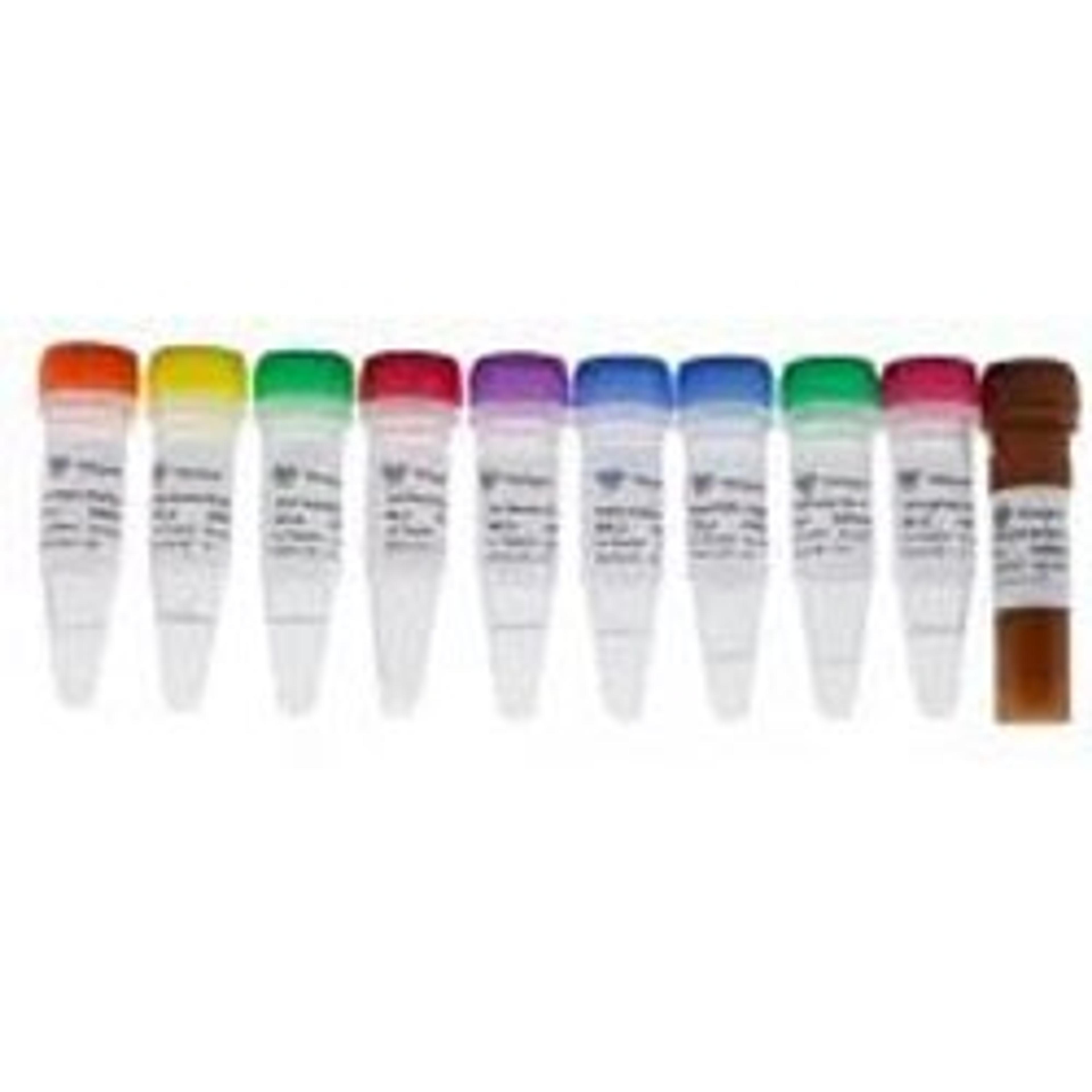
VAHTS Universal V8 RNA-seq Library Prep Kit for Illumina
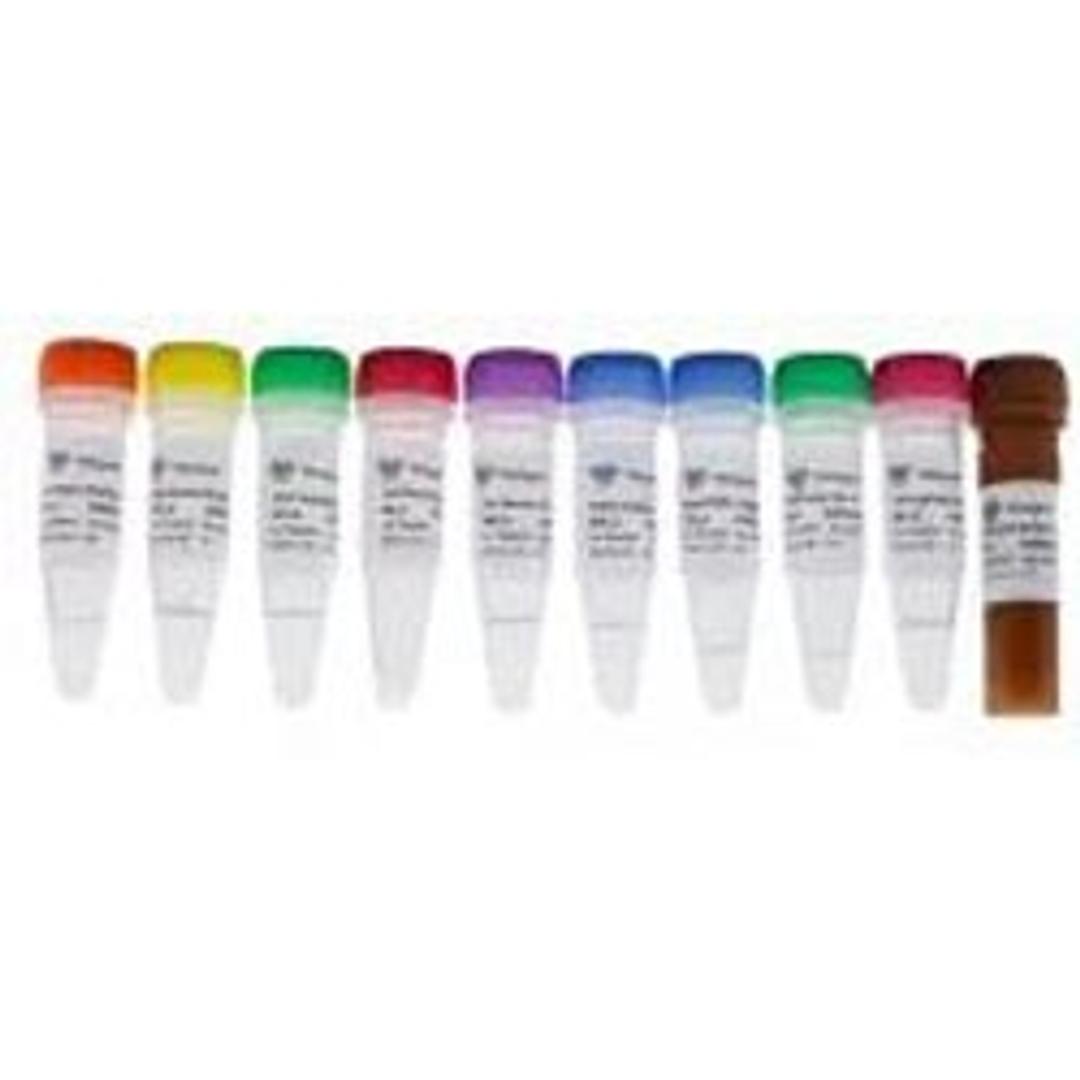
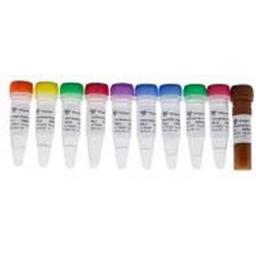
VAHTS Universal V8 RNA-seq Library Prep Kit for Illumina is specially designed for the preparation of transcriptome libraries for Illumina platform. The kit is universal and suitable for RNA library construction of RNA that have been obtained by Poly(A)-based mRNA enrichment or rRNA depletion. The kit contains two types of cDNA 2nd Strand synthesis buffer, which can be chosen for library construction for non-stranded or stran…
The supplier does not provide quotations for this product through SelectScience. You can search for similar products in our Product Directory.
VAHTS Universal V8 RNA-seq Library Prep Kit for Illumina is specially designed for the preparation of transcriptome libraries for Illumina platform. The kit is universal and suitable for RNA library construction of RNA that have been obtained by Poly(A)-based mRNA enrichment or rRNA depletion. The kit contains two types of cDNA 2nd Strand synthesis buffer, which can be chosen for library construction for non-stranded or stranded RNA-Seq transcriptome analysis. This kit combines 2nd Strand cDNA synthesis, end-repair and dA-Tailing into one step, with no need of purification, which greatly simplifies the process of library construction and shortens the operation time. The optimized reaction system improves the library construction efficiency, is compatible with lower-input RNA, and has uniform coverage for different amounts of input-RNA. Libraries of specific sizes, which can be customized, can be obtained after size selection with magnetic beads. All the enzymes and buffer provided in the kit have undergone rigorous quality control and functional testing to ensure the optimal stability and repeatability.
Product advantages
- Fast: the operation process is very simple, which reduces the time of building the transcription library to 3 h
- Compatibility: higher success rate of library construction for low initial volume and degraded samples
- High quality: Excellent sequencing data quality, resulting in more uniform coverage of the transcript region
Applications
VAHTS Universal V8 RNA-seq Library Prep Kit for Illumina is suitable for RNA library construction of total RNA that have been enriched by Poly(A) (for RNA with good integrity from eukaryotes such as animals, plants nd fungi) or rRNA depletion. As the content of mRNA in total RNA of different samples varies greatly, enough total RNA need to be inputted to make sure the sufficient mRNA for library construction. The amount of input-RNA is related to the mRNA enrichment module:
- VAHTS mRNA Capture Beads (Vazyme #N401): 0.01 - 4 μg;
- Ribo-off rRNA Depletion Kit (Human/Mouse/Rat) (Vazyme #N406): 0.01 - 1 μg;
- Ribo-off rRNA Depletion Kit (Bacteria) (Vazyme #N407): 0.01 - 5 μg;
- Ribo-off Globin & rRNA Depletion Kit (Human/Mouse/Rat) (Vazyme #N408): 0.01 - 1 μg;
- Ribo-off rRNA Depletion Kit (Plant) (Vazyme #N409): 1 - 5 μg;
- Purified mRNA or Ribosomal-depleted RNA: 0.5 - 100 ng;
It is recommended to use Agilent 2100 Bioanalyzer to analyze the integrity of total RNA. mRNA enriched with VAHTS mRNA Capture Beads (Vazyme #N401) must be high quality RNA (RIN ≥7). Degraded total RNA used for library construction will lead to 3' bias in RNA-seq. For RNA samples with RIN value <7, rRNA removal can be performed using the Ribo-off method (Vazyme #N406/407/408/409).
Main fields of RNA-related analysis:
- gene expression analysis
- single nucleotide variation calling
- alternative splicing detection
- gene fusion detection
- target transcriptome analysis
Self-prepared materials
RNA Analysis:
- Equalbit RNA HS Assay Kit (Vazyme #EQ211);
- Equalbit RNA BR Assay Kit (Vazyme #EQ212);
- Agilent RNA 6000 Pico Kit (Agilent #5067-1513).
- mRNA Enrichment & rRNA Depletion:
VAHTS mRNA Capture Beads (Vazyme #N401);
- Ribo-off rRNA Depletion Kit (Human/Mouse/Rat) (Vazyme #N406);
- Ribo-off rRNA Depletion Kit (Bacteria) (Vazyme #N407);
- Ribo-off Globin & rRNA Depletion Kit (Human/Mouse/Rat) (Vazyme #N408);
- Ribo-off rRNA Depletion Kit (Plant) (Vazyme #N409).
RNA and DNA Clean Beads:
- VAHTS DNA Clean Beads (Vazyme #N411) or Agencourt AMPure XP Reagent
- (Beckman #A63880/A63881/A63882);
- VAHTS RNA Clean Beads (Vazyme #N412) or Agencourt RNA Clean XP Beads
- (Beckman #A63987).
Adapters:
- VAHTS RNA Adapters Set 1 - Set 2 for Illumina (Vazyme #N803/N804), VAHTS RNA
- Adapters Set 3 - Set 6 for Illumina (Vazyme #N809/N810/N811/N812) or VAHTS RNA
- Multiplex Oligos Set 1 - Set 2 for Illumina (Vazyme #N323/N324).
Library Quality Control:
- Equalbit 1 × dsDNA HS Assay Kit (Vazyme #EQ121);
- Agilent DNA 1000 Kit (Agilent #5067-1504) or Agilent High Sensitivity DNA Kit (Agilent #5067 - 4626).
Other Materials:
- Freshly prepared Ethanol (80%), Nuclease-free ddH2O, Low-adsorption Nuclease-free PCR Tubes andPipette Tips, PCR Instrument, Magnetic Stand, Qubit, Agilent 2100 Bioanalyzer.

VAHTS Universal V8 RNA-seq Library Prep Kit for IIIumina (NR605)
In this application note, Vazyme Biotech describes the VAHTS® Universal V8 RNA-seq Library Prep Kit for Illumina. This kit is for transcriptome library preparation and was developed specifically for Illumina high-throughput sequencing platform.

Identifying novel aging genes and investigating their pathological role in breast cancer
The lifespan of mouse-inbred strains varies dramatically, indicating the genetic regulation of aging. To reveal the genetic mechanisms of aging, Dr. Rong Yuan and his team measured the lifespan of 32 inbred strains and longitudinally investigated the development and aging related phenotypes. The results suggest that the age of vaginal patency (AVP), a bio-marker of female sexual maturation (FSM), and the circulating IGF1 level, can be used as bio-markers of aging. By quantitative trait loci (QTL) analysis, combining bioinformatic methods, a group of novel aging related genes were identified, including nuclear receptor interacting protein 1 (NRIP1). Pathologic studies revealed that NRIP1 deletion could suppress the initiation and progress of breast cancer. Next-generation sequencing and single-cell RNA sequencing could significantly improve the ability to identify QTL genes and discover the molecular mechanisms of cancer.
In this webinar, join Dr. Rong Yuan and Shuyun Ding as they share how to identify novel aging-related genes and their pathological role in cancer. Plus, discover how to improve your research by using singe cell RNA sequencing and next-generation sequencing (NGS), and explore detailed applications for single-cell RNA sequencing.
Key learning objectives
- Discover how to identify novel aging-related genes and their pathological role in cancer
- Explore the principles and applications of next-generation sequencing
- Learn more about detailed applications for single-cell RNA sequencing
Who should attend?
- Scientists and clinicians with experience in NGS, biology, and genomics
Certificate of attendance
All webinar participants can request a certificate of attendance, including a learning outcomes summary, for continuing education purposes.