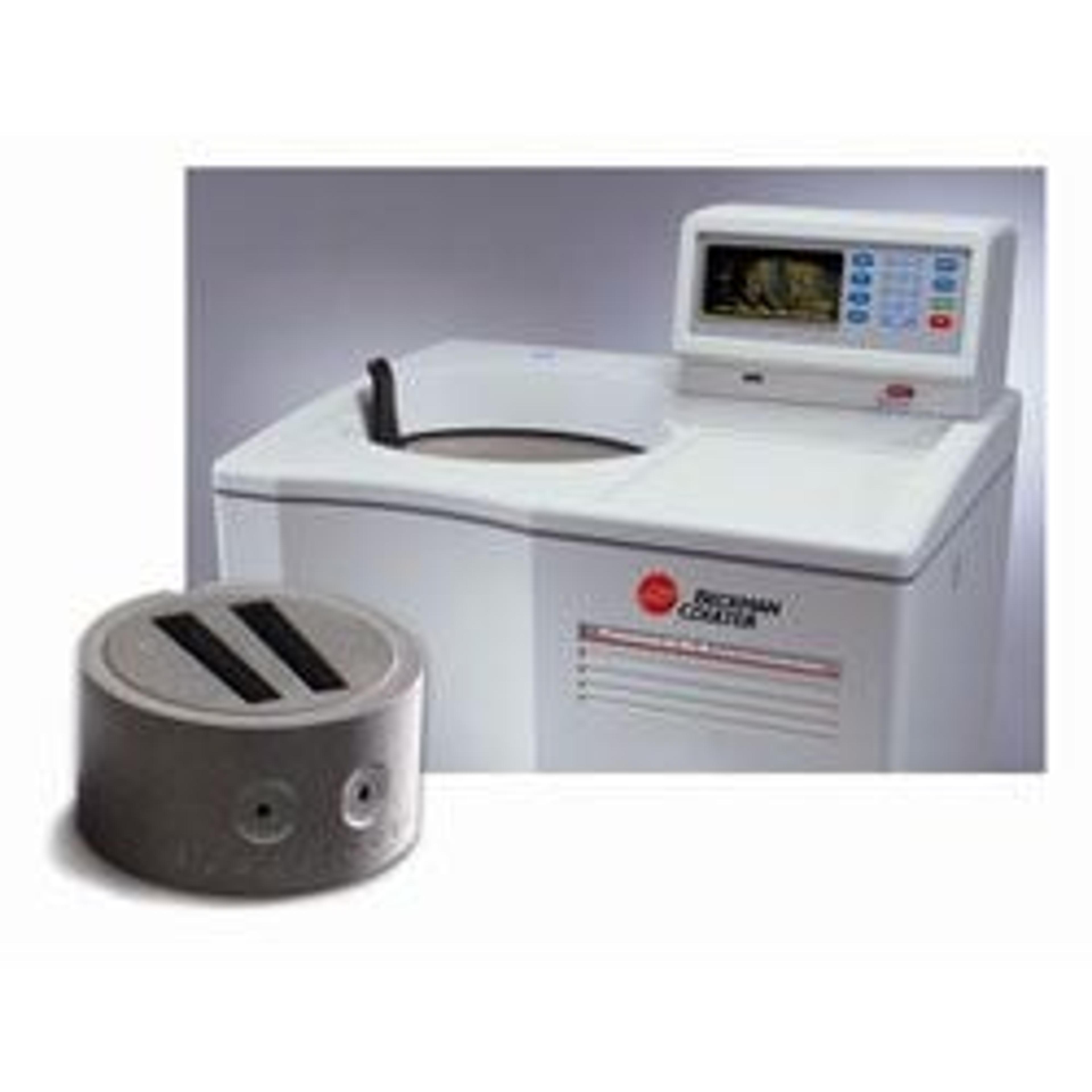
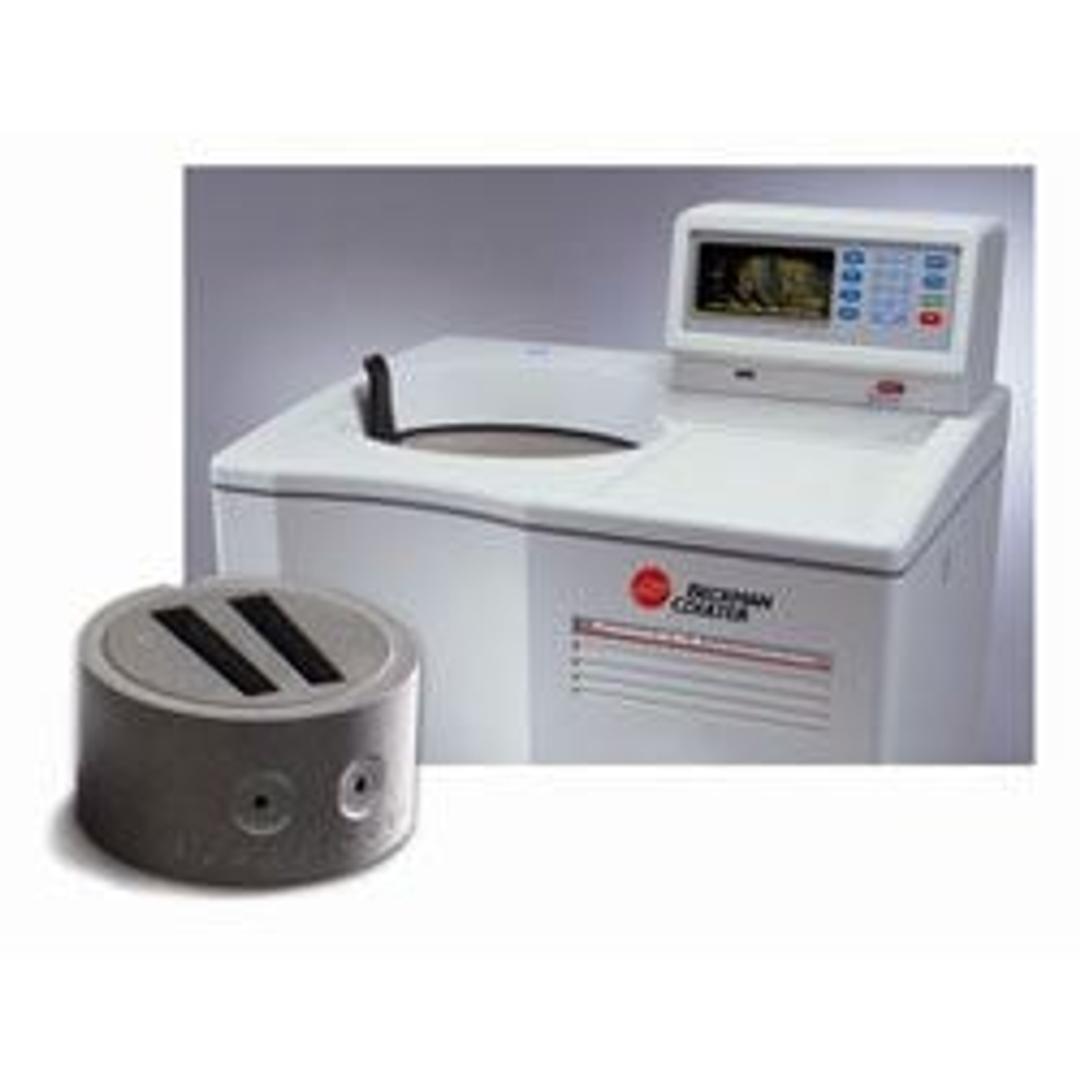
ProteomeLab XL-A/XL-I Analytical Ultracentrifuge (AUC)
Native-condition characterization for accurate results every time

The supplier does not provide quotations for this product through SelectScience. You can search for similar products in our Product Directory.
Particle sizing, molar mass determination
Very useful equipment for separation and molecular weight determination that does not require a separating matrix as is found in HPLC and SEC methods. However it is expensive to maintain and does not come with extensive data analysis software.
Review Date: 16 May 2012 | Beckman Coulter Life Sciences
Beckman Coulter pioneered the field of analytical ultracentrifugation and continues to design and produce powerful, reliable, and durable instrumentation to enable academic and industrial research around the world. By measuring proteins as interacting elements, ProteomeLab XL-A and XL-I systems accelerate the development of diagnostic markers and therapeutic targets for efficient and reliable protein characterization in solution. Each ProteomeLab system is designed to put actionable information in your hands quickly and easily. Native-condition characterization for better lead optimization, better drug candidate evaluation, better method validation....better science. The ProteomeLab XL-A/XL-I in-solution characterization of proteins, oligomers, aggregates, particles, colloids, and small structures delivers accurate results you can rely on time and again. In-solution characterization allows for testing in native conditions, meaning you determine the sample testing environment that best suits your needs. The unique column-free separating technique of the ProteomeLab XL-A/XL-I measures the relative change in the distribution of molecular weights, providing an efficient way to measure heterogeneity, stoichiometry and self-associating systems. And, because the measurements are based on the first principles of thermodynamics and hydrodynamics, no standards or calibrations are required. As a result, you spend less time on setup and more time on discovery.

Short Column Sedimentation Equilibrium Analysis for Rapid Characterization of Macromolecules in Solution
Short column sedimentation equilibrium analysis offers many advantages for researchers wanting quick, sure characterization of the solution properties of macromolecules. This application note provides an overview of short column sedimentation methods and describes when short column methods are an appropriate choice.
Characterizing Insulin as a Biopharmaceutical Using Analytical Ultracentrifugation
Insulin is a well characterized drug used to treat diabetes. A large number of insulin formulations have been investigated in order to develop the optimum time delivery suited to patient needs. In this application note, analytical ultracentrifugation (AUC) is investigated as a potential tool to analyze the higher-order structure of insulin under typical formulation conditions.
Analysis of membrane protein dimerization by sedimentation equilibrium
Integral membrane proteins can often be isolated and solubilized in a functional form by the use of detergents. As with soluble proteins, understanding of the sequence/structure/function of a membrane protein begins with determination of the molecular weight. In this application note, the molecular weight of membrane proteins is determined using sedimentation equilibrium.
The Solution Conformation of Novel Antibody Fragments Studied using the Proteomelab Xl-A Analytical Ultracentrifuge
In this study the monodispersity and absence of selfassociation phenomena of Fab’ and F(ab’)2 solutions are strongly indicated by sedimentation velocity and sedimentation equilibrium experiments. Cross-linking of novel Fab’ fragments has been a recent attempt to improve monoclonal antibodies in their use as radiolabeled diagnostic markers. In order to properly understand the function of these new antibody fragments in vivo, application of the ProteomeLab XL-A analytical ultracentrifuge was utilized to gain an appreciation of their size, self-association behavior (or preferably lack of) and solution conformation.
Stability of the Human Immunodeficiency Virus-1 Reverse Transcriptase Heterodimer
This application note describes the characterization of a heteroassociating system. The thermodissociation is studied using band sedimentation analysis, whilst the electrostatic dissociation is studied using boundary sedimentation analysis. Analytical ultracentrifugation represents a powerful methodology for expressing HIV-1 viral components. In conjunction with appropriate data analysis methodologies, analytical ultracentrifugation can be used to examine sample purity, detect and characterize conformational changes, determine subunit stoichiometries, characterize assembly and disassembly mechanisms of macromolecular complexes, and measure equilibrium constants and thermodynamic parameters of associating systems.