
ResourceLife Sciences
The Solution Conformation of Novel Antibody Fragments Studied using the Proteomelab Xl-A Analytical Ultracentrifuge
26 Jun 2016In this study the monodispersity and absence of selfassociation phenomena of Fab’ and F(ab’)2 solutions are strongly indicated by sedimentation velocity and sedimentation equilibrium experiments. Cross-linking of novel Fab’ fragments has been a recent attempt to improve monoclonal antibodies in their use as radiolabeled diagnostic markers. In order to properly understand the function of these new antibody fragments in vivo, application of the ProteomeLab XL-A analytical ultracentrifuge was utilized to gain an appreciation of their size, self-association behavior (or preferably lack of) and solution conformation.
Related products
Request Quote for All Products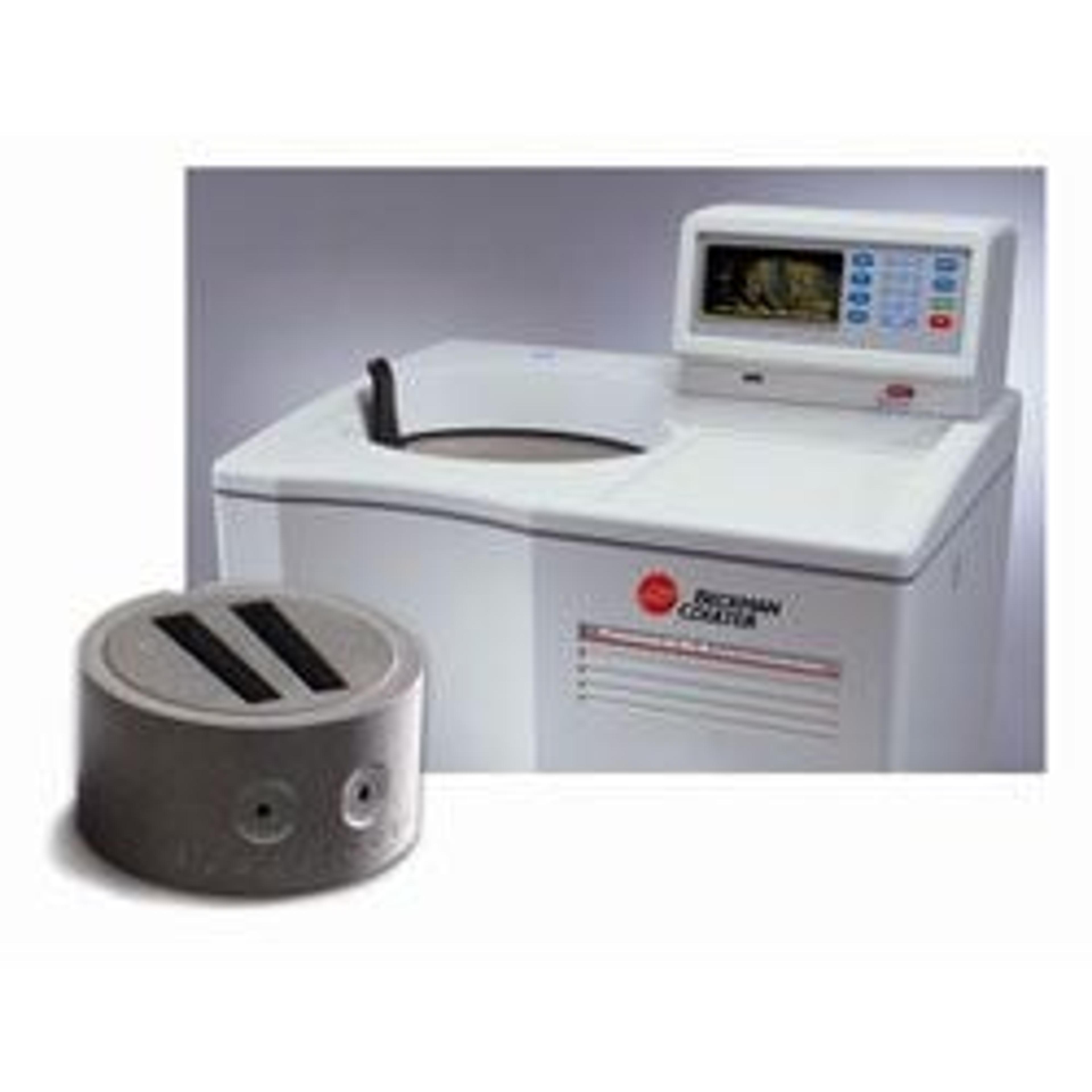
ProteomeLab XL-A/XL-I Analytical Ultracentrifuge (AUC)
Beckman Coulter Life SciencesNative-condition characterization for accurate results every time
Links
Tags
AntibodiesAntibodies are used in techniques such as confocal and fluorescence microscopy, flow cytometry, ELISA, ELISPOT, immunohistochemistry, western blotting and immunopreciptation. Select specific antigen reactivity, high specific affinity, low non-specific binding, monoclonal or polyclonal, primary or secondary antibodies and associated conjugates such as an enzyme or dye for visualization.Protein CrystallographyProtein crystallization is the process of crystallizing purified proteins for 3D structure analysis by x-ray crystallography. The main methods of protein crystallization include sitting drop, hanging drop and microbatch. It is important to control parameters such as pH, temperature and concentration. Following crystallization, detectors and software are used for data collection and analysis.Monoclonal AntibodiesMonoclonal antibodies (mAbs) are lab-made molecules that can bind to specific antigens on cells, making them highly effective in treating cancers, autoimmune diseases, and infections. These targeted therapies are transforming the treatment landscape for many conditions. Browse our peer-reviewed product directory to find monoclonal antibodies for research and clinical applications; compare products, check reviews, and get pricing directly from manufacturers.Molecular Weight AnalysisMolecular weight analysis determines the size and structure of biomolecules, essential in protein characterization, polymer studies, and drug development. Techniques like mass spectrometry ensure precise results. Compare solutions for molecular weight analysis in our peer-reviewed product directory.Protein StructureProtein structure refers to the three-dimensional arrangement of amino acids in proteins, determining their function. Understanding protein structure is key in drug discovery, enzymology, and molecular biology. Explore protein structure analysis tools in our peer-reviewed product directory; compare products, check reviews, and get pricing directly from manufacturers.Molecular DiagnosticsMolecular diagnostics use an individual’s genetic code and gene expression to diagnose and monitor diseases. The technique is used increasingly in the field of infectious diseases and oncology, as well as areas such as coagulation, HLA typing and pharmacogenomics. Molecular diagnostics plays a pivotal role in personalized medicine.CrystallographyUltracentrifugation