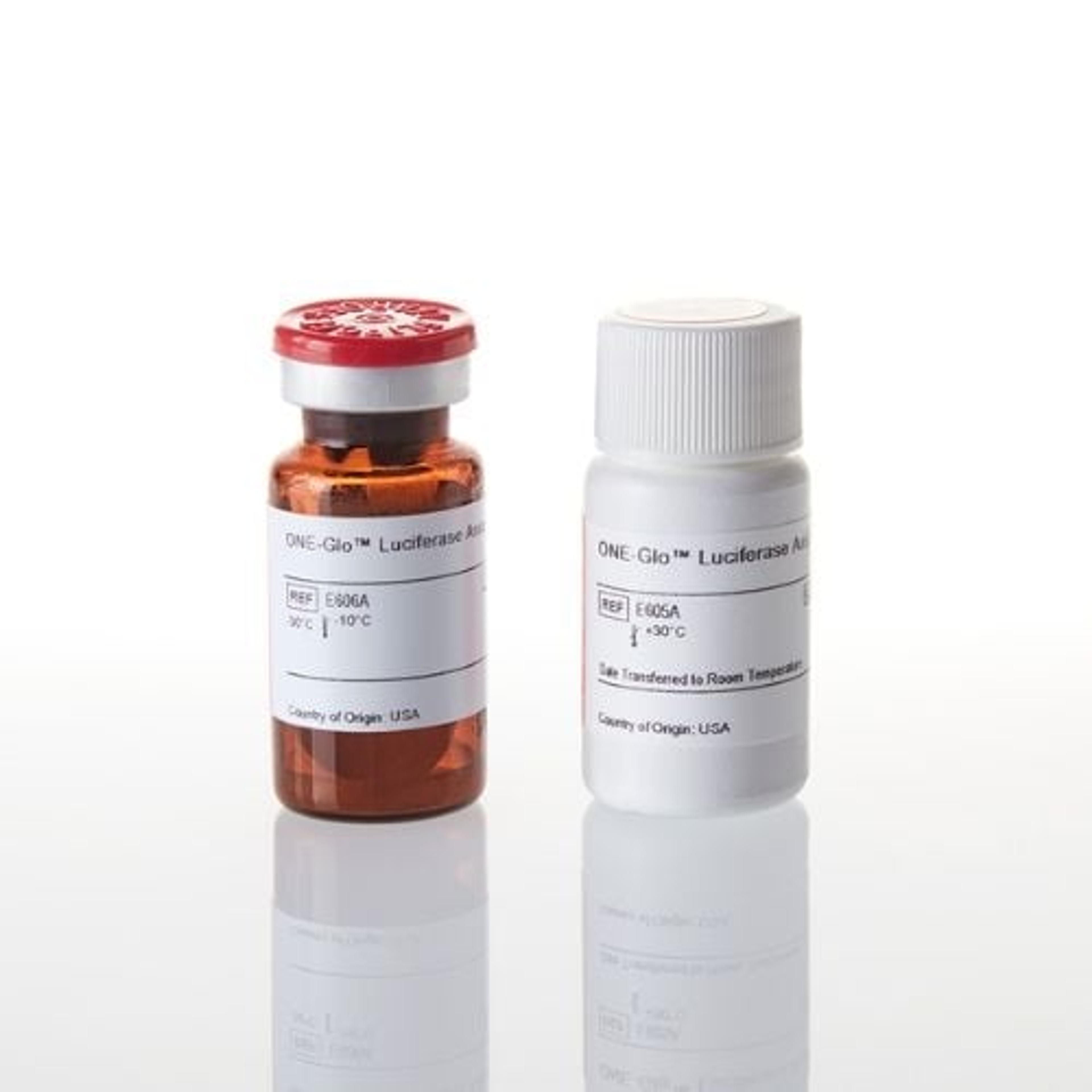
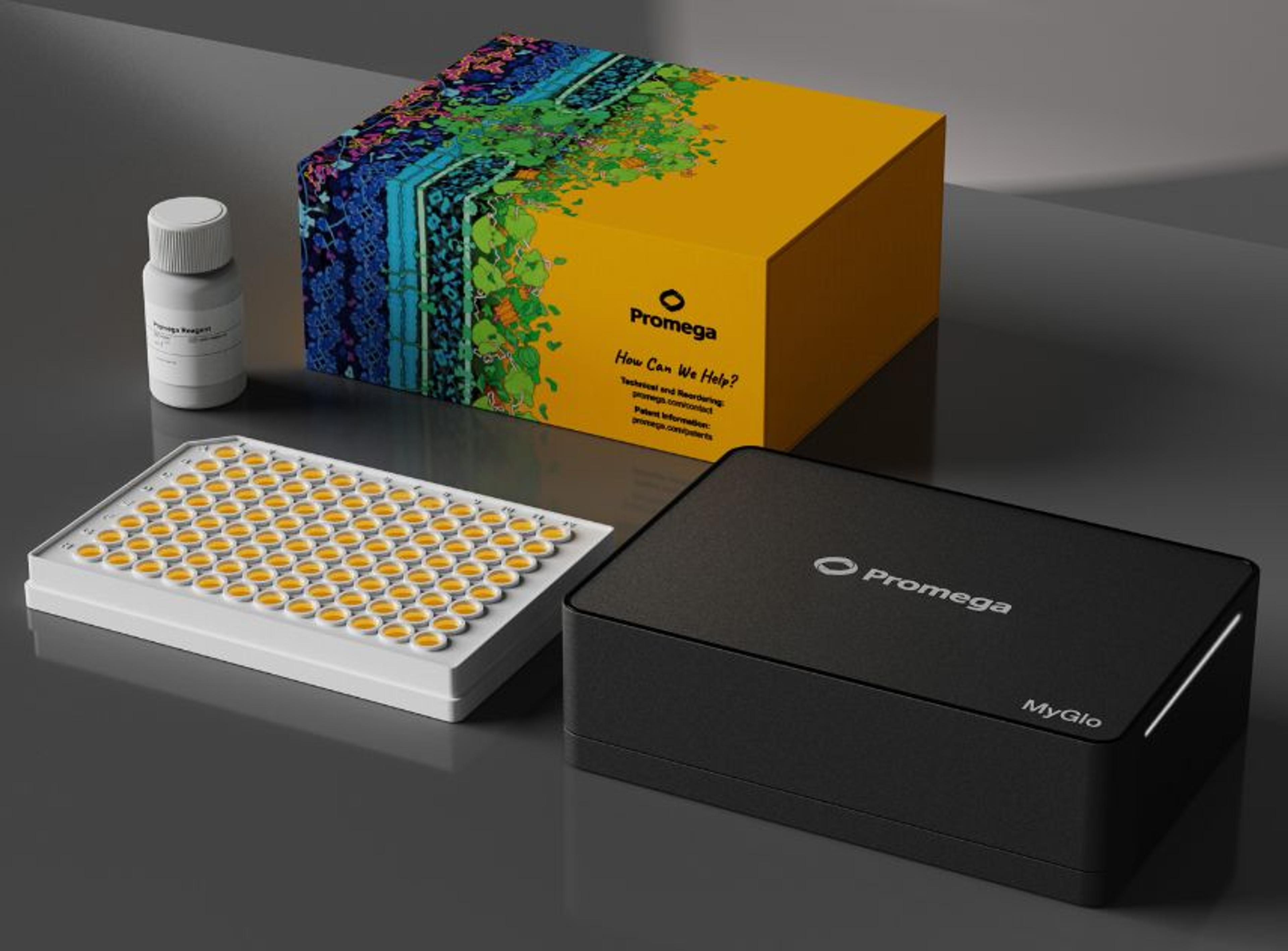
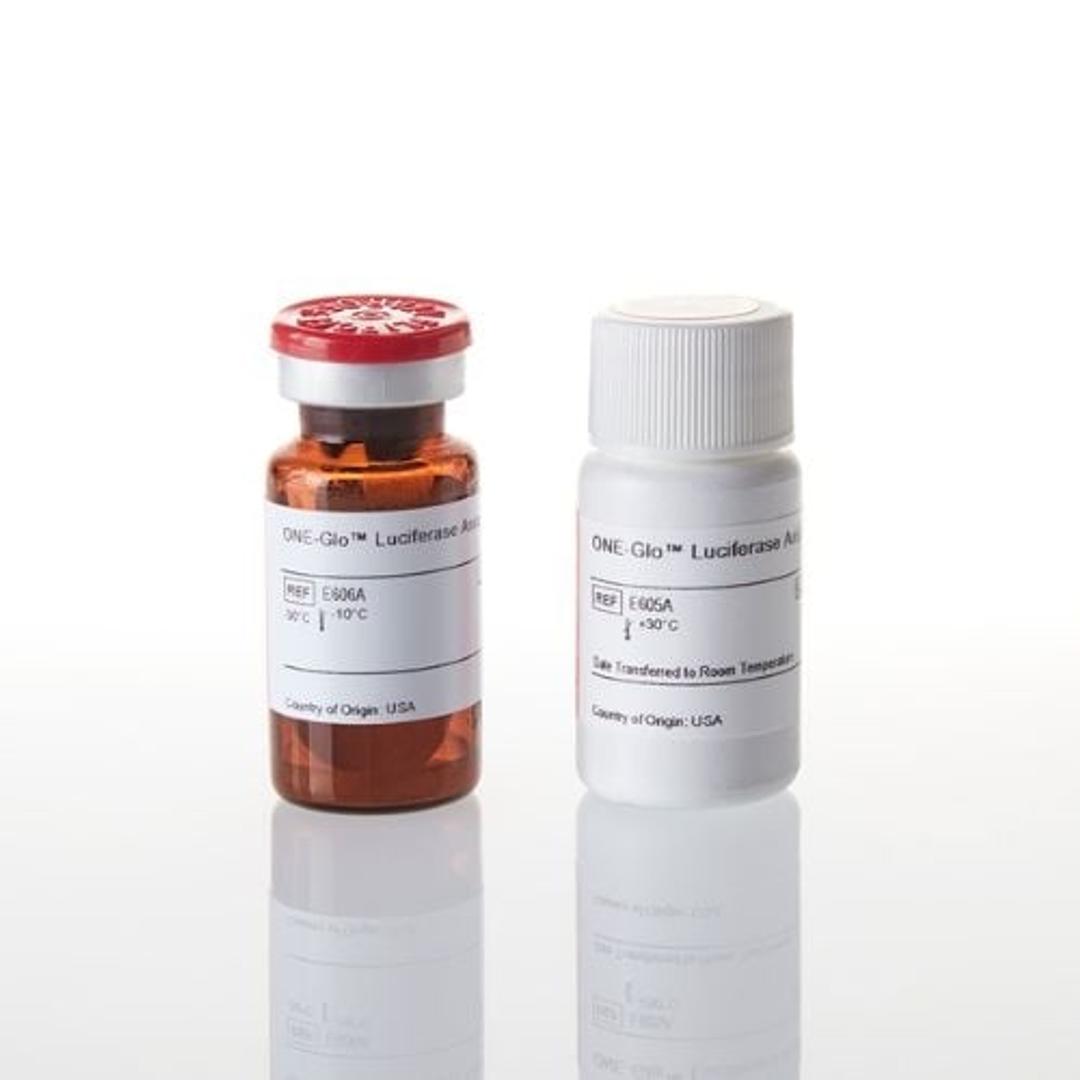
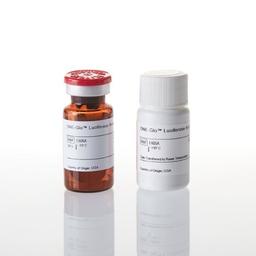
ONE-Glo™ Luciferase Assay System
The ONE-Glo™ Luciferase Assay System provides a highly sensitive, robust, homogeneous assay for detection of firefly luciferase reporter gene expression in mammalian cells. Ideally suited for high- and ultrahigh-throughput applications, the ONE-Glo™ Assay contains a new luciferase substrate, resulting in a reagent that is more stable, more tolerant to sample components, and has less odor than standard luciferase assay reagents…

Receive your quote directly from the manufacturer.
Fantastic for detection and quantitation of reporter expression
Expression of reporter construct
By and large the best system for performing high throughput screening in the search for entities that alter expression (either basal or stimulated) of reporter constructs. Competing products don't even come close to the strength of signal or ease of use.
Review Date: 16 Nov 2021 | Promega Corp.
Great results.
Cell based reporter assay
High quality reproducible results. Protocol could be modified to decrease the time it takes to complete the assay and increase throughput.
Review Date: 27 Oct 2019 | Promega Corp.
Speedy and easy to use.
cell functional assay
It is very reliable for my luciferase assay. I always get reproducible data using this reagent. It is very straight forward to use. I am very impressed by the speed of their shipment, I always get the product next day.
Review Date: 25 Oct 2019 | Promega Corp.
We use this routinely and it is very easy to use with good reproducibility.
Review Date: 28 Jun 2011 | Promega Corp.
The ONE-Glo™ Luciferase Assay System provides a highly sensitive, robust, homogeneous assay for detection of firefly luciferase reporter gene expression in mammalian cells. Ideally suited for high- and ultrahigh-throughput applications, the ONE-Glo™ Assay contains a new luciferase substrate, resulting in a reagent that is more stable, more tolerant to sample components, and has less odor than standard luciferase assay reagents. These features ensure that the ONE-Glo™ Assay provides robust performance and also eliminates many of the handling inconveniences experienced using other reporter assays in a high-throughput setting.
Features - Benefits
- Simplify Your Assay Optimization: The robust performance, reduced odor, improved storage, and larger available sizes make assay optimization even easier and more efficient.
- Store at Room Temperature or at 4°C: The extended stability of the ONE-Glo™ Reagent at room temperature and 4°C makes it more convenient for everyday use.
- Improve Assay Precision: Because the ONE-Glo™ Reagent is less sensitive to mixing and dispensing conditions, reproducibility is enhanced. The assay is ideal for use in high-density (384- and 1536-well) microplates.
- Get a Brighter, Longer-Lasting Signal: Optimized for batch and continuous-process handling, the extended bright light output of the ONE-Glo™ Assay allows high sensitivity, especially when extended incubation is required prior to reading results.
- Reduce Unwanted Effects from Sample Components: The novel chemistry used in the ONE-Glo™ Assay is less sensitive to culture media, phenol red, and luciferase inhibitors than other luciferase assays.

The P450-Glo CYP2B6 Assay: A Rapid and Selective Assay for Measuring CYP2B6 Induction and Inhibition
Promega has developed a luminogenic CYP2B6 assay for biochemical CYP2B6 inhibition and cell-based CYP2B6 induction studies. In this application note, Promega presents the new P450-Glo™ CYP2B6 luminogenic assay characterization and demonstrate its utility for measuring both CYP2B6 inhibition and induction.
Advancing Pathway Analysis with Custom Luciferase Reporters
To enable investigation of key cellular signaling pathways, Promega has developed a prtfolio of bioluminescent reporter gene assays using firefly and Renilla luciferases. In combination with best-in-class luciferase detection reagents, these genetic reporter systems enable interrogation of important cellular responses involved in cancer, inflammation and CNS disease.
Novel Fc Effector Function Reporter Bioassays from Promega for Development of Therapeutic Antibodies
This poster discusses the development of a suite of Fc receptor-specific reporter bioassays to interrogate antibody-dependent cellular cytotoxicity (ADCC) and antibody-dependent cellular phagocytosis (ADCP) mechanisms of action. Drug developers and regulatory authorities recognize ADCC and ADCP as important mechanisms of action of therapeutic antibodies (Abs). In qualification studies, the Fc effector reporter bioassays exhibit excellent specificity, accuracy, precision, and linearity enabling their use in Ab characterization, optimization, and potency determination.
Design and Validation of Bioluminescent Assays for 3D Cell Culture Models
This poster demonstrates the development of an improved reagent formulation for bioluminescent detection of ATP for measuring cell viability.