Molecular Beacons
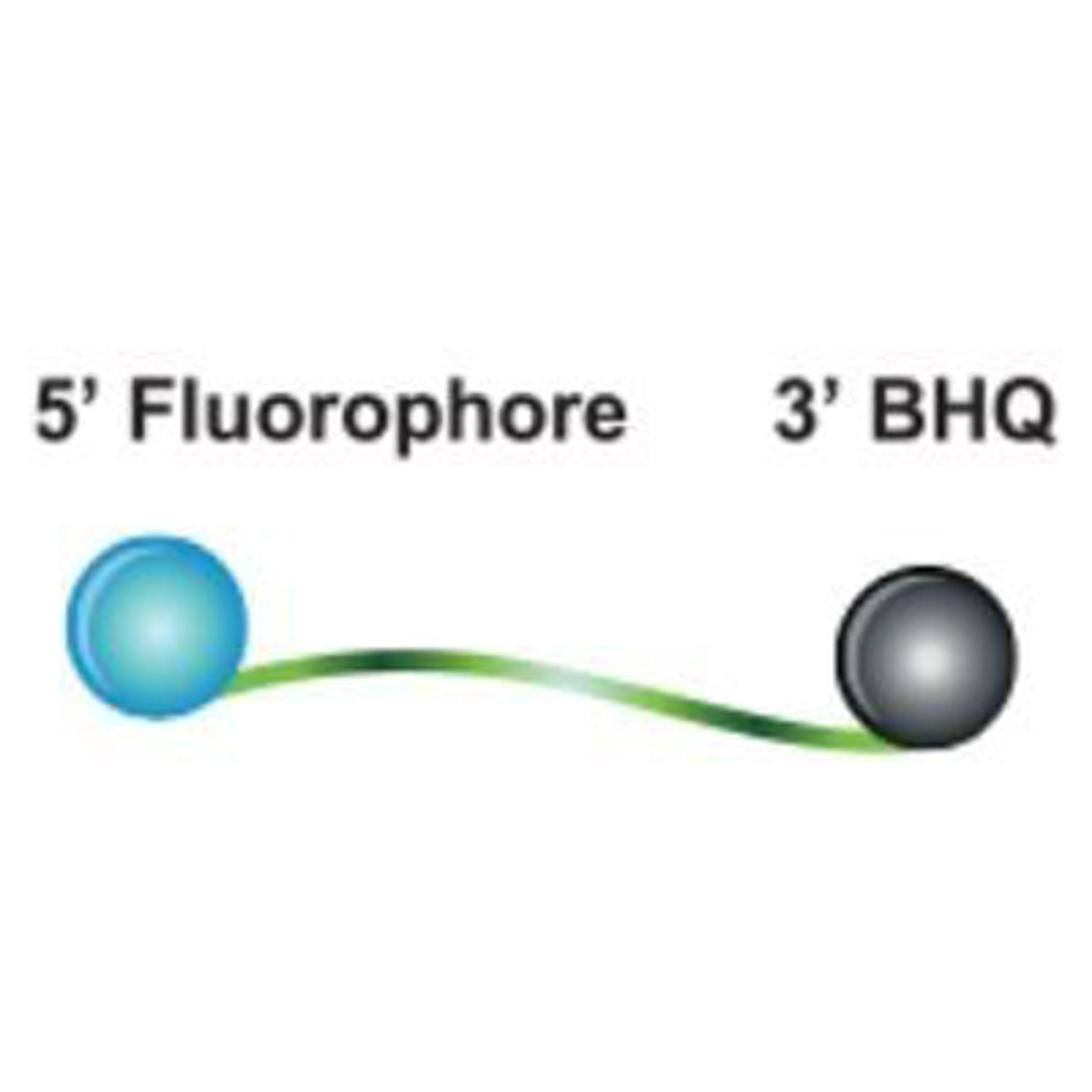
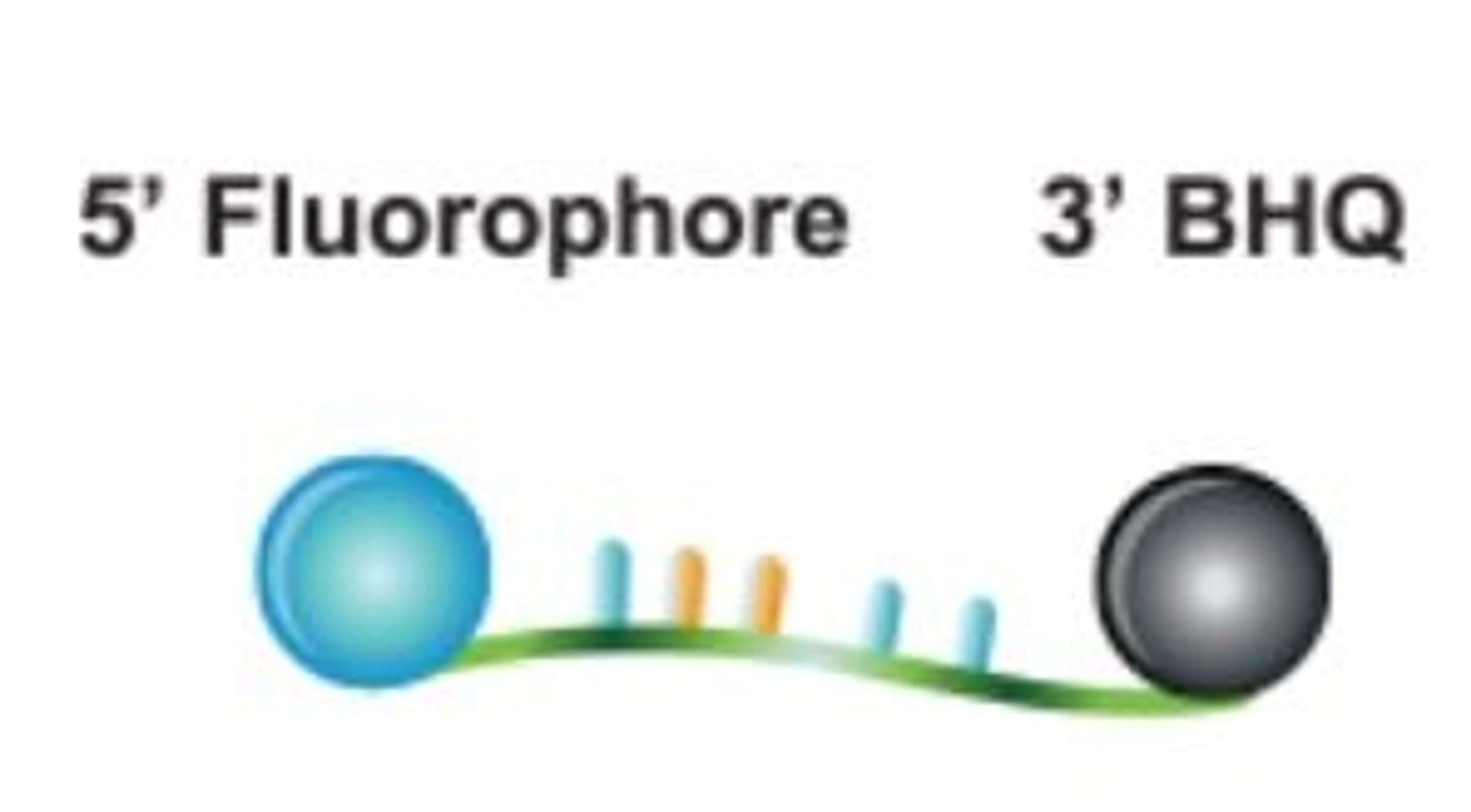
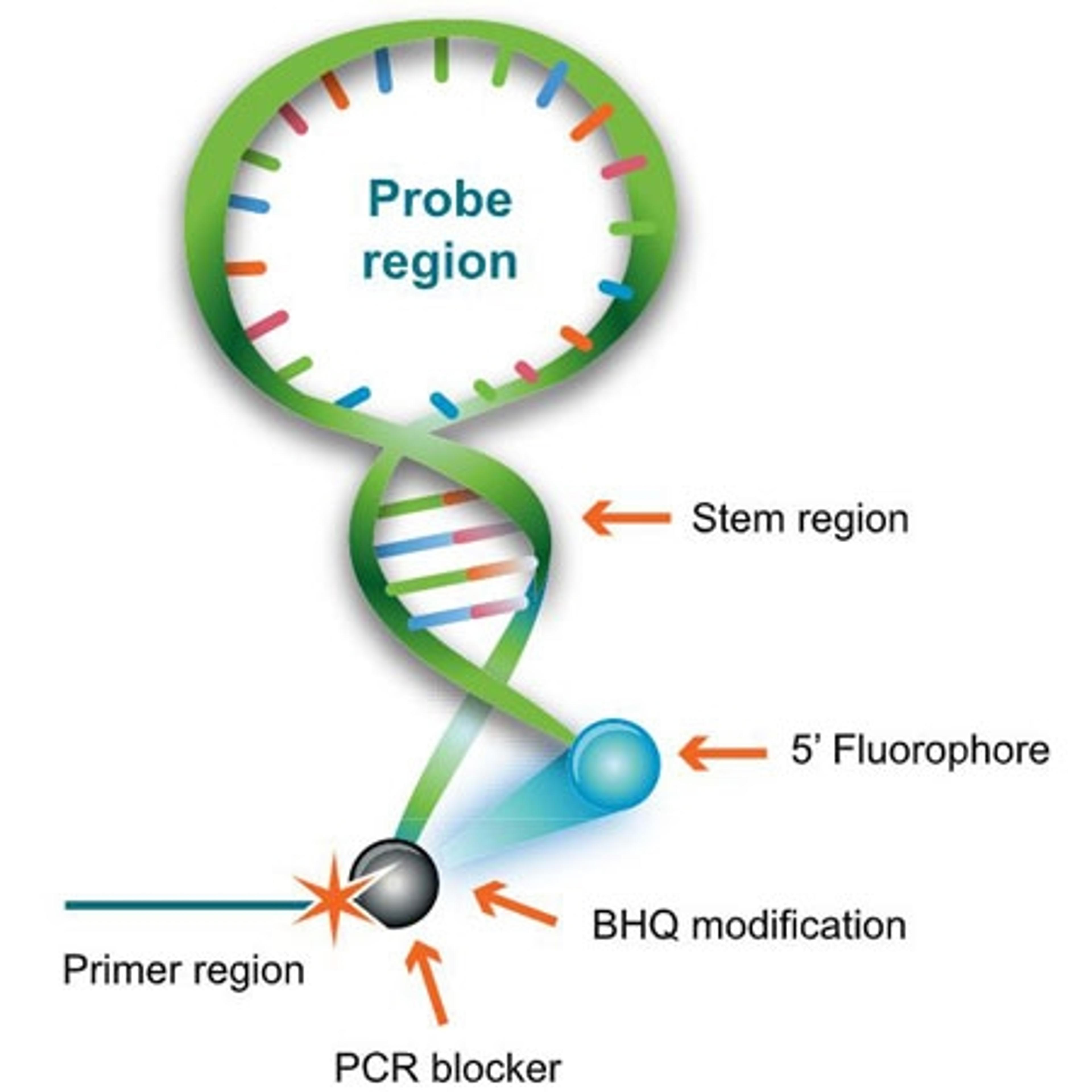
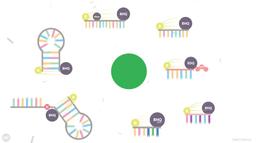
Molecular Beacons are a type dual-labeled FRET probes incorporating a quencher and a fluorophore reporter molecule. They differ from traditional dual-labeled probes, due to the incorporation of a short (~5 b.p.) complementary stem sequence at the 3' and 5' ends.



Place your order directly with the manufacturer.
I trust LGC with my order.
Biomarker, FACS
I am very pleased with the product yield and purity. I usually receive the custom made product within two weeks after I ordered it, which is great.
Review Date: 31 Jul 2017 | LGC Diagnostics & Genomics - Biosearch Technologies Oligo Synthesis
Molecular Beacons are a type dual-labeled FRET probes incorporating a quencher and a fluorophore reporter molecule. They differ from traditional dual-labeled probes, due to the incorporation of a short (~5 b.p.) complementary stem sequence at the 3' and 5' ends.
These complementary sequences hybridize to form a “stem-loop” structure which holds the reporter and quencher close together in space. This alternate conformation makes Molecular Beacons more discriminatory, allowing them to resolve different target sequences differing by a single nucleotide. Molecular Beacons also differ from traditional dual-labeled probes because they do not rely on probe hydrolysis from the 5' exonuclease activity of Taq polymerase to generate its fluorescence, therefore, a post-PCR melt curve is possible.
Just like standard Dual-labeled BHQ® probes it is possible to multiplex assays using Molecular Beacons. Multiplexing allows for the detection of several targets simultaneously using multiple spectrally resolved fluorescent probes.

Top tips for robust qPCR results
Reproducibility issues are a common pain point experienced by scientists carrying out quantitative polymerase chain reaction (qPCR), or real-time PCR, with challenges being linked to suboptimal design, probe selection, or workflow execution. The inconsistencies impact not only data quality, but also wasted time, lost samples and delayed research milestones.
A successful qPCR experiment relies on a well‑designed workflow, from high‑quality sample preparation to optimized reagents, primers, and probes, supported by thoughtful assay design that avoids issues like nonspecific binding or inefficient amplification. Expert probe‑selection strategies enhance specificity, especially in multiplexing, while effective troubleshooting helps diagnose common problems such as poor efficiency, primer‑dimers, or high variability. By applying key optimization techniques, researchers can achieve sensitive, accurate, and reproducible qPCR results.
Download this SelectScience guide to explore:
- How to overcome challenges in qPCR assay design
- A guide to selecting the right qPCR probe
- The best way to troubleshoot your qPCR
- Tips for qPCR optimization and validation
Resource details:
- Document type: SelectScience guide
- Page count: 49
- Read time: 69 mins
- Edition: 1st
7 innovative qPCR probe types explained
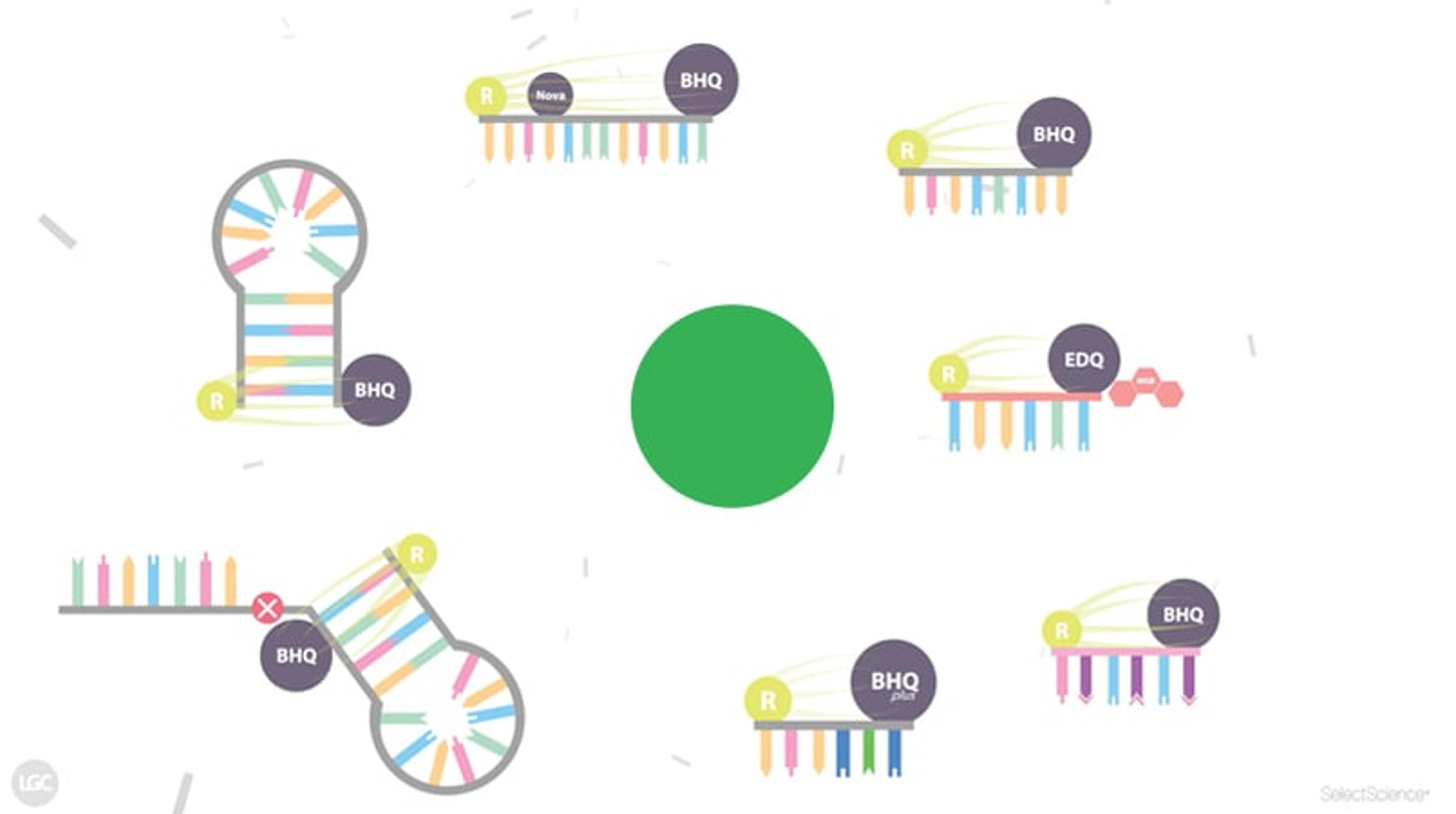
This comprehensive walkthrough animation outlines the latest developments in probe technologies in the qPCR field, highlighting the mechanisms of seven different real-time PCR probe and primer formats:
- Dual-labelled hydrolysis probes [00:19]
- BHQnova™ Probes [01:17]
- Minor groove binder (MGB) probes [01:49]
- Locked nucleic acid (LNA) probes [02:31]
- BHQplus™ Probes [03:15]
- Molecular Beacons [04:45]
- Scorpions™ Primers [06:00]